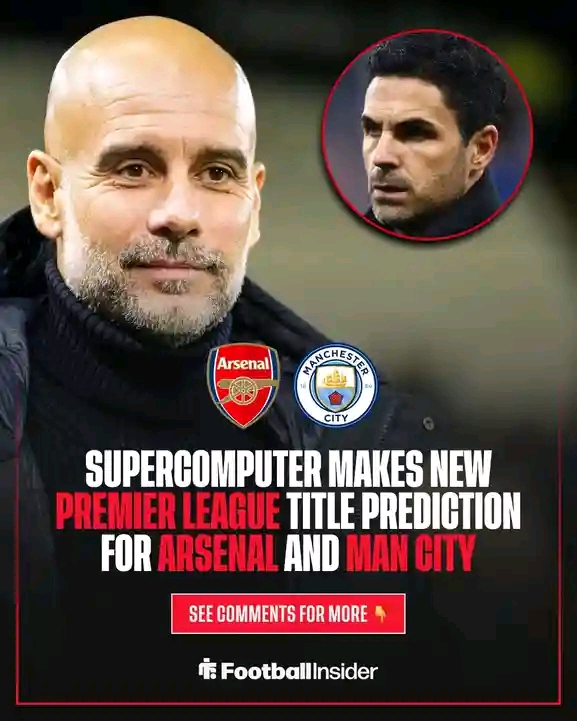
Arsenal remain favourites to win the Premier League title, but the mood around Mikel Arteta’s side has shifted dramatically after their dramatic 2-2 draw against Wolves at Molineux. What looked set to be a statement victory turned into a night of frustration, defensive confusion and late heartbreak, reopening the door for Manchester City and reigniting belief in Pep Guardiola’s camp. With the title race entering its decisive phase, every dropped point feels heavier than the last, and Arsenal’s latest stumble has intensified scrutiny on a team that once appeared in total control.
The Gunners travelled to Wolves knowing that victory would restore a commanding advantage at the top of the table. For large parts of the match, they looked poised to do exactly that. Goals from Bukayo Saka and Piero Hincapie gave Arsenal a 2-0 lead and appeared to steady nerves after a series of recent performances that hinted at tension creeping into their game. Saka’s influence was once again central, combining sharp movement with clinical finishing, while Hincapie’s contribution added to the sense that Arsenal had rediscovered their composure at a crucial moment.
Yet football matches are rarely decided before the final whistle, and Wolves had other ideas. Hugo Bueno sparked hope for the home side with a curling effort from the edge of the box, reducing the deficit and injecting fresh energy into the contest. The goal altered the atmosphere instantly. Arsenal, who had looked comfortable, began to retreat. Passes lost their precision, clearances lacked conviction, and Wolves sensed vulnerability.
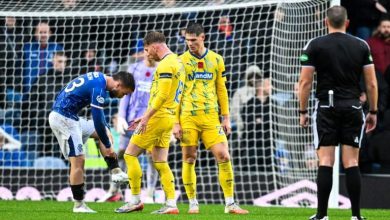
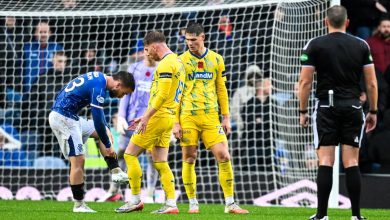
The decisive moment came in stoppage time, and it was born from confusion. A mix-up between Gabriel and goalkeeper David Raya created uncertainty inside the Arsenal penalty area. Wolves youngster Tom Edozie reacted quickest, directing a shot towards goal that deflected off the unfortunate Riccardo Calafiori and beyond Raya. The equaliser sent Molineux into raptures and left Arsenal players stunned. From cruising at 2-0 to conceding a chaotic late leveller, it was a collapse that felt symbolic of the mounting pressure surrounding the title race.
Emotions boiled over after the final whistle. Gabriel Jesus became involved in a confrontation with Yerson Mosquera, shoving the Wolves defender as tempers flared. It was a scene that captured the frustration coursing through Arsenal’s squad. This was not merely two points dropped; it was an opportunity missed to assert authority at the summit.
Despite the disappointment, statistical models continue to favour Arsenal. Opta’s widely referenced supercomputer has updated its projections and still gives the Gunners a commanding 79.69 per cent chance of lifting the Premier League trophy. That figure, though slightly reduced, reflects the consistency Arsenal have shown across the season. Even with recent slips, they remain top of the table and in control of their destiny.
Manchester City, by contrast, are assigned a 17.26 per cent chance of completing what would be another dramatic comeback under Guardiola. On paper, those numbers suggest Arsenal should feel confident. Yet football narratives are not dictated by algorithms alone. Momentum, psychology and experience play powerful roles, particularly when City are involved.
The new year has exposed certain frailties in Arsenal’s pursuit of the title. Being labelled firm favourites has not always sat comfortably on Arteta’s shoulders. Performances have occasionally lacked the freedom and fluidity that defined the early months of the campaign. Points have been dropped in five separate matches during this period, eroding what once seemed destined to become a double-digit cushion.
At one stage, Arsenal appeared ready to pull clear. Instead, the gap has narrowed to just two points. With a crucial trip to the Etihad Stadium still to come next month, the margin for error is diminishing. Should City win that encounter, the leadership at the top could change hands in an instant. That looming fixture casts a long shadow over the run-in.
History adds another layer of intrigue. Manchester City have overturned Arsenal challenges in previous seasons, finishing campaigns with relentless winning streaks that suffocated rivals. Guardiola’s teams have built reputations for peaking precisely when it matters most. However, this iteration of City has shown vulnerability. Inconsistency earlier in the season left them playing catch-up, and defensive lapses have occasionally cost them valuable points.
Even so, belief within the City camp is growing. Arsenal’s stumble at Wolves was met with enthusiasm in Manchester. A revitalised City side senses opportunity. Guardiola understands that sustained pressure can erode confidence at the top, and the knowledge that Arsenal must still visit the Etihad provides additional motivation.
Comparing the remaining fixtures for both sides reveals a challenging landscape. Manchester City’s schedule includes home and away tests that could shape the outcome of the title race. They host Newcastle United before travelling to Leeds United, where Elland Road has witnessed upsets in the past. Trips to West Ham and Chelsea present further obstacles, while Everton and Bournemouth away fixtures offer potential pitfalls. The home clash with Arsenal on 18 April stands out as the defining encounter, and Aston Villa’s visit on the final day could yet carry enormous significance.
Arsenal’s path is equally demanding. A North London derby looms, always a fixture charged with intensity regardless of league position. Chelsea’s visit follows, presenting another London rivalry with implications at both ends of the table. Beyond that, the trip to Manchester City is the headline challenge, accompanied by a potentially difficult visit to the London Stadium to face a West Ham side fighting for survival.
What distinguishes this race is the psychological dimension. Arsenal know that if they win their remaining matches, the title is theirs. There is clarity in that reality, yet clarity does not always translate into calm. The burden of expectation has grown heavier with each passing week. Supporters, while still hopeful, have experienced similar scenarios before. Near-misses in recent seasons linger in collective memory, creating anxiety that history might repeat itself.
City, conversely, are accustomed to chasing. Guardiola has mastered the art of late-season surges. His squads often speak of focusing on one match at a time, avoiding the distraction of long-term projections. The experience of serial title triumphs cannot be discounted. Even with a lower statistical probability, City possess intangible qualities forged in high-pressure environments.
The Wolves draw also highlighted tactical considerations. Arsenal’s defensive organisation, usually a cornerstone of their success, faltered in key moments. Communication between Gabriel and Raya will undoubtedly be analysed in training sessions. Arteta must ensure that such lapses are not repeated, particularly against opponents capable of punishing mistakes ruthlessly.
For Wolves, the comeback represented resilience and belief. For Arsenal, it served as a warning. The Premier League rarely allows teams to cruise, and even a two-goal lead can evaporate within minutes. Managing game states, especially late in matches, will be critical as the season approaches its climax.
Social media reaction reflected the volatility of the race. Arsenal’s official message urging supporters to “stick with us” acknowledged the disappointment while seeking unity ahead of upcoming fixtures. Rival fans seized on the collapse as evidence that the Gunners are wobbling. Analysts debated whether the psychological impact would linger or galvanise the squad.
Opta’s supercomputer projection provides comfort to those who trust data-driven assessments. A nearly 80 per cent probability suggests that, over thousands of simulated outcomes, Arsenal prevail far more often than not. Yet football is played once, not in simulations. A single deflection, a red card, an injury, or a moment of brilliance can reshape destiny.
Manchester City’s revival narrative is compelling precisely because it defies expectation. Earlier in the season, few would have predicted them narrowing the gap so convincingly. Injuries, inconsistent form and defensive uncertainty appeared to hinder their rhythm. However, recent performances indicate a team rediscovering cohesion. Guardiola’s tactical adjustments, coupled with renewed sharpness in attack, have restored optimism.
The title race may ultimately hinge on direct confrontation. When Arsenal travel to the Etihad, the stakes will be immense. Victory for City could swing momentum decisively. A draw might preserve Arsenal’s advantage but prolong tension. An Arsenal win would silence doubters and potentially deliver a psychological knockout blow.
Beyond the headline fixture, consistency against mid-table and lower-table sides will matter just as much. Champions are defined by their ability to secure points when performances are imperfect. Arsenal’s draw at Wolves demonstrated how quickly control can slip. City have experienced similar moments this season. Avoiding repetition will determine the final standings.
The broader context of the Premier League underscores its competitiveness. Teams fighting for European places and survival alike can disrupt title ambitions. West Ham, Everton and Bournemouth may not dominate headlines, but their motivation will be fierce. Leeds at Elland Road have shown they can unsettle established powers. Every away trip carries risk.
As the calendar moves toward April and May, narratives will intensify. Media scrutiny, fan debate and statistical modelling will continue to shape perception. Yet within dressing rooms, focus remains on preparation and execution. Arteta and Guardiola are seasoned tacticians aware that composure can be decisive.
Arsenal’s destiny remains in their own hands. Despite recent setbacks, they lead the table. Their blend of youth and experience has carried them this far. If they channel disappointment into determination, the Wolves draw could serve as a catalyst rather than a collapse.
Manchester City, meanwhile, embrace the chase. Their percentage chance may be lower, but belief is growing. The knowledge that Arsenal must visit Manchester fuels ambition. Guardiola’s side understand the importance of applying relentless pressure.
The Premier League title race is delicately poised. A two-point margin separates control from vulnerability. One dramatic evening at Molineux has reignited suspense. Statistics favour Arsenal. Experience favours City. Fixtures promise drama. Supporters on both sides brace for twists still to come.
In the end, algorithms may project probabilities, but football thrives on unpredictability. Arsenal’s stumble has ensured that the race remains alive. Manchester City sense opportunity. With defining matches ahead and emotions running high, the battle for the Premier League crown appears destined to captivate until the very final whistle of the season.