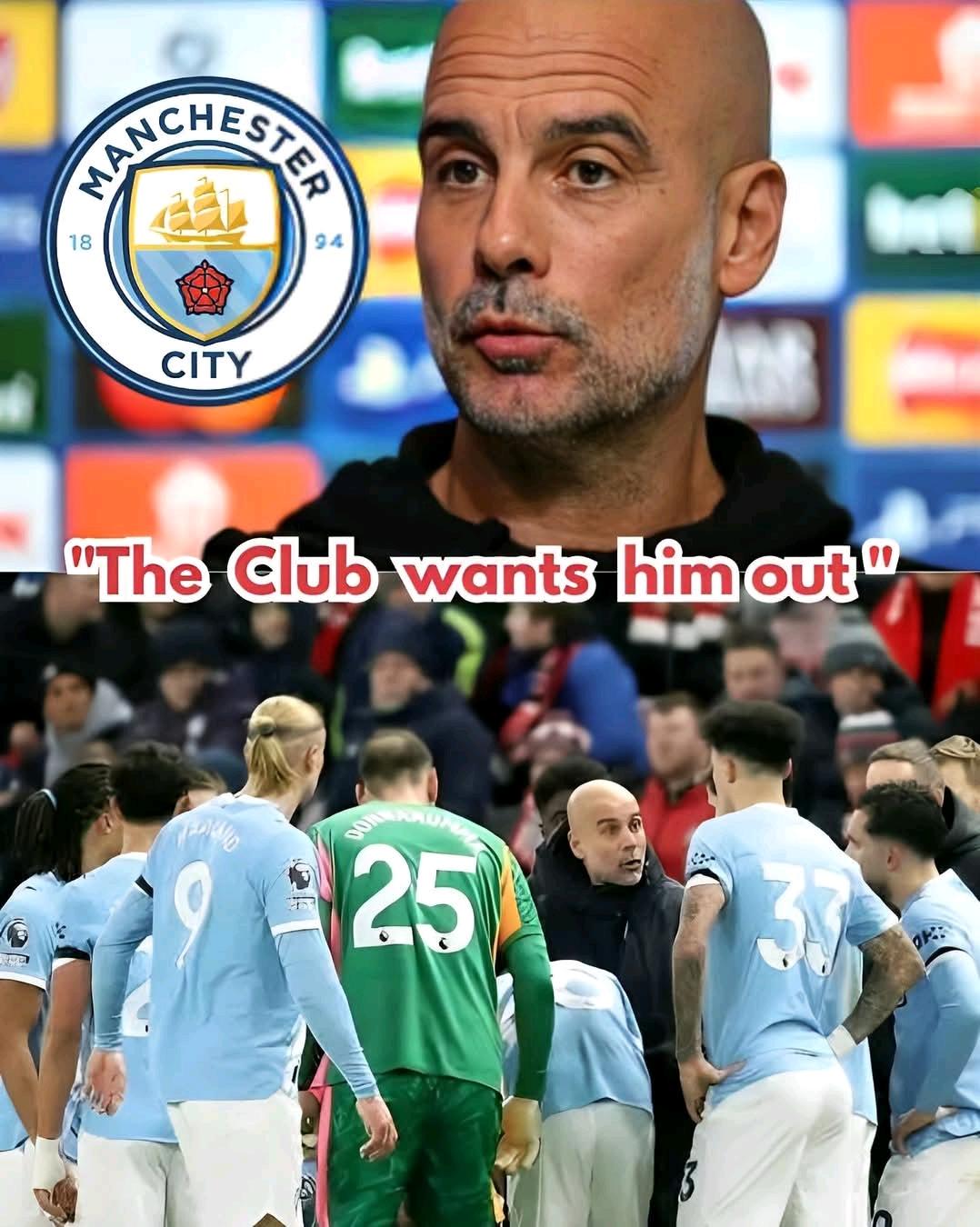
Tell him to pack his belongings and leave my club immediately, because I DO NOT TOLERATE LAZY players…I can’t be paying high salary on Him and not benefiting from Him’: Manchester City owner has ordered Pep Guardiola they must sell £43 million FLOP as soon as possible or risk losing their jobs. AFTER having less touch in the game

The noise started quietly, like a whisper behind closed doors, but in modern football whispers never stay hidden for long. One leaked message, one bold claim, and suddenly everything begins to shake. At the center of it all was a statement so powerful that it sent shockwaves across the football world. A valuation met. Documents ready. A declaration that a football club had grown beyond its identity and transformed into something much bigger, something almost untouchable. The idea that Chelsea FC could become the richest sporting empire in history felt unreal, yet the tone of the message suggested this was no longer a dream but a reality unfolding in real time. And with that came another bombshell, a suggestion that the era of Todd Boehly was coming to an end, signaling a complete shift in power, ambition, and direction.
But while that storm brewed in West London, another drama was unfolding miles away, one filled with tension, frustration, and growing impatience. At Manchester City, success had set a dangerous standard. Winning had become normal. Dominance had become expected. And so when things began to slip, even slightly, the reaction was always going to be extreme. This time, it came in the form of a furious message from above, a message that cut straight through the calm exterior that Pep Guardiola has always tried to maintain.
The words were brutal, direct, and impossible to ignore. A player, once trusted, once valued, now labeled as a burden. A £43 million investment now seen as a mistake. The instruction was clear: pack his belongings and leave. No patience. No second chances. Just a demand for results and accountability. In a club where excellence is the minimum requirement, anything less quickly turns into a crisis.
Yet on the pitch, things looked different. Not disastrous, but not perfect either. On New Year’s Day, City traveled to face Sunderland AFC at the Stadium of Light, a place known for its intensity and resilience. It was the kind of game that, on paper, City should control, dominate, and win. And in many ways, they did control it. Possession was theirs. The rhythm of the game was theirs. The chances, though not endless, were enough to secure victory. But football is not played on paper, and dominance without goals is meaningless.
From the first whistle, City tried to impose themselves. The passing was sharp, the movement fluid, but something was missing. That final moment, that killer instinct, that ability to turn control into goals, it simply was not there. Bernardo Silva thought he had found the breakthrough early on, only for his effort to be ruled out for offside. It was a warning sign, a glimpse of what could have been, but also a reminder of how fine the margins are at this level.
Then came the chances that truly mattered. Erling Haaland, a striker known for his ruthless efficiency, found himself in a promising position before the break. It was the kind of opportunity he usually converts without thinking. But this time, the ball did not find the net. Whether it was hesitation, pressure, or just one of those moments every striker faces, the result was the same. The chance was gone, and the frustration began to grow.
Sunderland, to their credit, were not just spectators. They defended with discipline, with organization, and with belief. Every City attack was met with resistance. Every cross was challenged. Every shot was blocked or saved. And when the opportunity came, they pushed forward with intent, reminding City that this was not going to be a one-sided affair.
As the first half came to a close, there was a sense that something needed to change. City had control, but not the result. They had the ball, but not the breakthrough. And in games like this, patience can quickly turn into desperation.
The second half brought a shift, not dramatic, but important. The introduction of Rodri changed the rhythm of the game. Suddenly, there was more calm, more control in the middle of the pitch. The passes became cleaner. The movement more purposeful. It was the kind of influence Guardiola values deeply, a player who can slow things down and speed them up at the right moments.
With that control came more pressure. Josko Gvardiol pushed forward, trying to make something happen. Jeremy Doku used his pace and skill to stretch the defense. Chance after chance came, each one bringing a wave of hope, and then disappointment. The ball just would not go in.
And that is where the frustration truly lies. Not in being outplayed, not in being second best, but in doing almost everything right and still not getting the reward. It is one of the hardest things to accept in football, especially for a team built on precision and efficiency.
After the final whistle, the scoreline read 0-0. A point gained, but it felt like two points lost. Yet when Guardiola faced the media, his reaction was not what many expected. There was no anger, no visible frustration. Instead, there was calm, even positivity.
He spoke about the performance, especially in the second half. He acknowledged the missed chances but refused to dwell on them. He praised the effort, the control, the way his team played in a difficult stadium against a determined opponent. For him, the performance mattered as much as the result, maybe even more.
But behind that calm exterior, questions remained. Why could his team not finish? Why were clear chances being wasted? Why was a team filled with world-class talent struggling to turn dominance into goals? Even Guardiola himself admitted he did not have all the answers.
And that is where the pressure from above becomes dangerous. When a manager is trying to stay calm, to build confidence, to focus on positives, and then a message comes demanding change, demanding exits, demanding accountability, it creates tension. It creates uncertainty. It forces decisions that may not always be the right ones.
The schedule ahead does not make things easier. Games come quickly. There is little time to rest, little time to reflect. The Premier League does not wait. The Champions League does not forgive. Every match becomes a test, every result a statement.
For City, the challenge is clear. They must find their edge again. They must turn performances into victories. They must silence the doubts, both inside and outside the club. And for Guardiola, the task is even bigger. He must manage not just the team, but the expectations, the pressure, and the noise that comes with it.
Because in football, everything can change in a moment. One goal, one win, one performance can shift the narrative completely. What looks like a crisis today can become a distant memory tomorrow. But until that moment comes, the questions will remain.
Was this just a bad day at the office, or the beginning of something deeper? Is the squad still as strong as it once was, or are changes needed? And most importantly, can Guardiola keep everything together in the face of growing pressure?
As the days pass and the next match approaches, the answers will begin to reveal themselves. For now, all City can do is move forward, focus on the next challenge, and hope that the missed chances, the frustration, and the noise around them will soon be replaced by something far more familiar: victory.