The former Premier League referee has had his say on the controversial incident

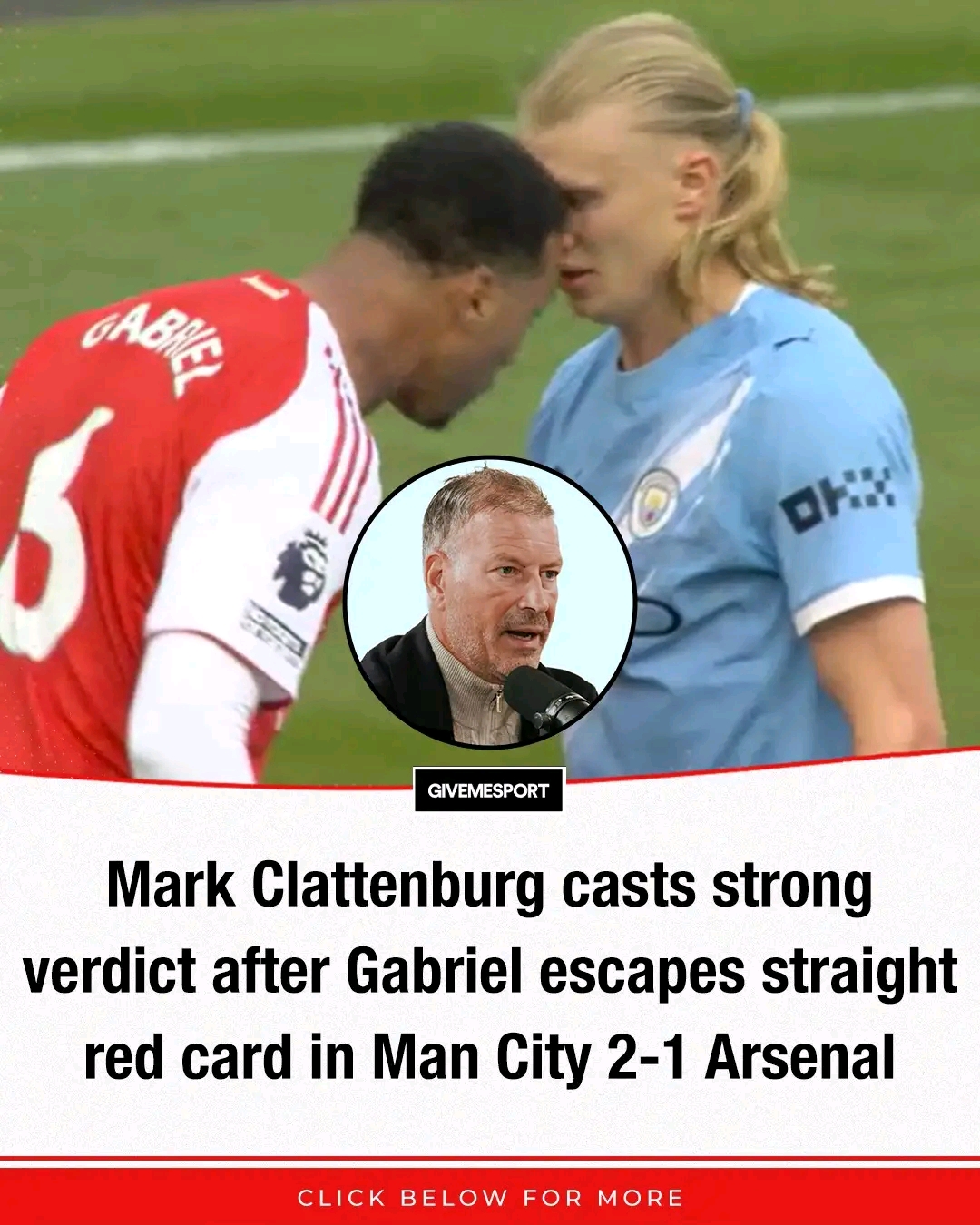
The match between Manchester City and Arsenal was already full of drama, tension, and high stakes before one single controversial moment changed the entire conversation. It was a game that had everything. Title race pressure. Big personalities. Strong tackles. Heated emotions. And in the middle of it all was a clash between two warriors who refused to back down.
On one side stood Erling Haaland, the powerful striker who has built a reputation as one of the most dangerous forwards in world football. On the other side was Gabriel Magalhães, Arsenal’s aggressive and fearless defender, known for never stepping away from a battle.
When these two players came face to face during the second half, sparks were always going to fly.
The match itself was intense from the first whistle. Both teams knew what was at stake in the Premier League title race. Manchester City needed a win to close the gap at the top. Arsenal needed to avoid defeat to keep control of their destiny. Every pass felt important. Every tackle felt heavy.
But it was the moment between Gabriel and Haaland that quickly became the biggest talking point of the night.
The two players came together during a heated phase of the match. Words were exchanged. Bodies collided. Then their foreheads touched. For a few seconds, everything stood still. The stadium watched. The cameras zoomed in. And then came the movement that would divide opinions across the football world.
Gabriel appeared to move his head forward towards Haaland in what many described as an attempted headbutt. Referee Anthony Taylor immediately stepped in. Both players were shown yellow cards for adopting an aggressive attitude.
But the debate had already begun.
Was it just two players showing passion? Or was it violent conduct that deserved a red card?
The incident was checked by VAR, with John Brooks reviewing the footage. After careful analysis, the decision on the field stood. No red card. Just yellow.
However, not everyone agreed with that call.
Former referee Mark Clattenburg was one of the first to give a strong opinion. Speaking after the match, he did not hide his feelings. According to him, Gabriel was “very fortunate” not to be sent off.
Clattenburg explained that when two players put their heads together, referees often give both players yellow cards for aggressive behavior. But he argued that Gabriel’s second movement of the head changed everything. In his view, once that clear forward motion happened, it crossed the line from aggression to violent conduct.
He insisted that even if there was no strong contact, the attempt itself was enough to justify a red card.
Another experienced voice, former FIFA referee Keith Hackett, shared a similar opinion. He believed referee Anthony Taylor was too lenient. According to Hackett, Gabriel’s use of his forehead towards his opponent was serious enough to demand stronger punishment.
For these former officials, the rule was clear. An attempted headbutt is violent conduct. And violent conduct means red card.
But not everyone saw it that way.
Former referee Mark Halsey offered a different perspective. In his opinion, Anthony Taylor handled the situation correctly. Halsey argued that both players were aggressive. Both players went head-to-head. And both deserved yellow cards.
He also made an interesting point about Haaland’s reaction. Halsey suggested that Haaland actually helped Gabriel by staying on his feet. If the Norwegian striker had dramatically fallen to the ground, it might have influenced the referee to show a red card.
This comment added another layer to the debate.
Should a player’s reaction decide the punishment?
Should referees judge only the action, or also the outcome?
The controversy did not end there.
After the match, Haaland himself was asked about the incident. And his response was calm but revealing. He suggested that if he had fallen to the ground, the punishment might have been different.
He made it clear that he does not like to dive or exaggerate contact. According to him, he will not fall unless someone truly attacks him. But he admitted that sometimes in football, reactions can influence decisions.
His words sparked even more discussion among fans.
Some praised him for staying honest and not diving. Others argued that in modern football, players sometimes need to make sure referees see the seriousness of incidents.
Meanwhile, the bigger picture of the match continued to unfold.
Manchester City had gone on to win the game 2-1, with Haaland scoring the decisive goal. That strike ended his short goal drought and reminded everyone why he is one of the most feared strikers in Europe.
It was his 34th goal of the season in all competitions and his 23rd in the Premier League campaign. Since joining City from Borussia Dortmund in 2022, he has consistently delivered incredible numbers. This season may not be his highest tally, but it still keeps him at the top of the scoring charts.
For Arsenal, the defeat was painful. The title race remains tight. Every point matters. And moments like the Gabriel incident only increase the emotional pressure on players and fans.
Many Arsenal supporters felt the decision was fair. They argued that football is a physical and emotional sport. They believe Gabriel showed passion, not violence. In their eyes, two yellow cards were enough.
Manchester City fans, on the other hand, questioned whether they would have been treated the same way if the roles were reversed.
These are the debates that make football so intense.
Rules are written clearly in the book. Violent conduct is defined. Headbutts are usually punished with red cards. But in real-time situations, referees must make split-second decisions. They must judge intent, force, reaction, and context.
Anthony Taylor saw the incident clearly. He chose yellow cards. VAR reviewed it. They agreed.
But former referees looking at slow-motion replays saw something different.
That is the beauty and frustration of football. One moment can create ten different opinions.
As the title race continues, this incident will not be forgotten quickly. It adds more fire to the rivalry between Manchester City and Arsenal. It adds more emotion to their next meeting.
Players like Gabriel and Haaland thrive on battles. They are competitors. They want to win every duel. They push each other to the limit. Sometimes that line between aggression and control becomes very thin.
The important question now is how Arsenal respond. Will Gabriel use this controversy as motivation? Will he channel that aggression in the right way? He remains one of the key defenders in Arteta’s system. His physical presence is crucial in big games.
For Manchester City, the victory gave them momentum. Haaland’s return to scoring form is a major boost for Pep Guardiola’s side. When he scores, City often win. And when City win, they build confidence that can carry them through the toughest moments of the season.
This controversy also reminds everyone of how much pressure referees face in modern football. Every decision is analyzed from multiple camera angles. Every movement is replayed on social media within seconds. Former officials give interviews. Fans debate endlessly.
There is no hiding place.
Whether Gabriel was lucky or whether Taylor was correct may remain a matter of opinion. But one thing is certain. The incident added drama to an already dramatic title race.
In the end, football is about moments.
Moments of skill.
Moments of passion.
Moments of controversy.
And this clash between Gabriel and Haaland was all three.
It showed how emotions can boil over in high-stakes matches. It showed how fine the line is between yellow and red. And it showed how even experienced referees can divide opinion.
As the season moves towards its final weeks, every tackle will feel heavier. Every confrontation will be watched more closely. And every decision will carry even greater weight.
Because when trophies are on the line, nothing is small.
And sometimes, one movement of the head can shake the entire football world.