Racism against Marc Guehi is completely unacceptable and honestly so disappointing to see 😤 Yes, he made a mistake that led to a goal, but football is a game of moments. Over the course of the match against Everton, he was still solid making important clearances, staying composed under pressure and even contributing an assist in our equalising goal. There’s a clear difference between football criticism and outright abuse. Whatever happens on the pitch, racism should never be part of the conversation. No room for racism in football. We stand with you

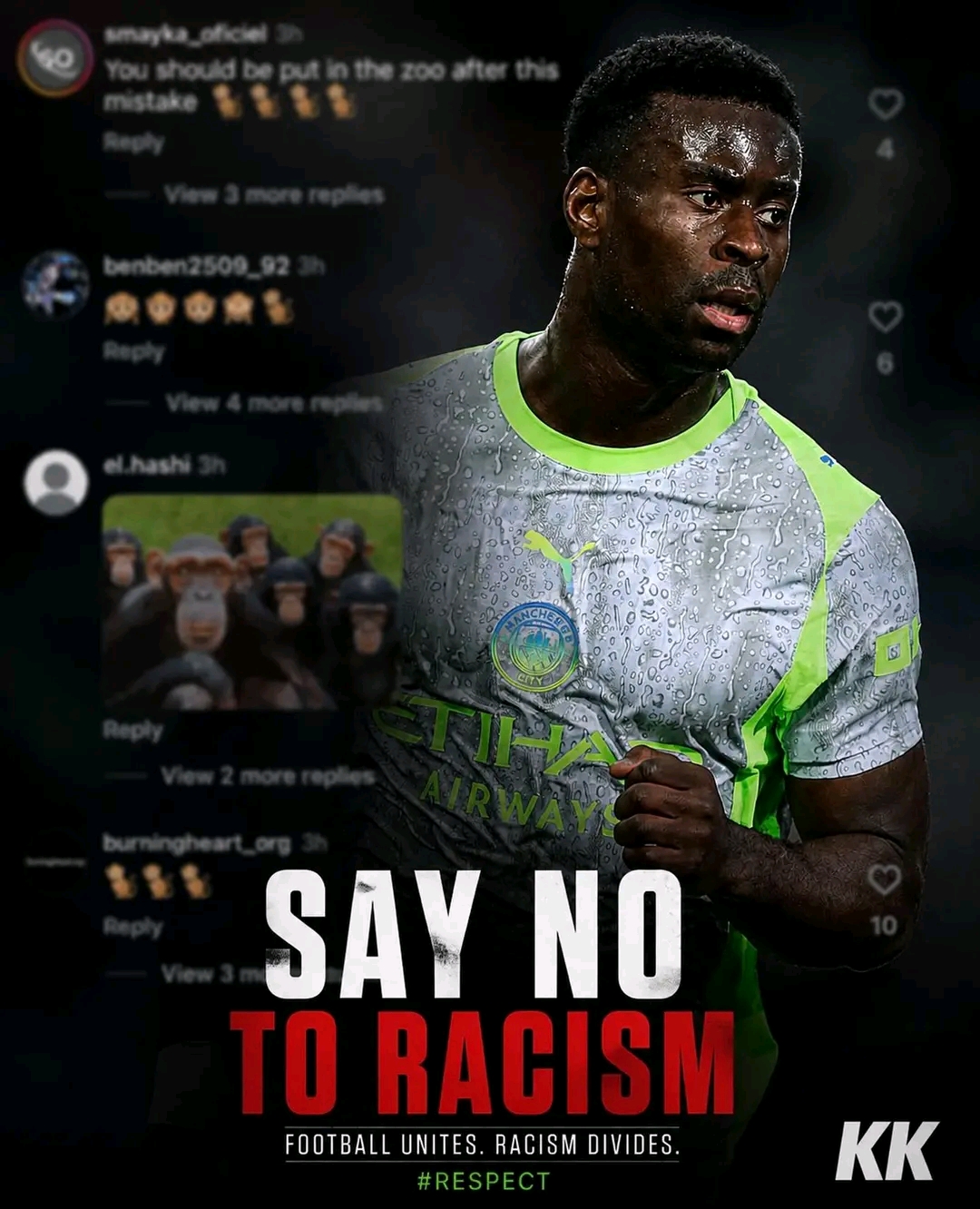
The final whistle had already blown, but the noise did not stop. The stadium lights were still shining, the cameras were still rolling, and the emotions from that chaotic 3-3 draw were still hanging heavily in the air. It was one of those nights that nobody could forget easily. A match full of drama, mistakes, brilliance, and heartbreak. But what happened after the game hurt even more than anything that happened on the pitch.
Because this time, the conversation moved away from football, and into something much darker.
The focus quickly turned to Marc Guehi, a player who had given everything during the match for Manchester City. Yes, he made a mistake. A costly one. A moment that led to a goal for Everton F.C.. In a game like this, where every second matters, those moments can change everything.
And it did.
But what followed after that mistake was something no player should ever have to face.
Racism.
It started slowly, like it often does. A few comments here and there. Then more. Then it spread across social media. Messages filled with hate, anger, and words that had nothing to do with football. Words that crossed the line. Words that should never be said to anyone, no matter what happens on a football pitch.
And that is the problem.
Football is a game of moments. Every fan knows this. One second can change everything. A defender slips. A striker misses. A goalkeeper makes a mistake. These things happen. Even the best players in the world have had nights they wish they could forget.
That is part of the game.
But racism is not part of the game. It has never been, and it should never be.
Marc Guehi’s mistake was just that, a mistake. It was not a lack of effort. It was not a lack of commitment. It was one moment in a match full of many moments. And if you watched the full game, you would see a completely different story.
You would see a player who was fighting from the first minute to the last.
You would see him making important clearances when his team was under pressure. You would see him staying calm even when the game became chaotic. You would see him reading the game, positioning himself well, and trying to organise the defence when things started to fall apart.
And more than that, you would see him contributing going forward.
Because in that same match, in the same intense environment, he played a role in the equalising goal. He did not hide after his mistake. He did not let his head drop. He kept going. He kept fighting. He kept believing.
That is what football is about.
Resilience.
Courage.
The ability to keep moving forward even when things go wrong.
But sadly, not everyone sees it that way.
For some people, one mistake is enough. One moment becomes the only thing they remember. And instead of offering fair criticism, they choose something else. Something ugly. Something harmful.
Racism is not criticism.
It is abuse.
There is a very clear difference, and it is important to understand it.
Football criticism is normal. Fans will always have opinions. They will analyse performances, talk about mistakes, and debate decisions. That is part of being a fan. It is part of the passion that makes football so powerful.
But racism has nothing to do with passion.
It is not about the game.
It is about hate.
And there is no place for that in football, or anywhere else.
When players step onto the pitch, they represent more than just themselves. They represent their teams, their families, their communities, and the fans who support them. They give everything, physically and mentally, to perform at the highest level.
And in return, they deserve respect.
Not abuse.
Not hatred.
Not racism.
For Marc Guehi, this moment should have been about reflection. About learning. About improving. That is how football works. Players make mistakes, they grow, and they come back stronger.
But instead, he was forced to deal with something much heavier.
Something that goes beyond football.
It is disappointing. Deeply disappointing. Because despite all the progress that has been made over the years, moments like this remind us that the problem is still there.
Still present.
Still hurting people.
Still damaging the game.
Football has always been a sport that brings people together. Different cultures, different backgrounds, different languages, all united by a shared love for the game. That is what makes it special.
That is what makes it powerful.
But racism does the opposite.
It divides.
It isolates.
It destroys the very thing that makes football beautiful.
And that is why it must be challenged every single time it appears.
Clubs, players, fans, and organisations all have a role to play. Speaking out is important. Standing together is important. Showing support for players who face abuse is important.
Because silence only allows the problem to grow.
After the match, many fans and voices in football came out in support of Guehi. Messages of encouragement. Messages of solidarity. Messages that reminded him that he is not alone.
And that matters.
Because behind every player is a human being.
Someone who feels pressure.
Someone who feels pain.
Someone who reads those messages and is affected by them.
It is easy to forget that sometimes. Easy to see players as just names on a shirt. But they are more than that.
They are people.
And they deserve to be treated with dignity.
The match against Everton F.C. will be remembered for many reasons. The goals. The drama. The comeback. The missed chances. The emotions.
But for Guehi, it will also be remembered for something else.
A reminder of the challenges that exist beyond the pitch.
A reminder of how quickly things can turn.
And hopefully, a reminder of the importance of standing up against racism.
Because in the end, football is just a game.
Yes, it means a lot. Yes, it brings joy and pain. Yes, it creates unforgettable moments. But it should never be a reason for hate.
Mistakes will always happen.
Players will always have good days and bad days.
That will never change.
But what can change is how people respond.
Choosing respect over abuse.
Choosing support over hate.
Choosing to see the bigger picture instead of focusing on one moment.
For Marc Guehi, this is not the end of the story. It is just one chapter. One difficult chapter, but not the whole book. He will continue to play. Continue to improve. Continue to prove himself.
That is what strong players do.
And that is why support matters.
Because when players know they are backed, when they know they are valued, it gives them the strength to keep going.
The strength to rise again.
The strength to turn a negative moment into something positive.
Football needs more of that.
More unity.
More understanding.
More respect.
Because without those things, the game loses its meaning.
And moments like this remind us of what is truly important.
Not just the goals.
Not just the results.
But the values.
The way we treat each other.
The way we respond when things go wrong.
There is no excuse for racism.
Not in football.
Not anywhere.
And as fans, as people who love the game, it is our responsibility to make sure that message is clear.
Loud and clear.
No room for racism.
Not now.
Not ever.
And in moments like this, standing with players like Marc Guehi is not just the right thing to do.
It is the only thing to do.