leaked camera footage finally reveals what referee and VAR did in Celtic penalty chaos 😳 pure robbery claims erupt as Scottish football is shaken to the core 🔥 referee John Beaton reportedly breaks internal silence after explosive backlash

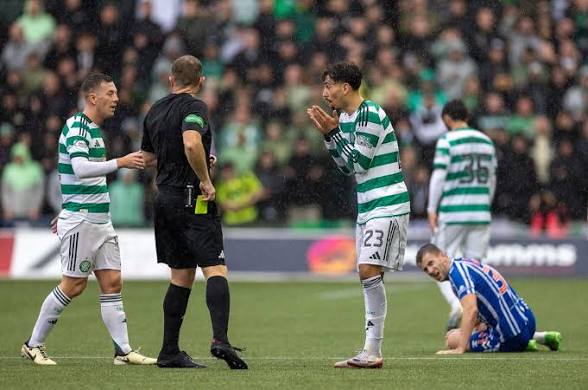
The football world has once again been shaken by a wave of controversy after leaked camera footage reportedly showed what happened during a dramatic penalty incident involving Celtic F.C. in a match that has now become the centre of heated debate across Scotland and beyond.
The incident, which quickly spread online and triggered widespread accusations of “robbery” from angry supporters, has placed match officials under intense scrutiny, with particular focus on referee John Beaton and the Video Assistant Referee (VAR) team.
What was initially just another controversial decision in a high-stakes match has now grown into something much bigger. The release of alleged behind-the-scenes footage has reignited anger, raised questions about transparency, and left fans demanding answers about how such decisions are made at the highest level of Scottish football.
The controversy began during a crucial moment in the match when Celtic appealed strongly for a penalty. Players immediately surrounded the referee, protests erupted from the stands, and replays shown on television only added to the confusion. Some angles suggested contact inside the box, while others appeared less clear. But what followed has now become the main focus of attention.
According to reports circulating online, leaked footage from inside the stadium’s officiating communication system has surfaced, allegedly revealing conversations between match officials and VAR during the decision-making process. Although the authenticity of the footage has not been officially confirmed by governing bodies, it has already been widely shared and heavily discussed by fans and pundits.
The reaction from supporters was immediate and emotional. Many Celtic fans described the situation as unfair, claiming that their team had been denied a clear penalty at a decisive moment in the match. The phrase “pure robbery” began trending on social media as frustration boiled over, with clips and screenshots being analysed frame by frame by fans trying to understand how the decision was reached.
For many, the anger is not just about one single decision. It is about a growing feeling that key moments in matches are not being handled consistently. VAR was introduced to remove clear and obvious errors, but critics argue that it has instead created new layers of confusion, inconsistency, and controversy.
As the debate intensified, attention quickly turned toward the referee at the centre of the incident, John Beaton. Known as one of the most experienced officials in Scottish football, Beaton has been involved in several high-profile matches over the years, but this latest controversy has placed him under an especially harsh spotlight.
Reports suggest that following the backlash, internal discussions took place within refereeing circles, and Beaton is believed to have addressed concerns privately regarding the incident. While no official statement confirming the contents of those discussions has been released, speculation has only added to the intensity surrounding the situation.
Some sources claim that officials involved in the match have defended the decision, arguing that the challenge in question did not meet the threshold for a penalty after VAR review. Others, however, insist that the footage shows enough contact to justify intervention, raising further questions about consistency in decision-making standards.
This divide in interpretation is at the heart of the controversy. Football laws are often open to subjective judgement, and VAR was meant to reduce those grey areas. Instead, incidents like this have highlighted just how difficult it is to create universal agreement, even with video technology.
Supporters of Celtic have been particularly vocal, pointing to similar incidents in other matches where they feel decisions have gone against their team. For them, this latest episode is not isolated but part of a pattern that fuels distrust and frustration.
On the other side, some neutral observers and analysts have urged caution, reminding fans that leaked footage often lacks full context. Without official confirmation or full audio transparency, they argue, it is impossible to fully understand the communication between referee and VAR during the incident.
This raises an important issue in modern football: transparency. As technology becomes more embedded in the game, fans are demanding greater access to decision-making processes. Many believe that if VAR conversations and referee explanations were made public in real time, controversies like this could be better understood, even if not everyone agrees with the outcome.
However, governing bodies have traditionally been reluctant to fully open up officiating communications, citing concerns over pressure on referees and potential misuse of conversations taken out of context. The balance between transparency and protection of officials remains a difficult one.
In Scotland, this debate has now been reignited with force. Calls for reform are growing louder, with some fans and pundits demanding changes to how VAR is used in the domestic game. Others argue that while mistakes will always happen in football, technology should not be blamed for human interpretation errors.
Meanwhile, the emotional impact of the incident continues to linger. For players and supporters of Celtic, the frustration of feeling that a key decision went against them in a crucial moment is difficult to move past. Matches at this level are often defined by fine margins, and one call can change everything.
For referees, however, the situation is equally challenging. Officials operate under intense scrutiny, knowing that every decision will be replayed, analysed, and criticised from multiple angles. The introduction of VAR was supposed to reduce that burden, but in many cases it has simply shifted the pressure rather than removing it.
As the conversation continues to grow, governing bodies are now expected to review the incident as part of wider discussions about officiating standards and VAR implementation in Scottish football. Whether any official action or clarification will follow remains to be seen.
What is certain, however, is that this incident has once again exposed the deep divisions that exist around VAR in football. For some, it is a necessary tool that improves fairness. For others, it is a system that has introduced more confusion than clarity.
In the end, the truth of what happened in that specific moment may take time to fully emerge, especially if official communication logs are reviewed and released. Until then, speculation, debate, and emotion will continue to dominate discussions.
For now, the only certainty is that this controversy has added another chapter to the ongoing VAR debate in football, and its impact will likely be felt far beyond a single match in Scottish football.