SHOCKING VAR CONTROVERSY! The Scottish Football Association reportedly explain why Celtic FC’s controversial penalty against Motherwell FC may NEVER have been given! 🤯⚽ Fans are furious as new details spark massive debate across Scottish football

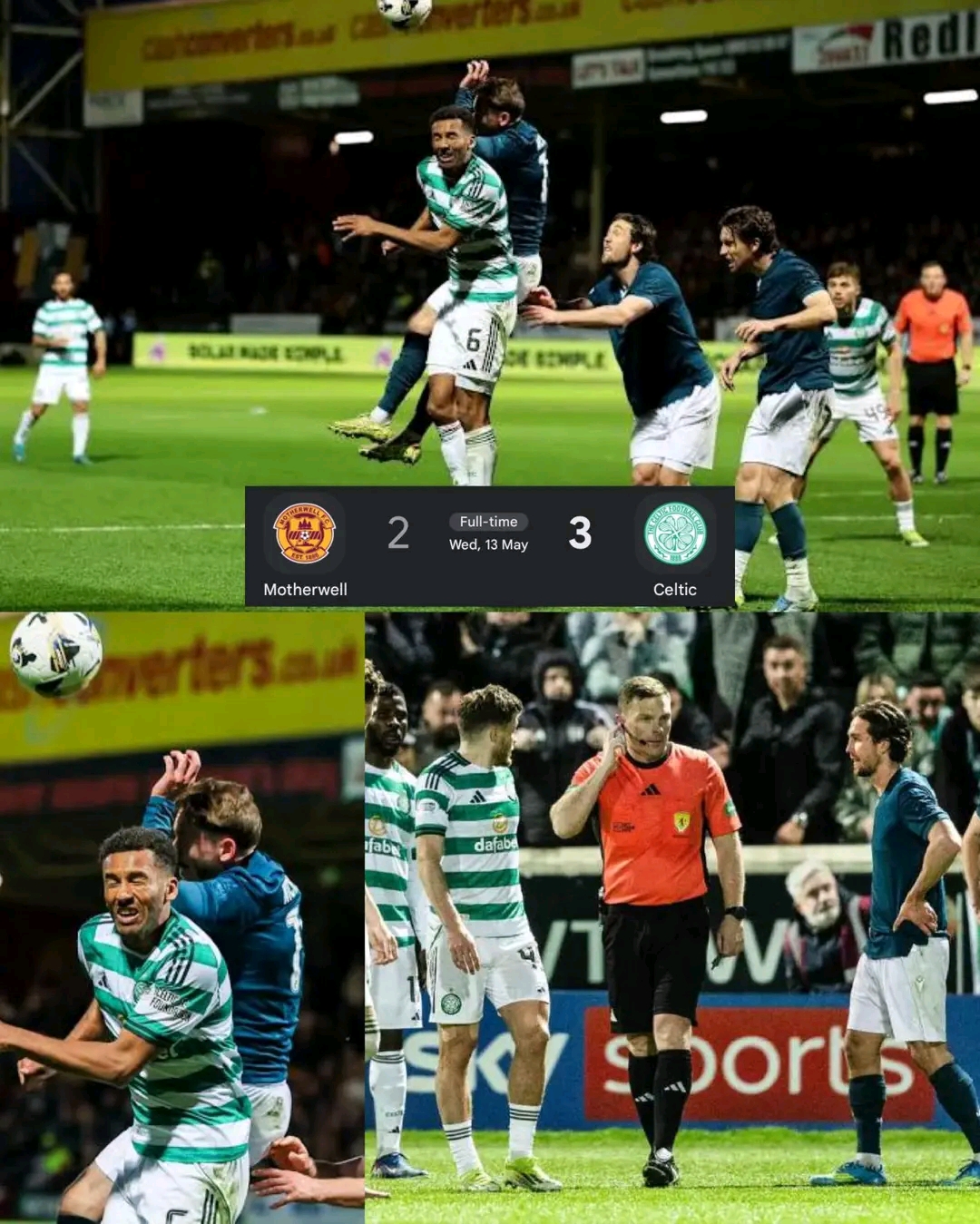
The final weeks of the Scottish Premiership season were already filled with pressure, tension and drama, but what happened at Fir Park between Celtic FC and Motherwell F.C. turned the title race into complete chaos. What should have been remembered as another exciting chapter in Scottish football instead became one of the most controversial VAR moments the league has seen in years. Days after the match, anger is still spreading across Scotland, and now even the Scottish FA’s own Key Match Incident panel has admitted the decision that helped Celtic win the game should never have happened in the first place.
The incident came during a dramatic clash at Fir Park with the score tied at 2-2 deep into stoppage time. Both teams were exhausted. Every tackle mattered. Every second carried huge importance. Celtic were desperately pushing for a winner that could keep them ahead in the title race while Motherwell were fighting to hold on for a valuable point. Fans inside the stadium could feel the tension with every attack. Nobody imagined the game would end in such explosive fashion.
The moment that changed everything arrived after an aerial duel inside the Motherwell penalty area. Celtic defender Auston Trusty challenged for the ball while Motherwell winger Sam Nicholson attempted to clear the danger. The ball appeared to brush through the crowded area before play continued. Referee John Beaton initially waved away Celtic’s appeals for a handball. Many players simply expected the game to continue. Even television replays did not provide a clear answer. Some angles suggested possible contact, others showed nothing obvious at all.
Then VAR stepped in.
Andrew Dallas, who was working as the VAR official, advised Beaton to go to the pitchside monitor and review the incident again. The moment immediately caused confusion around the stadium. Motherwell players surrounded the referee in disbelief while Celtic fans sensed an opportunity. Television commentators struggled to understand what exactly Dallas believed he had seen. Replays continued to look inconclusive, but after a brief review Beaton suddenly overturned his original decision and pointed to the penalty spot.
The reaction was instant.
Motherwell players were furious. Their supporters inside Fir Park could not believe what they had just witnessed. Celtic players celebrated wildly because they knew how important the decision could become in the title race. Every point mattered at that stage of the season and a late penalty represented the perfect opportunity to take control of the championship battle.
Nigerian striker Kelechi Iheanacho stepped forward under enormous pressure. The former Manchester City F.C. player kept his composure and smashed the penalty into the back of the net. Celtic supporters erupted in celebration while Motherwell players collapsed in frustration. Seconds later the final whistle arrived and Celtic walked away with a dramatic 3-2 victory that could eventually decide the destination of the league trophy.
At first, Celtic supporters celebrated what felt like a title-winning moment. Social media exploded with reactions. Videos of the penalty were shared everywhere. Fans of rival clubs immediately accused the officials of making a terrible mistake. Many could not understand how the VAR team had decided there was enough evidence to overturn the original decision.
The controversy quickly spread beyond Scotland.
Former England striker and television pundit Gary Lineker described the incident as “one of the worst VAR decisions” he had ever seen. His comments attracted huge attention online because Lineker rarely speaks so strongly about Scottish football controversies. But after watching the replays, he appeared stunned by what the officials had done.
Meanwhile Derek McInnes, the Hearts manager, was absolutely furious. Hearts were directly involved in the title race with Celtic and understood immediately how costly those two dropped points could become. McInnes reportedly described the decision as “disgusting” and questioned how such a major error could happen at such a crucial stage of the season.
The anger from Hearts supporters became even louder because of what the result meant mathematically. Before Celtic’s late winner, the title race remained extremely tight. Goal difference could still play a huge role on the final day. But after Celtic secured all three points at Fir Park, the situation completely changed. Instead of needing a big victory over Hearts in the final match, Celtic suddenly only needed a simple win by any scoreline to secure the Scottish Premiership title.
That single penalty completely changed the pressure of the final weekend.
Supporters across Scotland began debating whether technology was helping football or destroying it. VAR was originally introduced to eliminate obvious mistakes, but critics argued this incident proved the system was creating even bigger controversies. Fans complained about inconsistent handball interpretations, slow reviews and unclear communication between officials. Many people watching the game believed Beaton’s original decision was correct and should never have been overturned.
Days later the Scottish FA’s Key Match Incident panel finally released its verdict, and the findings poured even more fuel onto the fire.
According to the panel, referee John Beaton had actually been right when he initially refused to award the penalty. The panel concluded that the VAR intervention itself was incorrect and that Andrew Dallas should never have instructed Beaton to review the incident. In simple terms, the governing body admitted the game-changing penalty should never have been awarded.
That announcement created another massive wave of outrage.
For Hearts supporters, the statement felt like confirmation that their club had been badly damaged by officiating mistakes during the most important period of the season. Many fans argued the apology came too late because the points could not be returned. Others demanded accountability for officials involved in the incident. Social media became flooded with criticism aimed at both Beaton and Dallas.
What made the situation even more painful for Hearts was the fact that this was not the first controversial refereeing decision to go against them in recent weeks. Earlier in the season another incident involving Motherwell had already caused frustration. During that match, Hearts players Alexandros Kyziridis and Tawanda Maswanhise were involved in a penalty appeal that many believed should have been awarded.
On that occasion referee Steven McLean stuck with his original decision despite a VAR recommendation. Later reviews suggested that call had also been mishandled. Hearts supporters therefore believed they had suffered two huge officiating mistakes during the title run-in, both involving Motherwell matches and both eventually judged to be incorrect.
When the final league table showed Hearts finishing only two points behind Celtic, those incidents suddenly became impossible to ignore.
Fans immediately started asking the biggest question of all: did refereeing mistakes decide the Scottish Premiership title?
It is a dangerous question for Scottish football because it attacks the credibility of the competition itself. Supporters can accept losing titles because of poor performances or missed chances on the pitch. But when controversial officiating decisions become decisive, anger grows much deeper. Many Hearts fans believe their club was denied a fair opportunity to compete for the championship.
At the same time Celtic supporters defended their team fiercely. Many argued players can only perform within the rules and that the officials, not Celtic, were responsible for the controversy. Others pointed out that questionable decisions happen to every club during a season and insisted Celtic still deserved credit for fighting until the final whistle.
Still, even some Celtic fans admitted privately that the decision looked extremely harsh on Motherwell.
The situation also increased pressure on the Scottish football authorities. Critics questioned how VAR officials continue to produce inconsistent decisions despite having access to multiple camera angles and slow-motion replays. Some pundits argued that technology is only as good as the people operating it. Others demanded clearer communication similar to rugby, where referees explain decisions publicly during reviews.
Former players joined the debate throughout the week. Several insisted Scottish referees are now under unbearable pressure because every decision is replayed repeatedly on television and social media. Others argued officials must accept criticism when major mistakes occur in title races worth millions of pounds.
The Scottish Senior Football Referees Association later released a strong statement defending match officials against growing abuse. The organisation warned that criticism had become “entirely disproportionate” and condemned threats, intimidation and the leaking of referees’ personal information online.
According to the association, referees are human beings making difficult decisions in extremely intense environments. Officials reportedly fear for their safety after major controversies because abuse can quickly spread beyond football discussions into personal attacks. The statement called on supporters, clubs and media outlets to reduce hostility and remember that referees should not become targets for harassment.
That statement created another debate of its own.
Some fans agreed that abuse towards referees has crossed the line and that personal attacks can never be justified. Others responded by saying accountability must still exist when mistakes affect championships, relegation battles and European qualification races. The balance between protecting officials and demanding higher standards has become one of the biggest issues in modern football.
VAR itself remains at the centre of the storm.
When the technology first arrived, football authorities promised it would remove clear and obvious mistakes. Instead, many supporters now feel it has created confusion and endless arguments. Handball decisions especially continue to divide opinions because interpretations often seem inconsistent from one week to another.
In the Celtic versus Motherwell incident, the biggest frustration came from the lack of clear evidence. Many viewers believed the replay angles failed to show any obvious handball by Nicholson. That is why the KMI panel’s conclusion became so damaging. If the evidence was unclear, critics asked, why was the referee sent to the monitor at all?
Some analysts argued the psychology of the monitor review itself may influence referees. Once officials are called to the screen, there is often an expectation that something important has been missed. As a result, referees may feel pressured to overturn their original decision even when evidence remains uncertain.
The controversy has also reignited discussions about transparency in Scottish football officiating. Fans want to hear conversations between VAR officials and referees during reviews, similar to systems used in other sports. Many believe public access to those discussions would help supporters understand why decisions are made.
Others want stricter rules limiting VAR intervention only to absolutely undeniable mistakes. They argue football is becoming over-controlled by technology and that natural flow and emotion are being destroyed.
For Motherwell, the situation was heartbreaking. Players and supporters felt they had earned a valuable point against one of Scotland’s biggest clubs only for it to disappear in the final moments because of a controversial decision. The sense of injustice remained strong long after the match ended.
For Hearts, the anger was even deeper because the consequences stretched far beyond one single game. Missing out on the title by only two points made every controversial moment feel enormous. Supporters replayed the incidents repeatedly online, convinced those decisions changed the entire season.
Meanwhile Celtic attempted to focus on celebrating another successful campaign despite the noise surrounding the victory. Players insisted they simply continued fighting until the end and took the opportunity presented to them. Inside the club there was little interest in discussing whether the penalty should have stood because, from their perspective, the points had already been secured.
Still, the controversy refused to disappear.
Television shows across Scotland spent days analysing freeze frames, replay angles and VAR procedures. Former referees gave conflicting opinions. Some believed the officials made an understandable mistake in real time. Others insisted the intervention represented a complete failure of the system.
The debate became so intense because Scottish football already carries enormous emotional tension between rival clubs and supporters. Every controversial decision involving title races instantly becomes magnified. In this case the combination of VAR confusion, late drama and championship implications created a perfect storm.
Many fans now fear trust in officiating is being seriously damaged.
When supporters begin believing results are influenced by inconsistent decisions rather than performances on the pitch, confidence in the sport suffers. Scottish football authorities therefore face major pressure to improve communication, consistency and transparency before next season begins.
Questions are also being asked about referee training and VAR standards. Critics wonder whether officials receive enough support and whether current protocols are clear enough. Some believe Scottish football introduced VAR without fully preparing everyone involved for the pressure and complexity of the technology.
Financial pressure adds another layer to the controversy. Winning the Scottish Premiership brings massive rewards including prize money, sponsorship opportunities and qualification for European competitions. A single refereeing mistake can therefore carry enormous consequences for clubs financially as well as emotionally.
Supporters of Hearts believe those consequences hit them hardest this season.
At pubs, radio stations and online forums across Scotland, fans continue debating what should happen next. Some demand public apologies from officials. Others want referees temporarily removed after major errors. A few even argue VAR should be scrapped completely from Scottish football.
Yet despite all the anger, the league table will not change.
Celtic’s victory remains official. Iheanacho’s penalty still counts. The title race is over. Hearts are left wondering what might have happened if the original on-field decision had stood.
That painful uncertainty may remain with supporters for years.
Football history is filled with controversial moments that fans never forget. Diego Maradona’s “Hand of God,” Frank Lampard’s disallowed goal against Germany and countless disputed penalties have all become permanent parts of the sport’s story. In Scotland, this Celtic versus Motherwell VAR drama may now join that list of unforgettable controversies.
The incident also showed how modern football can change in seconds. One call from a VAR room can transform a title race, change emotions across an entire country and place referees under extraordinary pressure. Technology was supposed to make football fairer, but moments like this leave many people questioning whether the game has actually become more complicated instead.
As preparations begin for the next Scottish Premiership season, the fallout from this controversy will continue hanging over Scottish football. Referees will enter matches knowing supporters are watching every decision more closely than ever. Clubs will continue demanding consistency. Fans will continue arguing about fairness.
And every time a referee walks towards the pitchside monitor, memories of Fir Park will probably return immediately.
For now, one thing is certain. The Scottish FA’s own verdict has confirmed what many fans believed from the beginning: the controversial penalty that helped Celtic defeat Motherwell should never have been awarded. But while the ruling may provide some validation for angry supporters, it cannot undo the damage already done.
The points are gone. The title race is finished. The debate, however, is only getting louder.