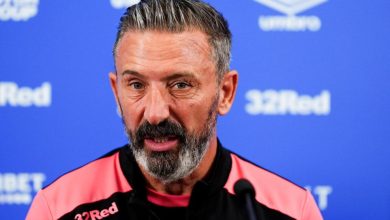
Danilo Pereira stands at a critical juncture in his professional football career, facing the kind of decision point that frequently determines whether talented players successfully navigate career challenges or whether early promise gradually dissipates into mediocrity. The Rangers striker, now twenty-seven years old, finds himself negotiating potential transfer to Brazilian side Botafogo—not as permanent acquisition but rather as loan arrangement until June 2027 with accompanying option to convert temporary move into permanent transfer.
This potential move represents far more than simply another loan spell for a player struggling to establish himself at his current club. Rather, it constitutes potential homecoming after more than a decade operating within European football, offering opportunity to reignite career that has progressively disappointed since his high-profile arrival at Rangers from Feyenoord barely three years prior. The prospect of returning to Brazil, his native football market, carries psychological and practical implications extending beyond simple change of environment.
Understanding Danilo’s situation requires comprehensive examination of his career trajectory, the circumstances that created current predicament, and what potential Botafogo move represents regarding his future within professional football. His journey from promising Eredivisie striker to increasingly marginalized Rangers player to potential Brazilian returnee illustrates broader themes regarding player development, adaptation challenges, and how careers can take unexpected turns when early optimism encounters reality’s complications.
Danilo Pereira’s professional football journey began with considerable promise within Portuguese football before progressing through European football hierarchy in ways suggesting upward career trajectory. The Brazilian-born striker, having developed through European academy systems, established himself within Dutch football as genuinely talented performer deserving elite club attention.
His performances within Feyenoord’s system particularly impressed elite club recruitment networks. Operating as striker for the Eredivisie club, Danilo demonstrated technical capability, physical presence, and goal-scoring ability suggesting potential to perform at highest competitive levels. The Dutch league’s reputation as developmental environment where young strikers frequently develop before progressing to elite leagues meant that Danilo’s Feyenoord performances carried particular weight regarding assessment of genuine quality.
By summer 2023, when Rangers secured his services for reportedly substantial fee, Danilo represented striker apparently ready for elite football progression. The Scottish club’s decision to invest in him reflected confidence that his Feyenoord performances indicated genuine quality justifying investment in player whose development trajectory suggested imminent elite-level contribution.
However, the three years separating Danilo’s Ibrox arrival from present circumstances have proven substantially disappointing relative to initial expectations. Rather than establishing himself as Rangers’ primary attacking threat, Danilo has become increasingly peripheral to club’s offensive plans. Injuries—inevitable reality of professional football—have disrupted consistency and prevented establishment of sustained form. More problematically, inconsistent performances when fit have created questions regarding whether his Feyenoord success actually indicated elite-level capability or whether he represented player perhaps better suited to secondary-league football than elite club operations
Danilo’s Rangers tenure has been characterized by persistent struggle to establish himself as consistent first-team contributor. While he has accumulated forty appearances across the 2025/26 campaign—a respectable number suggesting meaningful squad involvement—the composition of those appearances tells crucial story: twenty-eight appearances for Rangers, supplemented by twelve additional matches during loan spell at NEC Nijmegen in second half of campaign.
This distribution reveals fundamental reality: Danilo could not command consistent playing time at Rangers, necessitating loan placement to acquire meaningful minutes. In top football, players struggling for regular opportunities typically require external playing time to maintain fitness, confidence, and competitive edge. Rangers’ decision to loan Danilo reflects acceptance that he had fallen sufficiently far down squad hierarchy that loan represented more appropriate environment for his development than continued marginalisation at Ibrox.
The goal-scoring return across entire season—five goals across forty total appearances—represents deeply disappointing productivity for striker. While midfielder or defender might accumulate respectable contributions through defensive work and positioning, strikers face constant evaluation primarily through goal-scoring metrics. Five goals across forty appearances represents return suggesting striker struggling to maintain elite-level performance standards. For context, elite strikers typically target double-digit goals even in limited playing time; Danilo’s return indicates struggles translating into relatively modest contribution.
More concerning than simple goal shortage is what inconsistent performances suggest regarding his overall development. The fact that Rangers deemed loan necessary suggests club determined that continued marginalisation at Ibrox represented suboptimal development environment. The loan spell itself—while providing increased playing time—failed to produce dramatic improvement suggesting underlying quality merely awaiting exposure opportunity. Instead, modest goal return at NEC Nijmegen suggested Danilo’s struggles reflected genuine capability limitations rather than simply insufficient playing time
Danilo’s loan spell at Dutch club NEC Nijmegen during second half of 2025/26 season represented attempt to address lack of playing time and rebuild confidence through guaranteed regular football. The Dutch Eredivisie club provided appropriate competitive level—respectable football enabling meaningful development without overwhelming competition—where Danilo could theoretically reestablish himself as consistent performer.
However, the loan spell’s outcomes remain ambiguous. While Danilo accumulated twelve appearances, suggesting meaningful involvement, his goal return during Dutch spell proved equally modest to Rangers experience. The failure to dramatically improve or demonstrate clear rejuvenation raises questions regarding whether loan placement addressed underlying issues or simply provided playing time without substantial performance improvement.
This reality creates concerning narrative: Danilo received loan opportunity specifically designed to rebuild form and confidence, yet emerged from spell without convincing evidence that fundamental issues had been resolved. Rather than returning to Rangers with rejuvenated confidence and improved form, he seemingly returns in similar predicament—capable of accumulating appearances but without demonstrating consistent goal-scoring or attacking contribution justifying elite club status.
To fully appreciate Danilo’s current struggles, one must understand what his Feyenoord performances actually represented and why Rangers invested substantially in him based on Eredivisie success. His time at the Dutch club established him as genuinely talented striker deserving elite club attention, yet the three years since that success have raised questions regarding whether Feyenoord performances reflected elite-level capability or whether he represented skilled Eredivisie performer whose abilities did not translate convincingly to elite leagues.
The Eredivisie possesses particular reputation as developmental league where technical players flourish before progressing to elite environments. Dutch football’s emphasis on technical quality, possession-based systems, and systematic attacking approaches creates environment potentially suited to certain striker profiles. A striker thriving within possession-intensive Dutch football might struggle within leagues emphasizing more direct approaches or within elite defenses requiring different technical capabilities.
Danilo’s Feyenoord success, while undoubtedly genuine, may have represented optimal environment for his specific skillset rather than indicating elite-level capability translating universally across different competitive contexts. The contrast between his Feyenoord performances and subsequent Rangers struggles raises possibility that environmental factors—tactical systems, defensive intensity, competition quality—contributed meaningfully to disparity between performances in different leagues.
This analysis does not suggest Danilo lacked talent during Feyenoord period; rather, it indicates that top-flight success does not necessarily translate universally. Some players truly elite across all environments; others excel specifically within particular tactical systems or competitive contexts. Danilo’s career trajectory suggests he may occupy latter category—a genuinely capable striker within appropriate environment but struggling when contexts change substantially.
While tactical and competitive factors explain some of Danilo’s struggles, injury complications deserve specific examination regarding impact on career development. Professional football’s physical demands impose substantial stress on musculoskeletal systems, with injuries representing unavoidable occupational hazard. Some players recover completely from injuries with minimal long-term consequences; others experience lingering effects impacting performance or confidence.
Danilo’s Rangers tenure has reportedly included injury complications that disrupted consistency and prevented establishment of sustained form. Injury recovery periods, while necessary, inevitably impact matchday preparation and game-sharpness. Players returning from injury frequently require adjustment periods reestablishing physical condition and confidence. For striker position—where inconsistency proves particularly damaging—injuries disrupting consistency create substantial complications.
The question emerges whether Danilo’s struggles reflect primarily injury consequences (potentially addressable through adequate recovery time and rehabilitation) or whether injuries simply exacerbated underlying capability limitations. If primarily injury-related, he might reasonably expect improved performance following adequate recovery. If capability-based, additional recovery time and opportunities cannot substantially alter fundamental limitations.
Understanding Danilo’s potential Botafogo move requires examination of Brazilian club’s specific situation and strategic objectives guiding their recruitment. Botafogo, operating within Brazilian football’s increasingly competitive landscape, has apparently identified Danilo as potential attacking reinforcement. However, reports suggest Danilo would occupy supporting attacking role rather than serving as primary striker.
Arthur Cabral, established striker currently leading Botafogo’s offensive operations, apparently represents primary attacking focus. Danilo’s arrival would supposedly provide competing attacking option rather than displacing Cabral. This supporting role profile differs substantially from typical expectation when significant striker joins new club; rather than anticipating regular starting status, Danilo would likely compete for playing time and positions within squad hierarchy.
This role allocation carries implications regarding Danilo’s status and expectations. Botafogo is apparently not acquiring him as transformational attacking signing but rather as additional depth and rotation option within attacking department. This suggests Brazilian club views him as useful contributor without viewing him as automatic starter or primary attacking solution. Such positioning represents realistic assessment: a twenty-seven-year-old striker with mixed recent record joins as experienced option rather than central focus.
Botafogo’s interest, while potentially beneficial for Danilo, should not be misinterpreted as unambiguous vote of confidence. Rather, the club apparently views him as potentially useful option available within financial parameters, not as elite talent requiring substantial investment or premium positioning.
The reported structure—loan until June 2027 with option to convert to permanent transfer—reveals methodical approach to risk management and financial flexibility. Rather than committing permanently to Danilo’s acquisition, Botafogo implements arrangement enabling evaluation before permanent commitment.
This structure creates several advantages for Botafogo. Firstly, it provides guaranteed playing time opportunity without requiring permanent financial commitment. The club can assess Danilo’s performances, his adaptation to Brazilian football, and his consistency before determining whether permanent acquisition represents sound investment. Secondly, the arrangement provides financial flexibility—if Danilo performs poorly or fails to justify permanent transfer, Botafogo simply allows loan agreement to expire without triggering purchase option.
For Rangers, the loan arrangement facilitates squad restructuring by removing player from wage bill while retaining theoretical purchase option value. If Danilo performs exceptionally well at Botafogo and demonstrates renewed form, Rangers theoretically retains claim on player and could potentially benefit from subsequent sale. However, realistic expectations suggest Rangers has effectively written off substantial portion of Danilo’s original investment and accepts loan arrangement as practical means of moving him on.
Danilo’s potential move to Botafogo represents return to Brazil after more than decade operating within European football. This geographic and cultural relocation carries psychological implications beyond simple change of club or competitive environment. Returning to native country after extended European period typically involves adjustment process distinct from remaining within European contexts.
Brazilian football has particular cultural and tactical characteristics potentially suited to certain player profiles. The league emphasizes technical quality, creativity, and attacking football—characteristics potentially advantageous for strikers whose development was rooted within technical football traditions. Danilo, having developed through European football emphasizing technical development, might find Brazilian football environment comfortable and confidence-building.
Additionally, playing in native country carries psychological benefits. Familiarity with cultural environment, potential proximity to family and established relationships, and connection to Brazilian football roots can provide emotional stability and support mechanisms contributing to performance improvement. For player struggling with confidence and consistency, such psychological stabilization can prove meaningful.
The homecoming dimension might represent crucial factor differentiating this loan from previous unsuccessful attempt at NEC Nijmegen. Rather than moving to unfamiliar environment within competitive Dutch football, Danilo would return to football culture and country he understands inherently. This comfort factor could theoretically facilitate more relaxed approach enabling performance improvement.
Danilo’s potential departure requires examination within broader context of Rangers’ squad reconstruction under Derek McInnes. The new manager has apparently determined that current attacking options require restructuring and possible reduction. Danilo’s marginalisation and likely departure represents component of broader strategic shift regarding how Rangers constructs attacking department.
McInnes’ early tenure has witnessed squad rotation affecting multiple established players. John Souttar’s exclusion, James Tavernier’s departure, and Jack Butland’s removal indicate manager is willing to move decisively regarding players failing to align with his vision. Danilo’s marginalisation and likely exit similarly reflects managerial assessment that he lacks necessary qualities or consistency for McInnes’ attacking plans.
The pattern emerging suggests McInnes is constructing attacking department according to specific profile preferences. Players not meeting those profile requirements—whether through capability limitations, injury history, or tactical misalignment—are being moved on. Danilo’s situation exemplifies this broader pattern of managerial decision-making prioritizing alignment with specific vision over retaining established squad members.
Danilo’s likely departure without generating substantial transfer fee represents financial reality Rangers must acknowledge. The original investment from Feyenoord—reportedly substantial figure reflecting Rangers’ confidence in his capability—has not generated commensurate return. Rather than establishing himself as valuable squad asset potentially commanding resale value, Danilo has become liability Rangers seeks to move from wage bill
This financial outcome reflects broader investment reality: not all player acquisitions prove successful regardless of quality of scouting or apparent soundness of investment decisions. Injuries, tactical misalignment, competitive struggles, and simple performance inconsistency can render previously sound investments disappointing.
From Rangers’ perspective, accepting loan arrangement without guaranteed permanent fee represents pragmatic financial management. Rather than retaining player generating minimal contribution while consuming substantial wage resources, loaning him frees financial capacity for alternative investments. The potential purchase option provides theoretical value recovery possibility, but realistic expectations suggest this represents secondary consideration.
Danilo’s potential Botafogo move represents critical juncture determining whether his career rebounds or continues declining trajectory. At twenty-seven years old, he occupies age bracket where players typically reach peak performance years or begin experiencing capability decline. His decision to return to Brazil and accept secondary attacking role at Botafogo carries implications regarding his career trajectory assessment.
The move could represent genuine opportunity for career rejuvenation. Brazilian football environment might provide confidence-building opportunity enabling renewed performances. Success at Botafogo could theoretically facilitate subsequent transfer to elite European club or serve as platform for career revitalization. However, alternatively, the move could represent tacit acceptance that his elite-level aspirations have proven unachievable and that secondary league football represents more appropriate career level.
For Danilo specifically, success at Botafogo depends substantially on psychological approach and whether he can capitalize on fresh-start opportunity. A player entering new environment with renewed determination and confidence potentially improves substantially. Conversely, a player carrying baggage of previous disappointments and questioning own capabilities might struggle similarly to previous environments.
The loan structure—providing guaranteed playing time without permanent commitment—creates pressure to perform convincingly to justify potential permanent transfer. Danilo must essentially audition for permanent Botafogo contract through loan performances. This competitive dynamic could prove either motivating (providing clear performance goals and pathway to permanent move) or pressure-inducing (creating anxiety if performances struggle).
Ultimately, whether Danilo can successfully relaunch career through Botafogo move remains genuinely uncertain. Professional football features numerous examples of strikers successfully reigniting careers through environmental changes, but equally numerous examples of players who struggled similarly regardless of circumstances. Danilo’s potential success cannot be predicted with certainty; it represents genuinely open question dependent on multiple factors beyond simple change of clubs.
His ability to score consistently at Botafogo will prove determinative. A striker who accumulates goals—demonstrating that previous struggles reflected circumstantial factors rather than fundamental limitations—could theoretically establish foundation for career recovery. Conversely, continued modest goal return would suggest underlying capability limitations proving persistent regardless of environmental change.
Danilo Pereira’s potential Botafogo loan move represents significant moment within his career, offering opportunity for fresh start within familiar Brazilian football environment after disappointing Rangers tenure. The loan structure—until June 2027 with option to purchase—enables both player and club to evaluate whether permanent move proves justified.
For Rangers, the transfer represents acceptance that Danilo’s Ibrox project has not produced anticipated results, and that loan placement removes him from wage bill while potentially preserving residual value through purchase option. For Danilo, the move offers psychological reset and opportunity to reignite career through change of environment and return to native football culture.
Whether this move ultimately proves beneficial depends substantially on Danilo’s ability to capitalize on fresh-start opportunity and perform consistently at Botafogo. Success could facilitate career rejuvenation; continued struggles would suggest career has reached predictable trajectory unlikely to improve regardless of environment.
For Rangers, Danilo’s departure completes element of squad reshaping under McInnes, removing player deemed unsuitable for manager’s vision and freeing resources for alternative investments. For Danilo, the move represents final opportunity to demonstrate that his elite-level aspiration remains achievable or acceptance that secondary-league football represents his appropriate competitive level. The coming seasons will definitively answer these questions currently existing in genuine uncertainty.