South African Centre-Back Olwethu Makhanya: A Comprehensive Analysis of Why He Could Be The Missing Piece in Derek McInnes’ Defensive Rebuild

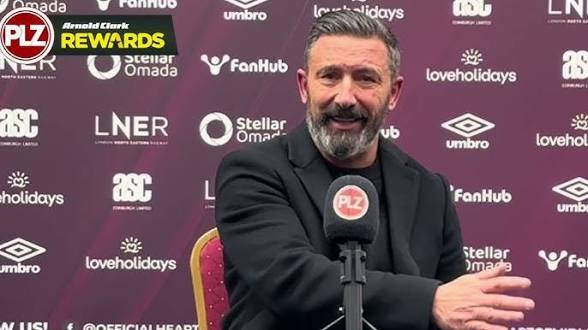
In what is shaping up to be one of the most active transfer windows of recent years, Rangers Football Club has identified yet another potential acquisition that could significantly bolster their defensive infrastructure ahead of the 2026-27 season. According to a recent update from Sky Sports Scotland, the Glasgow giants have set their sights on Philadelphia Union defender Olwethu Makhanya, a young South African international whose progression in Major League Soccer has caught the attention of Derek McInnes’ recruitment team.
The potential acquisition would represent a strategic move in a summer that has already seen the Ibrox club make considerable changes to their squad composition. With contract departures, loan recalls, and strategic sales creating significant gaps in their defensive ranks, Makhanya could provide not just immediate reinforcement but also represent a long-term investment in Rangers’ future defensive stability.
## The Current State of Rangers’ Defence
To fully understand the significance of Rangers’ pursuit of Makhanya, one must first comprehend the precarious situation the club currently faces in their defensive third. The past few months have witnessed a dramatic reshaping of the backline, with several key players either departing or entering uncertain futures at Ibrox.
The return of both Nasser Djiga and Derek Cornelius from their respective season-long loan spells at Wolves and Marseille has created a cascading effect throughout Rangers’ central defensive options. Rather than providing additional depth, their returns have highlighted the club’s need for defensive reinforcement. Meanwhile, the release of two experienced defenders—James Tavernier and Ben Davies—has further depleted the available centre-back options.
Most significantly, the potential departure of John Souttar, who has attracted interest from Leicester City in the English Premier League, would represent a considerable loss. Souttar has been a mainstay in Rangers’ defence over recent campaigns, and his exit would leave notable gaps that cannot simply be filled by internal promotion or reliance on fringe players.
The mathematical reality is stark: with the likely exits of Souttar and Clinton Nsiala, Rangers would be left with Emmanuel Fernandez and Ben Godfrey as their only established central defensive options. While Godfrey arrived on a season-long loan from Atalanta and brings Serie A experience, this depth is manifestly insufficient for a club with Champions League aspirations and multiple domestic competitions to navigate.
Olwethu Makhanya represents precisely the type of young, tactically versatile defender that modern football increasingly demands. At just 22 years old, the South African international has already compiled a remarkable resume that belies his youth, demonstrating the kind of rapid progression that separates the genuinely promising talents from the merely adequate.
Born and developed through Marumo’s academy system in South Africa, Makhanya’s early career trajectory demonstrated consistent upward mobility. His breakthrough came through Stellenbosch in the South African Premier Division, where he eventually secured regular first-team football during the 2022-23 campaign. His performances attracted significant attention, ultimately leading to a €445,000 transfer to Philadelphia Union—a move that saw him become the MLS club’s first signing under the U-22 initiative, a competitive recruitment strategy designed to identify and develop young international talent.
The transition to Major League Soccer, however, was not immediate. Like many young players adapting to new leagues and cultures, Makhanya spent an initial period with Philadelphia’s reserve team, a common pathway for overseas arrivals in the MLS. However, his patience was rewarded with promotion to the first team, and he has since accumulated 53 competitive appearances for the Union across all competitions.
Most notably, Makhanya’s performances merited inclusion in South Africa’s World Cup squad for the 2026 FIFA World Cup in the United States. Though he remained an unused substitute throughout the tournament, his selection alone speaks to his standing within the international setup and his potential within the global football landscape
What renders Makhanya particularly intriguing as a potential acquisition is his comprehensive skill set, which encompasses both the traditional and modern elements required of contemporary centre-backs. He has flourished as a tactically versatile defensive option, capable of performing in various systems while maintaining consistency in his core defensive duties.
Physically, Makhanya possesses the kind of natural dominance that often characterises top-tier centre-backs. His frame and athleticism provide an immediate presence in the penalty area, offering both defensive security during set pieces and potential threat during attacking set pieces. However, what distinguishes him from purely physical defenders is his technical proficiency.
In an era where centre-backs are increasingly required to function as ball-playing operators within a team’s build-up phase, Makhanya’s technical ability becomes particularly valuable. He demonstrates the kind of composure in possession and distributional range that allows teams to progress the ball from deep areas without resorting to long, speculative clearances. This attribute would be particularly valuable to Rangers under Derek McInnes, whose tactical philosophy emphasises controlled possession and structured build-up play.
Additionally, Makhanya exhibits the kind of game-reading ability that separates merely competent defenders from exceptional ones. His capacity to anticipate opposition movements, position himself effectively, and make decisive interventions has been consistently evident throughout his performances. These cognitive and spatial elements of defending cannot be rushed or improved through training—they speak to an inherent footballing intelligence that Makhanya possesses in abundance.
One consideration that occasionally causes hesitation among European clubs regarding MLS signings concerns the quality of opposition and the comparative physicality of the North American league. However, the increasingly global nature of the MLS, combined with the presence of numerous experienced European players and high-profile imports, means the league has evolved considerably from its reputation merely a decade ago.
Makhanya’s experience in the MLS has not occurred in a vacuum. The Philadelphia Union represent one of the more competitive and tactically sophisticated franchises within the league, operating under management that emphasises defensive organisation and structural discipline. The exposure to MLS football, with its demanding physical requirements and increasingly technical sophistication, has provided Makhanya with valuable experience at a professional level that transcends any perceived limitations of the competition.
Furthermore, his performances against elite MLS opposition, combined with his involvement in a competitive World Cup environment, have already exposed him to the level of intensity and technical demand that European football—even at the Scottish Premier level—necessitates. The transition should represent a manageable step in his continued development.
## Rangers’ Summer Activity: Context and Strategy
To properly evaluate Makhanya’s potential impact, it is essential to understand the broader context of Rangers’ transfer strategy this summer. The club has demonstrated considerable ambition and strategic acumen in their recruitment approach, balancing fiscal responsibility with genuine quality improvement.
The acquisition of Lawrence Shankland, Dan Neil, and Cammy Devlin on free transfers demonstrates shrewd business—utilising the Bosman ruling to acquire experienced players without significant financial outlay. Similarly, the season-long loan of Ben Godfrey from Atalanta represents a low-risk arrangement that provides immediate defensive reinforcement while preserving financial resources for permanent acquisitions.
Conversely, the club’s willingness to invest in permanent signings is evident through acquisitions such as Ross McCrorie from Aberdeen (€900,000 rising to potentially €2 million through performance clauses) and the Ivor Pandur transaction with Hull City. While the Pandur deal ultimately netted Rangers only €3 million following Jack Butland’s departure in the opposite direction, the net expenditure demonstrates the club’s commitment to rebuilding with a clear structural vision.
The financial resources available for Makhanya’s potential acquisition therefore exist within a carefully balanced framework. The sale of Souttar to Leicester City would likely generate the requisite funds, while also freeing up significant salary expenditure. This creates a scenario where Rangers can pursue Makhanya without overextending themselves or jeopardising the squad building already undertaken.
While Makhanya presents considerable promise, any realistic assessment must acknowledge potential obstacles and areas of concern. At 22 years old, he remains fundamentally a young player still in the developmental phase of his career. Though his progression has been impressive, he lacks the extensive European experience that sometimes provides immediate, guaranteed consistency.
Reports indicate that Makhanya can occasionally be prone to lapses in discipline during challenging duels, suggesting that the intensity and physicality of Scottish football might require an adjustment period. While not insurmountable, these tendencies would benefit from the mentoring and tactical refinement that Rangers’ coaching infrastructure can provide. Derek McInnes’ experience and demanding approach could prove particularly beneficial in addressing these elements.
Additionally, the player remains fundamentally unproven at the elite European level. While his World Cup inclusion is commendable, unused substitute status hardly constitutes extensive high-level experience. Rangers would be making an investment in potential and trajectory rather than assured, established quality. This element of risk is inherent but manageable, particularly given the player’s age profile and the developmental pathway typical of modern football.
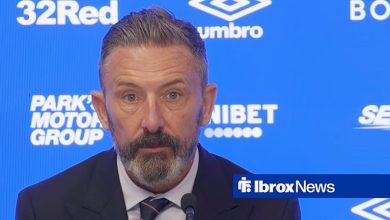
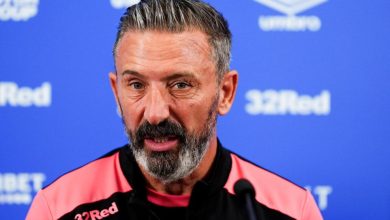
Derek McInnes’ appointment as Rangers manager represents a significant moment for the club. His tactical philosophy emphasises defensive solidity, structural discipline, and organised pressing without reckless abandon. Within such a system, a player like Makhanya—capable of reading the game, maintaining positional discipline, and distributing effectively—would flourish considerably.
McInnes’ defensive reconstruction requires players who understand both the physical and cognitive demands of modern centre-back play. Makhanya’s combination of physical presence and technical ability positions him ideally to develop under such management. The likelihood of receiving instruction in McInnes’ defensive principles, combined with the competitive environment of Scottish football and potential European football through Champions League qualification, would provide the optimal development context for a player at Makhanya’s stage of career progression.
In any transfer analysis, consideration of alternatives proves instructive. What alternative defensive options might Rangers pursue to address their central defensive requirements? The market for established, proven centre-backs operating at elite levels remains competitive and expensive. Established Premier League defenders would command premium fees likely beyond Rangers’ immediate requirements, particularly given their need to reinvest elsewhere within the squad.
Makhanya’s advantage lies in his combination of youth, development trajectory, and relative affordability compared to established European options. He represents the type of player who could develop significantly under intensive top-level football, while simultaneously costing considerably less than established alternatives. In a footballing landscape where adaptation and potential are increasingly valued, this profile carries considerable appeal.
While specific fee details remain unconfirmed, market analysis suggests that Philadelphia Union would likely demand a transfer fee in the region of €4-6 million for a player who has established himself in MLS and possesses international experience. Such a fee, while not insignificant, remains entirely manageable within Rangers’ estimated transfer budget, particularly in conjunction with Souttar’s anticipated sale.
Should Souttar command a fee in the region of €10-15 million from Leicester City, Rangers would possess the financial flexibility to pursue Makhanya while simultaneously investing in other positional requirements. The financial mathematics, therefore, appear favourable for such an acquisition.
Beyond the immediate defensive reinforcement that Makhanya would provide, his acquisition carries broader implications for Rangers’ long-term trajectory. At 22 years old, he represents a long-term investment aligned with modern football’s emphasis on youth development and sustained competitive performance.
The presence of such a player within the squad would signal Rangers’ commitment to building sustainably rather than merely addressing immediate requirements through short-term expedients. This approach, championed increasingly by leading European clubs, creates the foundation for extended periods of competitive excellence rather than cyclical boom-and-bust patterns.
Olwethu Makhanya represents precisely the type of signing that characterises progressive, forward-thinking football club strategy. While not a marquee acquisition that generates immediate media sensation, his potential to develop into a cornerstone defensive player over the coming years carries considerable strategic value.
His combination of youth, technical ability, physical presence, and demonstrated progression trajectory positions him ideally for the demands of Scottish football and European competition. Under Derek McInnes’ management, with appropriate support and development, Makhanya could evolve into an exceptional talent capable of serving Rangers’ defensive needs for the better part of a decade.
The financial feasibility of such an acquisition, combined with Rangers’ identified defensive requirements and the strategic alignment with McInnes’ tactical approach, creates a compelling case for pursuing this opportunity. As the summer transfer window continues, Rangers must act decisively to secure Makhanya’s services before other clubs recognise his potential and enter the bidding process.
The Glasgow giants have built their summer on smart acquisitions and strategic planning. Adding Olwet# Rangers Target South African Centre-Back Olwethu Makhanya: A Comprehensive Analysis of Why He Could Be The Missing Piece in Derek McInnes’ Defensive Rebuild
In what is shaping up to be one of the most active transfer windows of recent years, Rangers Football Club has identified yet another potential acquisition that could significantly bolster their defensive infrastructure ahead of the 2026-27 season. According to a recent update from Sky Sports Scotland, the Glasgow giants have set their sights on Philadelphia Union defender Olwethu Makhanya, a young South African international whose progression in Major League Soccer has caught the attention of Derek McInnes’ recruitment team.
The potential acquisition would represent a strategic move in a summer that has already seen the Ibrox club make considerable changes to their squad composition. With contract departures, loan recalls, and strategic sales creating significant gaps in their defensive ranks, Makhanya could provide not just immediate reinforcement but also represent a long-term investment in Rangers’ future defensive stability.
To fully understand the significance of Rangers’ pursuit of Makhanya, one must first comprehend the precarious situation the club currently faces in their defensive third. The past few months have witnessed a dramatic reshaping of the backline, with several key players either departing or entering uncertain futures at Ibrox.
The return of both Nasser Djiga and Derek Cornelius from their respective season-long loan spells at Wolves and Marseille has created a cascading effect throughout Rangers’ central defensive options. Rather than providing additional depth, their returns have highlighted the club’s need for defensive reinforcement. Meanwhile, the release of two experienced defenders—James Tavernier and Ben Davies—has further depleted the available centre-back options.
Most significantly, the potential departure of John Souttar, who has attracted interest from Leicester City in the English Premier League, would represent a considerable loss. Souttar has been a mainstay in Rangers’ defence over recent campaigns, and his exit would leave notable gaps that cannot simply be filled by internal promotion or reliance on fringe players.
The mathematical reality is stark: with the likely exits of Souttar and Clinton Nsiala, Rangers would be left with Emmanuel Fernandez and Ben Godfrey as their only established central defensive options. While Godfrey arrived on a season-long loan from Atalanta and brings Serie A experience, this depth is manifestly insufficient for a club with Champions League aspirations and multiple domestic competitions to navigate.
Olwethu Makhanya represents precisely the type of young, tactically versatile defender that modern football increasingly demands. At just 22 years old, the South African international has already compiled a remarkable resume that belies his youth, demonstrating the kind of rapid progression that separates the genuinely promising talents from the merely adequate.
Born and developed through Marumo’s academy system in South Africa, Makhanya’s early career trajectory demonstrated consistent upward mobility. His breakthrough came through Stellenbosch in the South African Premier Division, where he eventually secured regular first-team football during the 2022-23 campaign. His performances attracted significant attention, ultimately leading to a €445,000 transfer to Philadelphia Union—a move that saw him become the MLS club’s first signing under the U-22 initiative, a competitive recruitment strategy designed to identify and develop young international talent.
The transition to Major League Soccer, however, was not immediate. Like many young players adapting to new leagues and cultures, Makhanya spent an initial period with Philadelphia’s reserve team, a common pathway for overseas arrivals in the MLS. However, his patience was rewarded with promotion to the first team, and he has since accumulated 53 competitive appearances for the Union across all competitions.
Most notably, Makhanya’s performances merited inclusion in South Africa’s World Cup squad for the 2026 FIFA World Cup in the United States. Though he remained an unused substitute throughout the tournament, his selection alone speaks to his standing within the international setup and his potential within the global football landscape.
What renders Makhanya particularly intriguing as a potential acquisition is his comprehensive skill set, which encompasses both the traditional and modern elements required of contemporary centre-backs. He has flourished as a tactically versatile defensive option, capable of performing in various systems while maintaining consistency in his core defensive duties.
Physically, Makhanya possesses the kind of natural dominance that often characterises top-tier centre-backs. His frame and athleticism provide an immediate presence in the penalty area, offering both defensive security during set pieces and potential threat during attacking set pieces. However, what distinguishes him from purely physical defenders is his technical proficiency.
In an era where centre-backs are increasingly required to function as ball-playing operators within a team’s build-up phase, Makhanya’s technical ability becomes particularly valuable. He demonstrates the kind of composure in possession and distributional range that allows teams to progress the ball from deep areas without resorting to long, speculative clearances. This attribute would be particularly valuable to Rangers under Derek McInnes, whose tactical philosophy emphasises controlled possession and structured build-up play.
Additionally, Makhanya exhibits the kind of game-reading ability that separates merely competent defenders from exceptional ones. His capacity to anticipate opposition movements, position himself effectively, and make decisive interventions has been consistently evident throughout his performances. These cognitive and spatial elements of defending cannot be rushed or improved through training—they speak to an inherent footballing intelligence that Makhanya possesses in abundance.
One consideration that occasionally causes hesitation among European clubs regarding MLS signings concerns the quality of opposition and the comparative physicality of the North American league. However, the increasingly global nature of the MLS, combined with the presence of numerous experienced European players and high-profile imports, means the league has evolved considerably from its reputation merely a decade ago.
Makhanya’s experience in the MLS has not occurred in a vacuum. The Philadelphia Union represent one of the more competitive and tactically sophisticated franchises within the league, operating under management that emphasises defensive organisation and structural discipline. The exposure to MLS football, with its demanding physical requirements and increasingly technical sophistication, has provided Makhanya with valuable experience at a professional level that transcends any perceived limitations of the competition.
Furthermore, his performances against elite MLS opposition, combined with his involvement in a competitive World Cup environment, have already exposed him to the level of intensity and technical demand that European football—even at the Scottish Premier level—necessitates. The transition should represent a manageable step in his continued development.
## Rangers’ Summer Activity: Context and Strategy
To properly evaluate Makhanya’s potential impact, it is essential to understand the broader context of Rangers’ transfer strategy this summer. The club has demonstrated considerable ambition and strategic acumen in their recruitment approach, balancing fiscal responsibility with genuine quality improvement.
The acquisition of Lawrence Shankland, Dan Neil, and Cammy Devlin on free transfers demonstrates shrewd business—utilising the Bosman ruling to acquire experienced players without significant financial outlay. Similarly, the season-long loan of Ben Godfrey from Atalanta represents a low-risk arrangement that provides immediate defensive reinforcement while preserving financial resources for permanent acquisitions.
Conversely, the club’s willingness to invest in permanent signings is evident through acquisitions such as Ross McCrorie from Aberdeen (€900,000 rising to potentially €2 million through performance clauses) and the Ivor Pandur transaction with Hull City. While the Pandur deal ultimately netted Rangers only €3 million following Jack Butland’s departure in the opposite direction, the net expenditure demonstrates the club’s commitment to rebuilding with a clear structural vision.
The financial resources available for Makhanya’s potential acquisition therefore exist within a carefully balanced framework. The sale of Souttar to Leicester City would likely generate the requisite funds, while also freeing up significant salary expenditure. This creates a scenario where Rangers can pursue Makhanya without overextending themselves or jeopardising the squad building already undertaken.
While Makhanya presents considerable promise, any realistic assessment must acknowledge potential obstacles and areas of concern. At 22 years old, he remains fundamentally a young player still in the developmental phase of his career. Though his progression has been impressive, he lacks the extensive European experience that sometimes provides immediate, guaranteed consistency.
Reports indicate that Makhanya can occasionally be prone to lapses in discipline during challenging duels, suggesting that the intensity and physicality of Scottish football might require an adjustment period. While not insurmountable, these tendencies would benefit from the mentoring and tactical refinement that Rangers’ coaching infrastructure can provide. Derek McInnes’ experience and demanding approach could prove particularly beneficial in addressing these elements.
Additionally, the player remains fundamentally unproven at the elite European level. While his World Cup inclusion is commendable, unused substitute status hardly constitutes extensive high-level experience. Rangers would be making an investment in potential and trajectory rather than assured, established quality. This element of risk is inherent but manageable, particularly given the player’s age profile and the developmental pathway typical of modern football.
Derek McInnes’ appointment as Rangers manager represents a significant moment for the club. His tactical philosophy emphasises defensive solidity, structural discipline, and organised pressing without reckless abandon. Within such a system, a player like Makhanya—capable of reading the game, maintaining positional discipline, and distributing effectively—would flourish considerably.
McInnes’ defensive reconstruction requires players who understand both the physical and cognitive demands of modern centre-back play. Makhanya’s combination of physical presence and technical ability positions him ideally to develop under such management. The likelihood of receiving instruction in McInnes’ defensive principles, combined with the competitive environment of Scottish football and potential European football through Champions League qualification, would provide the optimal development context for a player at Makhanya’s stage of career progression.
## Comparison to Alternative Options
In any transfer analysis, consideration of alternatives proves instructive. What alternative defensive options might Rangers pursue to address their central defensive requirements? The market for established, proven centre-backs operating at elite levels remains competitive and expensive. Established Premier League defenders would command premium fees likely beyond Rangers’ immediate requirements, particularly given their need to reinvest elsewhere within the squad.
Makhanya’s advantage lies in his combination of youth, development trajectory, and relative affordability compared to established European options. He represents the type of player who could develop significantly under intensive top-level football, while simultaneously costing considerably less than established alternatives. In a footballing landscape where adaptation and potential are increasingly valued, this profile carries considerable appeal.
## Financial Considerations and Transfer Fee
While specific fee details remain unconfirmed, market analysis suggests that Philadelphia Union would likely demand a transfer fee in the region of €4-6 million for a player who has established himself in MLS and possesses international experience. Such a fee, while not insignificant, remains entirely manageable within Rangers’ estimated transfer budget, particularly in conjunction with Souttar’s anticipated sale.
Should Souttar command a fee in the region of €10-15 million from Leicester City, Rangers would possess the financial flexibility to pursue Makhanya while simultaneously investing in other positional requirements. The financial mathematics, therefore, appear favourable for such an acquisition.
## Long-term Implications and Club Trajectory
Beyond the immediate defensive reinforcement that Makhanya would provide, his acquisition carries broader implications for Rangers’ long-term trajectory. At 22 years old, he represents a long-term investment aligned with modern football’s emphasis on youth development and sustained competitive performance.
The presence of such a player within the squad would signal Rangers’ commitment to building sustainably rather than merely addressing immediate requirements through short-term expedients. This approach, championed increasingly by leading European clubs, creates the foundation for extended periods of competitive excellence rather than cyclical boom-and-bust patterns.
## Conclusion: A Smart Acquisition for Rangers’ Future
Olwethu Makhanya represents precisely the type of signing that characterises progressive, forward-thinking football club strategy. While not a marquee acquisition that generates immediate media sensation, his potential to develop into a cornerstone defensive player over the coming years carries considerable strategic value.
His combination of youth, technical ability, physical presence, and demonstrated progression trajectory positions him ideally for the demands of Scottish football and European competition. Under Derek McInnes’ management, with appropriate support and development, Makhanya could evolve into an exceptional talent capable of serving Rangers’ defensive needs for the better part of a decade.
The financial feasibility of such an acquisition, combined with Rangers’ identified defensive requirements and the strategic alignment with McInnes’ tactical approach, creates a compelling case for pursuing this opportunity. As the summer transfer window continues, Rangers must act decisively to secure Makhanya’s services before other clubs recognise his potential and enter the bidding process.
The Glasgow giants have built their summer on smart acquisitions and strategic planning. Adding Olwethu Makhanya to this recruitment philosophy would represent another exemplary expression of this approach—an investment in youthful potential combined with immediate competitive requirement. In football’s modern landscape, such balanced strategy frequently separates genuinely ambitious projects from merely aspirational ones. For Rangers, Makhanya could prove to be precisely the missing piece in their defensive rebuild.hu Makhanya to this recruitment philosophy would represent another exemplary expression of this approach—an investmentuthful potential combined with immediate competitive requirement. In football’s modern landscape, such balanced strategy frequently separates genuinely ambitious projects from merely aspirational ones. For Rangers, Makhanya could prove to be precisely the missing piece in their defensive rebuild.