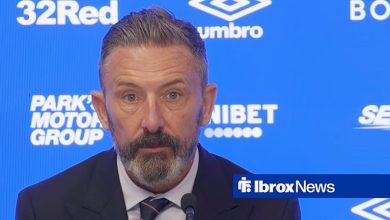
Rangers Close in on Vanja Dragojevic Signing: A Comprehensive Look at the Club’s Ambitious Midfield Overhaul

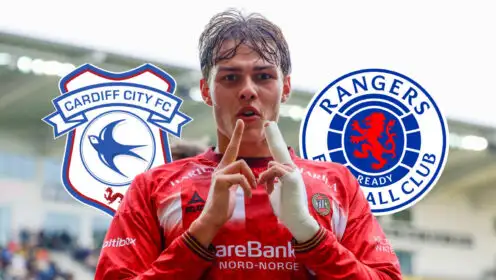
The summer transfer window at Rangers Football Club continues to gather momentum as the Ibrox outfit edges closer to securing one of their most promising targets of the season. According to reports emerging from Serbian media, Rangers have finally reached an agreement with Partizan Belgrade for the services of 20-year-old midfielder Vanja Dragojevic, marking a significant moment in the club’s ongoing recruitment strategy under manager Derek McInnes.
For several weeks, speculation has swirled around Dragojevic’s potential move to Scotland’s west coast, with multiple reports suggesting that a transfer was merely a matter of time and fine details. Now, those reports have crystallized into something more concrete. According to TV Arena Sport, a prominent Serbian media outlet with established connections to Partizan Belgrade, the capital club have accepted Rangers’ latest financial offer for their captain.
The fee has been reported to be in the region of £4.6 million, equivalent to approximately €5.5 million in euros. This represents a significant investment for Rangers, particularly given the club’s already substantial expenditure throughout this transfer window. Beyond the initial transfer fee, Rangers have agreed to incorporate additional performance-based bonuses into the deal structure—bonuses that will be fully revealed once the signing is officially announced and the deal is finalized.
This agreement comes after Rangers had previously seen a bid of around £4.3 million rejected by Partizan. The increase in their offer by roughly £300,000, combined with the addition of performance incentives, ultimately proved sufficient to convince the Serbian club to part with one of their most important players. The progression from rejection to agreement demonstrates both Rangers’ determination to secure their target and Partizan’s willingness to negotiate, suggesting that both parties have found a solution that works for their respective circumstances.
At just 20 years old, Dragojevic represents exactly the type of talent that modern football clubs seek—young enough to develop further, yet already established enough at the highest levels of European football to make an immediate impact. His role as captain at Partizan Belgrade, one of Serbia’s biggest clubs, speaks volumes about his maturity and leadership qualities at an age when many players are still developing their craft.
Dragojevic’s career at Partizan has been marked by consistent improvement and increasing responsibility. The Serbian midfielder has become a fixture in Partizan’s starting lineup and has attracted attention from clubs across Europe. His performances in domestic competitions and continental fixtures have marked him as one of the more promising young talents in Serbian football, with his technical ability, tactical intelligence, and physical presence making him an attractive prospect for larger clubs looking to invest in youth with proven pedigree.
As a central midfielder, Dragojevic’s profile suggests he can contribute at multiple levels—his ability to distribute the ball, his positioning, and his work rate have all been highlighted by observers as particular strengths. For Rangers, a club that has traditionally valued midfielders who can influence proceedings across multiple phases of play, Dragojevic’s skillset appears tailor-made for what Derek McInnes is attempting to build at Ibrox.
The pursuit of Dragojevic must be understood within the context of Rangers’ broader transfer strategy this summer. Manager Derek McInnes, who arrived at the club with a clear vision for how to structure the squad, has overseen one of the most active transfer windows the club has experienced in recent years. The spending has been substantial, and the recruitment strategy has been deliberate and focused.
To date, Rangers have successfully brought in several significant additions. Ivor Pandur, a goalkeeper, has arrived to provide competition and potentially long-term succession planning at that crucial position. In defense, both Ross McCrorie and Ben Godfrey have been secured, addressing what was identified as a priority area for the club. In midfield, Dan Neil and Cammy Devlin have been added, while in attack, the club has invested in bringing in Lawrence Shankland, a prolific goalscorer expected to make an immediate impact.
Each of these signings has been made with careful consideration of Rangers’ needs and budget constraints. The club has been strategic in spreading investment across different departments of the team, recognizing that success requires a balanced squad rather than an over-reliance on any single position or player. However, it has become increasingly clear that McInnes and his recruitment team believe that further investment in central midfield is necessary to achieve the club’s objectives for the coming season.
The signing of Dragojevic, should it be completed as expected, would represent another significant piece of the puzzle that McInnes is attempting to assemble. It also demonstrates the club’s ambition and their willingness to compete financially for top talent, even when that talent is based abroad and might involve more complex negotiations than domestic recruitment
Central midfield has long been an area of focus for Rangers, and McInnes clearly believes that significant investment is required to build a midfield capable of competing at the highest levels. The addition of Dragojevic would give the club additional options and depth in a position that has historically been crucial to the team’s success.
Current reports suggest that Rangers’ existing central midfield options may be subject to significant changes in the coming weeks. Nicolas Raskin, a midfielder who has featured prominently for Rangers in recent seasons, has apparently attracted attention from Italian club Bologna and English Championship side Hull City. If either of these clubs makes a compelling offer, there is speculation that Rangers might be willing to let Raskin depart.
Connor Barron, another midfielder in the Rangers squad, is similarly being tracked by Italian clubs, and there is an understanding at Ibrox that if suitable offers arrive, the club would at least consider them. This suggests that McInnes may be planning a significant overhaul of his midfield options, moving out some established players while bringing in new talent such as Dragojevic to refresh the department.
In the wings, Rangers have also been linked with Lewis Ferguson, a midfielder currently playing for Italian club Bologna. Ferguson’s past connection with McInnes, who managed him at Aberdeen, adds an interesting dimension to this potential transfer. The familiarity between manager and player could prove advantageous should Rangers move to bring Ferguson to Ibrox.
Additionally, Tromso midfielder Jens Hjerto-Dahl has been identified as another potential target for Rangers, who appear determined to press forward with their ambitious midfield reconstruction plans. The fact that Rangers are casting their net to multiple locations—Serbia, Italy, the English football league, and the Norwegian league—demonstrates the scale of their recruitment operation and their commitment to finding the right players for McInnes’ vision.
The pursuit of a young, talented midfielder from abroad may seem like a risk, particularly given that Rangers could potentially find established players within the Scottish game. However, there are several compelling reasons why Dragojevic represents a smart investment for the club.
First, at 20 years old with significant experience already under his belt at a major European club, Dragojevic offers a blend of youth and experience that is particularly valuable. He’s young enough that he can develop and improve further under McInnes’ tutelage, yet already experienced enough to step into the Rangers side and make an immediate contribution. This is precisely the type of player that modern football clubs target when they’re planning not just for the current season but for the future as well.
Second, the financial investment, while significant, is not excessive by modern football standards. A fee of £4.6 million for a 20-year-old captain of one of Europe’s notable clubs represents reasonable value. In an era where young players with far less pedigree are commanding similar or larger fees, Dragojevic appears to be priced appropriately.
Third, recruiting from European leagues outside the major five demonstrates Rangers’ confidence in their scouting and recruitment infrastructure. It also suggests that the club has identified a player who has proven himself at a high level and who fits a specific tactical and strategic need. The fact that this signing hasn’t come out of nowhere, but rather represents the culmination of several weeks of reported interest and negotiation, suggests that it has been carefully considered.
Finally, bringing in a player like Dragojevic sends a clear message to the rest of the Rangers squad about the club’s ambitions. It demonstrates that the club is willing to invest in top talent, that they’re thinking about both the present and the future, and that they’re not content with the current state of affairs. These messages are important for club culture and for attracting other players who want to be associated with an ambitious, forward-thinking organization.
It’s important to understand the Dragojevic signing within the context of Rangers’ broader ambitions and the Scottish football landscape. Rangers, as one of Scotland’s two biggest clubs, have significant resources and a fan base that expects regular success. After a period of relative underperformance compared to their historical standards, the club appears to be committed to returning to their position of dominance in Scottish football.
Derek McInnes was appointed specifically because of his track record at Aberdeen, where he had managed to challenge Rangers and Celtic despite the significant financial disparities. His recruitment philosophy appears to emphasize finding young talent with potential, players who might be undervalued relative to their ability, and building a cohesive team that is greater than the sum of its parts.
The Dragojevic signing fits neatly into this philosophy. Rather than attempting to buy an established, expensive midfielder already in his prime, Rangers are investing in a talented young player who has the potential to grow into an important player for the club over the next several years. If Dragojevic develops as expected, Rangers may look back on this signing as a shrewd piece of business.
It’s worth noting that bringing in a player from Serbia does present some considerations beyond the purely footballing aspects. Dragojevic will need to adapt to Scottish football, which has its own unique characteristics in terms of pace, physicality, and tactical approach. He will need to learn to speak English, though his experience at a major European club suggests he likely already has at least some proficiency with the language.
However, these challenges are surmountable, and Rangers have experience in integrating foreign players into their squad. The club has successfully recruited from abroad on numerous occasions in recent years, and the infrastructure is in place to help new signings settle and adapt. The fact that McInnes and his coaching staff will be hands-on in this process should help Dragojevic transition more smoothly.
Assuming the deal goes through as expected, Vanja Dragojevic will become the latest addition to Derek McInnes’ Rangers rebuild. His arrival would signal the continuation of a summer transfer window characterized by ambition, careful planning, and a commitment to building a squad capable of challenging for major honors.
The coming weeks will likely see further developments in Rangers’ transfer activity. There remain questions about whether Raskin and Barron will indeed depart the club, and whether Rangers will add further midfield recruits beyond Dragojevic. The club’s recruitment team appears to be working with a clear plan and a reasonable budget to execute that plan.
For Rangers fans, the Dragojevic signing represents another positive step in the direction of rebuilding the club into a genuine force in Scottish and European football. While individual signings alone don’t guarantee success—the team still needs to gel and perform on the pitch—each addition like Dragojevic represents another piece of the puzzle falling into place.
As the transfer window continues and the new season approaches, all eyes will be on how quickly Dragojevic can adapt to Scottish football and whether he can fulfill the potential that led Rangers to invest in him in the first place. If he does, Rangers may look back on this summer as the moment when the pieces truly started to come together.