Nicolas Raskin at a Crossroads: The Rangers Midfielder’s Summer of Opportunity and Decision-Making

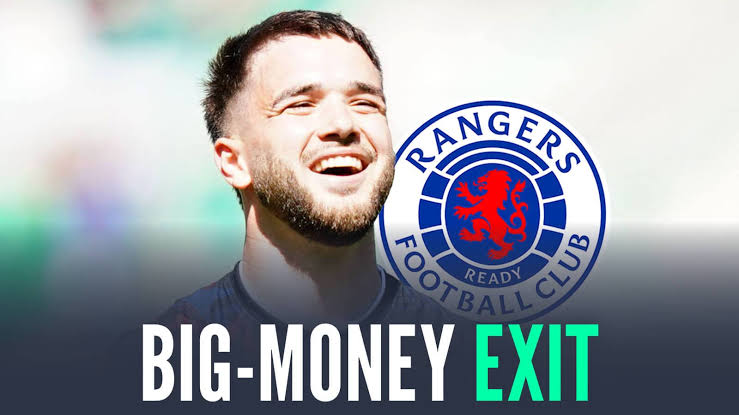
Nicolas Raskin stands at one of the most significant junctures of his football career. The 25-year-old Belgian midfielder, who has become a cornerstone of Rangers’ operation in the engine room, faces an unprecedented period of uncertainty and opportunity as the 2026 summer transfer window unfolds. Fresh off an impressive showing at the World Cup in North America, where he earned accolades from Belgian media and showcased his abilities on one of football’s grandest stages, Raskin finds himself in the enviable position of being pursued by some of Europe’s most prominent institutions.
Yet despite the flattery of interest from multiple elite clubs, the Rangers star appears poised to make a decision that could define not just his immediate future, but his entire career trajectory. The consensus among many observers has been that his departure from Ibrox feels inevitable—that a player of his caliber, performing at such a high level, would naturally seek a move to a bigger club with greater resources and continental prestige. However, the emerging narrative suggests something far more nuanced may unfold: Raskin could surprise everyone by rejecting some of the most attractive offers on the table.
To understand the magnitude of Raskin’s current situation, it’s essential to trace his journey to this point. The Belgian midfielder joined Rangers in January 2023 from Standard Liège for approximately £1.5 million—a relatively modest fee by modern standards. At the time, few could have predicted the impact he would make on Scottish football or the trajectory his career would follow.
Since arriving at Ibrox, Raskin has proven to be one of the shrewdest signings made by the Glasgow club in recent years. He hasn’t merely been a capable performer in Rangers’ midfield; he’s been instrumental to their success. His technical ability, work rate, tactical intelligence, and consistent performances have made him a fan favorite and a crucial component of the team’s identity. In the space of just a few years, he’s transformed himself from a relatively unknown quantity in the Scottish Premiership into one of Rangers’ most important and recognizable players.
This progression has naturally attracted attention from larger institutions across Europe, but it was his performances at the 2026 World Cup in North America that truly elevated his profile on the continental stage. Playing alongside his Belgian teammates in a World Cup tournament, Raskin demonstrated that his quality wasn’t simply a product of the Scottish league—he could perform against world-class opposition and hold his own against the elite.
The World Cup in North America provided Raskin with a platform to showcase his abilities to a global audience. Under the tutelage of Rudi Garcia, the Belgian team competed impressively in the tournament, and Raskin’s performances caught the eye of scouts from across Europe’s top leagues. Belgian media outlets, in particular, have described him as nothing short of a “revelation” at the tournament—high praise that reflects both the quality of his displays and the surprise value his emergence as a world-class midfield talent represents.
This World Cup exposure has fundamentally altered Raskin’s market position. Before the tournament, he was primarily known to supporters of the Scottish Premiership and those who follow the Belgian national team closely. Now, his name is being discussed in boardrooms and among transfer corridors in England, Spain, and Italy. The tournament has effectively opened doors that may have otherwise remained closed, providing him with options and opportunities that extend far beyond what he might have realistically expected just months earlier.
The range of clubs expressing interest in Raskin’s services is remarkable and speaks to both the quality of the player and the competitive nature of the current transfer market. Multiple elite institutions have made contact with Rangers to gauge the possibility of acquiring the Belgian midfielder, each representing a different pathway and set of opportunities.
In Spain, two significant clubs have held serious discussions with Rangers regarding a potential move for Raskin. Real Betis, a club with considerable resources and a growing profile in European football, sees Raskin as a potential piece in their midfield puzzle. Similarly, Villarreal—a club known for its technical, possession-based football and a strong European tradition—has also expressed genuine interest. Both clubs represent opportunities to play in one of Europe’s top five leagues while remaining at institutions with genuine ambitions and historical significance.
The appeal of Spanish football has attracted many elite players over the years, and for a midfielder like Raskin, the technical nature of La Liga and the possession-based football favored by both clubs could represent an ideal fit. The Spanish clubs also offer the prospect of potentially more regular playing time compared to some alternative destinations, a factor that may weigh heavily in his decision-making.
According to reports from reputable sources such as Voetbalkrant, Manchester United has also placed Raskin on their midfield shortlist. This represents perhaps the most glamorous option available to the Belgian midfielder—a move to one of the Premier League’s most storied institutions and one of the 20-time champions would represent a significant step up in terms of global profile and financial reward.
However, this opportunity presents a considerable paradox that could influence Raskin’s thinking. While Manchester United is undoubtedly one of football’s biggest institutions, the club has already invested heavily in midfield reinforcement during the current transfer window. The arrivals of Andrey Santos and Youri Tielemans represent significant investments in the midfield department, effectively creating a crowded marketplace for playing time at Old Trafford.
For a player of Raskin’s ambitions and quality, the prospect of moving to Manchester United only to find himself struggling for regular game time would represent a potentially career-damaging move. At 25, he’s at a stage where consistent, meaningful football is essential for his development as a player and his future marketability. Warming the bench at Manchester United, however prestigious the institution, could harm rather than enhance his career prospects.
Hull City has also emerged as an interested party, though their pursuit has been constrained by financial limitations. The Tigers were unable to match Rangers’ £20 million valuation of their midfield star, illustrating how the Scottish club has successfully established Raskin’s value in the transfer market. This pricing also demonstrates the profit Rangers have achieved since acquiring him for £1.5 million just three years earlier—a return of more than 1,200 percent on their initial investment.
To fully understand Raskin’s situation at Rangers, it’s crucial to examine the midfield rebuild that manager Derek McInnes has been orchestrating. The arrival of new players in the engine room suggests that McInnes and the Rangers hierarchy are preparing for significant changes in their midfield composition. This preparation may actually be creating a window of opportunity for Raskin’s departure, even as it simultaneously suggests that the club believes they can successfully replace his contributions.
McInnes has already made multiple additions to the squad in his quest to strengthen the midfield. Dan Neil has arrived to provide experience and stability, while Cammy Devlin brings additional options in the middle of the park. Perhaps most significantly, a deal for Partizan midfielder Vanja Dragojevic is close to completion, adding another dimension to Rangers’ midfield options.
Tochi Chukwuani, who impressed during the second half of the previous season after arriving in the winter transfer window, provides another option for McInnes to utilize. With these multiple arrivals and the apparent intent to add more, it’s clear that Rangers have begun thinking beyond Raskin and are preparing contingency plans for his potential departure.
However, this fact also raises an interesting consideration for Raskin: Does the club’s apparent willingness to rebuild around him leaving mean he should actually leave? Or does his undeniable importance to the team’s identity and success suggest that remaining could be the more prudent choice?
This is where the narrative becomes genuinely intriguing. There’s a compelling case to be made that Raskin might surprise many observers by rejecting even the most prestigious offers and choosing to remain at Rangers for at least another season.
Guaranteed Football: At Rangers, Raskin is a certain starter. He’s the midfield linchpin around which the team is built. At Manchester United, Real Betis, or Villarreal, he would be competing for places against established players and other recent signings. For a player still in his athletic prime and with significant career objectives remaining, guaranteed football carries immense value.
Familiarity and Comfort: Raskin has built a life in Glasgow. He knows his teammates, understands the tactical expectations, and has earned the respect of the Ibrox faithful. Uprooting to a new country and a new league carries inherent risks and adjustment periods that could impact his performances.
Continued Development: Some players benefit from remaining in an environment where they can continue to develop at a high level rather than being thrust into a situation where they’re constantly fighting for minutes. Another season of consistent, meaningful football at Rangers could enhance his profile further and make an even more prestigious move possible in future windows.
Financial Strength: Rangers’ resources, while perhaps not matching those of Manchester United or the wealthiest Spanish clubs, are nevertheless considerable. McInnes appears committed to building around Raskin’s continued presence, suggesting that the club will invest in players to support him.
From a purely financial perspective, Rangers’ position is strong. They’ve already achieved a remarkable return on their initial investment in Raskin. Whether they receive £20 million now or £25 million next summer is perhaps less significant than ensuring the player’s value doesn’t diminish through a move that restricts his playing time.
For Raskin personally, the financial differential between these various offers, while potentially significant, may be less important than the opportunity to continue playing at an elite level and potentially build an even more compelling case for a future move to an even bigger stage.
As the summer transfer window progresses, all eyes will be on Nicolas Raskin and the decision he makes regarding his future. The consensus expectation has been that he will seek a move away from Rangers to test himself at a bigger club. However, the emerging possibility that he might reject some of the most attractive offers on the table represents a genuinely compelling narrative.
The Belgian midfielder’s decision will likely come down to what he values most at this stage of his career: the prestige and global profile of a club like Manchester United, the technical football offered by Spanish institutions, or the guaranteed football and continued development opportunity that remaining at Rangers provides.
Whatever he chooses, Raskin’s decision will undoubtedly prove consequential. It will shape not just his immediate future, but potentially his entire career trajectory and legacy. In a transfer window full of possibilities, the most intriguing story may well be about a player choosing to stay rather than a player choosing to leave.