How Mohamed Salah Could Now Help Rangers Finally Get Their Man in Vaclav Cerny

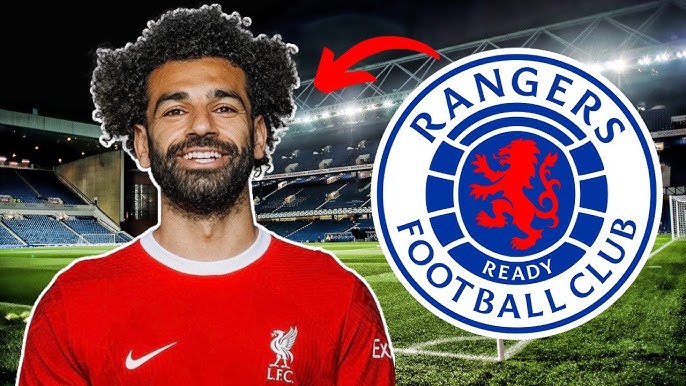
Rangers’ pursuit of Vaclav Cerny has dragged through the entirety of the 2026 summer transfer window, twisting through rejected bids, conflicting Turkish reports and a genuine sense that Ibrox might, once again, be left to rue a deal that got away. But in the space of a single week, an entirely unconnected transfer saga has begun to reshape the picture in Govan’s favour. Mohamed Salah’s protracted, messy and very public search for a post-Liverpool home has landed him at the door of Besiktas — and if that move goes through, it could be the very thing that finally prises Cerny out of Istanbul and back to Ibrox.
It is one of those strange football coincidences that only makes sense once you follow the money, the squad math and the timing all the way through. Derek McInnes wants a right winger. Besiktas may be about to sign one of the most famous forwards on the planet. And somewhere in the middle of it all sits a 28-year-old Czech international who once tore up the Scottish Premiership on loan and has spent the last year wondering whether Istanbul was ever really the right move.
A Saga That Has Run All Summer
Rangers’ interest in Cerny is not new, and it is not shallow. It stretches back to his electric loan spell at Ibrox in 2024-25, when the winger arrived from Wolfsburg and immediately became one of the most watchable players in the country. He scored 12 league goals in 33 appearances that season, was capped for Czechia at Euro 2024, and left Govan with supporters convinced they had briefly had, and then lost, a genuine game-changer. Rangers came close to signing him permanently before that loan spell ended, but ultimately let him leave for Besiktas, who paid Wolfsburg in the region of €6 million to make the move permanent in September 2025.
That fee has since become the entire crux of the transfer saga. Besiktas did not buy Cerny to sell him on for a marginal profit a year later, and everything about their public positioning this summer has reflected that. Rangers’ opening approach, an offer in the region of £5.1 million, was knocked back almost immediately, with Turkish reporter Onur Tascioglu confirming Besiktas had no appetite to sell at that number. A subsequent Rangers offer worth around €6 million — matching what Besiktas themselves paid for the player — was also rejected, with the Istanbul club understood to be holding out for something closer to their valuation of around €7 to €8 million.
It has been a frustrating pattern for Rangers to watch play out. Cerny had a productive campaign in Turkey by most statistical measures, registering somewhere in the region of 13 goal involvements across 30 appearances in the Super Lig, output that has only strengthened Besiktas’ negotiating hand rather than weakened it. There has been no shortage of noise suggesting a deal is close, only for those reports to be undercut days later by fresh insistence from Istanbul that the price has not moved. At one stage it appeared the move had collapsed entirely, with reports of a Besiktas U-turn driven by new foreign-player quota rules for the 2026-27 Super Lig season, which require a minimum number of squad members born in or after 2004 — rules that theoretically complicate, rather than force, Cerny’s exit.
What has remained constant throughout is the scale of the gap. Rangers have moved from roughly £5 million to something closer to €6-7 million and Besiktas have shown little sign of budging from their own valuation, sitting around the €7-8 million mark. It is not an enormous gulf in absolute terms, but it has been enough to stall a deal that both the player’s history at Ibrox and Besiktas’ own squad planning would otherwise seem to encourage.
Enter Mohamed Salah
Everything changed, or at least everything started moving, once Mohamed Salah’s name entered the Besiktas conversation. Salah’s Liverpool exit after nine trophy-laden years at Anfield has been one of the defining sagas of the European summer, with reported interest from Major League Soccer and a lucrative, previously spurned approach from Saudi Arabia’s Al-Ittihad. What emerged instead, in the days either side of this article’s original publication, was a very different destination: Istanbul.
Multiple outlets, including Foot Mercato’s Santi Aouna and Jordan Pardon, along with respected transfer insider Sacha Tavolieri, reported that Salah had reached a verbal agreement with Besiktas on a one-year contract, with an option for a second season. The financial terms being discussed were striking even by Salah’s standards — a guaranteed annual salary in the region of €10 million, with a further €2 million in available bonuses, taking his potential season earnings close to €12 million. Salah is understood to have originally sought closer to €15 million a year before scaling back his demands to make the move workable.
The story has not been entirely straightforward. Salah’s agent, Ramy Abbas Issa, publicly pushed back on claims that any agreement had been finalised, insisting there was “no deal was in place with any club” and that Salah’s next destination remained genuinely undecided. Besiktas president Serdal Adalı had also poured cold water on the links only days earlier. But the consistency and seniority of the sources reporting a verbal agreement — arriving from multiple well-regarded outlets within days of one another — suggests this is a live and advanced negotiation, whatever the final outcome, rather than idle speculation. Salah’s lawyer travelling to Istanbul to continue talks only added to the sense that something substantial is being worked through behind the scenes, whatever the public denials.
The context matters here too. Besiktas have already been busy rebuilding their attack this summer, most notably landing Leandro Trossard from Arsenal, a marker of genuine intent from a club looking to close the gap on Galatasaray and Fenerbahce domestically. Reports out of Turkey suggest Salah’s family are keen to settle in Istanbul, and that the player himself has been reluctant to follow the well-worn path to Saudi Arabia that so many of his contemporaries have taken. Besiktas, in other words, may hold more genuine appeal to Salah than the raw numbers from the Gulf ever could — and that gives this move a level of momentum that a purely financial approach from elsewhere might not have generated.
The Knock-On Effect for Cerny
This is where Rangers’ interest becomes relevant again. Salah operates predominantly on the right side of attack, precisely the zone Cerny has occupied for Besiktas over the past year. Should the move go through, it would immediately complicate Cerny’s route to regular first-team football in Istanbul, regardless of the good form he showed for large parts of last season.
There is also a financial dimension that Rangers will be acutely aware of. A deal of Salah’s reported scale — potentially in excess of €12 million a year across salary and bonuses — represents a huge outlay for a Super Lig club, even one as ambitious as Besiktas currently appear to be. Bringing in a player of that stature typically means squad-wide adjustments elsewhere, and clubs in that position often look to move on players whose wages can be freed up to help balance the books, particularly those who might become squad depth rather than guaranteed starters once a marquee arrival is in place.
None of this guarantees Besiktas will suddenly soften their valuation of Cerny. But it does change the calculus in ways that should, in theory, work in Rangers’ favour. A club that has spent the summer digging in over a valuation gap of a million pounds or so has just potentially taken on one of the biggest individual contracts in its history, for a player who competes directly with Cerny for a starting berth. If Besiktas do complete the Salah deal, the pressure to trim elsewhere in the squad, particularly among players whose long-term futures now look less certain, could realistically increase.
There is a further wrinkle worth noting. Besiktas have also been credited with interest in Leicester City’s Abdul Fatawu, a Ghana international who operates in a similar wide role to Cerny. Clubs rarely finalise a direct like-for-like replacement before they have accepted that a departure is close, and Rangers will hope that piece of transfer logic applies here just as it has elsewhere across the market this summer.
Where Rangers Stand Right Now
Derek McInnes’ priorities this summer have been reasonably clear from the outside. The Rangers manager wants more direct, incisive quality out wide, and has made no secret that the current squad lacks a genuine difference-maker on the flanks capable of consistently unlocking stubborn Scottish Premiership defences. Cerny fits that description almost perfectly, both because of what he showed during his loan spell and because he already understands the specific demands of Scottish football — the physicality, the low blocks, the wet Wednesday nights that separate players who can adapt from those who cannot.
Financially, Rangers have shown a clear willingness to move, even if they have not yet matched Besiktas’ full asking price. Having started around the £5 million mark, the club’s most recent reported offer sits closer to £6-7 million, a meaningful jump that suggests genuine intent rather than a token opening bid designed to test the water. Reports have also suggested that the gap between the two positions has narrowed to the point where a deal in the region of £6.5 to £7 million could plausibly get a deal over the line, though nothing has yet been confirmed by either club.
Cerny’s own situation adds another layer of intrigue. He recently retired from international football with Czechia, a decision he made after feeling he was not receiving the recognition he felt his form warranted, and has spoken about wanting to establish himself fully at Besiktas rather than treating the club as a stepping stone. That public commitment to his current employers has, if anything, made Rangers’ pursuit trickier to read. A player who talks up his desire to succeed where he is does not always end up walking through the exit door that same summer, but transfer business has a habit of overriding those sentiments once circumstances on the ground shift, and a marquee arrival like Salah is about as significant a shift in circumstances as a Super Lig club can experience.
The Barry Ferguson Connection
There is a sentimental thread running through all of this too, one that predates the current management setup at Ibrox. Barry Ferguson, during his spell as Rangers’ interim manager, was a genuine advocate for keeping Cerny at the club on a permanent basis last summer, before the current regime ultimately opted against making that move. Ferguson’s admiration for the winger was not simply about output either; it spoke to something more specific about the way Cerny had adapted his game under instruction.
Ferguson praised the winger’s willingness to embrace tactical responsibilities that had not previously been asked of him, highlighting his work without the ball as much as his end product, and made his hopes for a permanent stay unambiguous at the time. That endorsement has aged well given how highly regarded Cerny remains among the Ibrox faithful, and it underlines why this pursuit carries a certain unfinished-business quality for a section of the club’s support. Rangers had this player, by most accounts got the best out of him, and let a set of circumstances rather than a lack of ability see him depart. Ferguson’s comments, made in the heat of an interim spell in the dugout, now read almost like a prediction of the very reunion Rangers are trying to engineer a year on.
What Happens Next
There remain genuine variables that could still derail this reunion. Salah’s move to Besiktas, for all the momentum reported by multiple credible outlets, has not been confirmed by either party, and his own representation has actively disputed claims that personal terms have been finalised. Football’s transfer market is littered with verbal agreements that collapse in the final stages over medical concerns, contract clauses or a change of heart, and Salah’s situation carries an added layer of complexity given the scale of interest he has attracted from elsewhere across three continents.
Equally, even if Salah’s move to Istanbul does go through, there is no guarantee Besiktas immediately soften their stance on Cerny. Turkish clubs have shown throughout this saga that they are prepared to hold firm on valuations even when the broader logic of squad building might suggest otherwise, and Cerny’s contract, which runs until 2027 with reports of a further extension option, gives Besiktas legal and financial leverage that Rangers cannot simply negotiate around.
What does seem clear is that the dynamics have shifted meaningfully over the course of this week, in ways that specifically favour Rangers’ pursuit. A club that has spent the summer resisting Rangers’ advances is now potentially set to take on one of the most expensive individual contracts in its recent history, for a player whose best position sits in direct competition with the man Ibrox wants back. If Besiktas’ squad planning follows the pattern seen elsewhere in the market this summer — recruiting a replacement before moving on the man they are replacing — then Cerny’s path out of Istanbul, and back to Glasgow, may finally be opening up.
For Rangers supporters who watched Cerny light up Ibrox across a stunning loan season, then watched him leave for Turkey with a sense of what-might-have-been hanging over the club, the prospect of Mohamed Salah inadvertently clearing the path for a reunion carries an almost poetic quality. Derek McInnes has made no secret of his desire to add genuine quality to his wide areas this summer, and few players fit the profile Rangers are searching for quite as neatly as a winger who has already proven, in bright yellow and blue, exactly what he can do in Scottish football.
Whether Besiktas’ business with Salah accelerates Cerny’s exit remains to be seen, and Rangers will know better than most this summer not to count on anything until contracts are signed. But for a transfer saga that has spent months stuck in the same narrow valuation gap, this is the first genuinely external factor that looks capable of shifting Besiktas’ position rather than simply testing Rangers’ patience further. Sometimes in football, the deal that finally happens is not decided by the two clubs directly involved in the negotiation at all, but by a third party’s business hundreds of miles away. If Mohamed Salah does complete his move to Vodafone Park, Rangers may well have their most influential transfer window ally, one who has not kicked a ball for either side of this negotiation.