Derek McInnes discovers which Rangers matches he will miss as SFA touchline ban reduced on appeal

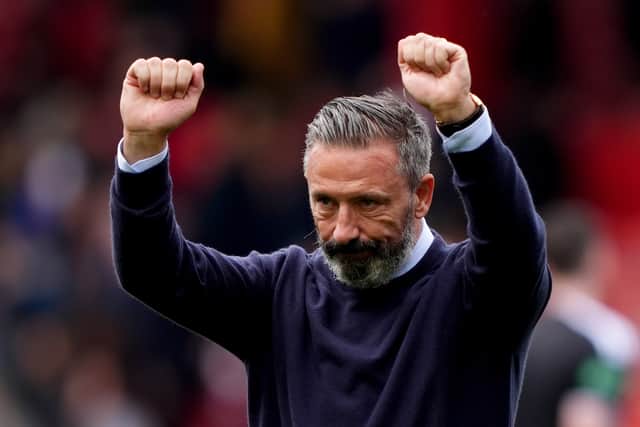
Rangers manager Derek McInnes has had his touchline ban reduced following an appeal to the Scottish Football Association, and the ruling clarifies exactly which games he’ll be watching from the stands and which ones he’ll be back in the dugout for.
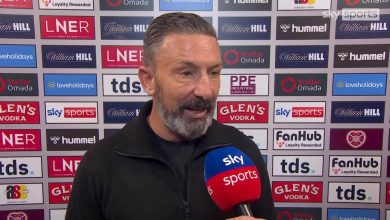
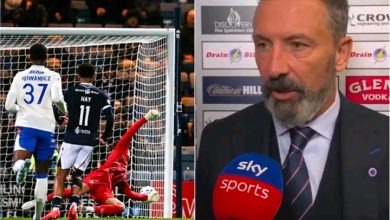
The background to the case traces back to comments McInnes made while he was still manager of Hearts, during the final week of last season. On the penultimate weekend of the campaign, Celtic were awarded a stoppage-time penalty away at Motherwell for a handball against Sam Nicholson, a decision that referee John Beaton made on the advice of video assistant referee Andrew Dallas. Kelechi Iheanacho converted the penalty, and Celtic went on to win 3-2 at Fir Park, a result that kept them one point behind Hearts with a single round of fixtures remaining. Celtic then completed the title win three days later on the final day of the season, overturning that gap with victory in their last match. In the immediate aftermath of the Motherwell result, McInnes, speaking to Sky Sports, described the penalty award as “disgusting,” said he did not believe it was a penalty, and added the phrase “it feels like us against everybody” in reference to how Hearts’ title challenge was being officiated. Scottish FA head of referees Willie Collum later defended the decision, saying there was clear evidence of Nicholson’s hand and arm being in an unnatural position and that the resulting contact constituted a punishable handball.
McInnes was subsequently cited by the SFA’s compliance officer for breaching Disciplinary Rule 72, which prohibits criticizing match officials in a way that implies bias or incompetence, or making remarks that impinge on an official’s character. He was initially handed a four-match touchline ban, with one match suspended, meaning three bans were due to be served immediately. That punishment was set to begin at the start of this domestic season, but Rangers, who appointed McInnes as their new manager over the summer, lodged an appeal that put the suspension on hold pending a hearing. In their submission, Rangers argued that McInnes’s remarks had been directed at the specific decision itself rather than representing any broader claim about officials being biased or incompetent as a group. McInnes echoed that distinction publicly, saying he had never wanted the comments to feel personal, that in his view the decision was simply wrong, and that broadcasters pay significant money specifically to capture honest, in-the-moment reactions from managers.
The appeal hearing has now produced a partial success for both McInnes and Rangers. The panel reduced the immediately-served portion of the ban from three matches to two, while the total suspension of four matches remains on the record, with two of those four now held in suspension rather than one. In practice, that means the two additional suspended matches would only be triggered if McInnes breaches the same rule again before the end of the current season, giving him a similar kind of “second offense” buffer as before, just calibrated slightly differently after the reduction. The practical, immediate consequence is now clear and specific. McInnes will not be permitted in the technical area for two matches: this week’s Scottish Premiership fixture away to Falkirk and the following home match against Motherwell at Ibrox. For both of those games, he will be required to watch from the stands rather than take his usual place on the touchline, meaning any tactical instructions or reactions during play will need to be relayed through his coaching staff on the ground rather than delivered by him directly pitchside.
The timing works out so that his ban expires just in time for a particularly significant fixture. McInnes is set to return to the dugout for a rescheduled league match against St Mirren at Ibrox on Wednesday, September 9. From there, the calendar becomes considerably higher profile. Because his suspension clears before that St Mirren match, McInnes will be free to take his place in the technical area for his first Old Firm match in charge of Rangers, a Premier Sports Cup quarter-final against Celtic on Sunday, September 13. He will then also be available for the first league meeting between the sides at Celtic Park the following weekend, a fixture that will be broadcast live on Sky Sports. Given the history behind this specific ban, stemming directly from a controversial officiating moment in a Celtic-adjacent title race, there is an obvious storyline layer to McInnes now being cleared in time to be present, in the dugout, for his first competitive matches against Celtic since taking the Rangers job, rather than watching Old Firm fixtures of this magnitude from the stands.
It’s worth noting the broader context of where McInnes and Rangers currently stand on the pitch, since that shapes how significant his return to the technical area for these fixtures actually is. His start at Ibrox has been difficult by the club’s own standards. Rangers have been eliminated from Europe entirely this season, first in the Europa League and then again in the Conference League, where they lost on penalties to Czech side Jablonec. Domestically, the picture has also been slow to develop, with Sunday’s win away at Aberdeen marking his first Premiership victory since taking charge, leaving Rangers five points behind Celtic after three league games. Against that backdrop, being unable to manage directly from the touchline for the upcoming Falkirk and Motherwell matches is a mildly unhelpful complication at a moment when McInnes is still trying to establish rhythm and results with his new squad, even if two closely-clustered mid-table fixtures are a considerably lower-stakes place to be serving a touchline ban than an Old Firm game would have been.
There is also a separate but related disciplinary story tied to the same underlying incident, since the fallout from that Motherwell penalty produced sanctions beyond just McInnes individually. Motherwell as a club were fined five thousand pounds over social media content posted in reaction to the penalty decision, and former Motherwell midfielder Elliot Watt, who was still a Fir Park player at the time and has since moved on to Turkish side Samsunspor, was given a four-match ban of his own for a post on his account describing the call as the “worst VAR decision in history.” Those punishments, both for the club and for Watt individually, were also under appeal, with hearings for both scheduled to take place on Thursday, meaning there could be further movement on the wider fallout from that single moment in the same week that McInnes’s own reduced ban comes into effect. Taken together, the episode is a useful illustration of how a single contested officiating decision late in a title race can generate a surprisingly long tail of disciplinary consequences that ripple across multiple clubs and individuals for months afterward, well past the point where the actual match result has been settled and largely forgotten by everyone except the parties still working through appeals.