Steven Gerrard Names Player That Would Have Taken Rangers to ‘Another Level’

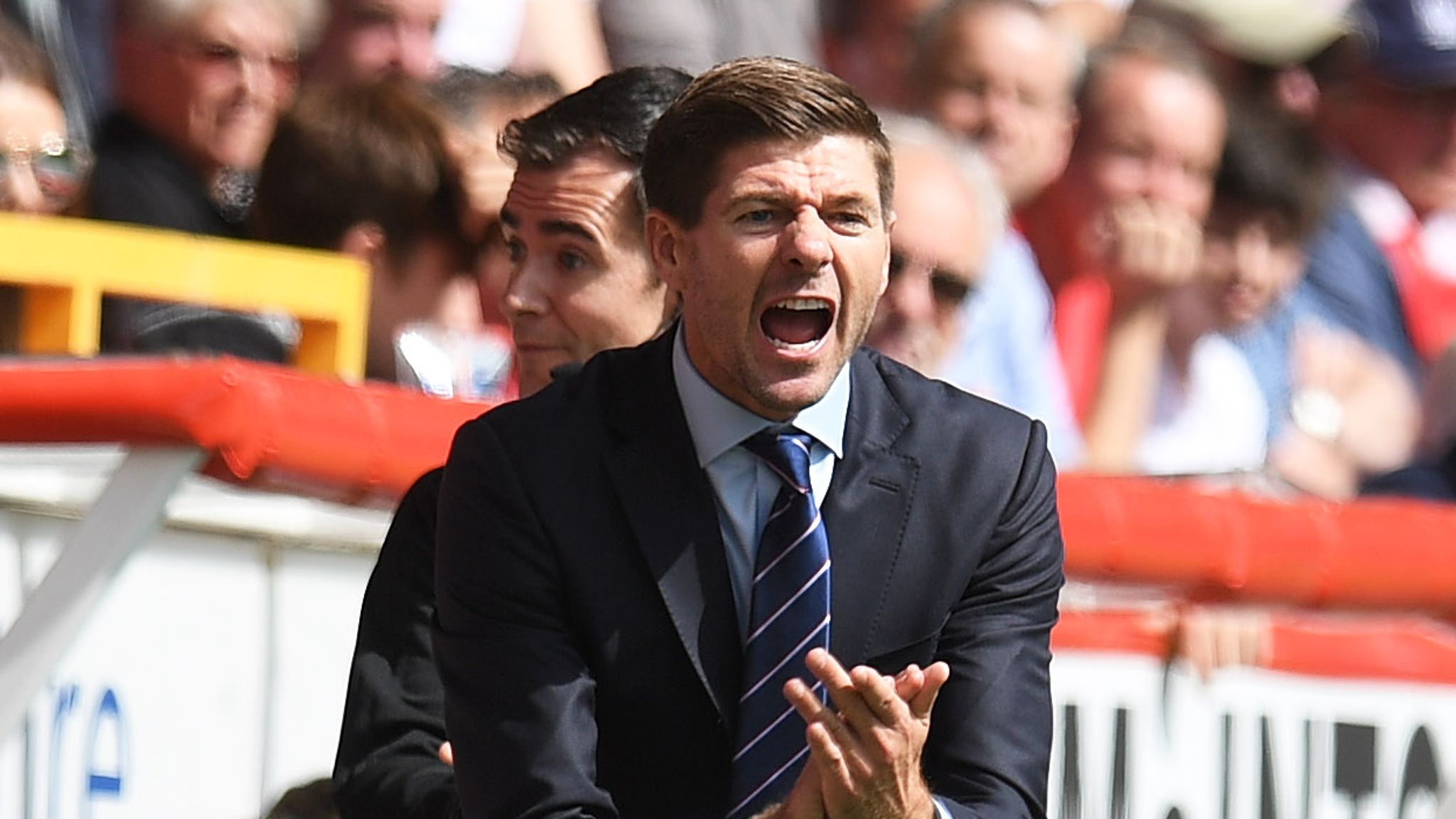
The player is Joey Veerman, the PSV Eindhoven midfielder, and the remarks come from Gerrard’s appearance on the Open Goal podcast, as reported by Last Word on Football on 6 October. That article blurs some timelines. For example, the Europa League final run came under Giovanni van Bronckhorst after Gerrard had left, and I’ve written around that. Below is a roughly 3,000-word article in continuous prose with no subheadings
Football managers spend much of their careers dealing with what they have rather than what they wanted, and Steven Gerrard’s time at Rangers is a case study in the gap between the two. The former Liverpool captain led the Ibrox club to a league title in 2021 that ended a decade of frustration, and he is still remembered with great affection for it. Yet in recent interviews he has revealed a source of lingering frustration about what happened next, a summer in which he believes the club missed the chance to kick on. At the centre of that story is a Dutch midfielder named Joey Veerman, the player Gerrard says could have taken Rangers to another level.
The comments came on the Open Goal podcast, one of several appearances Gerrard has made in recent weeks as he settles into a more prominent media role. He explained that in the summer of 2021, after the unbeaten title win, he and his staff had conversations with the people above them about how to use the moment. His message, in his own words, was that the club should fix the roof while the sun was shining, an image that captures the logic of building during success rather than waiting for the storm to arrive. He knew, he said, that the challenge would come back, and he wanted Rangers to prepare for it.
What he asked for was modest by the standards of a major club. Gerrard said he did not believe the team needed loads of players, and that the priority was two really big midfielders who could improve the engine room. It was a targeted request, based on an understanding of where the squad needed to improve, and it reflected the kind of focused thinking that has long been associated with successful managers. He was not demanding a revolution, only the right pieces in the right area of the pitch, and he was convinced that those two signings could make the difference between a good team and a great one.
The first name he mentioned was Veerman. Gerrard described him as a Dutch international who was available for around six or seven million pounds at the time, and said he had asked for that sum to be made available. He added that he understood the situation, acknowledging that it was a challenging period, but that he and his staff felt that landing the right two midfielders would transform the team. The second part of that plan was John Lundstram, who Gerrard believed would be really strong on a free transfer. The Englishman needed a little more in wages, but Gerrard described him as a Premier League midfielder who knew what it was about.
The conclusion he drew was clear. If Rangers had secured both Veerman and Lundstram, he felt, the team could have gone to another level. It is a bold claim, and it reflects the manager’s belief that midfield quality was the missing ingredient in a squad that had just achieved something remarkable but was beginning to age. The previous season’s success had been built on a strong defence, a reliable goalscorer and a collective spirit, but Gerrard knew that the engine room needed freshening, and he saw in Veerman a player who could provide the creativity and passing range that the team lacked.
Context helps explain why the move never happened. The Last Word on Football article, which gave rise to the headline, argues that Rangers had front-loaded much of their recruitment because of a lack of player sales over a long period. The board, it says, told Gerrard that he needed to sell to buy, a policy that made sense in a post-Covid world and with a financial hole of more than £25 million to fill. That meant that the manager was working with tight margins, and that the idea of spending six or seven million on a midfielder, however attractive, was harder to justify than it might have been in a more comfortable situation.
Gerrard also made a decision that complicated the picture. According to the same account, he chose to keep key performers such as Ryan Kent and Alfredo Morelos despite having offers on the table for both, a gamble that did not completely pay off. The thinking was reasonable, because both players were important to the team’s success, but it meant that the club did not receive the transfer money that might have funded other signings. It is the kind of dilemma that every manager faces, with the desire to keep the best players in tension with the need to raise funds, and it is easy to see how the decision looked sensible at the time yet frustrating in retrospect.
With money tight, Gerrard was given three signings that summer: Lundstram, Fashion Sakala and Juninho Bacuna. They arrived with different expectations and delivered varying levels of success at Ibrox. The article notes, with a touch of irony, that they ended up making the club money between them when they eventually left. That is a decent outcome from a financial perspective, but it did not give Gerrard what he really wanted, which was a creative midfielder with an elite passing range who could take over from the ageing Steven Davis. In other words, the signings filled gaps but did not solve the central problem.
It is worth remembering what happened to Gerrard himself shortly afterwards. He left Rangers in November 2021 to become manager of Aston Villa, a move that surprised many supporters and that he has since described in more reflective terms. Speaking on The Overlap, he said the step up in level was a big jump, and that he probably did not realise it at the time he made the decision. He added that he would have stayed at Rangers longer, gaining more experience and remaining at the club for a longer period. It was a frank admission, and it suggests that he considers the timing of his departure a regret.
That regret gives the Veerman story an extra layer of meaning. If Gerrard believes that the failure to sign the right midfielders contributed to his decision to leave, then the episode is more than a transfer anecdote. It is a turning point in the history of the club and in the career of a man who might have stayed and built something lasting. The article goes further, arguing that the lack of backing was a key reason for his departure and that Rangers missed an opportunity to kick on after the title. That is a strong claim, and one that is open to debate, but it is certainly consistent with the way Gerrard now talks about those months.
The sequel to the story adds a twist. In the summer after Gerrard left, Rangers, now under Giovanni van Bronckhorst, faced PSV Eindhoven in the qualifying rounds of the Champions League, and Veerman was on the opposing side. Rangers won the tie, and the Dutch midfielder reacted with obvious bitterness. Speaking to Dutch television, he said that PSV had not created enough, but then questioned whether Rangers were really the better team, and he added that he did not think it was fair for Rangers to be in the Champions League at PSV’s expense. It was the sort of reaction that tells you something about a player’s character, and it is not the kind of statement that wins admirers
The writer of the article uses that episode to raise a question about temperament. Veerman, he suggests, is not always a player who handles things well when they go against him, and one has to wonder whether that quality would have fitted in the pressure cooker of Ibrox. It is a fair point, though it is also the sort of judgement that is easy to make with hindsight. A player’s reaction to a bitter defeat is not necessarily a guide to how he would behave as part of a successful team, and many great midfielders have been known for their fiery personalities. What matters is whether the talent outweighs the temperament, and in Veerman’s case the evidence of his ability is substantial.
The statistics support Gerrard’s judgement. Veerman has won three Eredivisie titles, earned 20 caps for the Netherlands and recorded a goal or an assist roughly every two games across 198 appearances for PSV. He has also contributed to 11 goals in 32 Champions League matches, a record that places him among the more productive midfielders in European competition. These are the numbers of a player who creates and scores, and who could have given Rangers the attacking contribution from midfield that they have often lacked. It is easy to see why Gerrard was so keen on him, and why he considers the failure to sign him a missed opportunity.
The article draws a contrast with what Celtic have been able to do. It points to the impact of players such as Matt O’Riley and Benjamin Nygren, who have contributed goals and assists against teams that Celtic are expected to beat, and suggests that Rangers have not had anything like that from midfield since Joe Aribo left for Southampton and Scott Arfield’s contract was not renewed. Whether or not that comparison is entirely fair, it highlights a theme that has run through Rangers’ recent history, which is the search for a creative midfielder who can unlock tight defences. It is a theme that remains relevant today, as the current squad looks for ways to break down teams that sit deep.
Indeed, the story resonates with current debates around the club. Derek McInnes has spoken about having more options, and discussions among supporters have focused on whether Rangers have enough creativity in the middle of the park. Badredine Bouanani has been talked up as a player who can provide technical quality and set-piece delivery, and Kim Min-su has emerged as a new number 10. But the broader question of how the club builds its midfield, and how it balances short-term needs with long-term planning, is as pertinent now as it was in 2021. Gerrard’s remarks serve as a reminder of what can happen when a club does not act while it has the chance.
There is also a human side to what Gerrard said. A manager who has just won the league with an unbeaten record expects to be backed, and when that support is not forthcoming, it can feel like a lack of faith. Gerrard has always been careful to say that he understood the circumstances, and he has not directed bitterness at the board. But the tone of his comments suggests that it still rankles, and that he sees the failure to sign Veerman as a symbol of a broader missed chance. That is a natural reaction for a man who prides himself on ambition, and one that many supporters will sympathise with.
His relationship with Rangers remains complicated and warm in equal measure. In other interviews, he has talked about the difficulty of managing Alfredo Morelos, the maverick striker who scored 124 goals in 269 games for the club, and about the experienced players he brought in, Jermain Defoe and Kemar Roofe, to help handle him. He has praised Andy Halliday for the help he gave in resetting standards at the club, and he has explained why he chose James Tavernier as captain, despite not seeing him as a natural leader in terms of voice. These reflections show a manager who thinks deeply about the details of squad building, and who is willing to talk about both successes and regrets.
Gerrard’s recent move into the media, as a presenter on The Overlap Daily, will give him more opportunities to share such thoughts. He has already hinted that he follows Rangers closely, and that he has respect for Derek McInnes. He has also left the door open to a future return to management, saying that nobody knows what lies ahead. In that context, his remarks about Veerman can be seen as part of a wider process of reflection, as he considers what he did well, what he would change and what lessons he has taken from his time at Ibrox. Supporters will listen closely, because he remains one of the most significant figures in the recent history of the club.
The Veerman story also raises a broader question about how clubs make decisions at critical moments. A six or seven million pound investment might have seemed too risky or unaffordable at the time, but the potential return, in terms of results, revenue and stability, could have been far greater. Clubs that hesitate to spend on a key position often find themselves paying more later, either through a bigger transfer or through the cost of missed success. Whether Veerman would have delivered is impossible to know, but the logic of investing in a high-quality midfielder after a title win is hard to fault. The episode will serve as a cautionary tale for anyone involved in recruitment.
Hindsight, of course, is a powerful distorting lens. It is easy to say that a transfer would have changed everything when the alternative history cannot be tested, and the article itself acknowledges that we will never know. A player who looks perfect on paper can struggle to adapt to a new league, a new language and the intense scrutiny of a big club. Veerman may well have thrived at Ibrox, but he might equally have found it difficult, particularly if the team around him was in transition. The honest conclusion is that it was a reasonable aspiration that was never tested, and that its absence left a question mark over what might have been.
What can be said with confidence is that Gerrard believed in the plan and that the plan was never fully realised. The title was won, the club celebrated and the manager moved on, but the sense of unfinished business has stayed with him. His comments, delivered with the benefit of years of distance, are a reminder of the fine margins that shape a football club’s fortunes. A single transfer, a single decision or a single piece of backing can change a trajectory, and the people involved often spend a long time wondering what would have happened if things had been different.
For the Rangers fans who listen to the podcast, the story will provoke mixed emotions. There will be those who agree with Gerrard that the club missed a trick and who see the episode as evidence of a lack of ambition at the time. There will be others who point out that the financial situation was difficult and that the manager himself decided to keep certain players rather than sell them. Both views have merit, and the truth probably lies somewhere in between. What is undeniable is that the title-winning season created a window of opportunity, and that Rangers did not use it as fully as Gerrard would have liked.
In the end, the tale of Joey Veerman is a small piece of a larger story. It is about a manager who wanted to build on success, a board that was constrained by circumstances and a player who might have made a difference but never wore the shirt. It is also about the way football remembers what could have been, and the way those memories shape the present. As Rangers look to the future under a new manager, the lessons of that summer remain relevant, and the importance of investing in quality when the opportunity arises has rarely been clearer










