Forget The System: Three Questions Scotland Must Answer After Pocognoli’s Rocky First Camp

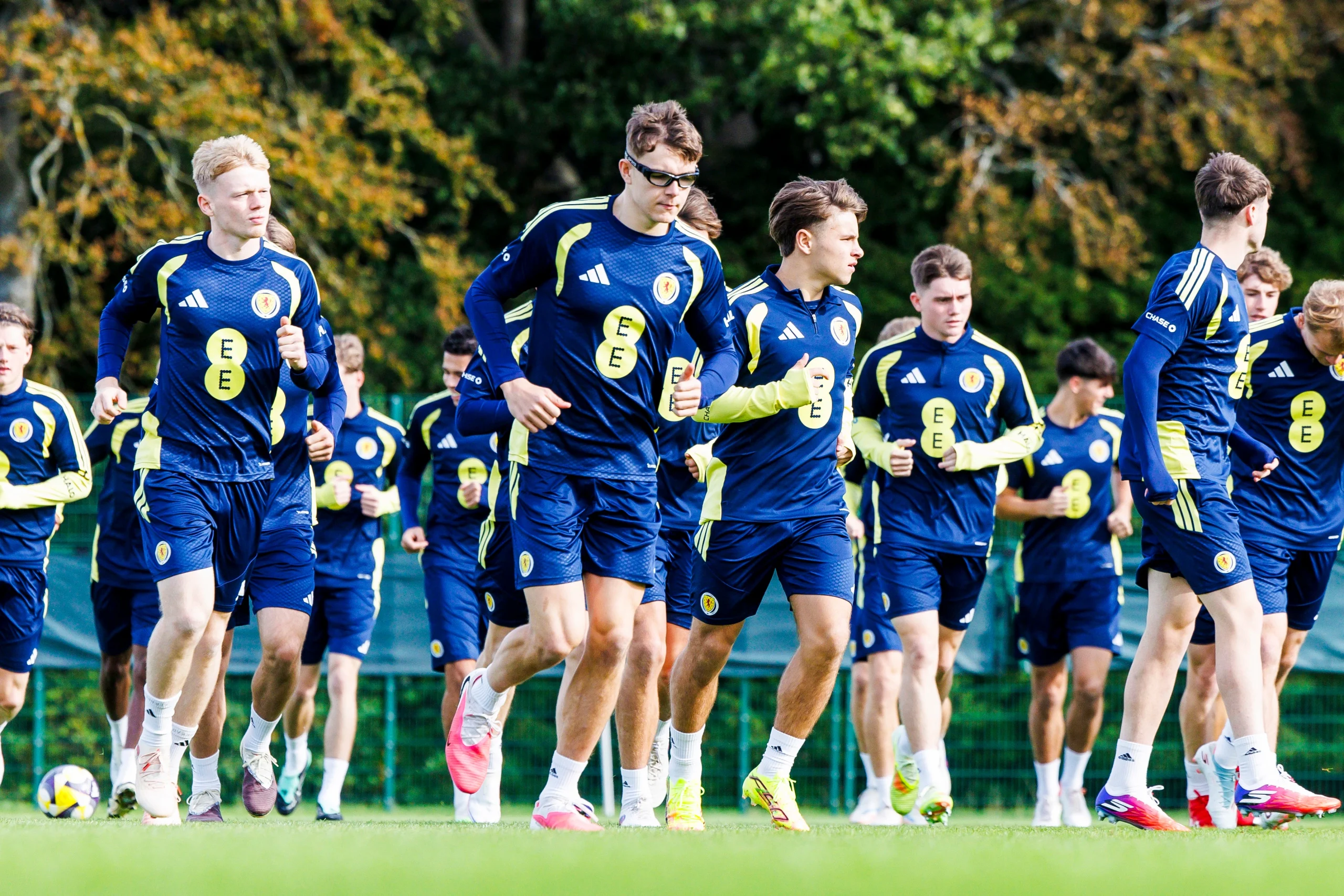
The booing at Hampden on Tuesday night lasted only a few seconds, but it said a great deal. A fortnight earlier, the Scotland supporters who filed into the national stadium had been willing to give a new manager the benefit of the doubt. By the time Slovenia had completed a 2-1 comeback, that patience had worn thin, and the mood around the camp had shifted from cautious optimism to open scepticism. Yet in the dressing room, the message coming from the players was strikingly different. Lewis Ferguson, speaking in the aftermath, told anyone who wanted to hear that people should forget about the system, because the real issue was that the team had lacked intensity themselves. It was a short, honest sentence, and it opened up a debate that will run all the way to the November double-header against North Macedonia and Switzerland. Is Sebastien Pocognoli’s system the problem? Is it the intensity of the players? Or is it something about the squad itself? Three questions, and four games’ worth of evidence to weigh them against.
Before we answer them, it helps to remember how much was packed into this camp. Pocognoli, a 39-year-old Belgian who arrived from a coaching career that includes Union SG and AS Monaco, took over from Steve Clarke after a World Cup summer that ended Clarke’s seven-year reign. His brief was clear. The supporters had spent the final months of the Clarke era longing for a front-foot, attacking side, and the new manager was hired to deliver one through a back three and an aggressive high line. Then came the fixtures. A 0-0 draw away to Slovenia, a 3-0 home defeat to Switzerland, a 2-0 win in North Macedonia, and finally the 2-1 home loss to Slovenia. Four matches in just over a week, a sequence that would test a settled side, never mind a squad learning a new way of playing from scratch. Scotland finished with four points from four, third in a four-team group in which the winner earns promotion back to League A and the runner-up gets a play-off. Relegation from the top tier came after a heavy defeat to Greece last season, so there is real urgency behind every point.
The first question, whether the system is the problem, is the one the Tartan Army has been asking loudest. It is a fair one. A back three with wing-backs and a high defensive line is a demanding structure, and it only works if everyone in the team understands precisely when to step up, when to drop and when to press. Mistakes are punished brutally, because a high line with gaps behind it leaves defenders exposed in one-on-one situations. The Switzerland game was the most obvious example of this, though the red card complicates the evidence. Jack Hendry was sent off after eleven minutes for a last-man challenge, and Ricardo Rodriguez scored from the resulting free-kick. Whatever the system, playing with ten men for almost the entire match against a side of Switzerland’s quality was never going to end well. The statistics that followed were grim: no shot on target at home for the first time since September 2023, four consecutive games without a goal for the first time since 1971, and no home clean sheet in eight matches. John McGinn called it a big setback, and he was right, though it was a setback with a very specific cause.
The Slovenia home game is a better test of the system, because there was no red card to hide behind. Pocognoli’s own analysis of it is revealing. He said he was angry because the team did not deliver what he expected, and that from the first minute they were not compact and not proactive in defending forward. Slovenia’s players kept getting the ball between the lines, turning and facing the Scottish defence, and with pace in front of them that became a serious problem. This is the weakness of any high line. When the midfield and forwards do not press the ball effectively, the defenders behind them are left defending a huge amount of space. The manager’s point was that Scotland were not committed enough to the system rather than that the system was flawed. If you set up to play aggressively and then drop off when the ball arrives, you get the worst of both worlds, with a back line that is too high to be safe and a press too weak to stop the passes coming through.
That brings us to the second question, the one Ferguson raised himself, which is intensity. His diagnosis is a simple one, and the more you look at the Slovenia game, the more it seems to hold water. After the break, Pocognoli tried to adjust by pushing Gilmour higher up the pitch so Scotland had three number tens in midfield. For about ten to fifteen minutes it worked, the team were more proactive, and the pressing became sharper. Then Slovenia scored from a situation in which Scotland cheaply gave up possession from their own throw-in, Aljosa Matko slipped away from Luis Binks and finished low past Angus Gunn from the edge of the box. From that point, the manager says, the old feelings returned. The team began to drop again, the compactness disappeared, and Slovenia got the same type of chances they had enjoyed in the first half. Fifteen minutes later, Matko was clear down the right again, and Danijel Sturm converted his low cross from seven yards. The pattern is hard to ignore. When Scotland pressed together, they controlled the game, and when they hesitated, they lost it.
Intensity is not just about running hard, of course. It is about doing the right thing at speed, being willing to commit to a press even when it might leave you exposed, and trusting that the players around you will do the same. That kind of collective belief takes time to build, particularly under a new manager who has barely had two weeks with the squad. Pocognoli seems to understand this, and his explanation for the Slovenia defeat reflects it. He pointed to the front three of Slovenia dictating where Scotland’s back line stood, and said the team had been beaten many times by a switch of movement from the number ten and the two strikers. When defenders doubt whether to step out and engage, the opposition finds the gap. The manager said they had looked at the situation on video and worked on it in training, which tells us the issue is not unknown to the coaching staff. What remains unclear is whether the players can put that learning into practice quickly enough.
There is a subtle but important disagreement here that is worth dwelling on, because it reveals a lot about the dynamics in the camp. Andy Robertson, the captain, had an animated discussion with his manager on the touchline as the match was slipping away, and in his post-match assessment he suggested that Scotland had been outfought by a hungrier opponent. Pocognoli, asked about it, did not quite agree. He said he did not think his players did not want to fight, that it was not the DNA of the team, and that nobody had prepared for the game believing it would be easy. For him, the problem was a lack of bravery in positioning rather than a lack of desire in the duels. It is the difference between a team that does not care enough and a team that cares but is afraid of getting it wrong. Robertson’s view and the manager’s are not necessarily contradictory, but they do highlight the gap between how players feel on the pitch and how a coach analyses it afterwards. On the pitch, a team that drops ten metres deeper than it should be feels like it is being bullied. From the touchline, it looks like a positioning error
The captain’s frustration is understandable. Robertson reached a major milestone in this camp, winning his 100th cap in the victory over North Macedonia, and before the Slovenia game he was presented with a jersey from each of the four managers he has played under for his country: Gordon Strachan, Alex McLeish, Steve Clarke and Pocognoli. Clarke himself was back at Hampden for the first time since leaving the job and received a warm reception from the crowd. It was a lovely moment, and one that underlined how much Robertson has been through in a Scotland shirt. A player with that much experience knows what it takes to win international matches, and his instinct that Scotland were not tough enough on the night should be taken seriously. Equally, Pocognoli’s job is to translate that instinct into a tactical plan, and the two will have to find common ground if the team is to improve.
The third question is the one nobody wants to ask in public, which is whether the squad is right for the system. Scotland’s recent strength has been built on a settled group of players who understand each other’s games. Changing the shape, particularly to a back three with a high line, asks different things of defenders, wing-backs and midfielders, and some may be better suited to it than others. Scott McKenna missed the Slovenia game through suspension, forcing Hendry back into the side after his red card against Switzerland, and Binks had a difficult night against Matko. Kieron Bowie was replaced early in the Switzerland match, and McBurnie, who has now played 20 times for Scotland without scoring, was substituted in the 66th minute against Slovenia. None of this means the players are not good enough. It means that a new system exposes different strengths and weaknesses, and some players will adapt faster than others.
The good news for Pocognoli is that the squad he will have in November is likely to be stronger than the one he had this time. Scott McTominay and Che Adams are expected to return, and both will add experience and quality to a team that has struggled to score. The manager has also hinted at some changes in selection, while insisting that stability matters too. That balance, between giving the players who have done the work a chance to continue and bringing in those who can improve the team, is a delicate one. It is also the kind of decision that defines a manager’s early reign. If he sticks too rigidly with the group that has just lost to Slovenia, he risks looking stubborn. If he changes too much, he risks undermining the continuity he has been trying to build.
There were positives in the camp that should not be lost amid the frustration. The second half in Ljubljana was the best Scotland performance of the four, with Robbie Ure striking a post and McBurnie and Bowie both spurning excellent chances after the break. Slovenia had an early goal disallowed for offside, so the 0-0 felt like a fair result, but the sense was that Scotland had grown into the match and could have won it. The win in Skopje was clean and controlled, and it came against a North Macedonia side that had already lost 3-0 to Switzerland and 2-0 to Slovenia. Pocognoli was honest about that, saying it was a good game against an opponent who was weaker than Scotland. And in the Slovenia match itself, the goal was a product of the sort of quick, direct play he wants, with Ben Gannon-Doak winning the free-kick, Ferguson playing it wide, and Ryan Christie back-heeling in from close range after a flick-on and a rebound. The ideas are there. The execution is not yet consistent.
Pocognoli’s own reflections on the camp give a sense of how he will approach the next one. He said the camp overall had been positive, even if the last game left a bad taste. He pointed to the attitude of the squad, the work they had done and the way they had responded after the Switzerland defeat. He admitted that, in international football, there are limits to how hard a manager can go at the players after a bad result, because there is no quick turnaround and no chance to fix things in the days that follow. He did not want to be too aggressive in the dressing room, and instead chose to tell the players they had done a good job in the camp but not enough on the day. His priority, he said, was that the squad keep the best memories and return in November with a positive and energetic feeling. That is a very different approach from a club manager’s, and it reflects a coach who understands the unique pressures of the international game.
Ferguson’s comments fit neatly with that approach. He described the camp as really enjoyable and said there had been a lot of work done on the grass with the new manager and the new system. He felt there was a lot to learn, and that the time spent on the pitch and together as a group would set the team up better for the next camp. This is the language of a squad that believes in what it is doing, even if the results have not yet matched the effort. It is also a reminder that international football is not like club football. A team that meets for a few days at a time cannot build chemistry at the same speed as one that trains daily. The progress Pocognoli is looking for will come in increments, camp by camp, rather than in a dramatic leap.
That said, the table does not care about increments. Scotland are third in the group with four points, Switzerland have already shown they are the team to beat, and the remaining fixtures against North Macedonia and Switzerland leave little room for error. A win over North Macedonia in November is close to essential, and a result against Switzerland would transform the group. Anything less, and the play-off place that currently looks within reach could slip away. For a manager who has just started his tenure, a failure to secure promotion or even the play-off would be an uncomfortable start, and it would raise the temperature around the national team once again.
So what is the answer to the three questions? On the system, the evidence suggests it is not fundamentally broken, but it is demanding, and it needs to be executed with full commitment to work. On intensity, Ferguson is probably right, and the second half of the Slovenia game is a case study in how a team can lose control when it stops pressing as one. On the squad, it is too early to say, but the return of key players in November will give the manager a better idea of what he is working with. The most honest summary is that Scotland have shown enough in four games to justify patience, and not enough to justify complacency. If the players bring the intensity Ferguson says was missing, the system may well start to look a lot smarter than it did on Tuesday night.
In the end, the strongest argument in Pocognoli’s favour is also the simplest one. He has been in the job for less than a month, he has had a handful of training sessions, and he has already produced a second half in Ljubljana and a win in Skopje that showed the shape of the team he wants to build. The strongest argument against him is that the results so far have been poor, the defensive record is worrying, and the supporters’ patience is not infinite. Both are true, which is why the November camp feels like such a pivotal moment. Scotland will need to turn good intentions into points, and the players will need to match the manager’s ambition with the intensity their own dressing room has called for. If they can, the first camp will be remembered as the awkward start of something worthwhile. If not, the questions will only get louder.










