
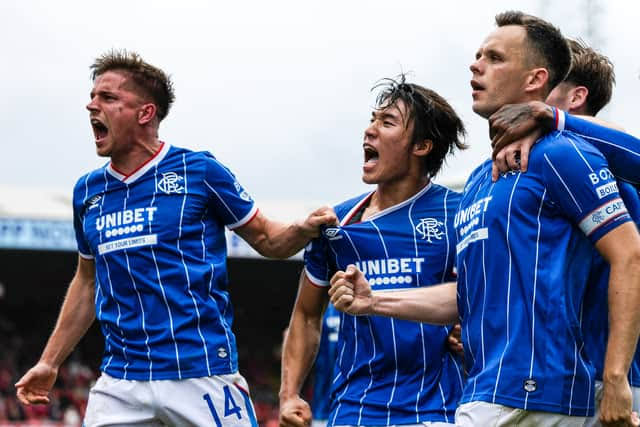
Rangers are reportedly facing a major decision over the future of Nico Raskin, with claims suggesting that an agreement has been reached to sell the midfielder before the January transfer window officially opens. Reports of an eight-figure fee have created fresh uncertainty surrounding the Belgian international, who has become an important figure in the Rangers midfield since arriving at Ibrox. While the details of the reported agreement remain to be independently confirmed, the possibility of such a deal would represent a significant development for the club as they prepare for the second half of the season.
For Rangers supporters, Raskin’s future is not simply another transfer story. The midfielder has been involved in several important discussions about the club’s direction, performances and ambitions, making any suggestion of a potential departure particularly interesting. Rangers have invested time in developing their midfield options, and losing a player of Raskin’s profile could force the manager and recruitment department to reconsider their plans. However, if an offer worth eight figures has genuinely been agreed, the club would also have to consider whether the financial benefits outweigh the sporting consequences.
The reported agreement has raised questions about whether Rangers are preparing for life without the Belgian midfielder or whether the situation is more complicated than the headline suggests. A pre-January agreement would not necessarily mean that Raskin has already left the club. Instead, it could indicate that discussions have taken place over a future transfer, with the possibility of a move being completed when the transfer window opens. Until the relevant clubs or the player’s representatives provide confirmation, supporters should treat the reported arrangement with caution.
Nevertheless, the story has created an opportunity to examine what a potential Raskin departure could mean for Rangers, why an eight-figure fee might attract attention and how the club could approach the January transfer window if the midfielder’s future is genuinely in doubt.
Raskin arrived at Rangers with the qualities expected of a modern central midfielder. His game combines energy, aggression, mobility and a willingness to compete for possession. These characteristics have helped him become a player capable of contributing in different midfield situations. He can help Rangers regain control of the ball, provide support to teammates and bring intensity to matches in which the opposition attempts to dominate the middle of the pitch.
Those qualities are particularly important in Scottish football, where Rangers regularly face opponents who defend in numbers and look for opportunities to disrupt the rhythm of possession. Midfielders must be comfortable dealing with physical challenges while maintaining the technical ability to move the ball forward. They also need the discipline to protect the defence when possession is lost. Raskin’s appeal comes partly from his ability to contribute to these different responsibilities.
A player with that profile can be difficult to replace immediately. Even when a club has several midfielders available, the individual characteristics of each player influence how the entire team operates. One midfielder might be more comfortable controlling possession, another might offer greater attacking creativity, while another provides the physical presence needed to win challenges. Finding a replacement who offers the same balance requires careful recruitment rather than simply signing the first available player.
That is why the reported possibility of an eight-figure sale has generated so much interest. Rangers would not only be losing a name from their squad. They could also be losing a player whose style influences the way the team approaches important matches.
However, football transfers are rarely determined by sporting considerations alone. Contract situations, wages, the player’s ambitions, the financial strength of interested clubs and the selling club’s long-term plans can all influence the final decision. If a substantial offer has been made for Raskin, Rangers would need to examine every aspect of the proposal before deciding whether to proceed.
An eight-figure transfer fee could provide the Scottish club with additional resources to strengthen several positions. Depending on the final amount and the structure of the deal, the money could potentially be used to recruit a replacement midfielder while also improving other areas of the squad. This could be attractive if the manager believes that the team needs greater depth to compete consistently across domestic and European competitions.
Yet the financial argument would only make sense if Rangers use the money effectively. Selling an established player for a considerable amount does not automatically improve a squad. The club would need to identify suitable targets, negotiate reasonable transfer fees and ensure that any new arrival can adapt quickly to the demands of playing at Ibrox.
The January window can be particularly difficult for recruitment. Clubs are often reluctant to sell their best players halfway through a season, and those willing to negotiate may demand higher fees because they have limited time to find replacements. Rangers could therefore find themselves in a difficult position if they agree to sell Raskin but struggle to bring in a midfielder with comparable qualities.
The timing of the reported agreement is another important element. A deal arranged before January could give Rangers additional time to plan for the midfielder’s possible departure. Rather than waiting until the transfer window opens to begin considering alternatives, the recruitment department could start evaluating candidates and assessing which players might be available.
That preparation would be essential if Rangers intend to maintain their competitive standards. A sudden departure during the middle of a campaign can create unnecessary disruption, particularly when the player involved regularly features in the starting lineup. Establishing a clear recruitment plan before the window opens would allow the club to approach the situation with greater confidence.
There is also the question of whether Rangers would want a replacement to arrive before Raskin leaves. Such an arrangement could help the new midfielder settle into the squad and understand the manager’s expectations. It would also reduce the risk of leaving the team short of options during an important period of the season.
If the reported agreement involves a summer departure or another future date, the club might have more flexibility. The manager could continue using Raskin for the remainder of the campaign while preparing for the next stage of the squad’s development. However, the exact timing of any potential transfer remains a crucial detail that supporters would need clarified.
For the player himself, a move could present a different set of opportunities. Midfielders who perform consistently in competitive leagues can attract attention from clubs searching for energy, technical ability and experience. A transfer could offer Raskin the chance to test himself in a different footballing environment, take on new responsibilities or compete in another major competition.
Nevertheless, a move away from Rangers would not necessarily guarantee greater success. A new club would bring different tactical demands, different teammates and potentially more competition for a place in the starting eleven. Raskin would have to demonstrate that his qualities could translate into another system and that he could adapt to the expectations placed on him.
Remaining at Rangers also has potential advantages. The club offers a demanding environment in which players are expected to compete for trophies and perform under significant pressure. A midfielder who becomes an important part of a successful Rangers team can strengthen his reputation while continuing to develop his game. The opportunity to contribute to a title challenge could be an important consideration when deciding what comes next.
This is why the reported agreement should not automatically be interpreted as evidence that the player wants to leave or that the relationship between him and the club has broken down. A transfer can happen for many reasons, and the existence of a reported fee does not establish the personal motivations behind a potential move.
Rangers supporters will naturally want to know whether the club considers Raskin an important part of its future. If the midfielder remains central to the manager’s plans, the board may be reluctant to sanction a departure without securing an adequate replacement. If the club believes that his transfer value has reached an attractive level, however, the financial argument could become more persuasive.
The manager’s position would be particularly important. Coaches are judged on results, and losing an influential midfielder during the season could affect their ability to implement tactical plans. Even if the transfer generates significant income, the manager would still need enough quality and depth to compete in the matches ahead.
A team can sometimes cope with the departure of a key player by changing its formation or redistributing responsibilities among the remaining squad members. For example, a more possession-focused midfielder could take on additional defensive duties, while another player could be asked to contribute more aggressively when pressing the opposition. However, these adjustments require time, and they do not always produce the same balance as the original lineup.
Rangers would therefore need to consider whether their existing midfield options are sufficient to absorb the loss. If several players can perform the required roles, a sale might be manageable. If Raskin is one of the few midfielders capable of combining defensive work with progressive passing, replacing him could become a more urgent priority.
Squad depth would also influence the decision. Injuries, suspensions and fixture congestion can quickly reduce the number of available players, particularly during the winter months. Rangers cannot afford to plan only for their strongest eleven. They must also consider what happens when key players are unavailable and whether the substitutes can maintain the required standard.
This is especially relevant if the club hopes to remain competitive in the Scottish Premiership while pursuing success in cup competitions. Every match carries importance, and a shortage of midfield options could affect performances over a sustained period. The recruitment department would need to account for these risks before approving a major departure.
Financial planning is another area worth examining. Transfer fees are not the same as immediate profit, because clubs must consider the original cost of acquiring a player, any outstanding payments, contractual obligations and the terms of the proposed sale. The headline figure may also include performance-related bonuses or instalments rather than a single guaranteed payment.
Consequently, the phrase eight-figure fee does not tell supporters everything they need to know. A deal worth more than £10 million, for example, would be significant for a Scottish club, but the practical value would depend on how much is guaranteed, when the payments arrive and whether additional conditions must be satisfied.
Rangers would also have to consider the wider transfer market. Selling Raskin could create an opportunity to recruit a younger midfielder with strong development potential, an experienced player capable of making an immediate impact or multiple players who improve the overall depth of the squad. Each approach would carry different risks.
Signing a younger player might offer long-term value and the possibility of a future transfer profit. However, a developing midfielder may require time to adjust to the pressure of playing for Rangers. Recruiting an experienced player could provide greater immediate reliability, although the fee and salary demands might be higher. Bringing in several less expensive players could increase competition within the squad, but it would not necessarily replace the influence of a proven first-team performer.
The correct strategy would depend on the manager’s assessment of the squad and the club’s wider ambitions. If Rangers are targeting immediate success, they may prioritise players who can contribute from the beginning. If the club is building for the longer term, it might be willing to accept a period of adaptation in exchange for greater future potential.
There is also a commercial dimension to the situation. Successful transfers can strengthen a club’s financial position and create opportunities for reinvestment. However, Rangers must be careful not to treat every valuable player as an asset that should be sold at the first attractive opportunity. Maintaining a competitive squad is essential to sustaining the club’s sporting and commercial ambitions.
Supporters expect Rangers to compete for the Scottish Premiership title, challenge for domestic trophies and perform respectably in European football when opportunities arise. Those expectations require a balance between financial sustainability and investment in the playing squad. A major transfer should therefore be judged by what it enables the club to achieve, rather than by the fee alone.
If the reported agreement proves accurate, the club’s next decisions could be just as important as the negotiations themselves. Rangers would need to communicate their plans clearly, identify suitable alternatives and ensure that the squad remains capable of meeting its objectives. Poor planning could turn a financially attractive transfer into a sporting setback.
On the other hand, a carefully managed sale could allow Rangers to strengthen several areas while maintaining the quality of their midfield. The club might identify a replacement who offers a different style of play, giving the manager additional tactical options. A new arrival could also bring fresh competition and encourage existing players to raise their performances.
However, those possibilities remain hypothetical until the reported terms are confirmed and Rangers explain their intentions. Supporters should be cautious about assuming that an agreement has been completed simply because a headline describes the transfer as settled. In football reporting, an agreement in principle, an agreement between clubs and a completed transfer are different stages of the same process.
An agreement between clubs does not necessarily mean that the player has accepted personal terms. Medical examinations, contractual details and other requirements may still need to be completed. Even when all parties are willing to proceed, a transfer can change if negotiations encounter difficulties.
It is therefore important to distinguish the reported claims from confirmed developments. At the time of writing, the alleged pre-January agreement and eight-figure fee should be treated as unverified unless confirmed by Rangers, the prospective buying club or reliable reporting that clearly establishes the details.
That distinction does not make the story any less significant. Instead, it highlights the questions that the reported deal raises about Rangers’ recruitment strategy and their approach to the winter transfer window.
One of the biggest questions concerns the club’s willingness to make difficult decisions when a valuable player attracts substantial interest. Rangers have to assess both immediate performance and long-term planning. Keeping every important player might appear to be the safest approach, but there are circumstances in which a major sale can benefit the wider squad. Equally, accepting a large offer without a credible replacement can undermine the team’s objectives.
The key is identifying the right moment to sell and ensuring that the club is prepared for the consequences. If Rangers have already identified their preferred alternatives, an early agreement could give them a useful advantage. If they have not, the situation could become more complicated as the January window approaches.
The player’s contribution during the weeks before any potential departure would also matter. If Raskin remains available and continues to feature, Rangers may be able to manage the situation without immediate disruption. If the transfer involves an early exit, however, the manager would need to reorganise the midfield and prepare the remaining players for additional responsibilities.
The response from supporters is likely to depend on the final details. Some may argue that a substantial fee represents sensible business, particularly if the money can be reinvested in multiple positions. Others may believe that Rangers should retain an established midfielder until the end of the season, especially if the team is competing for major honours.
Both arguments have merit. Football clubs must make financial decisions, but those decisions cannot be separated from their sporting consequences. A sale that looks attractive on paper can become costly if it weakens the team at a crucial moment. Equally, refusing every significant offer can limit a club’s ability to rebuild and improve its squad.
For Rangers, the challenge would be to establish whether the reported fee reflects the player’s market value, whether the timing suits the team’s objectives and whether the club has a realistic plan for the money. Those considerations should determine the final decision rather than the headline figure alone.
The situation could also have implications for the club’s longer-term recruitment model. If Rangers can consistently identify talented players, develop them and sell them at a profit, they may be able to reinvest in the squad while improving their financial stability. But that strategy depends on strong scouting, effective coaching and the ability to replace departing players without a major decline in performance.
A successful model must also account for the importance of continuity. Players need time to build relationships, understand tactical instructions and develop an understanding of their teammates’ movements. Regularly changing key positions can make that process more difficult. Rangers would therefore have to consider the benefits of any potential sale against the value of retaining a settled midfield.
Ultimately, the reported agreement involving Nico Raskin presents Rangers with a potentially important decision ahead of January. An eight-figure fee would attract attention, but the real question is whether accepting it would leave the club in a stronger position.
If the agreement is confirmed, supporters will want to know which club is interested, how much Rangers are guaranteed to receive, when the transfer would take place and whether a replacement is already being considered. They will also want clarity about the manager’s plans and the role Raskin could play while the situation develops.
Until those details become clear, it would be premature to declare that the midfielder’s Rangers career is over. The report points towards a possible transfer, but only confirmed information can establish whether the move is agreed, when it might happen and what it means for the player and the club.
For now, the biggest issue is preparation. Rangers must ensure that any decision involving a key midfielder supports their ambitions rather than simply generating a headline-grabbing transfer fee. If the club can secure an attractive deal and recruit effectively, the outcome could benefit the squad in the long term. If the departure leaves a significant gap that cannot be filled, the financial gain may prove less valuable than expected.
The January window could therefore become an important test of Rangers’ planning and decision-making. Whether Raskin stays or leaves, the club must demonstrate that its recruitment strategy is built around clear objectives, responsible financial management and the need to compete consistently at the highest possible level.
The reported pre-January agreement has certainly created a major talking point among Rangers supporters. But the final judgement should depend on the facts that emerge, the terms of any confirmed deal and the quality of the club’s response. Until then, the possibility of an eight-figure transfer remains a developing story rather than a completed chapter in Nico Raskin’s time at Ibrox.









