Football managers are used to long messages. They get them from chairmen, agents, former team-mates and well-wishers when a big job is announced. But sometimes the most revealing reaction is the shortest. When Scott Arfield was named player-manager of East Fife, one of the first responses to catch the eye came from the man who had once managed him at Ibrox. Steven Gerrard replied to the club’s announcement on Instagram with the words “Yes Scotty lad.”
It isn’t a statement or a tribute, and there are no adjectives in it. It is a former boss approving a former player in the language a dressing room actually uses. That is probably why it travelled: it sounds like something Gerrard would say to Arfield’s face.
This piece looks at what lies behind those three words: the appointment itself, the club Arfield is inheriting, the unusual player-manager role, the Gerrard connection, and what the wider reaction says about how former Rangers players see one another. I rely on the reporting from Rangers Review, the Daily Record and the Glasgow Times for the facts of the appointment and the reactions. Where I add general background about how football management works, I say so, and I haven’t invented any quotes or details beyond what those reports contain
The facts are straightforward. Arfield, 38, has become East Fife’s new player-manager on a contract that runs until May 2029. The Daily Record described it as his first permanent job in the dugout, after an interim spell at Livingston. He replaces Dick Campbell, and East Fife are currently ninth in League One.
The length of the deal stands out. A contract to May 2029 is a statement of intent for a club at this level, where managers are often given short-term arrangements. It signals that East Fife see Arfield as a long-term appointment, not a stopgap. It also gives him time, which is the scarcest resource a new manager can have.
The announcement came with the usual statements. Chairman Liam Anderson said the club were delighted to have agreed the deal, and described the appointment as innovative and a clear signal of the club’s ambitions. He added that he expected the supporters to welcome Arfield’s arrival, because they are keen to see an exciting brand of football at Bayview.
That last point is worth noticing. Chairmen don’t normally say they want “exciting” football unless they think the current version is lacking. The language suggests East Fife want a change of style as well as a change of personnel, and Arfield has been hired, at least in part, as the man to deliver it.
Arfield’s own words were measured. He said he felt ready to move into coaching after learning a great deal from excellent managers during his playing career, and that he was grateful to East Fife for giving him the opportunity. He went on to describe his aims: to create opportunities for others and to build a team that excites supporters and attracts the attention of the local community.
There are two ideas in that. The first is a debt to the managers he played under, which is a common theme for players who move into coaching. It also quietly acknowledges that a player’s career is a long apprenticeship. Over more than a decade of professional football, he will have seen many different approaches to training, selection, discipline and communication, and now has to decide which of them to keep.
The second idea is more distinctive. Talking about creating opportunities for others fits the role East Fife have in mind. At League One level, a manager’s job is partly about results and partly about development: finding players who can improve, giving younger ones a platform, and building a club that people in the community want to follow. Arfield’s emphasis on the local community shows he understands that the job extends beyond ninety minutes on a Saturday
Every new manager inherits a situation, and East Fife’s is a mixed one. The club sacked veteran manager Dick Campbell last month, and the Daily Record called him a legend of the game. That description matters. Replacing a respected, long-serving figure is one of the harder tasks in football, because the comparison is always there, whether anyone voices it or not.
Campbell’s name is among the best known in Scottish lower-league football, and the Daily Record’s description of him as a legend reflects that. Arfield doesn’t need to be Campbell, and nobody will expect him to be. But he will be measured against a man whose reputation in the game is considerable, and he’ll need to establish his own identity quickly.
The inheritance isn’t all difficult. Arfield takes charge of a side in good form, having recorded successive league wins over Queen of the South and Montrose. That is a useful starting position. A manager who arrives after a poor run has to repair confidence before anything else, whereas one who arrives after two wins can concentrate on adding his own ideas. The danger, of course, is that momentum is fragile and any early defeat will be noticed.
Ninth in League One is neither a crisis nor a triumph. It suggests a team in the middle of the pack, not obviously in trouble but not threatening the leaders either. For a first-time manager, that is probably a favourable place to start: the pressure is real but not suffocating, and there is room to improve without immediate risk of disaster
The most unusual feature of the job is its title. Arfield will combine management with playing, although he isn’t expected to take the pitch immediately while he builds up his match fitness.
The player-manager model has a long history in British football, but it has become rarer at the top of the game as the demands of both roles have grown. At lower levels it survives, and it has some obvious attractions. A player-manager can lead by example, understands the dressing room from the inside and offers the club two roles for the price of one. For a club with limited resources, that matters.
It also carries well-known risks, and this is general background and not something drawn from the reports. A manager who plays has to judge his own performances objectively, which is hard. He has to decide whether to pick himself, which creates an awkward conflict of interest. He is on the pitch during the match, which means he can’t see the whole game as clearly as a manager standing on the touchline. And he has to maintain authority over team-mates who, a few weeks earlier, were his equals.
The reports suggest East Fife are aware of this. The fact that Arfield isn’t expected to play straight away indicates the playing side is secondary at this stage, with the priority being to establish himself as manager first. That sequencing is sensible. A new manager who tries to do everything at once risks doing none of it well, and giving himself time to build his fitness avoids the situation in which he selects himself before he is ready.
Arfield’s path to this job has been shorter than many. He spent the latter part of last season as Livingston’s interim manager. That experience matters more than the word “interim” might suggest. Caretaker spells are a quick education in the realities of the job: dealing with injuries and suspensions, managing a squad’s mood, explaining decisions to players who want to be selected, and answering questions from the media after a defeat.
It also gave him something many first-time managers lack, which is a public record. His time at Livingston will have given East Fife a basis for judging him, and it presumably contributed to their decision. Hiring a manager who has already held the role, even temporarily, carries less risk than hiring one who has never done it.
The report also notes that Arfield is a former Canada international, which indicates the breadth of his playing career. He has played at international level, and players with that experience often bring a wider perspective than those who have spent their careers in one league. Whether that translates into management is uncertain, but it is part of the CV East Fife have bought into.
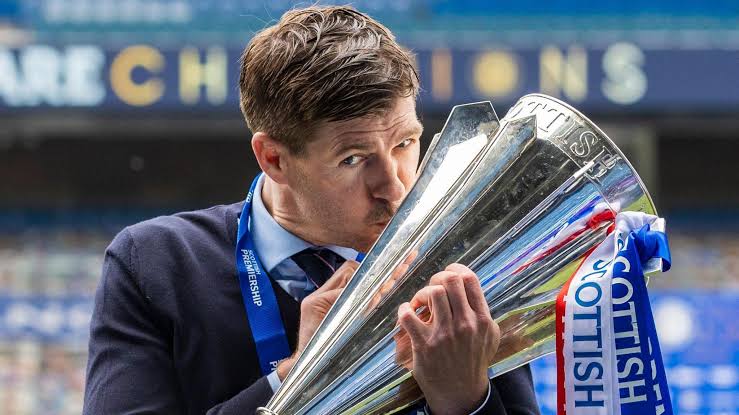
What gives Gerrard’s reaction its force is the history behind it. Arfield was part of the Rangers squad that won the Premiership under Gerrard in the unbeaten 2020/21 season, and the two enjoyed a successful spell together at Ibrox. That season is among the most celebrated in the club’s modern history. It ended a long wait for a league title and was achieved without a single defeat, which is why the players involved are often referred to as invincibles. The Glasgow Times used that description in its headline about Arfield.
For a manager to remember a former player’s nickname and respond to his appointment in this way suggests a relationship that outlasted the football. Gerrard has moved on considerably since those days, and it is worth recalling how far. After the title-winning season he was appointed manager of Aston Villa in November 2021, but was dismissed after eleven months in charge. He then managed Al-Ettifaq in Saudi Arabia from July 2023 until January 2025.
None of that has diminished the affection between Gerrard and the players he worked with at Rangers. If anything, the Ibrox years remain the high point of his managerial career, which explains why he continues to be tied to the club’s story. He has said he came very close to accepting a second spell as Rangers manager before declining, and that his heart was with Rangers and always would be. That context makes the Instagram comment more meaningful. It is the reaction of someone who still thinks of that squad as his
Gerrard wasn’t the only former Rangers figure to respond. Kemar Roofe, Andy Halliday, Jon Flanagan, Scott Wright and Andy Firth also reacted to the news.
That list is interesting in its own right. It includes players from different eras and roles at the club, which shows that Arfield’s standing reaches beyond a single squad or season. It is also a reminder of how closely connected the players who passed through Ibrox in this period remain. Halliday, who appeared elsewhere in the week’s football coverage as an analyst, is one of several former players who have stayed in the public conversation about the club.
Dressing rooms create bonds that last long after careers end, and these reactions are a small example. When a former team-mate gets a first managerial job, the others notice. Messages of support from people who know the individual personally are more than politeness. They are an informal endorsement from people who have seen him at his best and worst, and for a new manager that matters.
There is also a practical side, which is general observation and not from the reports. Managers rely on networks: for advice, for recommendations on players and staff, and for a sounding board when decisions are difficult. A manager with a strong network of former colleagues has access to knowledge that a newcomer without one does not. Arfield’s reception suggests he has th
Arfield’s appointment fits a broader pattern. The Scottish game has long produced managers from the ranks of former players, and the journey from respected professional to first-time manager is a familiar one. It is also a risky one. Success as a player doesn’t guarantee success in the dugout, and plenty of admired players have struggled once they swapped the pitch for the touchline.
Gerrard’s own record illustrates the point. His success at Rangers came in his first senior job, but the later spells were harder. The lesson isn’t that former players can’t manage. It is that the job is a different one, and the skills that made someone good on the pitch, such as technical quality, competitiveness and leadership by example, are only part of what is needed.
What tends to separate those who make the transition from those who don’t is adaptability. A good manager learns to communicate with a whole squad, not just the best players. He learns to deal with the media, to manage a budget and to make unpopular decisions. He also learns to delegate, which is particularly relevant for a player-manager who has to trust his staff to cover for him while he is on the pitch.
There is another case in the search results that illustrates how complicated the picture can be. Michael Beale, who worked under Gerrard as a coach at Rangers, later returned to the club as manager in November 2022 and stayed until October 2023. He is now at Zulte Waregem in Belgium. His story shows how intertwined the careers of people who worked with Gerrard have become, and how varied the outcomes ca
To judge whether the appointment makes sense, it helps to think about what East Fife actually need. The reports suggest a club that wants better football, more ambition and a stronger connection to its supporters. Arfield’s stated aims match that list closely: a team that excites fans and engages the local community.
Whether he can deliver is a separate question, and it will take time to answer. The factors that will decide it are fairly ordinary. Recruitment, in a league where budgets are tight, will matter. So will his ability to get the best from the existing squad, to build a coaching staff he trusts, and to handle the inevitable difficult spells.
The two-sided nature of the job creates a particular challenge. When results are good, the combination of manager and player can create a powerful sense of unity. When they are poor, the manager’s own performances on the pitch will be scrutinised alongside his tactical decisions. That is a double exposure few managers face, and it requires a thick skin.
On the other hand, the contract length gives him a margin that many in his position would envy. A deal to 2029 tells the squad, the supporters and the media that the club is committed to a project and not a quick fix. That is a significant advantage, as long as the results don’t deteriorate so badly that the commitment becomes
Back to the three words. There is a reason that “Yes Scotty lad” resonates more than a polished statement would. It is informal, warm and instantly recognisable as personal. It says that Gerrard is pleased, that he thinks Arfield deserves the chance, and that he sees him as one of his own, all without a single sentence of explanation.
That kind of reaction has a particular value in the football world. Supporters can tell when praise is routine and when it is sincere, and a short, affectionate message from a former manager tends to read as the latter. It also costs the sender very little and means a great deal to the recipient, which is an unusual combination.
It is also worth saying that the message doesn’t claim anything about the future. Gerrard isn’t predicting success or promising results. He is simply welcoming a former player to a new chapter, and that restraint is part of why it works. It avoids the hyperbole that often surrounds managerial appointments and leaves the judgement to be made on
Scott Arfield’s appointment is a modest story in the context of the whole football calendar, and a significant one for East Fife and for him. A former Rangers title winner, with an interim managerial spell behind him, takes charge of a League One club on a contract that runs to 2029. He inherits a team in reasonable form, a predecessor with a formidable reputation and a chairman who wants more attractive football.
The support from his former colleagues is a good sign, but it won’t win any matches. What will matter is how quickly Arfield can turn the squad’s recent form into something sustainable, how well he handles the dual role, and whether his approach to building a team lives up to the language of the announcement.
For now, though, the moment belongs to a short Instagram comment from a man who once led Arfield to a league title. It tells us less about what will happen at Bayview than about the relationships formed at Ibrox, and the way they continue to shape the careers of those who passed through. Three words won’t decide East Fife’s season. They do show that when Arfield takes his first training session, he does so with the good wishes of the people who know him best.