Ex-FIFA Referee Reacts to Rangers Controversy vs St Mirren as Chris Sutton Is Correcte


Football has a long tradition of arguing about penalties, and Saturday night in Paisley added another chapter. Rangers won 2-0 at St Mirren to close the gap on Celtic, but the talking point afterwards was not the goals or the title race. It was a first-half spot-kick, the extent of the contact that led to it, and a pointed disagreement between a former Celtic striker turned pundit and a former head of English refereeing about what the laws actually require.
The result itself was significant. Rangers moved one point behind Scottish Premiership leaders Celtic thanks to goals from Ryan Naderi and Dan Neil. The context matters too. Draws against Dundee and Hearts in their last two away league games had blemished the title challenge, but Derek McInnes’ side were determined to leave without a mark on them. That determination was visible from the start, and a decisive moment came early in the match, after which the argument began.
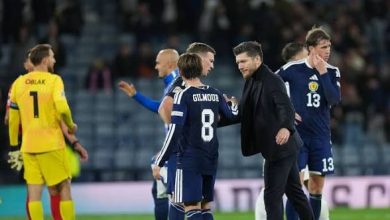
The breakthrough came in the first half when referee Nick Walsh awarded a penalty following contact between Samuel Ramos and James Penrice. The left-back went to ground inside the area, the whistle sounded and Rangers had the chance to take the lead. Naderi converted from the spot to put the visitors ahead. Reports differ slightly on the exact minute, placing it somewhere around the quarter-hour mark, but all agree that it arrived early and shaped the match.
The video assistant was involved, though only briefly. VAR checked the foul and did not believe it was necessary for Walsh to reconsider his decision. That is the key procedural point. The referee made a call on the pitch, the technology reviewed it and concluded that it was not a clear and obvious error. In the system as it currently operates, that is the end of the matter, whatever the television audience thinks.
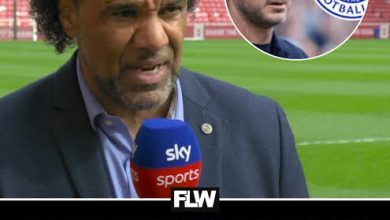
The audience, or at least some of the people paid to talk to it, had very strong opinions. Chris Sutton and James McFadden were both surprised by the decision to point to the spot, with McFadden describing it live on Sky Sports as the softest of soft penalties. Another account of the same commentary has him calling it softer than soft. Either way, the message was clear: the co-commentator did not think the contact justified the award.
Sutton went further. At half-time, he argued that there had not been enough contact to justify a penalty. He came back to the point after the match, when the debate moved to Penrice’s own account. Sutton said the defender had played the referee like a piccolo to win the penalty. It was a vivid line, and it pointed at the idea that the player had exaggerated the contact to earn the decision. That kind of accusation tends to spread quickly on social media, because it combines a specific allegation with an easy metaphor.
Then came a second layer. After Penrice’s interview, Sutton responded that the player sounded pretty guilty and that he was not sure he was convinced it was a penalty, calling it an admission that it was not really one. That is a harsh reading of a post-match chat, and it is worth being careful about. Players are routinely asked whether a decision was a penalty, and the honest answer is often that they do not know. Interpreting hesitation as guilt is a leap, though a tempting one for a pundit looking for a story.
Kris Boyd, also in the studio, offered a different perspective. He argued that it does not matter whether a decision is a soft-boiled egg or a hard-boiled egg, because it is still a boiled egg. The line landed because it captured a truth that many supporters feel. A penalty is a penalty, and whether it was gentle or forceful is beside the point if the laws say that contact has occurred. Boyd also credited the referee. He said Walsh deserved praise for making the call himself rather than relying on VAR to step in, though he admitted he was not sure it was the right decision.
That is a useful distinction. A referee who awards a penalty confidently, in real time, demonstrates the kind of decisiveness that supporters say they want. The system works best when the person on the pitch makes the decision and the technology acts only as a safety net. In this case, that is exactly what happened. Whether the decision was right is a separate question, but it was not a case of the referee hiding behind the video assistant.
The correction to Sutton came from Keith Hackett, the former head of English refereeing and a former FIFA official. Speaking exclusively to Ibrox News, Hackett insisted that it does not matter how minimal the contact was. His reasoning was clear and rooted in the wording of the laws. He described it as a careless challenge by the defender, who makes contact with his opponent, concluding that it is a foul and a penalty kick.
That analysis is the heart of the disagreement. Sutton’s argument is essentially about the amount of contact: it was too light, therefore it should not have been a penalty. Hackett’s argument is about the nature of the contact: if a defender is careless and makes contact with an attacker, the offence is committed, whether or not the attacker is knocked flying. Under the laws of the game, the threshold for a direct free kick is carelessness, recklessness or excessive force. A trip or a clip that is careless is a foul, even if the player might have stayed on his feet.
This is a point that supporters and pundits often miss. There is a widespread belief that contact must be significant for a penalty to be given, and that a player who goes down too easily should not be rewarded. In some circumstances that is right, because a referee can punish simulation. But if there is real contact that is careless, the fact that the attacker might have ridden the challenge does not erase the offence. Players are entitled to go to ground when they are caught.
Sutton, for his part, did not concede the point. He went on to reiterate that it was absolutely not a penalty, even after Hackett explained why it was. That is part of the nature of football debate. Strong views rarely yield to technical explanations, and for a pundit with a personal brand built on opinion, retreating is not an attractive option. It also reflects genuine disagreement about where the line should be drawn, and in the grey area between a foul and a normal coming-together, reasonable people can differ.
There is another thread that deserves attention. Earlier this season, the same fixture at Ibrox produced a controversy that went the other way. St Mirren felt they should have had a penalty when Ismeal Kabia and Emmanuel Fernandez collided, but referee Don Robertson and VAR agreed that no penalty should be awarded. At that time, former referee Bobby Madden took the view that the contact deserved a spot-kick, while Hackett took the opposite view, saying the referee was in a great position and arguing that the St Mirren player should have been cautioned for simulation.
That history makes Saturday’s comments more interesting. Hackett’s position on the earlier incident was that a player had gone down too easily and should be booked. His position on Saturday was that contact, however minor, justified a penalty. Those views are not contradictory, because the key difference is whether contact was made and whether the defender was careless. But they illustrate how fine the distinctions are, and how easily the same principle can lead to different outcomes depending on how the incident is read.
The St Mirren side also felt a sense of recurrence. One comment in the coverage noted that after the game at Ibrox the club received an apology for a penalty they should have got, where there was a decent amount of contact. The speaker accepted that if the referee gives a decision on the field, it can be difficult for VAR to overturn it, but the sense of being on the wrong end of marginal calls is a familiar one for clubs outside the Old Firm. Whether or not that perception is fair, it shapes the way these incidents are received.
It is worth setting the controversy against the wider picture. Rangers had earned the lead, but they did not rely on it. Dan Neil added a second just after the hour mark with a deflected strike, extending the unbeaten run in all competitions to 12 games. That is a long run, and it suggests a team that is growing in confidence. Whatever view one takes of the penalty, it is hard to argue that the outcome was undeserved over the course of the match.
The title race adds pressure to every decision. Celtic began Sunday’s home game against Kilmarnock with their advantage reduced to one point after both Glasgow clubs had completed twelve league matches. In such a tight contest, every point carries weight, and every contentious call is magnified. A penalty awarded in a game decided by two goals may seem less consequential than one in a game decided by one, but in a title race, the accumulation of small decisions can matter enormously.
That is why the debate will not disappear quickly. Supporters of other clubs, particularly Celtic, will point to the penalty as evidence of favourable treatment. Rangers supporters will respond that the decision was correct under the laws and that Hackett’s analysis supports them. The truth, as is often the case, lies somewhere between the two. The decision was defensible, the contact was real and the referee was entitled to give it, but it was also not the most obvious penalty, and the strength of the reaction is a reminder of how much latitude referees have.
There is a larger lesson about the role of pundits. Sutton and McFadden are paid to give instant reactions, and their comments are part of the entertainment. But a half-time verdict, however firmly delivered, is not the same as a considered analysis. Former referees such as Hackett bring a different perspective, grounded in the laws and in experience of making similar decisions. When the two clash, viewers are left to decide whom to trust, and the answer is rarely clear-cut.
It also highlights how much the standard of debate depends on knowing the laws. Many arguments about penalties are really arguments about what a penalty should be, not about what the rules say. The two are not the same. Fans may feel that minor contact should be ignored, but the laws do not set a minimum threshold of force. They ask whether the challenge was careless, reckless or excessive. Understanding that distinction does not end the argument, but it can make it more productive.
From a practical point of view, the officials performed in line with the guidelines. The referee saw the incident, made a decision and the video team checked it and agreed it was not clearly wrong. That is how the system is supposed to function. If supporters want a different outcome, they need to argue for a change in the protocols, not criticise the officials for following them. That might mean a lower threshold for intervention, or greater use of pitchside reviews, but those are decisions for the governing bodies.
Meanwhile, Rangers can take satisfaction from the manner of the performance. They went to Paisley, took the lead, controlled the game and added a second. That is what title challengers are supposed to do. Penrice, who has been a consistent performer, will be targeted by critics for a while, but he has little to answer for. Players are encouraged to win decisions, and a defender who clips an opponent in the box cannot complain if the whistle goes.
For Sutton, the episode is another in a long line of disputes with Rangers’ fortunes, and it will not be the last. His willingness to speak bluntly makes him a compelling presence on television, but it also means he is frequently on the receiving end of rebuttals. Being corrected by an experienced former official is part of the price of being a pundit, and it is probably a price he is willing to pay.
As the international break approaches, the story will fade, to be replaced by new controversies when the league resumes. But the questions it raised will remain: how much contact is enough, how much deference should VAR show to the referee, and how can the game better communicate the reasoning behind its decisions? These are not easy to answer, and they will continue to be debated for as long as football is played.
For now, the facts are simple. Rangers were awarded a penalty for contact between Ramos and Penrice, VAR checked it and left it alone, Sutton and McFadden thought it far too soft, and Hackett explained that the laws only require a careless challenge with contact. Rangers won 2-0, moved a point behind Celtic and extended their unbeaten run to 12 games. The rest is argument, and in Scottish football, there is always plenty of that.
The Sutton, McFadden, Boyd and Hackett comments come from reports published today. I can’t tell who made the “we get an apology” comment, so I haven’t named them. The penalty minute is reported as the 16th in one source and the 18th in another, so I kept it vague. The explanation of how the laws treat “careless” contact is my own summary and not a quote, so check it against the Laws of the Game if you plan to publish.