Rangers Winger Minsu Kim Ruled Out of South Korea Under-21 Squad With Injury
Reported 10 November 2026
A setback at an awkward moment
Minsu Kim’s first few months in Scottish football have been a study in contrasts. In the space of roughly eleven weeks, the 20-year-old winger has gone from a little-known Girona product who barely featured in La Liga to a Rangers number 10, a senior South Korea international and, now, a player forced to miss another window of international football through injury. On Tuesday 10 November, the Korea Football Association confirmed that Kim has been withdrawn from the national under-21 squad, a decision that closes off what was supposed to be a useful stretch of competitive minutes after he was left out of the senior group.
The news is a minor blow rather than a crisis. By every available account the problem is a calf issue, the player is expected to be back in the Rangers squad within a fortnight, and the national association framed the withdrawal as a precaution rather than a diagnosis of anything serious. But the timing, and the story that surrounds it, make this more than a routine injury note. Kim is a player whose profile has risen quickly, whose results have not yet matched the attention, and whose standing with the national team has swung sharply in a matter of weeks. This piece sets out what has been confirmed, what is still uncertain, and why a calf strain in November matters more than it might seem.
What the Korea Football Association said
The KFA announced on 10 November that Kim had been removed from the under-21 call-up. Its statement said the player was being excluded to protect him following an injury, and that Suwon Samsung Bluewings forward Gyeol Kim had been selected as his replacement. Gyeol Kim plays in the second tier of Korean football, the K League 2, and his promotion into the squad is the kind of late, practical substitution that national federations make routinely when a European-based player drops out.
The under-21 side is coached by Kim Eun-jung, and Minsu Kim had been expected to join that group specifically to gain age-group match experience. That detail matters. Under-21 fixtures are not the glamour end of international football, but for a player who has spent much of the past two years either on loan in Andorra or on the fringes at Girona, minutes with a national team of any age are valuable. They are also a way of staying in the national conversation. Losing that opportunity is a real, if modest, cost.
The wording the KFA chose is worth noting. Describing the exclusion as being for the player’s protection is standard language, and it signals caution more than alarm. National associations tend to use it when they would rather not risk a player’s fitness for a lower-priority fixture, particularly when the club, in this case Rangers, has a stake in the outcome. There was no suggestion in the statement of a lengthy absence, and none of the reporting that followed offered a longer timeline.
The injury itself
According to the reporting in both Korea and Scotland, the problem is in Kim’s calf. The KFA indicated that the injury was picked up in Rangers’ most recent match, a 2-0 win away to St Mirren in Paisley. Kim finished on the winning side but did not finish the game: he was taken off before full-time, and the account given is that the substitution was down to the injury rather than tiredness or a tactical decision from the bench.
Calf injuries are among the most common muscular problems in professional football, and their severity varies widely. A tightness or minor strain can clear in a matter of days with careful management, while a more significant tear can sideline a player for several weeks. Because Kim was substituted rather than playing on, and because the national team has chosen to withdraw him rather than wait and see, it is reasonable to infer that the club and the federation judged rest to be the sensible course. It is not reasonable to say anything firmer than that. Neither Rangers nor the KFA has published a medical grading, and the reporting that exists is second-hand. Anyone claiming to know exactly how long he will be out is speculating.
What can be said is that the early signals are not pessimistic. The Scottish coverage points to Kim being available for Rangers’ next fixture after the international break, a Premiership game against Motherwell on 21 November. That timeline would mean he misses nothing at club level, which is the outcome Rangers supporters will care about most.
What it means for Rangers
From Rangers’ point of view, the international withdrawal is almost a convenience. Players who report for national duty injured or half-fit are a perennial worry for club managers, and a calf problem that might have been aggravated in a hard-fought under-21 match is precisely the sort of risk a club would prefer to avoid. By staying away from the squad, Kim gets uninterrupted time with Rangers’ medical and conditioning staff, and the club avoids the scenario in which he returns from a trip to South Korea with the injury worse than he left.
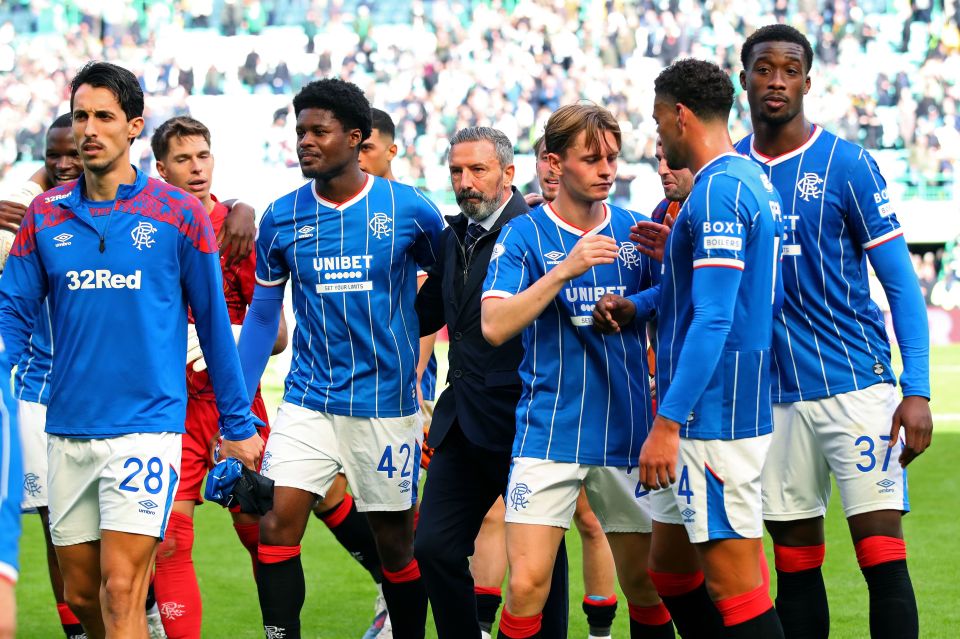
The caveat, as with anything in this story, is that the optimistic return date comes from Rangers-focused media rather than an official club statement. Managers in Scotland and elsewhere routinely hold their cards close, and a player described as likely to be available can still be left out of the matchday squad if he is not fully fit. Derek McInnes, who took Kim into his team quickly after the summer signing, has shown he is willing to use the winger in big games, including the Old Firm fixture at Celtic Park in September. If Kim is fit for Motherwell, he will probably be in contention. If he is not, Rangers have other attacking options, but few who bring the same combination of youth, technical quality and uncertainty.
There is also a squad-management angle. Rangers have had their own injury issues this season. Captain Lawrence Shankland was forced off early in an away match at Motherwell back in September, a reminder that the club’s attacking resources are not unlimited. Every additional absence tightens the margins for McInnes, which is one reason the early optimism around Kim’s recovery will be received gratefully at Ibrox.
How Kim got here: from Gwangju to Barcelona
To understand why a calf injury to a 20-year-old generates this much coverage, it helps to look at the path he has taken. Kim was born in January 2006 in Gwangju, a city of around 1.5 million people that is remembered internationally for hosting the 2002 World Cup quarter-final in which South Korea knocked out Spain on penalties. There is a pleasing irony in the fact that Spain would later shape his career. When he was ten, his family made the unusual decision to commit fully to his football development. His mother took him to Barcelona, while his father and two sisters stayed behind in South Korea.
That sacrifice is the foundation of his story. In Catalonia he moved through a series of youth clubs, passing through Penya Blaugrana Cinc Copes, Premier Barcelona, Mercantil and Damm before arriving at the Girona academy in 2022. He progressed through Girona’s B team, where he made a substantial number of appearances and scored a respectable tally of goals for a young attacker, and he eventually reached the first team. His La Liga debut came in October 2024, a landmark for a player who had left South Korea as a child. But opportunities in Girona’s senior squad were limited, and his top-flight record there was thin: only a handful of appearances and no goals.
The next step was a loan to Andorra in the Spanish second division for the 2025-26 season. It proved to be the making of his senior career. Across roughly forty appearances he scored six goals and provided four assists, enough to establish him as a regular first-team player and to demonstrate that he could handle the physical and tactical demands of professional football week in and week out. It was the kind of season that attracts scouts, and by the summer of 2026 his profile had grown beyond what his Girona numbers alone would have suggested.
The move to Ibrox
Rangers confirmed the signing of Kim from Girona in late August, on a four-year contract with an option for a further year, subject to international clearance. Spanish reports said the Scottish club paid his release clause, put at ten million euros, with sterling reports putting the figure at roughly 8.5 million pounds. Either way, it was a significant investment in a player with limited top-level experience, and it reflected how highly Rangers rated his potential.
He was handed the number 10 shirt and became the first South Korean men’s player in Rangers’ history, a distinction the club made a point of highlighting. In his introduction, Rangers manager Derek McInnes described him as a talented young player with excellent technical ability and energy, someone who wants to develop. That is a measured endorsement rather than a boast, and it fits the profile: Kim arrived as a prospect, not as a finished article.
The wider context helped explain the interest. Kim had been named by the CIES Football Observatory, an analytical body linked to FIFA, among a list of 100 promising players born after 2006 who play outside Europe’s top five leagues, and he was the only South Korean on that list. Spanish media had even floated him as a potential successor to national icon Son Heung-min. Those comparisons are heavy for any young player, and they should be treated with caution. They do, however, illustrate the expectations that travelled with him to Glasgow.
A turbulent international picture
Kim’s relationship with the South Korea national setup has been unusually volatile for a player so early in his career. Before his Rangers move, he was overlooked by Hong Myung-bo, then the senior national team coach, and by Lee Min-sung, who led the under-23 side for the Asian Games. Korean media described the Asian Games omission as a mystery, and some reports suggested the decisions came despite his consistent performances in Europe. An earlier invitation to a September training camp under Lee had gone unfulfilled because of club obligations.
Then circumstances changed quickly. Hong left his post following South Korea’s World Cup campaign, and Robert Moreno, the former Spain manager, was installed as interim head coach. Moreno named Kim in his senior squad in mid-September, a first call-up that Scottish coverage described as a surprise in South Korea. It was, by any measure, a rapid turnaround: a player who had been passed over for age-group and senior selections was suddenly in the senior group within weeks of arriving at Rangers.
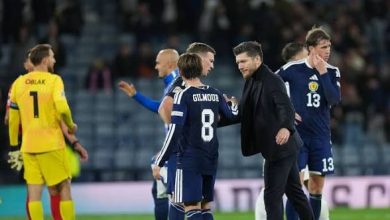
He joined camp slightly late, because McInnes used him in the Old Firm match at Celtic Park, and then made his international debut. South Korea played Ecuador in Suwon, then Uruguay at Seoul World Cup Stadium on 28 September. The Uruguay game ended in a 4-1 defeat, but Kim’s second-half appearance was singled out for praise. Korean commentators and supporters responded warmly to his 45-minute cameo, and Rangers-focused coverage described it as the one bright spot in a heavy loss. He added another appearance against Venezuela in Ulsan on 2 October, bringing his senior tally to three caps without a goal.
The November omission and the U-21 plan
Against that backdrop, his omission from Moreno’s squad for the November fixtures came as a disappointment. The interim coach named 26 players for matches against Saudi Arabia and Qatar in Doha on 13 and 17 November, the final international window of 2026, and Kim was among several players who missed out as Moreno made changes.
Explanations for the decision have been tentative. One Korean journalist suggested that the squad would already have been submitted before Kim’s most recent club game, so the injury was not the reason, and that the likeliest explanation was simple competition for places, with Eom Ji-sung ahead of him in the pecking order. That view framed the omission as a normal selection call rather than a rebuke, and even suggested it might motivate the youngster to sharpen his club form.
The under-21 call-up was meant to soften the blow. Rather than sitting out the window entirely, Kim would have joined Kim Eun-jung’s group and played competitive minutes at an age-appropriate level. With the injury, that plan has gone too. He now has neither the senior squad nor the under-21 squad this month, which gives the break an unwelcome emptiness for a player trying to maintain momentum.
Form at club level
The more pressing question is what Kim does for Rangers. By the available accounts his start has been uneven. He has not yet scored or provided an assist since joining from Girona, and local coverage has described his performances as inconsistent. That is not unusual for a young player adapting to a new country, a new league and the intensity that comes with representing one of Scotland’s two biggest clubs, but it does mean the narrative around him currently runs ahead of the output.
It is worth being fair about this. Kim’s route into the first team has been compressed. He arrived late in the summer window, was thrust quickly into big matches and has been balancing club and country duties almost from the start. Players in that position often take time to settle, and a few months is a short sample. There were also signs of promise: the technical quality McInnes talked about, the energy that impressed in the Uruguay game, and the willingness of his manager to trust him in high-pressure fixtures.
Still, the early season has left a gap between potential and production. The calf injury, minor as it appears, will not help him close it, particularly if it costs him training time. For a winger whose game depends on sharpness and acceleration, even a short disruption can interrupt rhythm.
What comes next
The near-term picture is straightforward. Kim will stay in Scotland, receive treatment, and, if the reporting is right, return for the Motherwell game on 21 November. The international window will pass without him, and Gyeol Kim will take his place in the under-21 squad.
The longer-term picture is more interesting. Kim is a player with genuine international relevance and a club that has invested heavily in him, yet his position in both setups is fluid. Moreno is an interim coach, which means the senior team’s direction could change again, and a new permanent appointment would bring fresh selection priorities. At Rangers, McInnes has shown faith in Kim, but patience is not infinite in a league where results are scrutinised intensely. A good run of form in December and January, with goals and assists to justify the number 10 shirt, would transform the conversation. A prolonged lull would sharpen the doubts.
For now, the sensible reading is that nothing about this injury changes the fundamentals. It is a small, protective withdrawal affecting a player with real promise and a lot still to prove. The things to watch are whether he is in the squad against Motherwell, how he performs when he returns, and whether the national team continues to see him as part of its plans.
A note on sourcing
The core facts here, that Kim was withdrawn from the under-21 squad due to injury, that the KFA announced it on 10 November, and that Gyeol Kim was called up in his place, are consistent across Korean and Scottish outlets. The detail about a calf injury sustained against St Mirren, and the expectation that he will be fit for Motherwell on 21 November, come from Scottish reporting that cites the KFA but is not an official Rangers medical bulletin. As with any developing injury story, the picture could change if the club releases new information or if the player’s recovery does not go as planned.