Scott McTominay ‘had shock on heart’ two days before World Cup game as ex-Man Utd star opens up on summer

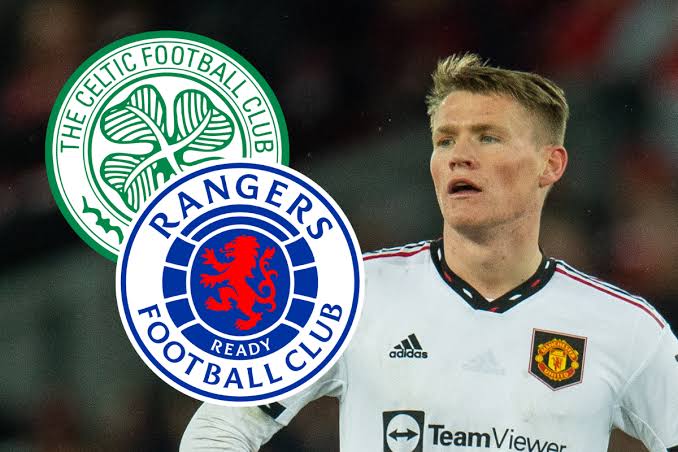
Some tournaments end in a single image. For Scotland at the 2026 World Cup, it may be Scott McTominay stretching to meet a John McGinn cross against Brazil, only to see Alisson claw the header away. It was the kind of chance the Napoli midfielder has been converting for two seasons in Italy, and the kind he simply couldn’t convert in the United States.
This week, McTominay explained why he thinks that was. He told an interview that the tournament had been a struggle because he had fallen ill in the days before Scotland’s opener, and that he felt unwell for much of what followed. He called his below-par displays one of the biggest regrets of his career. Two days before the first match, he said, he felt ill and didn’t know whether he would play. He has since needed heart surgery for an unrelated-sounding but now very present problem. For a footballer whose whole reputation rests on arriving in the right place at the right moment, the picture that has emerged is a sobering one
To understand why the regret is so sharp, you have to remember what this tournament meant. Scotland had not been to a World Cup since 1998. Qualification was a feat that Italy, a four-time winner, could not manage, and the Tartan Army travelled to North America in the tens of thousands. Reaching the knockout rounds of a World Cup had never been done by a Scotland side, and in a tournament expanded to 48 teams, a group that included Haiti looked like the best chance the country would ever get.
The draw was kind in one respect and cruel in another. Haiti, back at the World Cup for the first time in more than fifty years, were there to be beaten. But Brazil and Morocco, ranked among the top handful of teams in the world, sat in the same group. The plan was simple enough to say aloud: beat Haiti, take something from one of the giants, and make history.
McTominay was the centre of that plan. He had been the best Scotland player for several years and, at Napoli, had become one of the most productive midfielders in Serie A. He scored twelve league goals as Napoli won the title under Antonio Conte in 2024-25, and in total he had scored 27 goals in 82 matches for the club by the start of this season. Steve Clarke planned to use him as an attacking midfielder, the role that suits his arrival in the box, rather than the deeper or more defensive positions he has sometimes been given.
Scotland’s preparation had its own blows. Billy Gilmour, McTominay’s Napoli club-mate, was ruled out of the tournament after a cruel injury in a friendly win, a loss McTominay called devastating in a public message to his friend. McTominay himself looked sharp in the final warm-up, scoring in a 4-0 win over Bolivia. By the time the squad settled in the Boston area, there was reason for optimism.
Then came the Thursday before the opener. On 11 June, with the tournament under way elsewhere, Scotland trained without McTominay. The initial explanation was a stomach complaint, and the reaction was the sort of measured concern that surrounds any key player two days from a big match. Kenny McLean, speaking to reporters, tried to sound reassuring. Defender Scott McKenna was also absent with a knock, which made the day feel even more like a minor crisis.
By the following day, the mood had lifted. Clarke said McTominay was ready to go after overcoming the bug, and a day later McTominay was photographed training with the squad. The story, as it was told at the time, was a small scare with a happy ending. Nobody asked, because there was no reason to, whether the midfielder had in fact recovered at all.
McTominay’s own account suggests the answer was more complicated. Two days before the first match, he said, he felt ill and did not know whether he would play. He played. In the circumstances that is easy to admire and equally easy to question. Captains and talismans in his position do not step aside two days before a first World Cup in 28 years unless they truly cannot stand.
The opener, on 13 June at Boston Stadium, delivered the result and little else. Scotland beat Haiti 1-0, and John McGinn scored the only goal in the 28th minute with a shot that took a couple of deflections on its way in. It was McGinn’s first goal for his country in 13 games, and it made him Scotland’s first World Cup scorer since Craig Burley in 1998.
It was a nervy win. Haiti had their moments, with Frantzdy Pierrot missing the best chance to take a point, and Scotland held on through eight tense minutes of stoppage time. But the result put Scotland top of the group, at least for a few hours, after Brazil and Morocco had drawn 1-1 earlier in the day.
McTominay’s contribution was a glimpse of what might have been. He hit the post. In a match decided by one deflected shot, a centimetre either way would have made the afternoon comfortable and given the rest of the tournament a different feel. Afterwards, as the reviews came in, the verdict was that Scotland had done what they had to do and nothing
What followed was the part of the story that Scotland supporters would prefer to forget. On 19 June, Morocco beat them 1-0 in Boston, and the defeat exposed the gap between a team that had qualified and a team that could compete at this level. Scotland failed to register a single shot on target, the first time that had happened to them at a World Cup since 1986. Morocco completed 601 passes, the most by an African team in a World Cup match since 1966. McTominay had a reasonable penalty claim that went unrewarded, but the match was lost in the middle of the pitch, where Scotland were out-passed and out-thought.
The final group game was against Brazil in Miami. It could hardly have started worse. Inside seven minutes, Vinícius Júnior ran onto a mistake from McKenna, rounded Angus Gunn and scored. A second Brazil goal was ruled out for a foul, but the pattern was clear, and Brazil eventually won 3-0. McTominay’s header, which Alisson saved at close range after McGinn’s cross, was the best chance Scotland created. He had others, including a header late on and a further effort in added time, and each time the Brazil goalkeeper was equal to it.
The ending was administrative rather than dramatic. Scotland finished third in Group C with three points and a goal difference of minus three. They then waited two days for other results to go against them, and when they did, their tournament was over. They had become the ninth World Cup squad in their history to leave at the group stage, and the first to do so having at least given their country a reason to dream.
In the assessments that followed, McTominay’s tournament was graded harshly. One set of player ratings described him as a talisman who could not reach his Napoli heights, noting the post against Haiti, the penalty claim against Morocco and a number of half-chances against Brazil. It was fair, and it was precisely the sort of assessment that makes the later explanation so striking.
McTominay’s interview, which has been reported in English as an account of his surgery and his World Cup regrets, is notable for its candour. Asked whether he had felt unwell during the tournament, he agreed, adding that it had made things much harder. He said the illness had come on in the days before the opener, and that he had not been sure he would be able to play.
He did not offer it as an excuse, and that is worth stressing. A player who says he regrets his performances at a World Cup is describing disappointment, not shifting blame. He was also careful about the medical side. He said the operation was something he had to deal with, that he had only just found out he needed it, and that he expected to be back before long. The tone was matter-of-fact, the tone of an athlete who regards his body as a piece of equipment that occasionally needs repair.
It is also a reminder of how much goes unsaid at a tournament. The public picture of a World Cup is built from team sheets and match reports. The private one, assembled later, includes the illnesses, the knocks and the decisions to play through them. McTominay’s account adds one more entry to the second
The next chapter of the story began in September. On 1 September, Napoli announced that McTominay had developed a mild benign arrhythmia and would undergo corrective surgery, a cardiac ablation, within days. The wording was careful and calm, and it reached supporters at a moment when the season was only a few weeks old.
The procedure was carried out on a Tuesday morning at the Spire Manchester Hospital. Napoli described the operation as a complete success and said McTominay would rest for two weeks before returning to training. He missed Scotland’s Nations League matches and sat out Napoli’s Champions League tie against Arsenal. One Italian report put his likely absence at about 40 days, a longer estimate than the club’s, though the club’s own wording was the more reassuring.
The nature of the condition matters here, and so does the restraint required in discussing it. An ablation is a well-established treatment for rhythm problems of this kind, and the language used by the club, “mild” and “benign,” was deliberate. But a heart procedure is never routine for the person undergoing it, and it was unsurprising that a footballer who built his career on relentless running would feel a jolt at the news. Napoli’s statement was supported by a short message from the player himself, promising supporters that he would see them again soon. Whatever the clinical details, the tone from all sides was the same: this was a problem that had been found an
It is tempting to draw a straight line from the illness before Haiti to the arrhythmia that followed, and a good many supporters have done exactly that. The temptation is understandable. A key player feels unwell before a World Cup, struggles through the tournament, and is then found to have a heart condition within weeks of it ending. The narrative arranges itself.
But nothing in the reporting I could find establishes the link. The condition at the time was described as a stomach bug, and the training-ground absence was attributed to a stomach complaint by the people around the squad. The arrhythmia was announced in September, nearly three months later, with no suggestion from the club that it had been present or detectable in June. McTominay himself, as far as the coverage shows, has spoken about feeling ill, not about a diagnosis he did not yet have.
That leaves an honest gap. It is entirely possible that the two were unrelated, that a man simply caught a bug at the worst moment and then, separately, discovered a rhythm problem. It is also possible that the doctors will one day say otherwise. A responsible account cannot say which, and the footballers and clubs concerned have not claimed to know. Anyone who writes confidently in either direction is going beyond the evidence.
What can be said is narrower and, in its way, more human. McTominay played a World Cup while unwell, struggled, and reached the end of it feeling he had let people down. Whatever the cause, that experience is real, and so is the regret he
The practical consequences have been modest. McTominay was off form in Napoli’s first two Serie A games of the new season, a detail that looks different now than it did at the time. The surgery has since taken him out of the side for a few weeks, but the expectation from the club is a full return and a normal season. He is 29, in the prime of his career, and he has already shown what he can do in Italy.
For Napoli, the loss is a familiar one. Every club that relies on a single dominant midfielder faces the same exposure, and McTominay’s goals have been central to their recent success. Gilmour’s own absence from the World Cup, caused by injury, is a reminder that their midfield has had a trying year.
For Scotland, the picture is stranger. The World Cup was supposed to be the culmination of a long project, and it ended in a group-stage exit that brought a familiar sense of anticlimax. Commentators pointed out that reaching the tournament at all was an achievement, and that the next challenge is to stop treating the group stage as a destination. McTominay’s regret is part of that larger story. He was the player most likely to turn a good tournament into a historic one, and the one who, by his own account, was not at full strength when it mattered.
There is something almost old-fashioned in the way McTominay talks about it. Modern footballers have been trained to speak in careful, forward-looking phrases, and the standard response to a disappointing tournament is to say it was a learning experience. He instead named it as one of the biggest regrets of his career, and he did so without pointing a finger at anyone.
That is a small act of honesty, and it matters. Supporters can forgive a poor tournament, particularly when it follows a 28-year wait and when the opposition includes two of the best teams in the world. What is harder to accept is the sense that nobody will say what really happened. McTominay has said, plainly, that he was unwell and that it made things harder. He has not claimed it would have changed the result, and he has not asked for sympathy.
It also changes how the tournament can be remembered. The post against Haiti, the penalty claim against Morocco, the saved header against Brazil: these look different when you know the man behind them was not at his best. They look less like failures of instinct and more like the margin between a fit player and one who was carrying something. That does not turn Scotland’s exit into a different story. It does make it a more forgiving one
McTominay’s recovery is, for now, the main thing. If the club’s statement is accurate, he should be back in training within a couple of weeks of the procedure and playing again soon after. The longer-term questions are for the next cycle: whether Scotland’s veterans have another tournament in them, who will lead the team, and whether the lessons of this World Cup, about squad depth, about finishing, about attacking ideas, can be applied.
For McTominay, there will be another chance. He is young enough for another European Championship and perhaps another World Cup, and the instincts that made him a star in Italy have not gone anywhere. What he carries now is the memory of a tournament that mattered enormously and passed him by, and a better understanding of what it costs to play when the body is sending warnings.
That is, in the end, the shape of the story. A footballer felt ill two days before the biggest match of his career, played anyway, and spent the rest of the tournament chasing the form he had lost. Months later, a medical problem was found and fixed. Whether the two are connected, nobody can yet say. But the regret is real, the recovery is under way, and the man himself has told the story in his own words, which is the one piece of this whole saga that no one else could have written for him