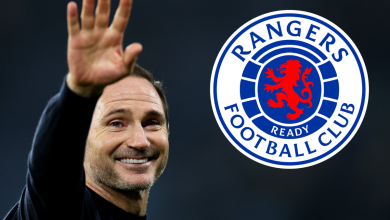
Danny Röhl says Rangers are ready as they look to claim three points in their final pre-split fixture

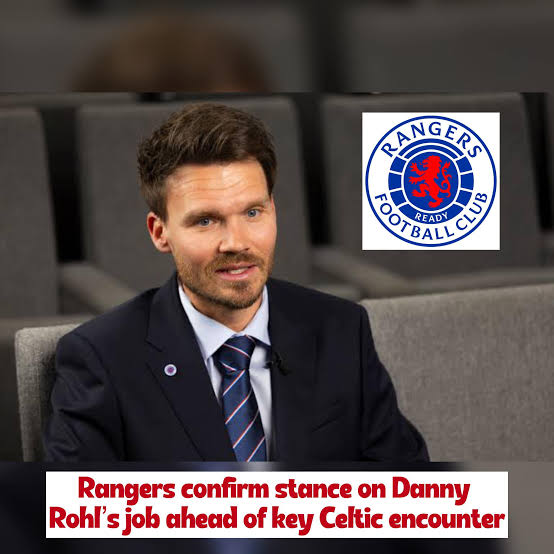
Danny Röhl pulled Rangers from 13 points off the lead into a real title race within three months, then watched the challenge fall apart in the final month and left for RB Salzburg before a second season began. That summary hides as much as it reveals, because neither “revival” nor “failure” fits his eight months at Ibrox on its own.
When he was appointed on 20 October 2025, Rangers were sixth, 13 points behind Hearts and eight behind Celtic. By the end of January he had won the league’s manager of the month award and the gap to the top was three points. Before the split he took 18 wins, six draws and one defeat from 25 league games. After it, Rangers lost four of their last five league matches, finished third and ended 10 points behind champions Celtic.
This review follows that arc: the chaotic appointment, the winter surge, the run-in to the split, the post-split slide, the clash with captain James Tavernier, the finale, and the departure. It closes with what the season says about the club he left behind. It draws on match reports, press-conference comments and analysis from Sky Sports, STV, the Irish Times, Rangers’ own website and other outlets listed at the end. Figures are as reported at the time, and I flag where sources disagree.
The arrival
Rangers appointed Röhl on 20 October 2025 after a 15-day search that embarrassed the club and left him with a rescue job. Russell Martin had been sacked on 5 October after 17 games and 123 days, with one league win in eight and defeats in the first two Europa League games, to Genk and Sturm Graz. Steven Gerrard stepped away from talks and discussions with Kevin Muscat collapsed. Röhl had withdrawn from contention days earlier, assuming Muscat would get the job, and only returned once those talks fell through (Sky Sports, Sporting Life).
The Irish Times argued the delay cost Rangers ground in the league, and that executives had been spooked by how an agitated fanbase might react to a coach without Gerrard’s star appeal. Supporters were already protesting against director of football Kevin Thelwell and chief executive Patrick Stewart, so Röhl arrived as the face of a board many fans distrusted. Kris Boyd told Sky the negativity was understandable after Martin, but urged supporters to back the new coach.
The CV was solid rather than spectacular. Röhl was 36. He had coached at RB Leipzig, followed Ralph Hasenhüttl to Southampton, and worked under Hansi Flick at Bayern Munich and with Germany. His only head coach job was Sheffield Wednesday, where he took over in October 2023, avoided relegation, finished 12th the next season and left in the summer amid the club’s financial upheaval. His record there was 34 wins, 21 draws and 34 defeats in 89 games. He had no experience of Scottish football, which the Irish Times noted had undermined recent Rangers managers.
The table he inherited was poor: sixth place, 13 points behind Hearts and eight behind Celtic, with Rangers still alive in four competitions. His first match, on 23 October, was a 3-0 defeat away to SK Brann in the Europa League. He added Mathias Kaltenbach, formerly of Ajax, as assistant and Sascha Lense as performance manager, and kept goalkeeper coach Sal Bibbo. Cup football would not help him. A League Cup semi-final against Celtic on 2 November finished 1-1 and Rangers went out, and Sky later noted they reached neither cup final all season.
The surge
Between late October and the end of January, Rangers went from also-rans to the form team in Scotland. Röhl won his first eight league matches without defeat. By mid-December Rangers were third, nine points behind Hearts with a game in hand, and he was telling Sky the club could achieve something that season (Sky Sports).
The run ended at Tynecastle just before Christmas. Hearts won 2-1, Chermiti scoring for Rangers in the 95th minute, and the gap grew to 12 points. Röhl called Hearts the best side Rangers had faced and said his players now needed a long winning run to have a chance (Sky Sports).
They produced one. On 3 January Rangers won 3-1 at Celtic Park, with Chermiti scoring twice and Mikey Moore once, in Wilfried Nancy’s last match as Celtic manager after 33 days. Two 2-0 wins over Aberdeen followed, the second at Pittodrie on 11 January, and then a 3-0 win over Dundee. By 22 January Sky reported that Rangers had more wins, points and goals than any top-flight side since Röhl arrived. He was named manager of the month for January, and by the end of the month Rangers were three points behind Hearts and three clear of Celtic, who had a game in hand. Martin O’Neill had returned to Celtic by then, and the three-way race looked unusually open (Sky Sports).
Sky’s analysis credited three changes: Rangers conceded less, were more clinical from set-pieces, and Röhl was willing to switch shape when Plan A stalled. The January window brought Tuur Rommens from Westerlo for around £3m, though pundits still said the squad needed more additions.
The high point came on 15 February. Rangers came from behind to beat Hearts 4-2 at Ibrox and cut the gap to two points, with the return fixture at Tynecastle still to play. Röhl pointed to consistency as the deciding factor, saying whoever took the most points before the split would hold the advantage. By then he had lost just one of 19 league games.
Into the run-in
The momentum faltered from late February, but Rangers recovered in time to enter the split one point behind Hearts. They drew 2-2 at bottom side Livingston, drew 2-2 with Celtic at Ibrox on 1 March, then played out a 0-0 Scottish Cup quarter-final against Celtic at Ibrox in which they pressed throughout without scoring and lost 4-2 on penalties. Kris Boyd worried publicly about the lack of quality in attack. Röhl asked his players to treat the remaining nine games as “nine cup finals”, and they answered with a 1-0 win at St Mirren on 15 March and a 4-1 win over Aberdeen on 21 March.
The recovery came in April. Rangers beat Dundee United 4-2 at Ibrox on 4 April, their last home game before the split, and Röhl said the win showed his group’s character. Eight days later they won 6-3 at Falkirk in the final pre-split fixture. That is most likely the game previewed in the post you pasted, which has Röhl saying Rangers were ready to take three points. Röhl had also arranged a training camp with a friendly for the break that followed.
The numbers going into the split looked strong. Rangers were on a 16-game unbeaten run in the league. Under Röhl they had taken 18 wins, six draws and one defeat from 25 league games, and sat one point behind Hearts and above Celtic (Sports Mole). One post-match analysis counted only two league losses in the 33 games before the split.
The same analysis flagged the weakness that would decide the season: 12 league draws across the 33 games, and a habit of failing to produce a full 90 minutes (match analysis). In the run-in before the split that cost little. After it, it cost everything.
The split collapse
Rangers lost four of their five post-split league games, and the title race was over for them by 10 May. They resumed at Ibrox on 26 April against Motherwell, needing a win to stay above Celtic and with a chance to go top if Hearts slipped at Hibs. Lukas Fadinger scored early, Emmanuel Longelo made it 2-0 before the half-hour, and Rangers lost 3-2 to a side chasing European football. The home crowd booed. Hearts won at Hibs, and Rangers fell to third on 69 points, four behind (Sky Sports).
On Monday 4 May Hearts won 2-1 at Tynecastle, leaving Rangers seven points behind with three games to go. Röhl had said beforehand that Rangers liked playing from the hunter’s position and wanted to hunt again. Six days later, at Celtic Park, Mikey Moore put Rangers ahead after nine minutes. Hyun-jun Yang equalised, and Daizen Maeda scored twice in five minutes, the second an overhead kick, to win 3-1 (Reuters via The Star). The result ended Rangers’ title hopes and guaranteed third place, their first third-place finish since 2018. Röhl was reported to be the first Rangers manager to lose three league games in a row since Dick Advocaat in 2000. His own diagnosis was that the team was again not sharp enough in its own box at key moments. On 13 May, Hibernian won 2-1 at Ibrox for a fourth straight defeat.
The post-match analysis was consistent. The problem was an inability to produce a full 90 minutes, the Celtic, Motherwell and Hearts games undid the earlier progress, and 12 league draws across the season had already left too little margin (match analysis).
My own read, from the results rather than from any source, is that three things combined. The squad was thin, as pundits had warned in January. The attack was short of a second reliable source of goals, as Boyd had warned in March. And the team’s best form had come against opponents it could press and outrun, not against sides that sat deep and punished mistakes. The sources I found do not settle how much injuries mattered, so I have not weighted them.
The Tavernier dispute
The collapse ended in a public row with the captain. James Tavernier, leaving after 11 years, was due to make his final home appearance against Hibernian on 13 May. Röhl had planned to use him as a substitute, but Tavernier refused to take a place on the bench (Sky Sports). Röhl left him out of the starting XI, Rangers lost 2-1, and the two men’s different accounts played out in public over the next two days (The Rangers Archives).
Röhl defended the decision afterwards. He said he had been clear and open with Tavernier from the start, that he always picks his team on matchday about three hours before kick-off, and that it had been his own wish for the captain to get a proper goodbye on the Wednesday. He added that Rangers were still a club playing for results and wins, and that he picked what he thought was best for the team. The issue split supporters, according to Sky.
Tavernier did not play in the final game at Falkirk. One preview said he had already played his last game for the club, citing a disagreement with the manager and an ankle problem, and Röhl said he was absent after taking a delayed injection.
Two caveats are worth stating. The accounts I found are mostly Röhl’s, and they do not include Tavernier’s full version, so who said what to whom is only partly established. And the episode mattered less for its details than for its timing. It arrived in the middle of a four-match losing run, at a point when some fans were already calling for Röhl to go, which turned a squad-management call into a test of his standing. Rangers’ chairman, Andrew Cavenagh, publicly backed Röhl in May despite the criticism.