Few loan signings in recent Rangers history have been missed as much as Václav Černý. He arrived quietly in the summer of 2024, left without a permanent deal, and has been linked with a return ever since. As of mid-November 2026 the talk of a reunion has not gone away. Supporters are split between excitement at the prospect and unease about the price.
The fee being discussed is a long way from the sums that first circulated. The question is whether any figure close to £10m makes sense for a 28-year-old winger who has already left Ibrox once. This piece covers his history with the club, his strengths and limits, how he fits the current squad, and what a fair price would be
Rangers signed Černý from Wolfsburg on a season-long loan in July 2024, as the club’s eighth addition of that window. He was 26 and had just played at Euro 2024 with the Czech Republic. The deal looked like a sensible, low-risk piece of business at the time. He had moved to the Bundesliga the previous summer for around £7m, scoring five goals across all competitions, so his first season in Germany had been underwhelming.
His background is a Dutch one. He came through the Ajax academy before spells at Utrecht and Twente, the latter being the club that earned him his move to Germany. That upbringing shows in his game. He is comfortable on the ball in tight areas, quick to turn, and happy to take on a full-back.
Rangers needed that kind of player. The squad was in the middle of a heavy rebuild, and what it lacked was a wide forward who could unsettle a low block and finish chances himself. A loan with no obligation to buy cost little and carried little risk, which suited a club working through a transitional period
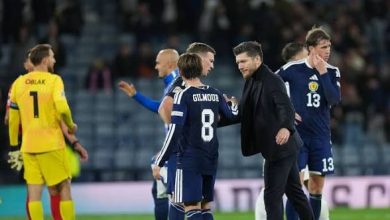
His numbers at Ibrox are the basis for the whole case. Reports credit him with 12 league goals in 33 appearances during the 2024/25 loan. That is a good return for a winger in a season when Rangers finished as runners-up and often struggled for fluency.
The raw output understates his influence. In a side that regularly met deep, organised defences, he gave Rangers an option that didn’t depend on a set piece or a long ball. He could receive the ball under pressure, drive at defenders and shoot with either foot. A team short of creativity benefits from a player who can create something out of nothing.
He was also a big-game player. Plenty of wingers pile up goals against the lower half of a division and vanish when it matters. Supporters remember Černý as a player who wanted the ball in difficult moments. That quality is hard to measure and easy to overstate, but it is a large part of why fans remember him so fondly.
He did have quieter spells, as most wingers do. His end product could be inconsistent, with a promising run sometimes ending in a rushed shot or a heavy touch, and he was less effective when asked to play as a conventional wide player hugging the touchline. He is at his best when given licence to come inside. Overall, though, the loan was a clear success, which explains why the club wanted to make it permanent.
The obvious question is why Rangers didn’t simply sign him in summer 2025. The answer is a mix of timing, price and the uncertainty of that period.
Wolfsburg’s valuation was a sticking point. After his strong performances at Ibrox, Wolfsburg reportedly set a £9 million asking price. That was a lot for a club in the middle of a takeover and a squad overhaul. There was also uncertainty over his place at the club because he was only on loan, with reports of interest from Greece and a €9m bid reported.
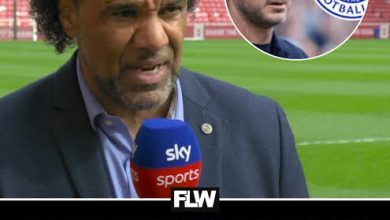
Keith Jackson of the Daily Record has since claimed the true picture was different. On Hotline Live he said Rangers had a genuine opportunity to sign Černý that summer, and that the fee required was far more manageable than what had been publicly suggested. He dismissed the loudest estimates, including the figure of £10m, as noise from people who “know nothing.” If he is right, the club passed on a deal that would have been reasonable.That version is plausible, but it comes from one source and can’t be fully checked. What can be said is that the window closed without a deal, and the player ended up in Turkey
In September 2025 he joined Besiktas on a permanent basis. The Turkish club reportedly paid between €5 and €6 million, which is well below the fees being floated in the spring. That tells us something useful about the market: his true price, once a deal was done, was roughly half of the most-quoted figure.
It also changes the negotiating position. Besiktas now own his registration outright, so they are the ones setting a price. They won’t want to sell at a loss, and they won’t want to be seen as a feeder club. Rangers’ opening bid of around £5 million was reportedly rejected, with the Turkish club holding firm, and a separate report put the bid at £5.1m.
So the numbers on the table run roughly like this:-What Besiktas paid: about €5–6mWhat Rangers reportedly offered: about £5mWhat Wolfsburg once wanted:about £9The headline figure in this story: £10m If the real asking price lands around £8–10m, Rangers would be paying close to double what Besiktas paid a year earlier for a player who is a year older. That is the heart of the value debate.
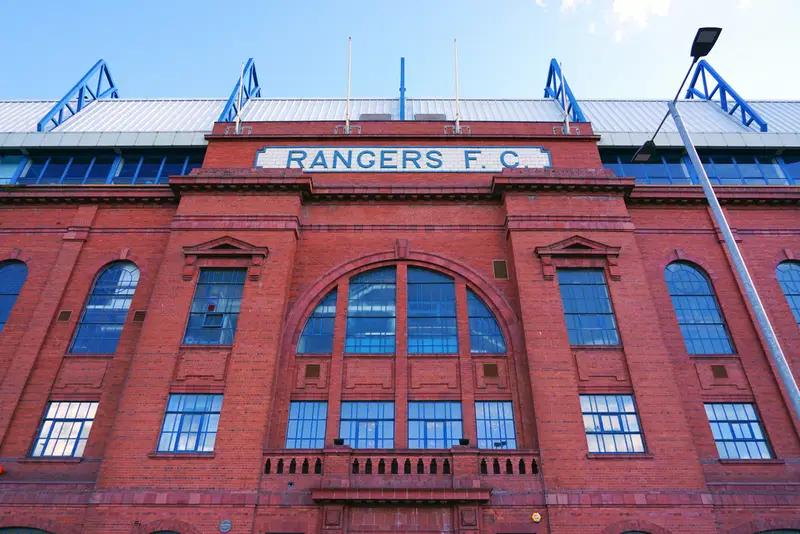
The case for or against a signing depends on what the club needs. Rangers are in a very different place from the summer of 2024. Ownership is new and ambitious, and the transfer policy has moved toward younger, higher-potential players, with Russell Martin building a squad aimed at winning the league. The club has already added attacking players, including Oliver Antman, signed from Go Ahead Eagles as the ninth summer signing.
With that in mind, a 28-year-old winger bought at a premium is not an obvious fit for a club emphasising resale value. A player of that age has little chance of increasing in value and a real chance of losing it. If the aim is to build assets, he is a poor purchase. If the aim is to win now, he makes sense. That tension is central to this story. Rangers cannot afford another year without the title, and in that context a proven performer with a track record at the club has real appeal. Settled, high-quality players are valuable when a club needs results quickly.
On the pitch, the case for him is straightforward. He is a technically gifted, direct winger who can play on either flank. That flexibility matters. A manager can use him on the right and let him cut inside onto his left foot, or play him on the left and have him run at defenders more directly.He suits a team that dominates possession. Against sides that sit deep, wingers who can beat a man in a small space are valuable, and Černý is one of them. He is also an energetic presser, which fits a high-intensity system.His weaknesses are equally clear. He is not an elite finisher, he can be wasteful, and he is not a natural creator in the sense of producing a steady stream of assists. His best work comes from carrying the ball and getting shots away himself. A team that relies on him for chance creation will be disappointed, whereas a team that uses him as one of several attacking threats will get the best of him. He also needs a role that suits him. The loan season showed that he flourishes when given freedom, so a manager who wants disciplined, structured wide play may find him frustrating.
Is he worth £10m? A few angles help. The comparison with what Besiktas paid. A fee of roughly €5–6m a year ago suggests the market values him well below £10m. Paying that much more for the same player would be hard to justify on straight value.
The Rangers premium. Some of the difference can be defended. A player who has already succeeded at Ibrox, understands the league and the demands of the club, and needs no settling-in period carries less risk than a new signing. That known quantity is worth something, perhaps a few million pounds. It is not worth double The age factor. He is 28. For a winger who relies partly on pace and acceleration, the next two or three years are likely his best, and after that the decline can be steep. A five-year contract at a high fee carries real risk. A shorter deal would reduce it.Resale value. At 28, he will not return much on the fee. Anything Rangers pay is effectively money spent on performance over the next few seasons, not an investment. The cost of waiting. If he is the right player and the club delays, the price could rise, or a rival could step in. Reports have linked other clubs with him, including interest from Greece earlier on.
Weighing all of that, my view is that a fair price sits around £5–7m, with a ceiling of perhaps £8m if the contract is structured sensibly. Beyond that, the club would be paying for sentiment A straight £10m payment is not the only route. Clubs often bridge a valuation gap with creative structures, and that may be how this one gets done. A lower guaranteed fee with add-ons A base of about £6m, with extra payments tied to appearances, goals and European qualification, would let Besiktas claim a higher headline figure while limiting Rangers’ risk.A sell-on clause.This would protect Besiktas without raising the upfront price, though it matters little for a player of his age. A shorter contract. Three years with an option for a fourth would reduce the long-term exposure. If the fee is the sticking point, add-ons are the sensible compromise. They align the price with performance, which is exactly the logic that applies to a signing like this.
Going back rarely works as well as expected. Players remembered fondly from a loan spell often struggle to repeat it. The first time, he arrived without pressure, played freely and was a pleasant surprise. A £10m signing arrives with expectations, and every missed chance is judged against the price tag.
Form and fitness. I have no reliable data on how he has performed at Besiktas this season, and a signing decision should rest on that. If his form has dipped or he has been injured, the case weakens considerably.
Wage demands. The transfer fee is only part of the cost. A player moving from a Turkish club may command a significant salary, and the combined bill could be considerably higher than the fee suggests. Opportunity cost. Every pound spent on one player is a pound not spent elsewhere. If the same money could buy a younger winger with resale value, the club should seriously consider that.
Against those risks, the arguments in favour are real. He has done it before, in this league, for this club, in a season when the team around him was far from settled. That is a much stronger indicator of success than any scouting report on an unproven player.
The club also needs attacking quality now. The title race is unforgiving, and a player who can deliver double-figure league goals from wide areas is valuable. In a season when margins are small, a dependable contributor is worth paying for. Finally, the supporters want him. That is not a reason to sign a player on its own, but it matters in a pressured environment. A popular signing lifts the mood around the club and gives the manager some breathing space.
If the price is too high, Rangers have options. The market for wide forwards is deep, and younger players with similar profiles can be found for comparable or lower fees, often with more potential to rise in value. The trade-off is certainty against upside. A younger signing might develop into a better player than Černý, or might not adapt at all. Černý is the safer choice, and he comes with a ceiling.
A sensible recruitment strategy would probably mix the two: a proven player for immediate impact, and younger signings for the long term. That is where Černý could fit, as one piece of a balanced squad and not its centrepiece. Is Václav Černý worth £10m to Rangers? On the evidence available, probably not at that price, though he is worth a serious bid.
The case for him rests on a strong loan season, a good fit with the style Rangers want to play, and the lower risk that comes from signing a known quantity. The case against rests on his age, the lack of resale value, the fact that Besiktas paid roughly half that figure only a year ago, and the risk of paying a premium for sentiment.
A fair deal would be somewhere between £5m and £8m, with add-ons covering the difference if Besiktas insist on a higher headline number. A shorter contract would also protect the club against the decline that tends to come for wingers in their thirties.
If Rangers can get him at that level, it is a good piece of business: a proven performer, quickly integrated, who improves the squad immediately. If the price creeps up to £10m or beyond, the club should be prepared to walk away. The best signings are the ones where the price, the player and the moment all line up, and right now only two of the three do.