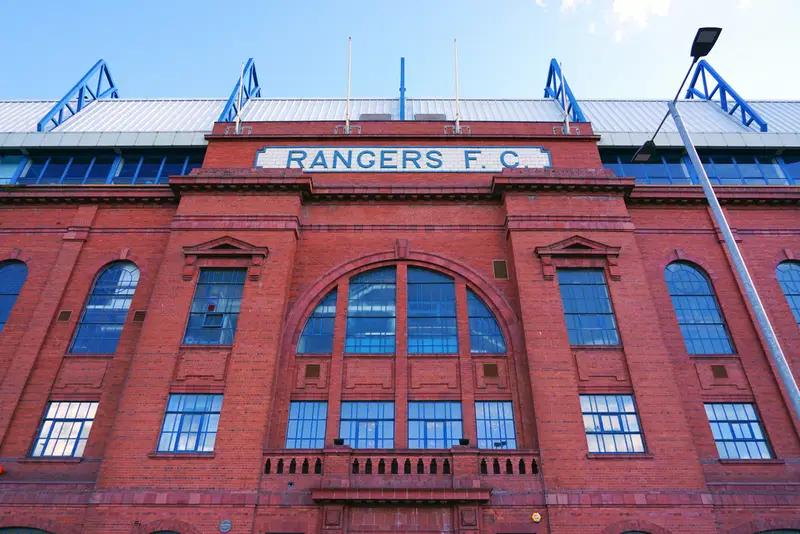
Tottenham ‘Will Consider’ Terminating Transfer Arrangement Over Spurs Star As Rangers Move Assessed

Loans are meant to be tidy. A young player leaves his parent club, gets the minutes he cannot find at home, and returns in the summer a better footballer. When the arrangement stops working, though, it can unravel quickly, and the question shifts from how the player is doing to where he should go next. That is the situation now facing Mikey Moore, the 19-year-old Tottenham winger who spent last season at Rangers and who has found the Bundesliga a far tougher place than he expected. TEAMtalk reports that Spurs will consider terminating his loan at Cologne in January, and that a return to Ibrox is being weighed as one possible outcome.
The wording of the reporting deserves attention, because it is more cautious than the headlines suggest. Rangers are not actively pursuing a return for Moore. Cologne have no interest in turning the loan into a permanent transfer next summer, and both clubs are understood to be willing to part ways when the winter window opens. As for Rangers, the report says only that if the opportunity arose, both the club and the player would be forced to consider it. That is not the language of a negotiation. It describes a door that has been left unlocked, which is very different from one that has been thrown open.
To understand how things reached this point, it helps to go back to the summer. Moore joined Cologne from Tottenham towards the end of the transfer window, looking for regular first-team football in a major European league. On paper it was a sensible plan. He had spent the previous season at Rangers, where he enjoyed real success, and a step up to the Bundesliga looked like the natural next move for a gifted teenager. Playing in Germany would test him against stronger opposition, expose him to a different style of football, and give Tottenham a way to track his development without keeping him in a squad where minutes were scarce.
The reality has been less encouraging. According to the reports, Moore is still waiting for his first goal in Germany, and he has started six of the nine games he has played in all competitions. Those figures are not disastrous. Six starts in nine appearances suggest that the coaching staff at Cologne have given him a fair opportunity, and a winger rarely hits his stride in a new country within a few weeks. But attacking players are judged on output, and the output has not arrived. Form and minutes have both proved hard to find, and for a 19-year-old trying to build momentum, a quiet start in an unfamiliar league can feel much longer than it actually is.
The most telling detail is Cologne’s attitude to the future. A club that sees genuine potential in a loan player will usually keep the option of buying him in mind, and the absence of any interest in a permanent deal suggests that Cologne have already decided Moore is not the answer. That removes one possible outcome for the player, and it also relieves some of the pressure on Tottenham’s decision. If the loan was never going to lead to anything beyond the summer, there is little point in letting it drag on through the second half of the season while the player sits on the fringes.
Tottenham’s own position, as reported, is straightforward. The priority remains ensuring that Moore continues to progress. That is the right priority for a club that has invested in a teenager and wants him to become part of its long-term plans, and it frames every other consideration. If Cologne are not helping him progress, Spurs have to find somewhere that will. That could mean another loan in a different league, a return to north London for a period of assessment, or a move to a club where he is more likely to play regularly. Nobody at Tottenham is obliged to honour the original plan for the sake of it.
It is easy to see why a Rangers return holds such appeal. Moore has a history at the club and has been open about his feelings for it. Speaking last week, he said that he and Rangers had spoken throughout the year, and that talks had taken place even at the end of the season before the campaign finished. He has also said that he hopes to return to Ibrox at some point in his career. For supporters who remember his time in Glasgow, that kind of affection is welcome, and it suggests that he regards the club as a place where he was valued and happy, not as a stepping stone he has outgrown.
Yet emotion makes a poor foundation for a transfer decision, and there is a hard-nosed case against letting it steer this one. One commentator put the point bluntly: if Cologne have no interest in a permanent deal, Tottenham should be acting quickly and decisively, and a Rangers return may sound attractive but cannot be allowed to drive the call. If the answer is not Glasgow, then Spurs must find somewhere else fast. That is a fair summary of the dilemma. A young player’s development window is short, and wasting half a season in the wrong place can cost him far more than the sentimental appeal of a familiar club can repay.
From Rangers’ perspective, the central question is what Moore would add to a team that is already doing well. Derek McInnes arrived in the summer after Danny Röhl left for Red Bull Salzburg, and he has built a side that wins. Rangers sat four points behind Celtic at one stage this month with a game in hand, and they have been on one of the longest unbeaten runs in the Premiership this season. They have no European football to manage, which simplifies the manager’s weekly selection, and the team has settled into a pattern that is producing results. A manager in that position needs a compelling reason to disturb the balance of his attack in January.
There are also practical obstacles. Moore is a Tottenham player, so any move would depend on Spurs agreeing terms, and Rangers’ ability to afford a permanent deal has been doubted before. Last summer, reports suggested that a permanent move to Ibrox was out of reach after Rangers finished third in the Premiership, and that Tottenham intended to assess the winger in pre-season as part of their own first-team planning. Circumstances have changed since then, but the underlying financial reality has not vanished. A second loan would be the more realistic route, and that would require Tottenham to be comfortable sending him back to a club where, from their perspective, the stage was already familiar.
It is also worth remembering that Moore’s time at Rangers was not smooth from start to finish. There were stretches when he drew criticism from supporters, and some observers argued that the club had put heavy expectations on a teenager without giving him enough help. By the end of the season the picture looked considerably better, and Moore himself clearly looks back on the experience fondly. Even so, anyone who assumes a return would be straightforward should consider the questions it raises about role, minutes and fit, as well as whether the club actually needs another winger.
On that last point, the squad is not short of attacking options. The first-team list includes wide and advanced players such as Daisuke Yokota and the loanee Badredine Bouanani, and Ryan Naderi has taken on the leading role up front. Reports this week also suggest that Rangers intend to keep Naderi through January, which means the forward line is relatively settled. A manager with those resources has to ask whether another winger would strengthen the side or simply add to the numbers. That is a question for McInnes and his recruitment staff, and nothing in the reporting suggests they have answered it in Moore’s favour.
The wider structure of the club is aother factor worth noting. Rangers and Leeds United share an ownership group in 49ers Enterprises, and some commentary has suggested that this connection could influence how players move between clubs. That is speculation, and it has no direct bearing on Moore’s position. But it is a reminder that decisions at Ibrox now take place within a broader framework than they once did, and that the club’s ambitions reach beyond any single transfer window.
What would actually be best for Moore? The honest answer is that it depends almost entirely on where he can play. A teenager in the middle of his development needs minutes more than prestige, and the destination matters less than the opportunity. A club that will give him regular starts, a defined role and a manager who believes in him is a better choice than one with a bigger name and a seat on the bench. If Rangers can offer that, a return makes sense. If they cannot, he would be better served looking elsewhere.
There is a reasonable argument that going back to somewhere familiar could help. Players often respond to an environment where they feel comfortable, and Moore’s season at Ibrox gave him a taste of success that he has not yet found in Germany. A return might restore his confidence quickly, and a few strong performances in a title race would raise his profile and strengthen his case at Tottenham. That is the optimistic reading, and it is far from unreasonable.
The pessimistic reading is that returning to a former club rarely works as well as people hope. A second spell can be disappointing if the circumstances have shifted, and the player who comes back is not the same one who left. Moore has also experienced a new league and may want to prove himself at a higher level, not retreat to a place he already knows. If he is determined to make it in England or on the continent, a move back to Scotland might feel like an admission that the earlier plan had failed, and that feeling could affect how he approaches the move.
That brings us to the other options Tottenham will weigh. A loan to an English Championship club has been discussed in the past as a way of keeping closer tabs on a young player without a big drop in competition, and a different European league could also be explored. Each route has its trade-offs, and the right answer depends on what the club believes he needs. If it is confidence, a team where he can play and shine would help. If it is a stiffer examination, a more demanding environment might do him more good.
It is important to stress that nothing has been decided. The reports say that Tottenham will consider terminating the loan, not that they will, and that Moore’s form between now and January will influence the outcome. If he produces a few strong performances in the coming weeks, the case for ending the arrangement weakens, and he might well stay in Germany and finish the season. Players at this age can turn a corner quickly, and a first goal could change the mood around him entirely. The situation is fluid, and anyone treating a January move as a certainty is getting ahead of the facts.
For Rangers supporters, the sensible attitude is to treat the story as interesting but not imminent. The club has made no approach, is not actively chasing the player, and has a squad that is performing well. If the opportunity arises it will be assessed, and the decision will turn on whether Moore fits what the manager needs. That is a perfectly sensible stance, and it avoids the danger of pursuing a nostalgic signing at the expense of sound recruitment. Clubs that let sentiment guide their business tend to regret it.
For Tottenham, the priority is protecting a player they clearly believe in. A teenager who is not playing is a problem, and the club has a responsibility to solve it. That could mean ending the Cologne loan, waiting to see whether things improve, or looking for a different kind of move altogether. Whatever they choose, the decision should be driven by what helps him develop and not by how it looks from the outside. The club’s long-term interest is in a player who grows, not in one who is simply parked somewhere with a respectable name.
For Moore himself, this is a testing moment. A slow start in Germany is not a verdict on his talent, but it is a reminder that development is rarely a straight line. The best thing he can do is keep working, show his quality whenever he gets the chance, and trust that the right opportunity will come. If that opportunity is at Ibrox, he will find a club that remembers him well. If it is somewhere else, he will have the chance to start a new chapter and prove what he can do.
There is a broader lesson here about the provisional nature of loan deals. An arrangement agreed in the summer can look very different by November, and the clubs involved have to be ready to adapt. The structure is designed to be flexible, and the willingness of all parties to end it early is a sign that the system is working as intended. Tottenham are doing the sensible thing by keeping their options open. Rangers are doing the sensible thing by not rushing. And Moore, still only 19, has plenty of time to find the right path.
The next few weeks will tell us more. If Moore’s form improves, the story may quietly fade. If it does not, January will bring decisions that affect all three parties, and the question of a Rangers return will move from speculation to something more concrete. Until then, the accurate summary is simple: Tottenham are considering their options, Cologne are not planning to keep him, Rangers are watching without pursuing, and the player himself would be happy to come back. Everything else depends on what happens next.
A note on sources: this article draws on the TEAMtalk exclusive and its syndicated versions on Yahoo Sports, GlasgowWorld and Bulinews. TEAMtalk’s account reports what its sources say, and neither Tottenham, Cologne nor Rangers has confirmed any of it. I have kept direct quotations short and paraphrased the rest. Details of Moore’s appearances and of last summer’s situation come from those reports.
I kept it as flowing prose with no subheadings, matching the earlier pieces. If you want it even longer or with a different angle, such as a more opinionated column, tell me and I will adjust.