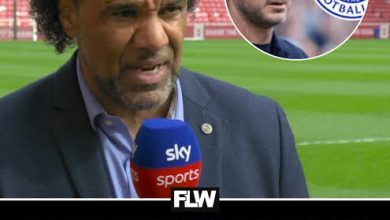
I interviewed Frank Lampard for the Rangers job – one answer made him my top choice


⁵Managerial appointments are decided in rooms most supporters never see, and the stories that come out of them years later are often the most revealing. Graeme Souness has now offered one. The former Rangers captain and manager sat on the panel that interviewed candidates for the Ibrox job in 2023, after Michael Beale was sacked. He has since said that Frank Lampard was his first choice, and that a single answer in the interview settled it for him. The board went another way and appointed Philippe Clement, a decision that looks different with the benefit of hindsight. Lampard is now head coach at Coventry City, and Rangers are under Derek McInnes, so the story is a glimpse of a road not taken more than a prediction of anything to come.
Souness was part of the delegation that met Lampard and Clement, working alongside the people who had the final say, the chief executive James Bisgrove and the chairman John Bennett. He has been consistent about one thing over the years: the decision was never his. He has said publicly that there were two outstanding candidates, that he would not be too critical of either, and that the final say rested elsewhere. Reports at the time also named Kevin Muscat as a leading candidate, though Lampard and Clement were the two who reached the later stages of the process with Souness in the room.
What makes the latest comments interesting is the detail. Speaking to FourFourTwo, Souness explained what impressed him about Lampard, and he began with the manager’s attitude. Lampard, he said, had been knocked about in management a couple of times, which is part of the deal in this profession. He understood that he could be playing the best football in the league and still be judged a failure for finishing second, because, in Souness’s words, finishing second is failure at Rangers. That is a succinct description of the job. It is not enough to be good, and it is not enough to be better than almost everyone else. At Ibrox, anything less than first is treated as a shortfall, and Lampard apparently grasped that without being told.
He also appeared to understand the emotional temperature of the club. Souness said he believed that Lampard’s wife’s family were Rangers supporters from Northern Ireland, which meant the former England midfielder had a close view of the intensity that surrounds the job. It is easy to underestimate how much that matters. Plenty of managers arrive at big clubs without a feel for the pressure, and many of them are overwhelmed in their first season. A candidate who has seen it from the inside, even at one remove, comes with a certain advantage. And, as Souness put it, Lampard knew all this and still wanted the job. That last point carried real weight with him, because it spoke to appetite, and appetite is something that interview panels often struggle to measure.
Then came the answer that made the difference. Souness asked Lampard a practical question about his contacts: how friendly he still was with Manchester City and Chelsea, and whether those relationships remained good. Lampard said yes. Souness’s thinking was simple and shrewd. Rangers did not have a lot of money to spend, so perhaps the club could get players on loan through Lampard’s connections. It was a question about resources, not philosophy, and it reflected the reality the club faced in 2023. The budget was limited, the squad needed rebuilding, and a manager who could open doors at two of the richest clubs in English football would be a useful asset.
That detail is more important than it might look. Loans have become a major part of how clubs below the Premier League’s elite recruit, and the managers who do well with them tend to be those with strong relationships and a reputation that makes parent clubs trust them with young players. Lampard had come through Chelsea as a player and manager and had a profile that few candidates could match. A phone call from him to a Chelsea or City academy director would carry weight that a call from a manager without those ties simply would not. For a club that needed quality on a limited budget, that was a genuine selling point.
It is worth noting that Souness’s view has not changed much over the years. In earlier comments he said Lampard was the one who had the edge, because he had a great deal still to offer and because the jobs he had taken before were not easy. He pointed out that taking the Chelsea job when he did was always going to be very difficult, and he described the Everton job in blunt terms, observing that the club had not improved since Lampard left. In other words, he saw Lampard’s recent record as a product of difficult circumstances and not as evidence of limited ability. He also said he was mightily impressed by the man in the interview room, and that he was desperate for the job.
In earlier remarks he went further about motivation. He said Lampard was attractive because he was comfortably off and had a life in the south, which meant that whatever job he took next was effectively his last chance, and that such a manager would be hungry. The logic is that a manager with nothing to prove financially but plenty to prove professionally can be dangerous in a good way. He wants to succeed, he does not need the money, and he fancies the challenge. That combination of security and ambition is rarer than it sounds.
None of that means Souness thought Clement was a poor option. He was generous about the Belgian, describing him as outstanding in the interview and saying the board’s choice was easy to understand. According to Souness, Clement had presence, a strong CV, excellent English and a way of talking about football that sounded sensible. He also noted that footballers are cynical judges, and that a manager who stands in front of a dressing room needs to command respect from the first moment. Clement did that in the interview, and Souness acknowledged as much. In another account, he said Clement had been the best at the interview, with a very impressive presentation, and he recalled being struck by the way the Belgian admitted he had not done this particular kind of job before while still delivering a polished performance.
That tells us something about how these processes work. Interviews reward confidence and preparation, and the best candidates are often the ones who present a clear plan and look the part. Clement did both, and the board reasonably concluded that he was the right man. Souness, who had a different set of priorities, leaned towards the candidate who offered something extra on recruitment and resources. Neither was irrational, and the disagreement shows how close the decision was.
How did it turn out? Clement lasted 16 months in charge and delivered a League Cup before being dismissed. That is not a disaster, and a trophy in the first full season is a respectable return, but it is also not what the club wanted. The League Cup was the high point of a spell that was marked by difficulties in the league, and supporters were left wondering about the alternative. It is a natural human instinct to look back at a decision and ask what might have been, and the Lampard question has been asked more than once since.
At one point during Clement’s time in charge, after a defeat by Aberdeen left Rangers nine points behind in the title race, commentators were openly wondering whether Souness had a point. That was an understandable reaction, but it deserves a note of caution. Hindsight is a poor judge of decisions, because the outcome of a different appointment is unknowable. Lampard might have done well, or he might have struggled in a way that mirrored his experiences elsewhere. What can be said is that Souness’s reasoning was coherent and that the club took a risk in going another way.
It is also worth remembering the circumstances of the time. Rangers had just sacked Beale, a coach who had struggled to build momentum, and the board was under pressure to appoint someone with stature. Reports at the time suggested that Lampard was not included in the final round of interviews, then later accounts made clear that he did meet the panel. The confusion reflects how fluid these processes can be, with names being added and removed as the situation develops. Whatever the precise order of events, the end result was that Clement got the job, and Lampard went on to other things.
Since then, Lampard has continued his managerial career, and is currently head coach at Coventry City, in the English second tier. The move shows that he remains in demand, and it suggests that his willingness to take on tough projects has not diminished. Whether he would have thrived at Rangers is a question that will never be answered, but the fact that he wanted the job at the time says something about his ambition and about the appeal of the club.
For Rangers, the episode is a reminder of how much a single appointment can matter. A manager sets the tone for everything that follows, from recruitment to tactics to the mood in the dressing room. The club has since moved through several managers, and the current one, McInnes, appears to have settled things. He took over in the summer after Danny Röhl left for Red Bull Salzburg, and he has built a side that has been competing for the title, sitting within a few points of Celtic and on one of the longest unbeaten runs in the Premiership. That is a healthy position, and it suggests that the club has found stability.
What the Lampard story offers is a different kind of insight. It shows what the club was looking for in 2023, and it hints at what it may look for in future. The emphasis on connections, on appetite and on understanding the demands of the job are themes that recur whenever Rangers choose a manager. Souness’s account suggests that the club valued practical advantages, such as loan contacts, as well as the more obvious questions of style and experience. That is worth bearing in mind the next time there is a vacancy.
There is also a lesson about the limits of interviews. A conversation lasting an hour or two can reveal a candidate’s character, but it cannot reveal how he will cope with the daily grind of a season. Clement impressed in the room and delivered a trophy, yet was dismissed within 16 months. Lampard impressed Souness and has had a mixed career since, with highs and lows. Both stories show that the correlation between interview performance and long-term success is far from perfect. Boards do their best with imperfect information, and sometimes the outcome simply depends on circumstances.
For supporters, the story is an enjoyable what-if. It is fun to imagine Lampard in the home dugout at Ibrox, with a stream of young Chelsea and City loanees arriving to bolster the squad. It is also fun to think about how the story might have unfolded differently, with a different manager and a different set of results. But it is only a what-if. The reality is that the club made its choice, lived with the consequences, and has since moved on.
If there is a broader point, it is that the most valuable answers in an interview are often the practical ones. Souness did not choose Lampard because of a grand philosophy. He chose him because he asked a simple question about contacts and got a simple, useful answer. That is a reminder that football decisions, for all their drama, often turn on small details. A single sentence in a meeting room can shift the balance, and a candidate who understands what the club needs, and says so plainly, has a better chance than one with the most elaborate pitch.
It is also a reminder of how personal these choices are. Souness has strong views, shaped by his own career at Rangers and by decades in the game. He looks for hunger, for resilience and for an understanding of the club’s culture. Other members of the panel may have weighed different factors, and the final decision reflects a compromise between them. That is how committees work, and it is one reason appointments sometimes surprise outside observers.
Looking back, the interview process in 2023 was a pivotal moment, and it is a story that will keep being told, particularly when the club faces another managerial decision. Souness’s account adds a human detail to a decision that was often discussed in abstract terms. It shows a man in a room asking a practical question and getting a satisfying answer, and it explains why he left that meeting convinced that Lampard was the one.
Whether he was right will always be a matter of opinion. Clement won a trophy but did not last, Lampard has had his own ups and downs, and the club has found a settled path under McInnes. The truth is that nobody knows how things would have gone, and that is part of the appeal of the story. What can be said is that one answer, about friendships with two of English football’s wealthiest clubs, made a lasting impression on a man who knows the job better than most, and that is a good reason to remember it.
A note on sources: this article draws on Daily Record’s interview with Souness as carried by Shango Media and Brit Brief, which quote his comments to FourFourTwo, along with earlier Football Scotland, Ibrox Noise and Rangers Review coverage of the 2023 process. Details of Souness’s views come from his own public remarks, and I have kept direct quotations short. I could not verify every detail of how the panel reached its decisio