Pocognoli shrugs off sack talk as Scotland manager hints at more flexible future 10 hours ago The Herald

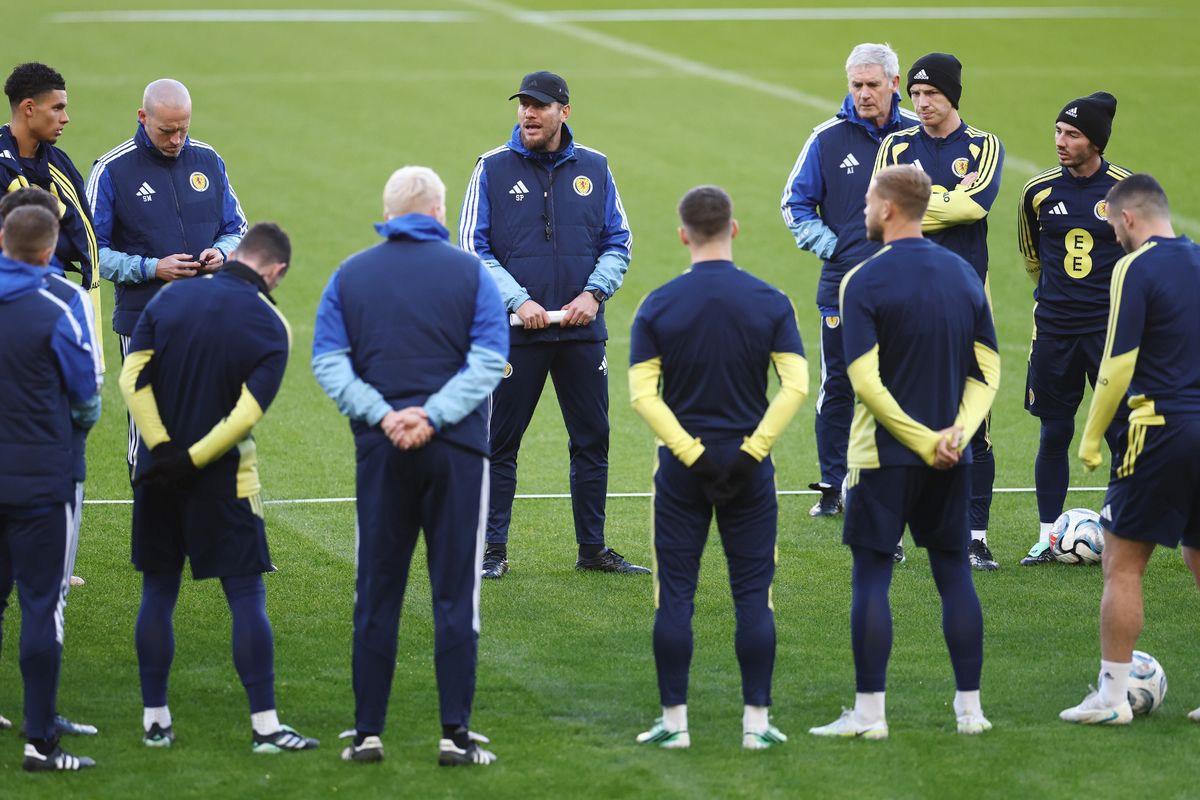
Scotland’s most radical managerial appointment in two decades is not yet three months old, and it is already being treated as a referendum. After a 4-0 Nations League defeat in Switzerland, Sebastien Pocognoli has said he will ignore calls for his sacking and keep working toward qualification for Euro 2028. That answer was always going to be tested, and what he said alongside it is more interesting. He brushed off questions about his position but intimated that he may at times move away from the 3-4-2-1 formation he has used.
That is the real story: a manager who arrived with a clear blueprint is publicly conceding that the blueprint may need editing. Whether that is wise adaptation or the first sign of a project coming apart depends on how the last three months are read. This piece goes through them.
Pocognoli’s appointment was a break with habit. Steve Clarke stepped down in June after Scotland were eliminated from the World Cup at the group stage. The Scottish FA quickly signalled it would look abroad. Jon Dahl Tomasson and Kasper Hjulmand were among the names linked with the job. The man it chose, managing a national team for the first time, became only the second foreign boss in Scotland’s history, after Berti Vogts.
His record was short but striking. He won the Belgian title with Union Saint-Gilloise in 2024-25, his first season as a head coach, before a Monaco spell that ended in the sack after a seventh-place Ligue 1 finish. He was 39, young for an international manager, and the SFA presented the hire as modern and data-informed.
His brief was clear from his first press conference. He said he had been asked to keep the heritage built with Clarke and his staff, who put Scotland back on the map, while bringing new ideas and preparing for the future. The mandate was continuity plus evolution, which is a delicate thing to deliver in a Nations League group with no grace period.
Clarke’s legacy cuts both ways. He made Scotland relevant again, yet there was widespread criticism that his team lacked ambition. Pocognoli was hired partly to change that, and attacking intent was always going to be judged against results.
The early numbers were acceptable. Four points from three Nations League games was adequate until Slovenia won 2-1 at Hampden Park. The same report said the nature of the display was what stood out, calling Scotland comprehensively outplayed by a side that is no better than functional.
Other assessments were more measured. After four matches Scotland had two defeats, a draw and one win, and Pocognoli’s system was under fire. That report also cautioned that it would be wrong to write the project off after four games and arguably one genuinely poor result.
Then came St Gallen. Monday’s 4-0 defeat by a much-changed Switzerland left Scotland third in their group and put them in pot three for next month’s Euro 2028 qualifying draw. The stakes of the match were clear: Scotland needed to win, and needed North Macedonia to take points off Slovenia, to finish second and reach pot two. They did neither, and the defeat drew the clearest public criticism yet of the project, from his own captain.
The Scotsman gave the mood a number. Three defeats in six matches, it noted, is not a sacking offence in itself. It also pointed to a precedent: Clarke suffered two 4-0 defeats in his first five matches. Heavy losses early in a reign do not by themselves end it. But the same article said Pocognoli is treading on thin ice in the court of public opinion, with a fans’ forum thread simply titled “sack him” the most visited.
Set against that backdrop, Pocognoli’s response was defiant and somewhat contradictory. On the sack talk he took a firm line. Asked how he copes with calls for his head, he replied that he does not accept this. He framed the question around a longer timeline, saying he was not thinking about it.
On tactics he said two things that sit in tension. First, he did not think the system was the problem in Switzerland. Second, he said it is possible to change the system, and pointed out that in the Champions League his teams used a different shape in half their games, so he is not inflexible.
These fit together if you read them carefully. He is not saying the 3-4-2-1 was blameless or the right choice for every opponent. He is saying one night in St Gallen is not proof the shape is broken, and that he reserves the right to change when he judges the moment calls for it. That is a defensible position. It is also exactly what a manager under pressure would say, so it deserves scrutiny.
The critics’ case is substantial and partly tactical. The Scotsman’s complaint is that Scotland’s tactical blueprint under the Belgian is rigid, a one-size-fits-all formula it said could harm Scottish football for generations. That is a strong claim from a newspaper, and the “generations” part is rhetoric. The underlying tactical objection, though, is specific.
Another critique argues that a back four and wingers playing on the wing are what the team needs, and that a 3-5-2 which leaves Gannon-Doak at wing-back produced one shot on target against Switzerland’s reserves. That piece is opinion, and it mixes the formation labels, so treat the detail with some caution. The thrust is clear, though: a back three can leave Scotland’s most creative wide players in defensive roles, away from where they hurt opponents.
This is a familiar problem. Scotland’s strengths have traditionally been in midfield and in a handful of attackers, with depth thinner at centre-back and wide positions. A three-at-the-back system needs wing-backs who can both defend and carry, plus centre-backs comfortable stepping out. If the squad does not fit that profile, the system asks players to be something they are not.
The 3-4-2-1 also carries a specific demand: the two players behind the striker must combine, and the striker must hold the ball up or run in behind. When it doesn’t work, you get a team that looks neither solid nor creative.
The defence of Pocognoli begins with sample size and context. Six matches is not enough to judge a system, and the group contained opponents with real quality. The Switzerland team that won 4-0 was a much-changed side, which makes the scoreline look worse for Scotland, but also means Scotland needed a result in a game where the opponent had little to play for. That is a painful kind of defeat.
There is also a structural argument about time. One analyst made it plainly: a new coach would get no more matches before March than Pocognoli will, and the SFA would be admitting in November that the process it sold in August was wrong. That is the strongest practical point against sacking him. A replacement would inherit the same squad, the same calendar and a shorter runway.
Scotland’s recent history offers a cautionary version of this argument. Clarke’s early reign included heavy defeats and still produced the most successful period in a generation. Early losses, in other words, are weak evidence.
And there is a broader football point about how international management works. Gary Strachan’s observation, in a piece on Pocognoli, captures it: as Scotland manager he first assumed the team could play a specific way straight away, and it did not work out, so he had to adjust to find a system that suited the talent. International managers cannot buy players or train daily. The best ones fit the system to the squad rather than the squad to the system. If Pocognoli is now moving in that direction, it may be the learning curve working as intended.
Scottish football has a long memory for tactical experiments gone wrong. Craig Levein’s strikerless 4-6-0 against the Czech Republic is the cautionary tale. Levein later defended it, saying he watched the opposition closely and felt the logic was sound. The lesson is not that bold ideas are always wrong. It is that Scottish audiences will judge a tactical gamble almost entirely by its result, and that a system becomes a symbol very quickly.
Pocognoli’s 3-4-2-1 risks a similar fate. It is no longer just a formation. It is shorthand for a style of management, foreign and data-led, that supporters and commentators are now measuring against outcomes. That is why his hint of flexibility matters. It lets him detach himself from the shape before the shape becomes the whole story.
There are three ways to interpret what Pocognoli said, and the truth probably combines them. It is genuine tactical ththinking. He has said he wanted to see particular players in the system, naming Scott McTominay and Che Adams. That suggests the formation was chosen with specific individuals in mind. If those individuals have not delivered in it, a change is logical rather than panicked it is a pressure valve. Hinting at change gives critics something and buys time. Managers do this routinely: the shape is not the problem, but I will adapt anyway.
It is a genuine concession. He may privately accept the team needs more balance, and be preparing the ground for a shift, perhaps to a back four or a hybrid that changes shape between phases of play. Hybrid systems, where a back three in possession becomes a back four out of it or vice versa, are a common middle path.
The Champions League reference supports a more flexible reading. Managers who change shape in half their games are not dogmatists. But club football and international football differ. A club coach drills a system for months. An international coach has a week. Shape-shifting works when players have internalised the principles, and Scotland’s players have had little time to do that.
The most uncomfortable detail is the criticism from his own captain. Public dissent from a captain is rarely casual, and it changes the internal politics of a squad. A manager whose senior players publicly question the approach has two options: win them back with results, or adapt to their concerns.
That makes the flexibility hint doubly significant. It may be partly a message to the dressing room: I hear you. If the captain’s criticism concerned the system, a change of shape would answer it directly. If it concerned something broader, such as selection, intensity or preparation, tactics alone will not settle it. The public record I found does not spell out the exact nature of the criticism, so this is an area where it would be wrong to over-read.
The context for the next phase is the Euro 2028 qualifying draw, due next month. Finishing third has put Scotland in pot three, which means a tougher group than hoped for. That raises the stakes for the spring window, and it sharpens the argument about timing
If Pocognoli stays, March becomes his real examination. He will have several months to revise the plan, analyse six matches of data, and decide whether to keep the 3-4-2-1 as a core identity or turn it into one option among several. If he goes, the SFA must choose a successor quickly and hand them the same short runway, having publicly backed a process that failed. That is why many commentators, even critical ones, stop short of calling for the sack now. The more common position is that the next window is the deadline, not this one.
The Scottish FA’s choice is not only about one manager. It is about whether the appointment philosophy still holds. The hire was framed as a break with the past: a young, foreign, data-driven coach brought in to refresh the national team’s style. Abandoning him after six games would imply the philosophy itself was wrong, or at least that the execution was hasty.
Backing him, on the other hand, commits the SFA to a longer judgment. It would need to define what progress looks like, whether in performances, in qualification, or in the integration of younger players. Pocognoli himself spoke of developing players for the future, which means success cannot be measured purely in results during the transition. That cuts both ways: it gives him room, but it also invites the question of what evidence would count against him.
A fair framework might look like this. Results matter most in qualifying, so the group draw and the first fixtures are the true test. Performance indicators, such as chance creation, defensive structure and pressing, should show a trend even when scorelines disappoint. And relations with senior players must stabilise, because a divided dressing room undermines every other metric.
Foreign managers of national teams tend to succeed when they adapt quickly to local conditions and fail when they import a system wholesale. Scotland’s own history with Vogts, the only previous foreign manager, is not an encouraging precedent, and it hangs over any comparison. The context is different now, with more sophisticated analytics and a more globalised coaching market, but the underlying challenge is the same: understanding a national football culture, a limited player pool and a demanding public.
Pocognoli’s approach to heritage suggests he understands this. Talking about keeping the foundation Clarke built is not just politeness. It signals that he knows Scotland’s identity, built on organisation, resilience and big-night spirit, is an asset. The risk is that in trying to add ambition he has subtracted some of that solidity without yet gaining the creativity.
Practically, there are several routes open to him.
1. A back four with natural wingers. This is the option critics most often name. It would put creative wide players where they are most dangerous and give the side a more conventional defensive shape. The cost is that it may expose a thinner centre-back pool.
2. A hybrid back three. Keeping three centre-backs in possession but allowing the wing-backs to push up or the system to morph out of possession would preserve his ideas while easing the burden on specific players.
3. Opponent-specific shapes.using the 3-4-2-1 against some teams and something else against others fits his Champions League claim. It requires players to be comfortable in more than one system, which takes training time he does not have.
4.Personnel-led adjustment. Rather than changing the formation, he could change who plays in it, for example by rebalancing the wing-back and attacking-midfield roles. This is the least dramatic option and the one most consistent with his claim that the system was not the problem. Each has costs, and none guarantees results. The point is that having options is itself an improvement on a single rigid plan.
It is easy to forget that managers under pressure are also making decisions in public with limited information. Pocognoli is 39, new to international football and to Scottish culture, and operating in a media environment that has shown it can turn quickly. His refusal to engage with sack talk is partly a professional necessity: acknowledging it would feed it.
But refusing to engage is not the same as ignoring the evidence, and his comments suggest he is listening. Admitting flexibility while defending the project is a hard balance to hold. If he overcorrects, he looks panicked. If he does not correct enough, he looks stubborn. A fair assessment at this point has to hold several things together.
The results are poor enough to justify scrutiny. Three defeats in six matches, a pot-three draw and open criticism from the captain are not trivial.
The sample is small, and the case for sacking him now is weak, partly because of the calendar and partly because any replacement would face the same constraints.
The tactical criticism is serious but not decisive. A rigid system is a problem only if it is applied rigidly, and he has now said he will not.
The flexibility hint is the most important development. It is a signal of intent, and it will be judged by what happens in March, not by what was said in November.
For supporters, the question is less whether Pocognoli should stay than what he does with the time. A manager who adapts, picks a shape that suits the players, and restores some of Scotland’s traditional resilience while adding the ambition he was hired to deliver could still turn this around. A manager who defends the plan while the results continue to slip will find that patience runs out quickly.
Scotland have been here before: a new manager, a flawed start, a nation split between patience and impatience. What decides these moments is rarely the first week of criticism. It is whether the manager can show, in the next window, that the lessons of the last one were learned.