Lewis Ferguson and dad Derek slammed by ex Rangers star who claims Ibrox outcast is better than Bologna ace

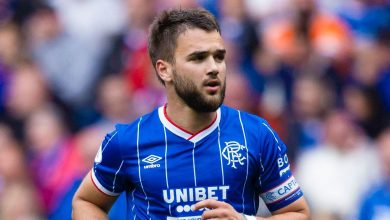
Some surnames in Scottish football need no introduction, and in the blue half of Glasgow, Ferguson is one of them. For a generation of Rangers supporters it conjures midfield battles, European nights and silverware. For Lewis Ferguson, the Bologna captain and Scotland international, it has been a gift and a burden in equal measure.
His father Derek made more than 110 appearances for Rangers and lifted five trophies in Govan. His uncle Barry is a club icon who captained the side for most of his 431 appearances across two spells and won 15 major trophies at Ibrox. Lewis grew up in that shadow, in a household where Rangers was a way of life rather than a football team.
That is why the story of Lewis Ferguson and Rangers never feels like an ordinary transfer tale. It is a family drama played out in public: a boy who wanted nothing more than to pull on the shirt, a club that decided at 14 he wasn’t good enough, and a career that has spent years answering that verdict. Every few months a new chapter appears, whether a transfer rumour, a podcast comment from his father or a debate about whether some other player is better than him. Each time, it reopens a question Rangers supporters have never fully settled
To understand Lewis, start with the house he grew up in. Derek Ferguson’s career took him through Rangers and Hearts, more than 200 matches between the two, and a spell in England with Sunderland. He was a creative midfielder from an era when Scottish football still produced them in numbers, and he has never hidden where his loyalties lie. He is a Rangers diehard, and the evidence is in how he lives it: he once watched his own son play against his beloved club from the away end, surrounded by Lewis’s two brothers.
Barry’s story is the louder one. Captain of a treble-winning side, a central figure at Ibrox for the best part of two decades and the owner of a trophy cabinet few Scottish players can match, he became the family’s public face. When Lewis was a child, his uncle was the standard of what a Ferguson could achieve in a blue jersey.
It would be easy to assume that made the path simpler. It probably made the eventual rejection harder. For a boy from a Rangers family, being told by Rangers that he wasn’t good enough was never only a footballing disappointment. It was personal, and it landed in a home where the club’s badge meant something close to inheritance.
Lewis spent four years in the Rangers academy, from the age of 10 to 14. Then came the news every young player dreads: he was being released.
He has spoken openly about how deeply that hurt, and he has admitted it still does. Reports of his interviews describe the sting of being told he wasn’t good enough, and he has said he used the experience as fuel. Speaking to Italian press, he reportedly explained that the rejection made him more determined than ever to prove he had been let go in error.
It is worth pausing on how common this experience is and how rarely it ends well. Academy releases at 14 are routine across British football. Most players who go through them never reach the top level, and many drift out of the game altogether. Lewis was one of the exceptions. He took the disappointment and turned it into something useful, and he did it without the safety net of a big club’s academy system behind him.
His uncle Barry has spoken about how difficult that period was, describing the despair Lewis faced after the release. That detail matters because it shows the story was not just a young player’s private frustration. It was felt by an entire family that had given its working life to the same club that had now turned the boy away
What followed was a patient, unglamorous climb. Lewis broke through at Hamilton Academical, where he got the senior minutes that bigger academies sometimes don’t offer. From there he moved to Aberdeen, and it was at Pittodrie that his career found real momentum.
He made 169 appearances for the Dons, and across that spell he contributed 60 goals and assists from midfield. The numbers only capture part of why he mattered. He became a leader, a player whose engine, vision and willingness to take responsibility set him apart in the Scottish Premiership. Derek McInnes, then Aberdeen manager, trusted him and played him regularly, and that relationship would become relevant again years later.
It was during this period that one of the great Ferguson family episodes played out. In the 2018 League Cup semi-final, Lewis helped knock Rangers out of the competition. His father Derek, the lifelong Gers man who lifted five trophies as a player in Govan, watched from the Aberdeen end. Derek later joked that the family blanked Lewis afterwards. It is the kind of story that could only happen in a household like this: a son beating the club his father and uncle had given everything to, and no one quite knowing how to react
By 2022, Lewis was a proven Scottish Premiership performer, and Rangers supporters could be forgiven for thinking he was an obvious fit. He was Scottish, experienced at a high level and carrying the family ties. Yet Rangers did not move.
Bologna did. The Serie A club brought him to Italy in 2022, in a transfer that looked at the time like a gamble: a Scottish midfielder, still relatively unheralded beyond the domestic game, moving to a league with a reputation for tactical rigour and a demanding adaptation period.
Barry has been vocal about the missed opportunity. He has said he couldn’t understand why Rangers hadn’t acted, and he has repeatedly claimed that Lewis would have “walked” to Ibrox if the club had shown proper interest. Fan sites have turned it into a kind of mantra: Rangers missed a trick. Reports at the time suggested Bologna paid a fee in the region of two million pounds, a figure that looks strikingly small in hindsight given how his value has since climbed.
Lewis himself has described the decision to leave in simple terms. He wanted to become a better footballer and play at a high level, and he has acknowledged that few things take you out of your comfort zone like moving to a new country, learning a new language and adapting to a different culture. It was a decision about development, not about turning his back on anything
Bologna proved the perfect environment. Under Thiago Motta, the club played a fluid, positionally sophisticated style that suited Lewis’s strengths, and the 2023-24 season was the one where he truly announced himself. He featured heavily, scored regularly and set up goals, and reports from that period put his tally at around 30 league appearances with six goals and five assists, figures that undersell his influence on how Bologna played.
That season, Bologna surged towards Champions League qualification, one of the stories of the Italian campaign. Lewis was central to it. His market value rose sharply, with some reports placing it at around €24 million after one update, and English clubs were linked with him. Individual recognition followed. He collected the Bulgarelli No. 8 award, named after the Bologna and Italy midfielder Giacomo Bulgarelli, an honour whose past winners include Xavi, Andrés Iniesta, Andrea Pirlo, Yaya Touré and Paul Pogba.
When Motta moved on, Vincenzo Italiano took over and Lewis continued to thrive. He became club captain, wearing the number 19 shirt, and in interviews he has spoken warmly about life in Italy, about how much the squad has improved over recent years and even about bringing a taste of home to Bologna in the form of Scotland’s favourite soft drink. He has also been clear that his pride in being Scottish has not dimmed. Scotland is where he grew up and where he is from, and he has never downplayed it
Football rarely allows a smooth upward line, and Lewis’s career has had its setbacks. Just as he looked set to break into the elite tier, he suffered a serious knee injury, a cruciate ligament problem requiring surgery, with reports suggesting he would be out for six to seven months.
The reaction around the game was telling. Well-wishes came from Scotland teammates, including Ryan Jack, who knows plenty about long injury lay-offs. Rangers-minded commentators who had spent years lamenting the missed signing joined in too. It was a reminder that, whatever the arguments about transfers and comparisons, there is real goodwill towards Lewis across Scottish football. Even supporters who feel Rangers let him slip away tend to wish him well.
Recovery from a cruciate injury is as mentally taxing as it is physically, and it tends to separate players who have built resilience from those who haven’t. Given his history, it would be surprising if the memory of that early rejection hadn’t shaped how he approached the rehabilitation
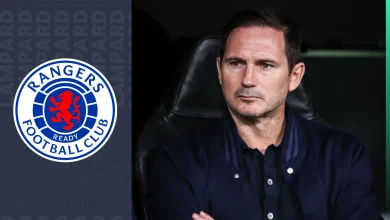
Then came the summer speculation. With Derek McInnes now in the Ibrox dugout, the link between Lewis and Rangers felt more plausible than at any earlier point. McInnes knew him, had worked with him and had played a major role in his development. Add the family connections, and a move looked, on paper, like a natural fit.
But the reaction from the Ferguson camp was anything but enthusiastic about the practicalities. Derek, speaking on the Open Goal podcast, questioned why Rangers had explored the move at all when Bologna’s valuation appeared beyond the club’s reach. Reports quoted him as describing the pursuit as a waste of time. His argument was essentially financial: if Bologna’s asking price was high and Rangers couldn’t meet it, there was little point in an approach.
Italian outlets picked up the story, with Bologna-focused sites noting that the Scottish club’s interest had reportedly stopped at the first hurdle of the Serie A club’s demands. Bologna themselves seemed relaxed about it. In their view, their captain was not going anywhere.
Lewis addressed the speculation by reaffirming his commitment to Bologna while admitting that the boyhood dream of playing for Rangers has not gone away. That balance, loyalty to his current club and honesty about his roots, is typical of how he handles the subject. He doesn’t dismiss the idea, and he doesn’t pretend it is imminent.
If Lewis is the measured one, Derek is the voice that keeps the story in the headlines. Over the years he has become a regular pundit and podcast guest, and he isn’t shy about giving opinions, including on matters involving his own son.
He has also waded into other Rangers debates. Commenting on Ianis Hagi, he urged Gheorghe Hagi to let his son make his own decisions, arguing it was the player’s career and that he should prove himself on the pitch. The remarks, picked up in Romanian media, are typical of Derek’s style: direct, personal and rooted in his experience as both a former professional and the father of one.
That frankness cuts both ways. It makes him compelling to listen to, and it makes him a lightning rod. A father who speaks publicly about his son’s career, his old club’s recruitment and the merits of other players will always attract disagreement. When a former player pushes back, whether on valuation, on ability or on whether Rangers should have pursued a deal at all, it is the natural result of a family that has put itself at the centre of the conversation
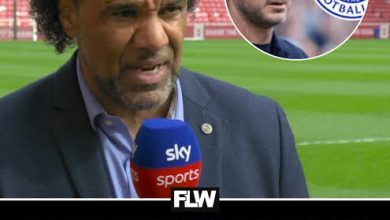
This brings us to the argument at the heart of the headline that started all this. Rangers supporters have spent years debating whether the club made a mistake over Lewis, and every time another player is set beside him, the conversation reignites. Is a player currently out of favour at Ibrox actually better than the Bologna captain? Could a former Rangers midfielder make that case? Of course. It is the sort of claim that fuels phone-ins and heated social media threads.
But comparisons like these are slippery. Players develop at different speeds, in different leagues, under different coaches. A midfielder who struggles for a place at Rangers might be perfectly good in another system, and a player who thrives in Serie A’s tactical structure might not have shone elsewhere. Statistics help but never settle it. Role, team quality, tactical fit and even luck all feed into the picture.
What can be said with confidence is that Lewis’s trajectory is hard to argue with. A player released at 14, who came through Hamilton and Aberdeen, who moved to a major European league, who became captain of a club that qualified for the Champions League and who earned individual recognition alongside midfield greats, has earned the right to be taken seriously. Whether someone else is “better” is a matter of opinion, but it is an opinion that has to reckon with that record
For Rangers, the Lewis Ferguson saga carries a lesson that goes beyond one player. Fan commentary has pointed out that the club had not made a domestic signing for some time, and that in Lewis’s case a pathway existed that was never taken. The fee Bologna reportedly paid looks small next to his valuation a couple of years later, with some articles noting he could now be worth more than eight times that.
That is the kind of statistic that stings, but it is worth being fair. Recruitment is never perfect, and decisions that look obvious in hindsight were made with incomplete information at the time. Rangers were not the only club that failed to see what Lewis would become, and plenty of others passed on him too.
What remains true is the emotional dimension. For a club whose identity is built on its history and its family names, the idea that one of its own got away carries a particular sting. It feeds a sense, rightly or wrongly, that Rangers have at times undervalued what was on their own doorstep.
The question now is where Lewis goes from here. His contract situation, his recovery from injury and the interest from bigger clubs all shape the picture, and anyone publishing this should check the latest status, since these details move quickly.
What is clear is that he has options. He is a Scotland regular, a proven Serie A performer and a captain at a club with European ambitions. Whether he stays at Bologna, moves to the Premier League or one day fulfils the boyhood dream at Ibrox, he will do it from a position of strength rather than hope.
For Rangers fans, a homecoming remains alluring, if unlikely in the short term. For the Ferguson family, it would be the most fitting of endings: the son returning to the club that let him go, on his own terms
It would be easy to reduce all this to a simple narrative: Rangers got it wrong, Lewis proved them wrong, end of story. The reality is richer and more human. It is about a family that loved a club, a boy who was hurt by it, a father and uncle who have never stopped talking about it, and a player who refused to let rejection define him.
It is also about how football works. Careers are rarely linear, judgments at 14 are fallible, and the arguments about who is better and who should have signed whom are, in the end, part of what makes the game worth following. When a former Rangers player claims someone is better than Lewis Ferguson, when Derek fires back on a podcast, or when Barry insists his nephew would have walked to Ibrox, they are all taking part in the same long conversation.