🗣️ “I get where the frustration is coming from, but it not out fault that we are victorious” 🗣️ “This is football, and we need to respect every aspect of it” 🗣️ ” What they said got me upset. I didn’t expect that from Shankland

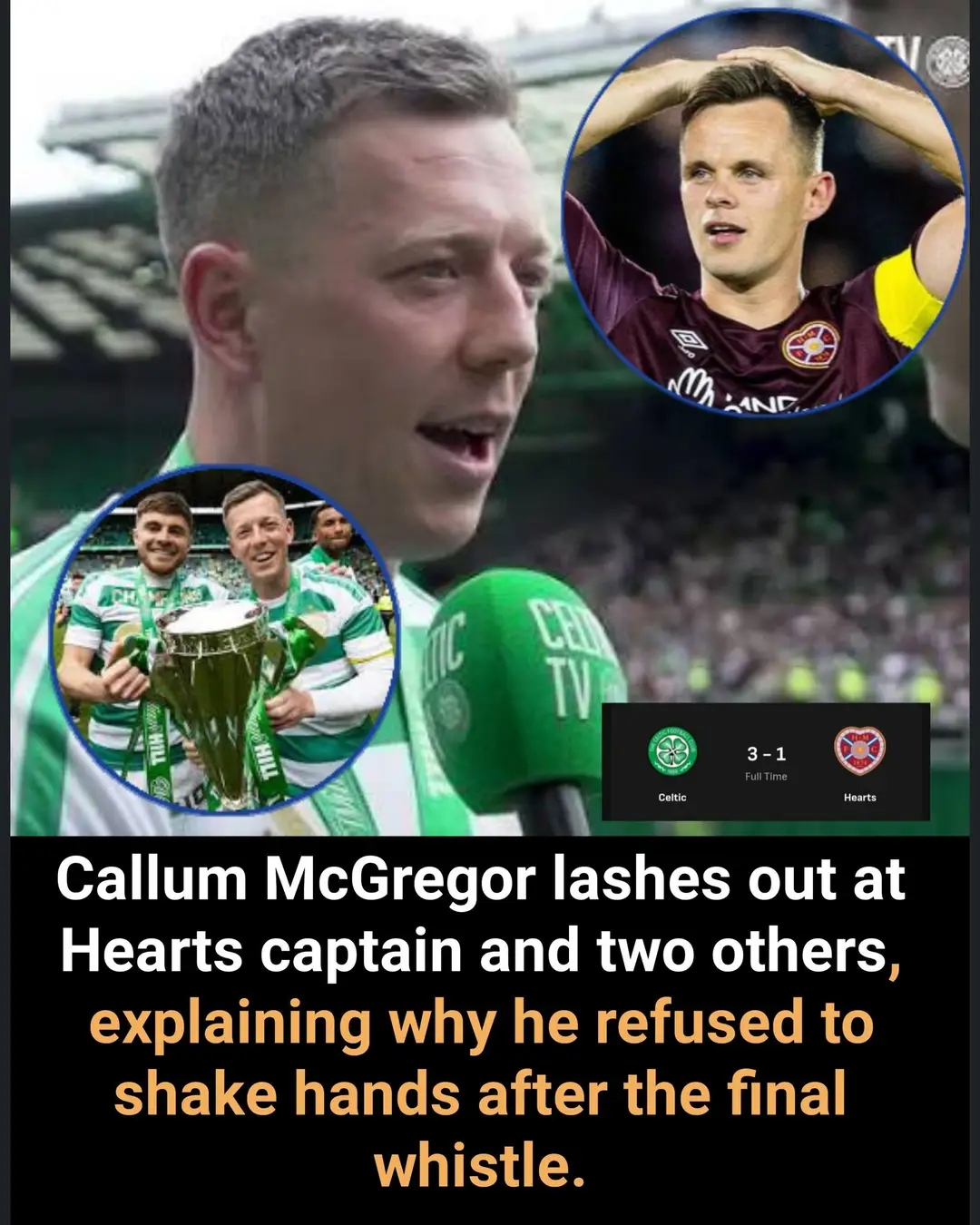
The tension in Scottish football has once again exploded into controversy, and this time it surrounds a heated post-match incident involving Callum McGregor and comments that have sparked debate, anger, and confusion across the football world.
It all began after a highly emotional match where expectations, pressure, and rivalry collided in dramatic fashion. The final whistle did not bring calm as usual. Instead, it brought frustration, confrontation, and moments that quickly spread across social media, turning a normal football result into a national talking point.
At the center of it all was McGregor, the experienced captain known for his leadership, discipline, and calm presence on the pitch. But on this occasion, his emotions were clearly visible, and his words after the match revealed just how deeply the situation had affected him.
Speaking after the game, McGregor delivered a message that immediately grabbed attention.
He said that he understood where the frustration from the opposition was coming from, but he insisted that it was not their fault that they had won the match. In his words, victory should not be treated as something suspicious or unfair simply because one team could not accept the result.
He made it clear that football is football, and every part of it must be respected, even when the outcome is painful for the losing side. According to him, emotions can run high, but respect for the game must remain no matter what happens on the pitch.
His tone was firm but controlled, as if he was trying to balance frustration with professionalism. However, it was also clear that something deeper had happened during the match, something that made the situation more personal than just a routine post-match disagreement.
McGregor also expressed disappointment about comments that were made by opponents, particularly singling out remarks involving Lawrence Shankland. He admitted that certain things said during or after the match had genuinely upset him and that he did not expect such reactions from a player of that level and experience.
For McGregor, this was not just about winning or losing. It was about respect between professionals who compete at the highest level but are still expected to maintain mutual understanding once the whistle blows.
He admitted that he was surprised by what had been said, and that it affected him more than he expected. His reaction suggested that the incident was not just a minor disagreement but something that lingered emotionally beyond the final scoreline.
The post-match atmosphere was already tense before his interview even began. Players had exchanged words on the pitch, body language had shown frustration, and the handshake moment after the final whistle became one of the most talked-about scenes of the match.
Reports suggest that McGregor refused to shake hands with certain players immediately after the game, a decision that quickly raised questions and fueled debate among fans and pundits. For some, it was seen as a sign of disrespect. For others, it was viewed as an emotional reaction to a heated and controversial match.
In football, handshakes after the final whistle are usually a symbol of respect, a gesture that says the battle is over even if emotions are still running high. But in this case, that tradition broke down, and the moment became symbolic of deeper tension between the teams involved.
McGregor’s explanation suggested that the situation was not as simple as it looked. He implied that comments made during the match influenced his reaction, and that emotions had reached a point where he could not respond in the usual polite manner expected after a game.
Still, he did not attempt to completely justify the reaction. Instead, he focused on explaining the emotional context behind it. He repeated that football is built on competition, passion, and intensity, but also on respect, and when that balance is disturbed, situations like this can happen.
His message was not only directed at fans or the media but also at the players involved in the incident. He seemed to be addressing the wider issue of respect within the game, suggesting that words spoken on the pitch can sometimes have lasting consequences.
As expected, reactions to his comments were immediate and divided.
Some supporters praised McGregor for being honest and direct, arguing that he was simply defending his team and standing up for what he believed was a fair result. They felt that frustration from opponents was natural, but it should not lead to disrespectful reactions after the match.
Others, however, saw his response differently. They believed that refusing a handshake and publicly criticizing comments from an opposing player only added fuel to an already heated situation. In their view, experienced captains are expected to calm tensions, not highlight them further.
The debate quickly grew beyond just one match. It became a discussion about sportsmanship, leadership, and emotional control in modern football.
Many pointed out that McGregor is not a young player learning the game anymore. He is a captain, a leader, and someone expected to set an example both during and after matches. Because of that, his actions and words carry more weight than most players on the pitch.
However, others argued that even the most experienced professionals are still human. They feel pressure, frustration, and disappointment just like anyone else, and sometimes those emotions spill over in ways that are not perfectly controlled.
This incident also highlighted the intense nature of rivalries in Scottish football, where matches are often more than just games. They are emotional battles filled with history, pride, and pressure from fans on both sides. In such an environment, moments of tension are almost inevitable.
McGregor’s comments about respecting football were aimed at reminding everyone that, despite rivalry and emotion, the sport still requires professionalism. He emphasized that winning should not be treated as something to apologize for or defend, especially when it comes through legitimate effort on the pitch.
But the reaction from the opposition camp suggested that they saw the situation differently, believing that certain decisions during the match influenced the outcome unfairly. That difference in perspective is what often fuels football controversies long after the final whistle.
The mention of Shankland added another layer to the situation. McGregor’s disappointment suggested that there had been a specific exchange or incident involving him, although full details were not completely clear. What was clear, however, was that it left an emotional impact on him.
He admitted that he did not expect those words or that attitude from Shankland, which suggests that there may have been a personal level of surprise or disagreement beyond normal match incidents.
As the conversation continued, McGregor also defended his team’s performance, making it clear that victories are earned through effort, preparation, and execution, not luck or external factors. He rejected the idea that their success in the match should be questioned or undermined.
At the same time, he acknowledged that football is emotional and that reactions in the heat of the moment are sometimes unavoidable. However, he stressed that once the match is over, respect should return.
The incident has now become part of a wider discussion about football culture, where passion often clashes with professionalism. Fans expect emotion, but they also expect respect. Players are encouraged to show fire on the pitch but calmness after it.
Balancing those expectations is never easy, especially for captains like McGregor who carry responsibility not only for their own performance but for their entire team’s image.
As the debate continues, one thing is clear: this incident will not be forgotten quickly. It will be analyzed, discussed, and used as an example whenever discussions about sportsmanship and respect in football arise again.
For McGregor, the focus will eventually return to football, training, and the next challenge. But for now, his words and actions after the final whistle have become one of the most talked-about moments of the season.
And in a sport where emotions often write the headlines more than the scoreline itself, this is another reminder that football is never just about what happens during 90 minutes—it is also about what happens after it.