Manchester City Target Elliot Anderson as Long-Term Rodri Successor Amid Mounting Fitness Concerns

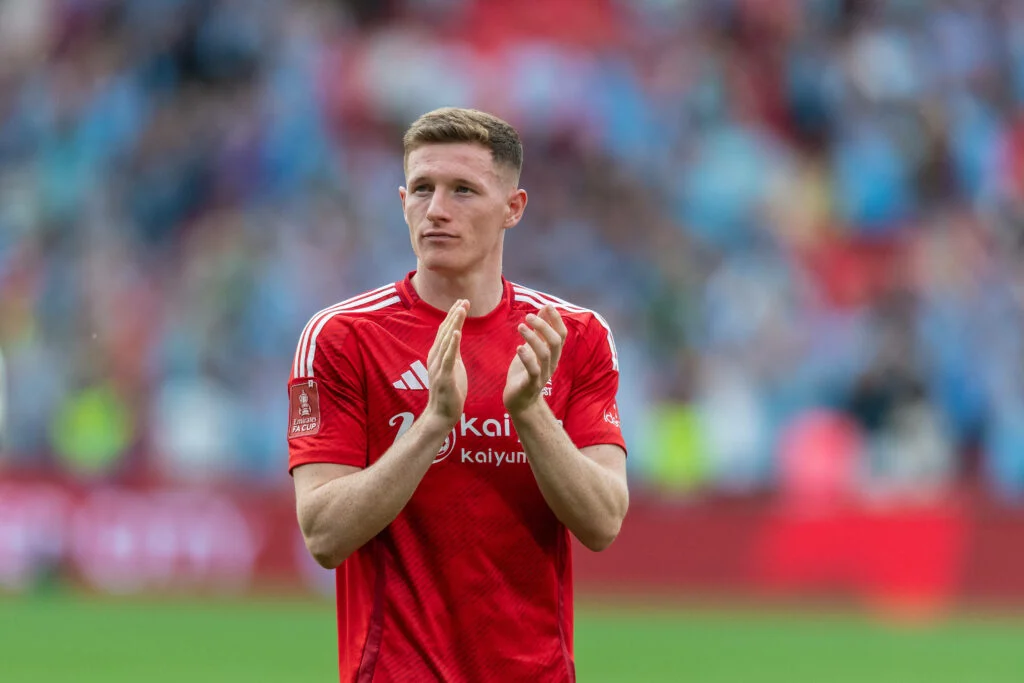
manchester City have identified Nottingham Forest’s Elliot Anderson as their preferred candidate to potentially replace Rodri, as concerns continue to mount regarding the Spanish midfielder’s persistent injury complications. The revelation comes from former Manchester United and Blackburn Rovers chief scout Mick Brown, whose extensive connections throughout the football industry continue to provide valuable insights into the transfer machinations of England’s elite clubs.
Brown, speaking exclusively to Football Insider, disclosed that Pep Guardiola has been thoroughly impressed by Anderson’s performances for Nottingham Forest this season, with the Manchester City manager reportedly viewing the England international as possessing the ideal combination of attributes to eventually succeed Rodri in the heart of City’s midfield. This represents a significant development in what has become one of the Premier League’s most closely watched transfer sagas, as multiple top-tier clubs circle around one of English football’s most exciting emerging talents.
The Financial Landscape and Competition for Anderson’s Signature
The transfer situation has become increasingly complex following Football Insider’s exclusive revelation that Nottingham Forest have substantially increased their valuation of Anderson. The City Ground hierarchy will now demand a fee exceeding £100 million for their prized midfielder, a figure that reflects both his exceptional performances and the inflated nature of the contemporary transfer market. This astronomical asking price positions Anderson among the most expensive midfield targets in world football and represents a potentially record-breaking transaction for a player of his age and experience level.
The competition for Anderson’s services extends well beyond Manchester City’s interest. Both Liverpool and Manchester United have been monitoring the situation closely, with each club identifying specific needs within their respective midfield departments that they believe the Nottingham Forest star could address. Liverpool, navigating a period of transition under their management, view Anderson as a player whose energy and technical quality could complement their high-intensity playing style. Meanwhile, Manchester United, perpetually seeking solutions to their well-documented midfield deficiencies, recognize in Anderson the type of complete midfielder they have struggled to recruit in recent transfer windows.
However, Manchester City’s interest carries particular weight due to the specific circumstances surrounding Rodri’s fitness situation. Unlike their rivals, who view Anderson primarily as a squad enhancement or tactical upgrade, City increasingly see him as a potential necessity rather than a luxury acquisition. The concerns surrounding Rodri’s long-term fitness have transformed what might otherwise have been a straightforward succession planning exercise into a matter of genuine urgency for the Premier League champions.
Mick Brown’s Expert Analysis and Industry Insight
Mick Brown’s credentials within football recruitment circles add considerable credibility to his assessment of the situation. His extensive tenure at Manchester United during the club’s most successful period under Sir Alex Ferguson provided him with unparalleled experience in identifying and evaluating top-level talent. His subsequent roles have maintained his connections throughout the game, making his insights particularly valuable when understanding the often opaque world of transfer negotiations and club planning.
Speaking to Football Insider on December 2nd, Brown provided detailed commentary on Manchester City’s accelerated plans to secure Anderson’s signature ahead of their Premier League rivals. His analysis went beyond simple transfer speculation, offering nuanced understanding of why Anderson represents such an attractive proposition for multiple clubs and specifically why Manchester City view him as the natural successor to Rodri.
“Anderson would be perfect for Man City,” Brown stated emphatically, establishing the foundation of his assessment. However, he was careful to acknowledge the broader context of interest surrounding the player: “He would be a top option for quite a few clubs. I look at him as the answer to Man United’s midfield problems, and Liverpool are looking at him too.”
This recognition of competing interest serves to underscore the magnitude of the transfer battle that may unfold. When multiple elite clubs identify the same player as their preferred target, transfer negotiations inevitably become more complicated, with agents and selling clubs able to leverage competition to maximize both transfer fees and contractual terms. Nottingham Forest’s elevated asking price already reflects this dynamic, with the club clearly aware that demand for Anderson’s services provides them with considerable negotiating leverage.
The Rodri Situation: Mounting Concerns and Complications
The specific circumstances surrounding Rodri’s injury situation provide crucial context for understanding Manchester City’s interest in Anderson. Brown’s comments directly addressed these concerns, revealing that the situation has become more problematic than initially anticipated: “But for City, they’ve got these worries about Rodri and his injury where he doesn’t seem to have recovered as well as they might have hoped.”
This revelation carries significant implications for Manchester City’s planning. Rodri has established himself as arguably the most important player in Guardiola’s system, functioning as the tactical fulcrum around which the team’s entire approach revolves. His ability to control tempo, win possession, distribute accurately under pressure, and provide defensive stability has made him virtually irreplaceable. The prospect of extended absence or recurring fitness issues represents a nightmare scenario for a club with championship ambitions across multiple competitions.
Brown further elaborated on the depth of concern within Manchester City’s hierarchy, stating: “I’m told Guardiola is a big fan of his and would want to bring him in if he became available, and they’re looking at maybe doing that in January.” This suggestion that City might pursue Anderson during the January transfer window, rather than waiting until the summer, indicates the seriousness with which they view the situation. Mid-season transfers of this magnitude are relatively rare, as selling clubs are typically reluctant to weaken their squads during an ongoing campaign, particularly for players as important as Anderson has become to Nottingham Forest.
The pattern of Rodri’s fitness struggles has become increasingly worrying for Manchester City. Brown’s assessment captured the frustrating nature of the situation: “Every time he gets close or makes a comeback, something else seems to come up. If he can’t stay fit for an extended period, they’ll need to bring in somebody who can.” This cycle of near-returns followed by fresh setbacks has prevented Rodri from establishing any meaningful rhythm or consistency, depriving Manchester City of their most important midfielder at a crucial stage of the season.
The numbers surrounding Rodri’s absence paint a stark picture of the challenge facing Manchester City. The Spanish international missed 53 matches for club and country following his torn cruciate ligament injury sustained last season. This represents an enormous void in playing time and underscores the severity of the initial injury. However, the subsequent complications have proven equally problematic, resulting in an additional 15 missed fixtures as medical staff work cautiously to ensure his complete recovery and prevent further setbacks.
Most recently, Rodri remained unavailable for Manchester City’s comfortable 3-0 victory over Sunderland, continuing his extended absence from competitive action. While the medical team continues working with him on his rehabilitation program, the lack of a definitive timeline for his return creates ongoing uncertainty for Guardiola’s tactical planning and squad selection.
Why Anderson Fits Manchester City’s Profile
Brown’s analysis included specific reasoning for why Anderson represents such an ideal candidate to eventually succeed Rodri in Manchester City’s midfield. His assessment highlighted the multifaceted nature of Anderson’s game and how various aspects of his playing style align with the demands Guardiola places upon his central midfielders.
“They’ve been looking at a few options, seeing who might be available and who best suits their team, just in case they need to go and buy somebody,” Brown explained, providing insight into Manchester City’s recruitment process. This methodical approach reflects the club’s typically thorough scouting and analytical work, with multiple candidates presumably undergoing detailed evaluation before the club commits to pursuing any particular target.
However, Anderson has evidently emerged from this evaluation process as the standout candidate. Brown elaborated on the specific qualities that distinguish him: “Anderson stands out as the ideal replacement, really, because he’s got that energy but he can play deeper and he’s very smart in possession as well.”
This combination of attributes is particularly significant when considering the demands of replacing Rodri. The Spanish midfielder’s game encompasses defensive work rate and energy, positional discipline and tactical intelligence when playing in deeper areas, and exceptional technical quality when in possession of the ball. Finding a player who combines all these elements at an elite level represents an enormous challenge, which explains why Manchester City have identified so few viable candidates.
Anderson’s energy levels and work rate ensure he can cover ground effectively and contribute defensively, pressing opponents and winning back possession in dangerous areas. His ability to play in deeper positions demonstrates tactical flexibility and positional understanding, crucial attributes for any midfielder operating in Guardiola’s system where players must constantly adjust their positioning based on the phase of play and the location of teammates and opponents. His intelligence in possession reflects the technical security and decision-making quality that Guardiola demands, with players required to maintain the ball under pressure, identify passing angles quickly, and execute accurate distribution even in congested areas.
These qualities have been evident throughout Anderson’s performances for Nottingham Forest this season, where he has established himself as one of the Premier League’s most impressive young midfielders. His development trajectory suggests considerable additional growth potential, an important consideration for Manchester City as they look not just for a short-term solution but someone capable of anchoring their midfield for many years to come.
The January Transfer Window Dilemma
The suggestion that Manchester City might pursue Anderson during the January transfer window introduces fascinating complications to an already complex situation. Mid-season transfers of this magnitude face numerous obstacles that make them considerably more difficult to complete than summer moves.
From Nottingham Forest’s perspective, selling their most important midfielder midway through the season would significantly undermine their own ambitions. Anderson has been integral to their performances, and losing him would create an enormous void that would be extremely difficult to fill adequately within the limited timeframe of the January window. Forest would need to identify, negotiate for, and integrate a replacement while simultaneously adjusting their playing style to accommodate the new player’s characteristics. This challenge becomes even more daunting when considering that any potential replacement would likely cost a substantial fee, and clubs rarely make their best players available mid-season.
Additionally, Nottingham Forest must consider their own Premier League status and ambitions. Depending on their league position in January, they might be fighting relegation, pursuing European qualification, or targeting cup competition success. In any of these scenarios, weakening their squad by selling Anderson would be counterintuitive and potentially catastrophic for their season.
However, the astronomical fee Manchester City would presumably offer creates powerful financial incentives. A transfer exceeding £100 million would represent transformational money for Nottingham Forest, potentially funding multiple high-quality signings and providing long-term financial security. The club’s ownership would need to carefully balance sporting ambition for the current season against the financial benefits and long-term planning advantages that such a windfall would provide.
From Manchester City’s perspective, pursuing a January transfer reflects the urgency created by Rodri’s situation. If the club genuinely believes he faces an extended absence or recurring fitness problems, waiting until summer could leave them navigating crucial months without adequate cover in their most important position. The potential costs of underperformance during this period—in terms of lost trophies, reduced prize money, and reputational damage—might justify the premium price typically associated with mid-season acquisitions.
The Broader Context of Manchester City’s Squad Planning
Manchester City’s interest in Anderson must be understood within the broader context of their squad planning and the challenges facing the club as they attempt to maintain their domestic and European dominance. Guardiola has constructed one of the most complete and balanced squads in world football, but even this expensively assembled collection of talent faces inevitable transitions as players age, contracts expire, and unforeseen circumstances arise.
The midfield department has been a particular area of focus for Manchester City’s recruitment in recent years. The departures of Fernandinho and subsequent additions have created a constantly evolving picture, with Guardiola seeking the optimal combination of attributes to dominate possession, control tempo, and provide defensive stability. Rodri’s emergence as the undisputed first-choice option brought stability to this area, but his injury problems have exposed the team’s vulnerability to his absence.
Current squad members have attempted to fill the void left by Rodri, but none possess his complete skill set or have been able to replicate his influence. Mateo Kovačić brings technical quality and experience, but lacks Rodri’s physical presence and defensive authority. Kalvin Phillips, recruited specifically as a potential Rodri alternative, has struggled to adapt to Guardiola’s demands and has fallen out of favor. The lack of a convincing internal solution makes external recruitment increasingly necessary.
Anderson’s age profile also aligns with Manchester City’s typical recruitment strategy. At a relatively young age for a midfielder, he offers the prospect of many years at peak performance level, providing long-term value that justifies the substantial investment required to secure his signature. This contrasts with potential alternatives who might offer more immediate experience but less longevity.
Nottingham Forest’s Perspective and Negotiating Position
Nottingham Forest find themselves in an enviable yet challenging position regarding Anderson’s future. The player’s exceptional performances have attracted attention from multiple elite clubs, validating their recruitment strategy and player development work. However, managing this interest while protecting their own sporting interests requires delicate handling.
The club’s decision to increase Anderson’s asking price to over £100 million reflects both his value to their team and their awareness of the competitive dynamics at play. By setting such a high figure, Forest ensure that any departure would provide them with transformational resources to reinvest across their squad. The price point also serves as a deterrent, potentially discouraging clubs whose interest might be speculative rather than genuine.
Forest’s negotiating position benefits from several factors. Anderson remains under contract, providing them with no obligation to sell and eliminating any urgent need to negotiate. The competition between multiple interested clubs prevents any single suitor from exercising undue leverage. The player’s continued excellent performances maintain his value and demonstrate that he remains fully committed despite the transfer speculation.
However, managing the situation also presents challenges. Anderson himself may desire a move to a club competing regularly in the Champions League and challenging for major trophies, ambitions that Nottingham Forest cannot currently fulfill. Refusing to sell could risk player dissatisfaction and potential deterioration in performances. The club must balance maximizing their financial return against maintaining positive relationships with their key players and demonstrating to other talents that Forest provides a platform for development and career progression.
The Player’s Perspective and Career Trajectory
Elliot Anderson’s own views on his future will ultimately prove decisive in determining the outcome of this transfer saga. The midfielder faces a career-defining decision that will shape the trajectory of his professional life for years to come.
Remaining at Nottingham Forest offers certain advantages. He occupies a central role in the team, receiving consistent playing time that is crucial for his continued development. The responsibility and expectation placed upon him as one of Forest’s key players provides an environment where he can continue refining his game without the immediate pressure of competing for trophies or meeting the expectations that accompany playing for a super-club.
However, the appeal of joining Manchester City or another elite club is obvious. The opportunity to work under Pep Guardiola, widely regarded as one of football’s greatest coaches, would accelerate Anderson’s tactical education and technical refinement. Competing regularly in the Champions League would expose him to the highest level of club football and test him against world-class opposition. The chance to challenge for multiple major trophies each season provides motivation that few other situations can match.
The timing of any potential move also requires careful consideration. Some players benefit from additional seasons at mid-tier clubs before making the step up to elite level, allowing them to mature physically and mentally while accumulating experience. Others possess the quality and temperament to make the transition immediately, thriving under increased pressure and expectation.
Anderson must also consider his England prospects. Regular playing time at Nottingham Forest might provide a clearer pathway to consistent international selection than joining Manchester City, where competition for places is intense and squad rotation common. However, the higher profile and greater success associated with playing for City might also enhance his visibility and reputation.
Conclusion: A Transfer Saga with Far-Reaching Implications
The pursuit of Elliot Anderson by Manchester City represents far more than a simple transfer negotiation. It encapsulates the interconnected nature of modern football, where one player’s injury problems trigger a chain of events affecting multiple clubs, players, and competitions.
For Manchester City, Anderson represents a potential solution to their most pressing squad concern. Rodri’s fitness issues have exposed a vulnerability in their otherwise complete squad, and identifying an adequate successor has become urgent rather than merely prudent planning. The club’s willingness to potentially pursue a January deal, with all the complications that entails, demonstrates the seriousness with which they view the situation.
For Nottingham Forest, managing Anderson’s future while protecting their own interests presents a delicate balancing act. The financial windfall from his sale would be transformational, but losing their most important midfielder could derail their season and send problematic signals about the club’s ambitions.
For Anderson himself, the decision carries enormous consequences. Whichever path he chooses will shape his career trajectory and determine whether he fulfills his evident potential at the very highest level of the game.
As January approaches and Rodri’s recovery continues to face setbacks, this transfer saga will intensify. The competition between Manchester City, Liverpool, and Manchester United ensures that the eventual outcome will reverberate throughout English football, potentially reshaping the competitive balance and determining which clubs can sustain championship challenges across multiple fronts. The resolution of Elliot Anderson’s future represents one of the defining transfer stories of the season, with implications extending far beyond the immediate transaction itself.