Kalvin Phillips: The Crossroads of a Career – From Yorkshire Hero to European Exile

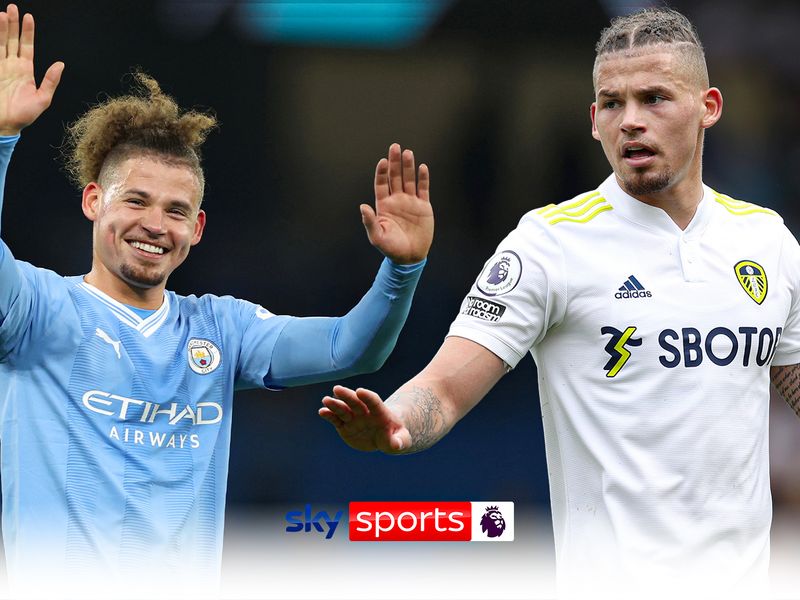
December 2025 marks a pivotal moment in the career of Kalvin Phillips, the 30-year-old midfielder whose journey from local Leeds hero to Manchester City squad player represents one of modern football’s most cautionary tales about timing, fit, and the unforgiving nature of elite competition. As the January transfer window approaches, Phillips stands at a crossroads that will likely define the remainder of his playing career. After three turbulent years at the Etihad Stadium, characterized by limited playing time, public criticism, and unsuccessful loan spells, the England international is preparing for what may be his final opportunity to reclaim the form that once made him one of the Premier League’s most coveted midfielders.
The Golden Years: Building a Legacy at Elland Road
To understand Phillips’ current predicament, one must first appreciate the heights from which he has fallen. His story began in the most romantic fashion possible for any footballer – a local boy making good at his boyhood club. Born in Leeds on December 2, 1995, Phillips joined the Leeds United academy at the relatively late age of 14, an unconventional entry point that would later inform his grounded perspective on professional football.
His early years at Leeds were marked by uncertainty. There were genuine questions about whether he would be retained at the U18 level, and his path to first-team football was far from guaranteed. However, the chaotic ownership years under Massimo Cellino inadvertently benefited Phillips and a generation of young Leeds players. With the club in flux, academy graduates were given opportunities sooner than they might have been under more stable circumstances. Phillips made his professional debut against Wolverhampton Wanderers on April 6, 2015, in a match that ended in a 4-3 defeat. Just days later, in his home debut against Cardiff City, he scored his first professional goal, a moment that fulfilled a childhood dream and hinted at the special relationship he would develop with the Elland Road faithful.
For the first few seasons, Phillips’ exact role remained somewhat undefined. He was clearly talented, but his best position and playing style were still being discovered. He operated as a box-to-box midfielder, showing glimpses of quality without truly dominating games. During the 2017-18 season, he enjoyed his best scoring campaign to that point, netting seven goals and providing three assists, demonstrating an attacking dimension to his game that would later be refined and redirected.
The Bielsa Revolution: Transformation and Triumph
The arrival of Marcelo Bielsa as Leeds manager in the summer of 2018 proved to be the transformative moment in Phillips’ career. The legendary Argentine coach, known for his tactical innovation and ability to maximize player potential, immediately recognized something special in the young midfielder. Bielsa made a bold decision: he would convert Phillips from a somewhat undefined central midfielder into a deep-lying playmaker and defensive pivot, a position that would become Phillips’ calling card.
The transformation was remarkable. Under Bielsa’s tutelage, Phillips developed into what Leeds fans affectionately termed the “Yorkshire Pirlo,” a nickname that referenced Italian maestro Andrea Pirlo and reflected Phillips’ newfound ability to dictate games from deep positions. Bielsa himself described Phillips’ strengths succinctly, noting his exceptional ability to receive possession under pressure and distribute the ball into better spaces, his tactical awareness in covering for attacking fullbacks, and his defensive capabilities when Leeds found themselves outnumbered.
The 2019-20 season marked Phillips’ emergence as an elite Championship player. As Leeds finally secured promotion to the Premier League after 16 years in the wilderness, Phillips was absolutely pivotal. He completed 136 of 215 long passes that season, a 64% success rate that placed him among the best in the division. His diagonal switches of play became a hallmark of Leeds’ attacking approach, allowing the team to stretch opponents and create spaces for their energetic wide players like Raphinha and Jack Harrison to exploit.
Phillips’ passing range was genuinely world-class. His ability to strike long balls with precision and power made him irreplaceable in Bielsa’s system. Pep Guardiola would later acknowledge this, stating that Phillips’ quality in playing long balls exceeded even Rodri’s, his own trusted defensive midfielder. This technical excellence, combined with Phillips’ improved defensive positioning and reading of the game, made him one of the Championship’s most complete central midfielders.
International Recognition and Peak Performance
Phillips’ club form inevitably caught the attention of England manager Gareth Southgate. In an unusual distinction, he became only the third player in the 21st century to represent England before making an appearance in the Premier League, joining Jack Butland and Wilfried Zaha in that select group. His international debut came in September 2020 against Denmark in the UEFA Nations League, just days before his first Premier League outing for Leeds at Anfield.
The selection proved inspired. Phillips quickly established himself as a reliable partner to Declan Rice in England’s midfield, offering tactical discipline, passing quality, and the kind of tireless work rate that Southgate valued. His crowning achievement came at UEFA Euro 2020 (played in 2021), where he started all seven of England’s matches en route to the final. His performances throughout the tournament earned widespread acclaim from pundits and fans alike, with his combative, dynamic displays helping England reach their first major final in 55 years. Although the Three Lions ultimately fell to Italy on penalties, Phillips’ stock had never been higher. He was voted England’s 2020-21 Men’s Player of the Year, an honor that recognized his outstanding contributions on the international stage.
At this point in his career, Phillips appeared destined for the very top of the game. He had proven himself in the Premier League across two seasons with Leeds, establishing himself as one of the division’s finest defensive midfielders. Multiple elite clubs were monitoring his situation. In July 2019, Leeds had reportedly rejected bids around £27 million for Phillips, determined to keep their homegrown star. By 2022, with two years of Premier League experience and a European Championship final appearance on his resume, his value had soared.
The Manchester City Move: A Dream Turns Nightmare
On July 4, 2022, Phillips completed his transfer to Manchester City, the reigning Premier League champions, for an initial fee of £42 million, potentially rising to £45 million with add-ons. He signed a six-year contract, a statement of intent from both club and player about their long-term commitment to making the partnership work. The move appeared logical on paper. City needed cover and eventual succession planning for the aging Fernandinho, and while they had already secured Rodri, the demanding nature of competing across multiple competitions meant quality depth in central midfield was essential.
Phillips joined a squad that was already brimming with world-class talent and would go on to achieve the historic treble of Premier League, FA Cup, and UEFA Champions League in his first season. However, from the outset, his integration proved problematic. Early injury issues required shoulder surgery in September 2022, forcing him to the sidelines for several weeks just as he should have been adapting to Guardiola’s complex tactical system and earning the manager’s trust.
When Phillips did return to fitness and featured for England at the 2022 FIFA World Cup in Qatar, he faced immediate controversy. Upon his return to Manchester, Pep Guardiola publicly stated that Phillips had come back from the tournament “overweight” and “not in the best condition to train and play.” These comments, made during a press conference in December 2022, would haunt Phillips for the remainder of his Manchester City career and beyond.
The Weight Comments: A Career-Defining Controversy
The fallout from Guardiola’s remarks cannot be overstated. In the modern football ecosystem, where social media amplifies every comment and criticism spreads instantaneously, the “overweight” label became a narrative that Phillips could not escape. Speaking candidly on the “My Mate’s a Footballer” podcast in 2024, Phillips revealed the profound impact these comments had on his confidence and career trajectory.
Phillips explained that he was only approximately 1.5 kilograms over his target weight, a relatively minor deviation that he attributed partly to a miscommunication between himself and City’s staff about when he was expected to return to training. However, the public nature of the criticism transformed a minor physical conditioning issue into a defining characteristic in the eyes of many observers. Phillips admitted feeling frustrated by how the narrative “just kind of grew and grew” on social media and in football discourse.
The psychological toll was significant. Phillips revealed that every club he subsequently spoke to – whether for loan moves or potential permanent transfers – would address the weight issue before discussing anything else. Nutritionists and managers at prospective clubs were fixated on this single incident, perpetuating a perception that Phillips lacked professionalism or had poor fitness habits. For a player who had always prided himself on his work ethic and dedication, the comments represented a devastating blow to his professional reputation.
Guardiola would later apologize multiple times for the remarks. In February 2024, the manager acknowledged his error, stating repeatedly, “Yeah, I’m sorry! Once in eight years is not bad, but I’m so sorry. I apologised to him, I do apologise, I’m so sorry.” While the apology was welcomed, the damage had already been done. The initial comments had shaped how Phillips was perceived not just by fans and media, but by other clubs and managers evaluating him for potential moves.
The Statistical Reality: Frozen Out at the Etihad
The numbers tell a stark story of Phillips’ marginalization at Manchester City. Despite his six-year contract and the substantial investment the club made in acquiring him, Phillips managed just 31 appearances across all competitions in his first 18 months at the Etihad. Of those appearances, only six were starts, meaning he played just seven percent of available Premier League minutes during this period.
The 2024-25 season has been even more bleak. As of early December 2025, Phillips has featured for just seven minutes in all competitions, a single substitute appearance that came in a Carabao Cup match against Huddersfield Town in September. He has been an unused substitute on numerous occasions, watching from the bench even when Rodri – the player whose position he was ostensibly brought in to provide cover for – has been unavailable through injury or suspension.
Guardiola’s public comments about Phillips grew increasingly telling. In December 2023, the manager admitted, “I struggle to see him” when asked about visualizing Phillips in his team. Despite praising Phillips’ training attitude and character, Guardiola acknowledged, “I’m not very pleased [with myself] and I am so sorry for him.” The manager’s honesty, while perhaps refreshing, confirmed what had become abundantly clear: Phillips had no realistic pathway to regular first-team football at Manchester City as long as Guardiola remained in charge.
The presence of Rodri proved insurmountable. The Spanish midfielder has been arguably City’s most important player in recent seasons, with the team’s record without him being dramatically worse than when he plays. During the 2023-24 season, City lost all three Premier League games in which Rodri was absent, highlighting their dependence on him and the impossibly high standard any challenger for his position would need to meet.
The Loan Saga: Searching for Lost Form
West Ham United: A Failed Rehabilitation (January-May 2024)
Recognizing that Phillips needed regular football to have any hope of reviving his career, Manchester City sanctioned a loan move to West Ham United for the second half of the 2023-24 season. The move came with an option to buy for approximately £40 million, suggesting City were open to making the separation permanent if Phillips could rediscover his best form.
The loan to East London was meant to provide Phillips with the platform he desperately needed. West Ham manager David Moyes had a reputation for getting the best out of British midfielders, and the prospect of regular Premier League football should have reinvigorated Phillips’ confidence. However, the move failed to deliver the expected results.
Phillips made just ten appearances for the Hammers, struggling to make any significant impact. The situation deteriorated dramatically during a match against Newcastle United, where Phillips gave away a late penalty and was subsequently caught making an offensive gesture toward angry West Ham supporters as he boarded the team coach after the game. The incident perfectly encapsulated how far Phillips had fallen from the composed, respected professional he had been at Leeds.
His performances were inconsistent, and he never managed to establish himself as a regular starter under Moyes. The loan spell did nothing to enhance his reputation or rebuild his confidence. More damagingly, it contributed to his exclusion from Gareth Southgate’s England squad for Euro 2024, a tournament where he might have expected to play a role given his previous importance to the national team. Being left out of the Euros represented perhaps the lowest point of Phillips’ career, a stark symbol of how dramatically his stock had fallen in just two years.
Ipswich Town: Another Attempt at Revival (August 2024-Present)
Following the unsuccessful stint at West Ham, Phillips returned to Manchester City for pre-season training ahead of the 2024-25 campaign. However, it quickly became apparent that there remained no place for him in Guardiola’s plans. In August 2024, Phillips was loaned to newly-promoted Ipswich Town for the entire season under manager Kieran McKenna.
The move to Ipswich represented a significant comedown for a player who, just two years earlier, had been competing in the Champions League and representing England at a World Cup. However, Phillips approached the opportunity with professionalism and, by his own admission, found himself enjoying life in Suffolk under McKenna’s management.
Phillips spoke positively about reconnecting with former Leeds teammate Leif Davies at Ipswich and praised McKenna’s coaching and man-management skills. Despite acknowledging that he “never expected to be down here” in the Championship, Phillips expressed gratitude for the opportunity to play regular football again. During the 2024-25 season, he made 21 appearances for Ipswich across all competitions, scoring one goal and contributing defensively with 40 tackles, 23 interceptions, and 37 clearances.
However, even this loan spell was disrupted by injury problems. Phillips suffered an Achilles injury that sidelined him during the critical final stretch of the season, ultimately keeping him out of Ipswich’s push for survival or success. The persistent injury issues have become another concerning theme in Phillips’ post-Leeds career, raising questions about whether the physical demands of trying to break into elite teams while lacking consistent playing time have taken their toll.
The January 2025 Window: Europe Beckons
As December 2025 unfolds, all signs point toward Phillips finally accepting that his future lies away from Manchester City and, quite possibly, away from the Premier League entirely. According to multiple reports from reliable sources including Football Insider, Phillips is now actively open to pursuing opportunities abroad, representing a significant shift in his thinking.
Why Europe Makes Sense
For much of his career, Phillips expressed a preference for remaining in England. His deep connection to Leeds, his family’s roots in Yorkshire, and his comfort in familiar surroundings made the prospect of a foreign adventure less appealing than it might have been for other players. However, the repeated setbacks in the Premier League have forced a reassessment of his priorities.
Several factors make a move to continental Europe logical at this stage of his career:
1. Fresh Start and Perspective Reset The weight of accumulated disappointments in England has become almost unbearable. Every club Phillips approaches remembers the Guardiola comments, the failed loan spells, and the decline from international regular to peripheral squad player. Moving abroad would allow him to escape these negative narratives and write a new chapter without the constant reminders of his struggles.
2. Different Tactical Approaches European leagues, particularly in Germany, France, and Spain, often employ different tactical systems and place different demands on defensive midfielders compared to the intense, physically demanding nature of the Premier League. Phillips’ technical quality – his passing range, tactical intelligence, and ability to play out from the back – might be better suited to leagues where technical ability is prioritized over pure physicality.
3. Reduced Intensity, More Game Time At 30 years old, Phillips needs consistent playing time more than he needs to prove himself at the absolute highest level. Mid-table teams in Europe’s major leagues could offer him regular starts, allowing him to rebuild his confidence through actual match minutes rather than training ground performances.
4. Salary Considerations and City’s Willingness Manchester City are reportedly willing to facilitate Phillips’ departure, whether on loan or permanently. European clubs have expressed interest, and while Phillips’ reported £150,000-per-week wages (some sources suggest £250,000 per week) represent a significant barrier, City may be willing to subsidize his salary to move him off their books and create squad space.
Interested Parties and Potential Destinations
Reports suggest interest from clubs across several European leagues:
German Bundesliga: RB Leipzig have been mentioned as potential suitors, with their high-pressing, dynamic style potentially suiting Phillips’ strengths. The Bundesliga’s reputation for revitalizing careers makes Germany an attractive destination.
Italian Serie A: Juventus, AS Roma, and potentially other Italian clubs have monitored Phillips’ situation. The Italian league’s more tactical, measured approach could allow Phillips to showcase his passing range and game intelligence without the relentless physical demands of the Premier League.
French Ligue 1: While specific clubs haven’t been widely reported, Ligue 1 could offer Phillips the combination of decent competitive level and reasonable expectation of regular starts that he desperately needs.
Austrian Bundesliga: RB Salzburg, the sister club to RB Leipzig, have also been mentioned, though this would represent a significant step down in competitive level.
The most likely scenario appears to be a loan move with Manchester City potentially covering a portion of Phillips’ wages. This arrangement would give Phillips the opportunity to prove himself over six months while allowing City to reassess their options in the summer. However, a permanent transfer cannot be ruled out, particularly if a club is willing to meet City’s valuation and Phillips performs well enough to convince them of his worth.
The Leeds United Question
One of the most poignant aspects of Phillips’ current situation is the speculation around a potential return to Leeds United. For a player who spent his entire youth and the most successful years of his career at Elland Road, a reunion would have an undeniable romantic appeal. Leeds fans still revere Phillips for his contributions to the club’s return to the Premier League and would undoubtedly welcome him back.
However, multiple reliable reports have confirmed that Leeds will not be pursuing Phillips in the January window. The club has moved on strategically, and there are legitimate concerns about whether Phillips could recapture his previous form. Additionally, his substantial wages would be prohibitive for a Championship club, even one with Leeds’ ambitions and resources. Perhaps most significantly, Phillips has been specifically ruled out by Leeds in recent reports, with the club having decided that re-signing him doesn’t align with their current needs or strategy.
The Psychological Dimension: Confidence and Identity
One of the most overlooked aspects of Phillips’ decline is the psychological toll that three years of disappointment and public criticism have taken. Football at the elite level is as much a mental game as a physical one, and Phillips’ confidence has been systematically eroded by a series of setbacks.
Consider the journey: from being a beloved local hero at Leeds, to England’s Player of the Year, to being publicly criticized by one of football’s most respected managers, to failed loan spells, to missing a major tournament, to playing in the Championship. Each step has chipped away at the self-belief that underpinned Phillips’ best performances.
In interviews, Phillips has demonstrated remarkable self-awareness about his situation. His comments about finding Guardiola’s weight remarks “a little hard to take” and his frustration with how the narrative followed him show a player grappling with the loss of control over his own story. The fact that he openly discusses these challenges rather than retreating into platitudes suggests a maturity and resilience that could serve him well in his eventual recovery.
His family’s role has been significant throughout this ordeal. Phillips has spoken about how upset his mother was by the public criticism, revealing the human dimension behind the headlines. For a player who has always emphasized his close connections to family and community, the disappointment of not living up to expectations – both his own and others’ – cuts deeper than it might for players with different motivations.
What Went Wrong? Analyzing the Manchester City Failure
It’s worth examining why the Manchester City move failed so comprehensively. Understanding these factors might provide insights into what kind of environment could help Phillips succeed going forward.
Tactical Misfit: Guardiola’s system places extraordinary demands on the No. 6 position. The defensive midfielder in City’s setup must be technically flawless under pressure, positionally perfect, capable of stepping into defense or midfield as needed, and able to maintain concentration while touching the ball more than almost any player on the pitch. Rodri has mastered these requirements through years of working with Guardiola. Phillips, despite his undeniable talent, never received enough playing time to properly adapt to these unique demands.
Timing and Competition: Phillips arrived at City at arguably the worst possible moment in terms of competition for his position. Rodri was entering his peak years and had become indispensable to City’s success. Unlike situations where a player might gradually phase out a declining predecessor, Phillips was trying to displace someone at the absolute height of their powers. In many ways, he was doomed from the start.
The Weight of Expectations: The £42 million transfer fee and the reputation Phillips brought from Leeds meant expectations were sky-high. Any new player needs time to adapt, but Phillips was expected to seamlessly slot in as Rodri’s deputy while also dealing with injury problems and adjusting to a radically different tactical system. The pressure proved too much.
Communication Breakdown: Phillips himself referenced a “miscommunication” between City’s staff and himself regarding return-to-training schedules after the World Cup. This suggests potential issues with integration off the pitch that extended beyond tactical adaptation. In an environment as structured and demanding as Manchester City, such misunderstandings can have cascading consequences.
Public Criticism: Guardiola’s public comments about Phillips’ weight, while perhaps intended as motivation, fundamentally altered the dynamic between manager and player. Once that public criticism occurred, it became nearly impossible for Phillips to rebuild his standing within the squad hierarchy. Every subsequent performance was viewed through the lens of that initial condemnation.
The Broader Context: Similar Cases in Modern Football
Phillips’ struggles at Manchester City are not unique in football history. Many talented players have found themselves unable to adapt to new environments despite obvious ability. Examining similar cases provides perspective:
Jack Rodwell at Manchester City: The parallels are striking. Rodwell arrived at City from Everton with enormous potential, struggled to break into the team, and saw his career trajectory dramatically alter. The experience appears to have had long-lasting effects on his confidence and development.
Scott Sinclair at Manchester City: Another English player who struggled to adapt to City’s demands, Sinclair made limited appearances before moving on, never quite recapturing the form that had earned him his move in the first place.
Renato Sanches at Bayern Munich: The Portuguese midfielder’s struggles at Bayern after a promising start to his career share similarities with Phillips’ experience. Lack of playing time, confidence issues, and the challenge of adapting to a new system in a demanding environment can create a vicious cycle.
These cases illustrate that the failure of a transfer isn’t always about lack of ability. Sometimes the fit simply isn’t right, and the consequences can be career-altering regardless of the player’s talent level.
The Path Forward: Realistic Expectations for 2025 and Beyond
As Phillips prepares for what promises to be a defining few months, it’s worth considering realistic expectations for the remainder of his career. At 30, he theoretically has several good years remaining, but the path back to his peak performance level appears steep.
Best Case Scenario
In the most optimistic projection, Phillips secures a move to a suitable European club in January 2025, rediscovers his form through regular playing time, and rebuilds his confidence. Over the next 18-24 months, he establishes himself as a reliable performer at a competitive level, possibly not at the absolute elite tier but in the strong second rank of European football. This could potentially open the door for a return to England in a couple of years, perhaps to a mid-table Premier League club, where he could finish his career with dignity and respect restored.
A successful revival could also see him force his way back into consideration for England, particularly given manager Thomas Tuchel’s tendency to value experience and tactical discipline. While he may not reach the heights of his Euro 2020 performances, becoming a squad player for international tournaments would represent a significant recovery.
Most Likely Scenario
More realistically, Phillips will secure a loan move to a club in Germany, France, or Italy, where he will have a solid but unspectacular spell. He’ll play regularly, showing flashes of his quality while also revealing the limitations that now define his game. At the end of the loan, Manchester City will look to move him permanently, likely for a fee significantly below what they paid, perhaps £15-20 million.
Phillips will then settle into a career as a dependable but not exceptional player for the remainder of his time in top-level football. He might have 2-3 more seasons at a reasonable level before moving to a less demanding league or even considering retirement. His international career is likely over, with younger players having surpassed him in the pecking order.
Worst Case Scenario
In the bleakest projection, Phillips’ struggles continue even after moving to a new club. Persistent injury problems, accumulated psychological damage, and the reality that he may have reached his ceiling could all contribute to an early decline. He could find himself bouncing between clubs on short-term deals, never quite settling, before an early exit from elite football.
However, given Phillips’ character, work ethic, and the support structure around him, this worst-case scenario seems unlikely. He has shown resilience throughout his career and appears to have the mental fortitude to work through these challenges.
Lessons and Legacy
Kalvin Phillips’ story, regardless of how it ultimately concludes, offers important lessons about modern football:
The Importance of Fit: Phillips was an outstanding player in Marcelo Bielsa’s system at Leeds but couldn’t adapt to Pep Guardiola’s Manchester City. This demonstrates that a player’s success isn’t purely about individual quality but about finding the right tactical environment and role.
The Power of Public Narrative: Once the “overweight” narrative took hold, Phillips found it nearly impossible to escape. In the social media age, a single comment or incident can define how a player is perceived for years afterward.
The Ruthlessness of Elite Competition: At clubs like Manchester City, margins are razor-thin. Phillips was competing against Rodri, one of the world’s best defensive midfielders, and there was simply no room for error or extended adaptation periods.
The Value of Playing Time: Phillips’ development stalled at City primarily because he wasn’t playing. No amount of training can replace actual match experience for maintaining sharpness, confidence, and development.
Despite his struggles, Phillips’ legacy at Leeds United remains secure. He was instrumental in one of English football’s great romantic stories – the return of Leeds United to the Premier League after 16 years. His performances under Bielsa showcased genuine world-class quality, and his contributions to England’s run to the Euro 2020 final will not be forgotten.
Conclusion: A Career at the Crossroads
As Kalvin Phillips stands on the brink of his 30th birthday and prepares for what may be the final opportunity to salvage a career that once promised so much, the football world watches with a mixture of sympathy and curiosity. His journey from Leeds hero to Manchester City afterthought represents one of modern football’s more sobering cautionary tales about the complexities of career management, the importance of finding the right environment, and the psychological demands of elite sport.
The January 2025 transfer window represents a genuine crossroads. Phillips can continue to drift, accepting his fate as a forgotten man at Manchester City, or he can seize the opportunity for reinvention that a move to Europe might provide. The decision to look beyond England’s shores demonstrates a maturity and willingness to adapt that perhaps wasn’t present earlier in his career.
Whatever happens next, Phillips has already achieved more than most footballers ever will. He played for his boyhood club at the highest level, represented his country with distinction, and won major trophies with Manchester City. The fact that his time at the Etihad didn’t work out as planned doesn’t diminish these accomplishments.
Football history is full of players who faced similar crises and responded in different ways. Some, like Roberto Soldado after leaving Tottenham, rediscovered joy and form by returning to their roots. Others, like Fernando Torres in his post-Chelsea years, never quite recaptured their peak but maintained dignity and professionalism throughout. Phillips has the opportunity to choose his own path forward.
For Leeds United supporters, Phillips will always be remembered fondly, regardless of how his career ultimately concludes. He was their player when they needed him most, and his contributions to their resurrection can never be taken away. For England fans, his performances at Euro 2020 remain a source of pride. And for Phillips himself, the challenge now is to look forward rather than backward, to embrace new opportunities rather than dwell on disappointments.
The next six months will likely determine the final chapter of Kalvin Phillips’ career. Whether he can rediscover the form and confidence that once made him one of England’s finest midfielders remains to be seen. What is certain is that he faces this challenge with the support of those who know him best, the experience gained from three difficult years, and the technical quality that, while perhaps diminished, remains intact.
In football, as in life, it’s not how you start but how you respond to adversity that ultimately defines you. Kalvin Phillips has responded to every previous challenge in his career with determination and character. The opportunity now exists for one final comeback story, a chance to prove that the “Yorkshire Pirlo” still has something to offer the game he loves. Whether he can seize this opportunity will determine not just where he plays next, but how his career will be remembered by future generations.
As he prepares to leave Manchester City and potentially England behind, Phillips carries with him the hopes of those who remember his best days and believe that, in the right environment with the right support, he might just find a way to reclaim at least a portion of his former glory. The journey from hero to exile has been difficult, but the path back to respectability remains open. The next chapter begins in January 2025, and for Kalvin Phillips, everything still remains to play for.