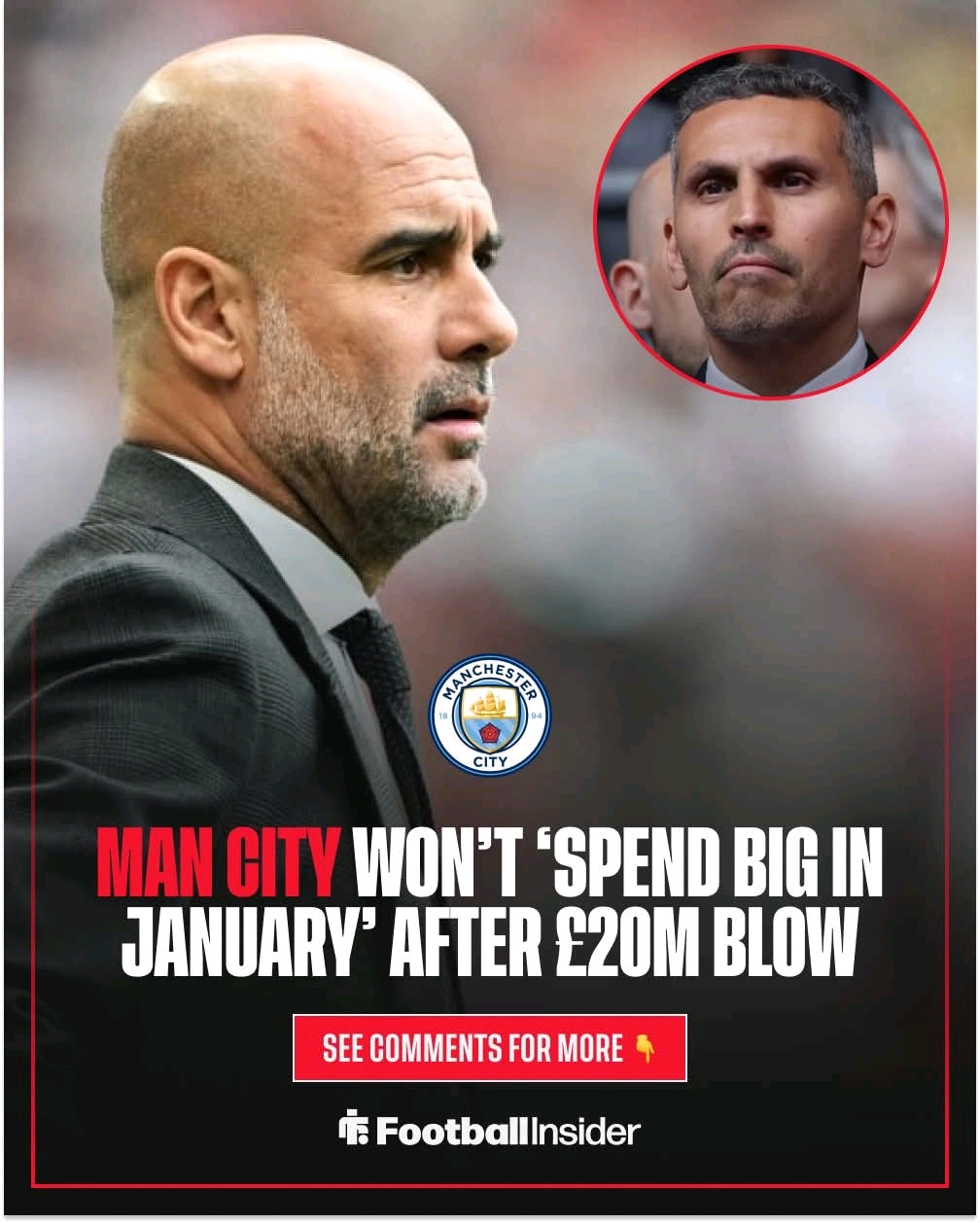
Manchester City are heading into another January transfer window surrounded by noise, rumours, and expectations, but behind the scenes the reality looks very different. While fans across the Premier League are waiting for big-money moves, shock signings, and dramatic last-minute deals, those close to the financial picture at the Etihad are sending a clear message. Manchester City are not planning to spend big in January, even though the club remains one of the richest and best-run football institutions in the world. This situation has raised eyebrows, especially after recent financial figures showed a £20 million drop in revenue compared to the previous season. Yet those who understand City’s long-term plan insist there is no panic, no desperation, and no rush to change course.
The latest insight comes from football finance expert Dr Dan Plumley, who has spoken in detail about why City are likely to stay calm and controlled during the winter window. His view is simple but important. Manchester City have already done most of their heavy lifting in recent transfer windows, both in terms of spending and squad building. What we are seeing now is not weakness or fear, but confidence in a structure that has been carefully planned over several years.
Manchester City’s most recent financial accounts revealed that the club earned £20 million less in the 2024–25 season than in 2023–24. For many clubs, such a drop would trigger alarm bells. For City, it has sparked discussion but not concern. The club remains in a strong financial position, with huge commercial power, global sponsorships, and consistent income from domestic and European competitions. The slight dip in revenue is viewed internally as a natural fluctuation rather than a sign of trouble.
Dr Plumley has made it clear that, despite the numbers, there is no wider financial crisis at Manchester City. The club’s leadership, including chairman Khaldoon Al Mubarak and CEO Ferran Soriano, have built a system that is designed to absorb changes like this without panic. City are not operating hand to mouth. They are not chasing short-term fixes. They are working to a long-term model that prioritises sustainability, squad balance, and controlled investment.
One of the key reasons City are unlikely to spend heavily in January is the amount of money they have already invested in the squad over the past few seasons. The 2024–25 campaign saw significant spending, with City refreshing their team and preparing for the next phase of Pep Guardiola’s project. When a club spends heavily in one cycle, it naturally leads to quieter periods that follow. January is expected to be one of those quieter moments.
Dr Plumley explained that City’s recent investment has shaped the current narrative. He pointed out that when you look at the players City have brought in, the ages of those players, and the profiles they fit, it becomes clear that the squad has been built for the future rather than short-term patchwork. Younger players, versatile players, and those who can grow within Guardiola’s system are now central to City’s strategy.
This approach reduces the need for emergency January spending. Manchester City are not scrambling to fix problems. They are not reacting to poor planning. Instead, they are trusting the groundwork already laid. That trust comes from years of success, trophies, and proof that their model works.
There has been talk of potential departures, with names like Savinho, Rico Lewis, and Oscar Bobb mentioned as possible players who could be sold to raise funds. Savinho, in particular, has attracted attention, with speculation suggesting his sale could fund a January spending spree. However, those close to the club insist City are not desperate to sell anyone. Any outgoing moves would be carefully chosen, not forced.
Dr Plumley addressed this directly, saying that while selling one or two players could open the door for reinvestment, it does not mean City are under pressure to do so. If a good offer arrives and it makes sense for both the player and the club, City may listen. But there is no fire sale coming. The finances are stable, and the squad depth remains strong.
What stands out most is the idea that Manchester City are operating on a different timeline to most clubs. While others chase instant impact signings, City are focused on development cycles. The current squad has been designed to evolve together, with younger players learning from experienced stars and gradually taking on bigger roles. This balance allows City to remain competitive while also planning years ahead.
Pep Guardiola’s influence cannot be ignored in this process. The City manager has always valued tactical intelligence, adaptability, and understanding of his system over flashy signings. Guardiola is known for improving players rather than constantly replacing them. That philosophy aligns perfectly with the club’s financial strategy. Rather than spending huge sums every January, City prefer to trust coaching, structure, and internal growth
Despite this cautious approach, Manchester City will always be a club capable of spending if they choose to. Dr Plumley made it clear that City still have the financial power to act when necessary. They are one of the few clubs who can dip into the market and compete for top talent at short notice. But having the ability to spend does not mean they feel the need to do so.
This is why January is expected to be quiet, unless something unexpected happens. If City move one or two players on and identify a clear opportunity to improve the squad, they may act. But that action would be measured, not reckless. The club’s leadership does not believe in spending for the sake of headlines.
Interestingly, despite all the talk of caution, Manchester City are still being linked with high-profile targets. One name that continues to surface is Bournemouth winger Antoine Semenyo. The 25-year-old has impressed massively since joining Bournemouth, and his performances have caught the attention of several top clubs, including City and Liverpool.
Semenyo signed a new contract in the summer that includes a £65 million release clause. Bournemouth are fully aware of his value, especially considering they signed him for just £10 million. Since arriving in 2023, Semenyo has delivered 28 goals and 10 assists in the Premier League, an outstanding return that highlights his impact and consistency.
For Manchester City, Semenyo fits the profile they like. He is strong, fast, direct, and capable of playing across the front line. He also works hard off the ball, something Guardiola demands from his attackers. However, a £65 million fee in January would represent a significant investment, and that is where the hesitation comes in.
City must weigh whether spending that amount now makes sense, especially when they already have attacking depth and young talents developing within the squad. The presence of players like Oscar Bobb and Rico Lewis shows City’s commitment to youth, even if those players face uncertain futures. Any decision involving Semenyo would need to align with the club’s broader strategy, not just immediate needs.
Liverpool’s interest in Semenyo adds another layer to the story. Competition from rivals can sometimes push clubs into action, but City are unlikely to be rushed. They have shown time and again that they are willing to walk away from deals if the price does not feel right. Their confidence comes from knowing there will always be another opportunity, another window, another target.
The wider context around Manchester City’s finances also plays a role in shaping expectations. With ongoing scrutiny and discussions around financial regulations, City are keen to maintain a position of strength and transparency. Staying disciplined in the transfer market helps reinforce that image. It shows they are not relying on reckless spending to stay competitive.
Fans may feel disappointed by the idea of a quiet January, especially after years of dominance that were often supported by smart signings. But patience has been rewarded before. City’s success has not come from panic buying or chasing trends. It has come from planning, trust, and execution.
Pep Guardiola understands this better than anyone. The manager has repeatedly spoken about the importance of squad harmony and balance. January signings can sometimes disrupt that balance, especially if they arrive with big expectations and limited time to adapt. Guardiola would rather work with players he knows and trusts than gamble on a mid-season arrival who may struggle to fit in.
That does not mean City are standing still. Behind the scenes, scouting continues, analysis continues, and plans continue to evolve. Every potential signing is monitored, every contract situation reviewed. City are always prepared, even when they choose not to act.
Dr Plumley’s comments reinforce the idea that Manchester City are thinking several steps ahead. He highlighted that the heavy investment has already been made upfront, reducing the need for constant spending. This is not just about January, but about future windows too. Even the summer may not see the kind of spending fans have become used to.
Instead, City are focusing on maximising the value of their current squad. That means developing young players, managing workloads, and ensuring the team remains competitive across all competitions. With Guardiola at the helm, there is confidence that this approach will continue to deliver results.
The idea that City are not desperate to sell is also important. Too often, financial stories are misinterpreted as signs of weakness. In this case, the opposite is true. City’s calm response to a £20 million revenue drop shows strength and maturity. They are not reacting emotionally. They are sticking to the plan.
If Savinho or any other player leaves, it will be because it makes sense, not because City need the money. And if someone arrives, it will be because Guardiola and the recruitment team believe that player can make an immediate and long-term impact.
As January approaches, rumours will only increase. Names will be linked, stories will be written, and fans will debate endlessly. But the reality is likely to be far quieter than the noise suggests. Manchester City are comfortable where they are. They trust their squad. They trust their finances. And they trust their process.
This calm confidence is what separates City from many of their rivals. While others chase quick fixes, City build foundations. While others react, City plan. It may not always be exciting, but it has proven to be incredibly effective.
In the end, Manchester City’s January strategy reflects everything they have become under their current leadership. Controlled, calculated, and confident. A club that knows who it is and where it is going. The £20 million revenue drop may have sparked headlines, but it has not shaken belief.
Whether or not a player like Antoine Semenyo arrives, whether or not Savinho departs, the bigger picture remains unchanged. Manchester City are not desperate, not panicking, and not about to abandon the model that has brought them so much success. January may come and go quietly, but for City, silence often speaks louder than noise.