Ex-PGMOL chief has delivered his verdict after re-analysing ‘penalty’ footage. 😱 🚨 Possible point additions for the Reds

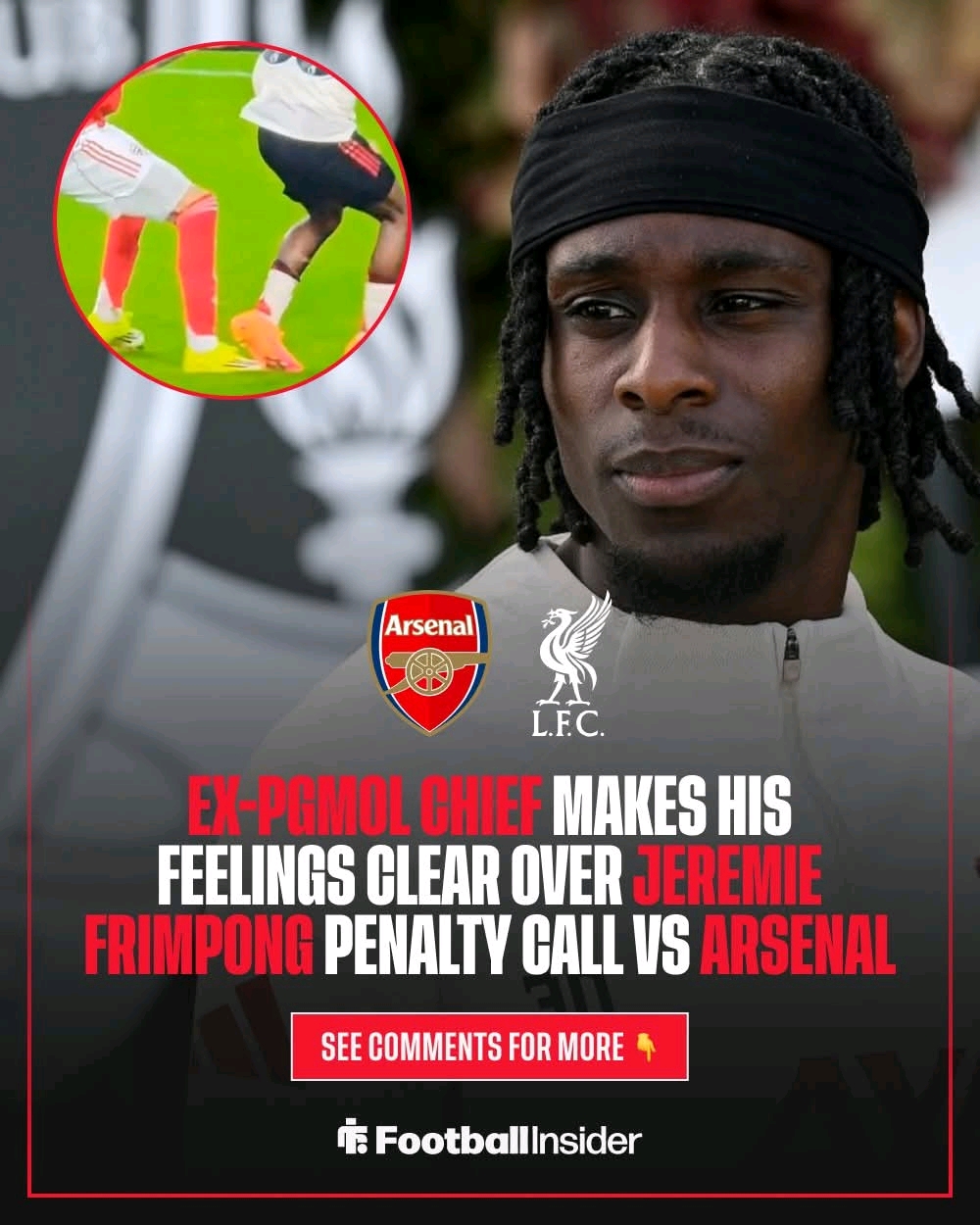
The night at the Emirates was supposed to be about football, about two giants of the Premier League clashing under the lights, about Arsenal and Liverpool pushing each other to the limit in a season that refuses to slow down. But as the final whistle blew and the noise faded into the cold London air, the talking point was not a goal, not a save, not even a tactical masterclass. It was a moment. A split second. A fall inside the box. Jeremie Frimpong on the ground. Liverpool fans screaming for a penalty. Arsenal players waving play on. And referee Anthony Taylor standing firm, unmoved, unmoralised, convinced he had seen enough.
For Liverpool supporters, it felt like another chapter in a long book of frustration. For Arsenal fans, it was a moment of relief mixed with defiance. And for everyone else watching, it became yet another debate about VAR, referees, and how fine the margins have become in modern football
Jeremie Frimpong was not even meant to be one of the main stories of the night. With Mohamed Salah away on international duty with Egypt, Liverpool needed someone to step into that right-wing role and provide energy, speed, and danger. Frimpong was trusted with that responsibility, and from the first whistle, he looked ready to prove that trust was well placed. He ran at Arsenal’s defence with fearless intent, stretching the pitch, forcing defenders to retreat, and creating uncertainty every time he touched the ball.
Arsenal knew his pace could hurt them, especially on the counter-attack, and they tried to stay compact. But football does not always follow plans. In the 35th minute, Liverpool broke forward with speed. Frimpong drove into the penalty area, cutting inside with confidence. Piero Hincapie was close, too close. There was a moment where legs tangled, or at least appeared to tangle. Frimpong went down clutching his ankle. Liverpool fans rose from their seats. Arms went into the air. Shouts echoed around the stadium and across television screens worldwide. Penalty. Surely penalty.
But Anthony Taylor waved play on.
The Arsenal players did not stop. The game continued. And just like that, the moment was gone, except it wasn’t. Because moments like that never really leave. They stay. They replay. They slow down. They get analysed from every angle, every frame, every possible interpretation.
Former PGMOL chief and ex-FIFA referee Keith Hackett later stepped into the conversation, and his words carried weight. Not because everyone would agree with him, but because he understands the referee’s world in a way few do. According to Hackett, Taylor was perfectly positioned to judge the challenge. He saw it clearly. And in his view, there was simply not enough evidence to justify awarding a penalty.
Hackett explained that from the referee’s angle, there was no clear contact that would force a decision. And in modern football, “clear and obvious” has become the key phrase. VAR exists to correct mistakes, not to re-referee matches. And because Taylor did not believe he had made an error, VAR did not step in. There was no invitation to the pitch-side monitor. No dramatic pause. No reversal.
To Liverpool fans, that explanation felt hollow. Because when they watched the replays, something did seem to happen. A slight tangle of ankles. A moment where Frimpong’s movement was interrupted. Not violent. Not obvious. But enough, they argued, to be punished.
And that is where football’s greatest arguments live. In the grey areas. In the “not quite enough” moments. In the challenges that look different depending on which shirt you support.
Hackett admitted that in real time, the contact looked minimal. And even on replay, while there was some contact, it was unlikely to meet the threshold for a penalty. From a referee’s point of view, awarding a penalty in such circumstances would be a risk. And referees, especially in games of this magnitude, often choose caution over controversy.
Ironically, controversy arrived anyway.
Anthony Taylor is no stranger to criticism. Earlier in the season, Hackett himself had been critical of Taylor’s performances. But on this occasion, the former PGMOL chief praised the referee for sticking to his decision and not being influenced by crowd pressure or player reactions. In Hackett’s eyes, Taylor did what referees are taught to do: trust your position, trust your judgement, and only intervene when you are sure.
Liverpool’s travelling fans did not see it that way. To them, it felt like a moment that could have changed the game. A penalty would have given Liverpool a huge chance to take the lead, especially in a match where goals were hard to come by. Without Salah, Liverpool needed moments like that. Needed something to break the deadlock. Needed help from fine margins.
But football rarely offers sympathy.
As the game moved into the second half, the tension only grew. Arsenal were walking a tightrope, and no player embodied that more than Leandro Trossard. Already booked in the 12th minute, he had to be careful. One wrong move, one mistimed challenge, and Arsenal would be down to ten men or facing another penalty call.
Just three minutes after the restart, danger arrived again. This time it involved Florian Wirtz, bundled over in the box after contact from Trossard. The reaction was instant. Gary Neville, watching and analysing, did not hold back. He called the challenge clumsy. He said it was risky. And many watching felt Arsenal had once again flirted with disaster.
VAR checked the incident. Screens flickered. The stadium waited. Liverpool players gathered, hopeful. Arsenal fans held their breath. But once again, the decision went Arsenal’s way. No penalty. Play on.
For Liverpool, it felt like déjà vu. Another appeal denied. Another moment where the balance tipped just slightly away from them. For Arsenal, it was survival. Barely, but survival nonetheless.
The match itself had several flashpoints, but these penalty incidents dominated the post-match discussion. Especially because of the context. Arsenal at home. Liverpool chasing. Title implications hanging in the air. Every decision felt heavier, louder, more important.
Trossard’s situation was particularly controversial because of his earlier booking. Had a penalty been given, questions would have followed about a possible second yellow card. Arsenal could have been reduced to ten men. The game could have changed completely. Instead, Arsenal escaped, and Liverpool were left wondering what more they needed to do.
VAR ruled that the referee had made the correct decision once again. But “correct” in football does not always mean “accepted.” Fans, pundits, and former players continued to argue long after the final whistle. Social media exploded with freeze frames, zoomed-in screenshots, and slow-motion clips designed to prove one point or another.
This is the modern game. Decisions are no longer moments. They are debates. They are discussions that last days, sometimes weeks. And they shape narratives far beyond the result.
For Jeremie Frimpong, the night was bittersweet. He had performed well, offered energy and threat, and shown that he can be trusted in big games. But he also became the face of a controversy he never asked for. One fall. One decision. And suddenly his name was everywhere, attached to arguments about referees rather than his performance.
Liverpool will move on, as they always do. But they will not forget. These moments build up across a season. They form part of the story teams tell themselves. About luck. About fairness. About whether things go their way or not.
Arsenal, meanwhile, will point to resilience. To discipline. To the ability to survive pressure and come through difficult moments. From their point of view, they defended well, stayed compact, and did not make obvious mistakes worthy of punishment. Football rewards those who stay on their feet, they will argue.
Keith Hackett’s intervention added an official voice to the debate, but it did not close it. If anything, it reminded everyone how subjective refereeing still is, even with all the technology in the world. VAR can slow things down, but it cannot remove opinion. It cannot eliminate disagreement. It can only assist, not decide.
Anthony Taylor walked off the pitch believing he had done his job correctly. And according to the laws of the game, and the interpretation provided by Hackett, he probably did. But football is not played in law books. It is played in emotion, in passion, in moments that feel bigger than rules.
As the Premier League season continues, this match will be remembered not for goals, but for what did not happen. For penalties not given. For decisions that split opinion right down the middle. And for the reminder that even at the highest level, football remains beautifully, painfully imperfect.
The arguments will continue. They always do. And the next time Liverpool or Arsenal find themselves on the wrong side of a decision, this night at the Emirates will be mentioned again. Because in football, nothing is ever truly forgotten.