Why Pep Guardiola is not on the touchline for Man City vs Exeter City FA Cup tie

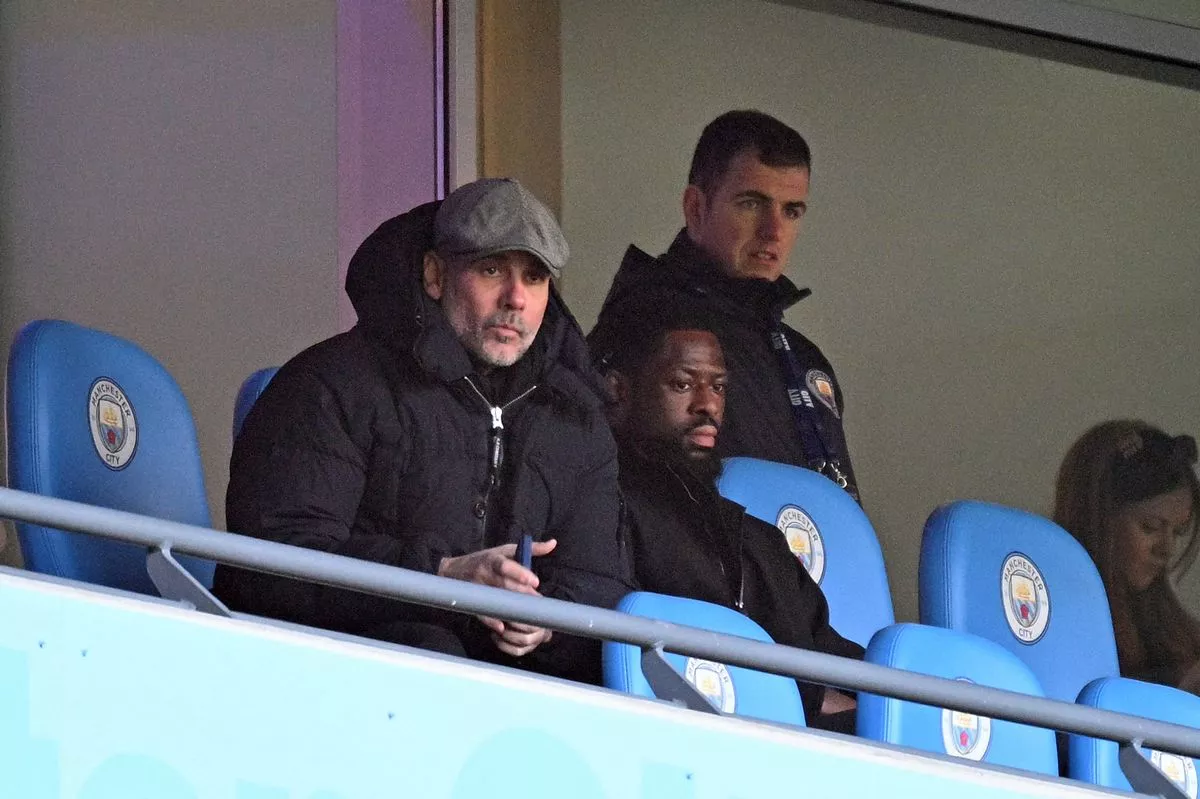
Pep Guardiola was not on the touchline for Manchester City during their FA Cup third-round match against Exeter City, and for many fans watching at the Etihad Stadium and around the world, it felt strange, unusual, and even unsettling to see the City manager sitting in the stands instead of pacing the technical area. Guardiola has become such a constant presence on the sidelines, shouting instructions, reacting emotionally to every decision, and living every second of the match with intense passion, that his absence immediately became a major talking point. But there was a clear and official reason why Pep Guardiola was not allowed to take his usual place on the touchline for this FA Cup tie, and it had nothing to do with injury, illness, or any hidden internal club issue. Instead, it was the result of a suspension that had been building quietly over the course of the season.
Guardiola was serving a one-match ban after collecting three yellow cards in domestic competitions, which automatically triggers a suspension for managers under Football Association rules. His third booking came during Manchester City’s midweek Premier League draw against Brighton, a match that was already full of tension, frustration, and controversy. That yellow card proved to be costly, as it ruled him out of the FA Cup clash with Exeter City, forcing him to watch from the stands while his assistants took control on the sidelines. While players receiving suspensions is common and widely discussed, manager suspensions often surprise fans, and many supporters were initially confused about why Guardiola was missing during such an important cup fixture.
The incident that led to Guardiola’s suspension was not sudden or unexpected to those who have followed City closely this season. His yellow card against Brighton was the third of the campaign, adding to previous bookings he had received earlier in the season. Guardiola was first cautioned during Manchester City’s win away at Nottingham Forest back in December, a game where his emotions boiled over during a heated exchange with match officials. He then picked up a second yellow card during the draw with Arsenal in September, another high-pressure match where decisions and momentum swung back and forth, pushing Guardiola’s patience to its limits. By the time City faced Brighton, Guardiola was already walking a disciplinary tightrope, and one more booking would automatically lead to a suspension.
During the Brighton match, Guardiola was visibly animated from the opening minutes. He spent much of the game arguing with the fourth official, reacting strongly to decisions he believed went against his team, and exchanging words with Brighton manager Fabian Hurzeler. The flashpoint came in the first half when Jeremy Doku went down in the penalty area, but the referee initially waved play on. Guardiola exploded in frustration, convinced it was a clear penalty. His protests were intense and relentless, and referee Thomas Bramall eventually booked him for his reaction. Moments later, VAR intervened and overturned the decision, awarding Manchester City a penalty. While Guardiola felt vindicated by VAR’s decision, the damage had already been done. The yellow card stood, and with it came the suspension that ruled him out of the FA Cup tie against Exeter City.
After the match, Guardiola did not hide his feelings about the incident. He explained that his reaction came from genuine belief and frustration rather than disrespect. He said he was complaining because he felt the referee had missed an obvious penalty, and he pointed out that VAR later confirmed he was right. Guardiola openly questioned how the referee could fail to spot such a clear incident in real time, suggesting that modern technology has made officiating easier and such mistakes harder to justify. His comments reflected both his passion for the game and his growing irritation with officiating standards, especially in high-pressure matches where fine margins can decide results.
Under FA rules, managers receive a one-match suspension after accumulating three yellow cards across domestic competitions, including league and cup matches. The suspension applies to the next applicable domestic game, which in Guardiola’s case happened to be the FA Cup third-round tie against Exeter City. If a manager collects eight yellow cards, the punishment increases to a two-match ban, and at 16 bookings, the case is referred to an FA misconduct hearing. Guardiola is no stranger to disciplinary issues, having built a reputation throughout his career as a fiercely competitive and emotionally driven coach who lives every moment from the touchline. While his passion is admired by many fans, it also makes him vulnerable to bookings when emotions spill over.
With Guardiola banned from the touchline, Manchester City had to adjust their matchday setup for the Exeter game. Assistant coach Pep Lijnders stepped into the lead role on the sidelines, taking responsibility for issuing instructions, managing substitutions, and communicating tactical adjustments to the players. Lijnders, who joined City’s coaching staff with a strong reputation for tactical intelligence and calm leadership, was supported by first-team coach Kolo Toure, another familiar and respected figure within the club. Together, they formed a temporary leadership team tasked with maintaining Guardiola’s standards and philosophy in his absence.
Although Guardiola was not allowed on the touchline, he was still very much involved in the match. Sitting in the stands, he watched every moment closely, constantly analysing the game, taking notes, and communicating with his staff when allowed. From his elevated position, Guardiola arguably had a better overall view of the match, enabling him to observe team shape, movement, and spacing with clarity. However, the inability to directly influence the game from the technical area was a clear limitation. Guardiola is known for making constant in-game adjustments, offering detailed instructions to individual players, and using his presence to maintain intensity and focus. Without him on the sidelines, Manchester City had to rely on pre-match preparation and the authority of his assistants.
For the players, Guardiola’s absence was noticeable but not destabilising. Manchester City are a highly structured and disciplined team, drilled extensively in Guardiola’s tactical system. Every player knows their role, responsibilities, and positional demands in detail. This level of preparation allowed City to function smoothly even without their manager on the touchline. The coaching staff ensured that Guardiola’s ideas and plans were communicated clearly before kickoff, and the players executed them with professionalism and confidence.
The FA Cup match against Exeter City also provided an opportunity for Guardiola to observe certain players from a different perspective. Watching from the stands allowed him to focus on overall team dynamics rather than individual duels or touchline interactions. This could be particularly useful for assessing squad players, young talents, and those returning from injury. Guardiola is known for his obsession with details, and even during a suspension, he would have been mentally preparing notes and observations to discuss with his staff afterward.
The situation also highlighted the intense pressure Guardiola has been under this season. Manchester City have been competing on multiple fronts, dealing with injuries, squad rotation challenges, and increased scrutiny from rivals and officials alike. Matches against teams like Arsenal, Brighton, and Nottingham Forest have been physically and emotionally draining, often decided by fine margins and controversial moments. In such an environment, Guardiola’s emotional reactions are understandable, even if they sometimes cross the line into disciplinary trouble.
Guardiola’s suspension sparked debate among fans and pundits about whether managers should face the same booking rules as players. Some argue that managers should be held accountable for their behaviour to maintain respect for officials and the integrity of the game. Others believe that the emotional nature of football makes such strict rules excessive, especially when managers are simply defending their teams against perceived injustices. Guardiola’s case became a talking point because it involved one of the most high-profile managers in world football, highlighting the broader issue of touchline behaviour in the modern game.
Despite the ban, Guardiola’s absence against Exeter City was only temporary. The one-match suspension meant he would return to the touchline for Manchester City’s next domestic fixture, refreshed and perhaps slightly more cautious about his interactions with officials. However, those who know Guardiola well understand that his passion is unlikely to change. His emotional connection to the game is central to his identity as a manager, and while he may try to control his reactions, moments of frustration are almost inevitable.
In the end, Guardiola watching from the stands served as a reminder that football is governed by strict rules that apply to everyone, regardless of status or success. Even one of the most decorated managers in history is not immune to suspension if he crosses disciplinary lines. For Manchester City, the situation was handled calmly and professionally, with the coaching staff stepping up and the players responding well on the pitch. For Guardiola, it was a brief but humbling experience, reinforcing the importance of balance between passion and control.
As Manchester City continue their season across multiple competitions, Guardiola’s focus will remain firmly on success, improvement, and maintaining his team’s high standards. The FA Cup tie against Exeter City may not be remembered as a defining moment of the season, but Guardiola’s absence added an unusual twist and sparked conversations that extended far beyond the match itself. It was a reminder that even the smallest moments, such as a yellow card shown in frustration, can have unexpected consequences in football.
Ultimately, Guardiola’s suspension was not a sign of crisis or conflict within Manchester City. It was simply the result of accumulated bookings in a season filled with intensity and pressure. Guardiola will return to the touchline wiser, perhaps calmer, but still driven by the same hunger and passion that have defined his career. For City fans, seeing him back where he belongs will restore a sense of normality, as the team pushes forward in pursuit of more trophies and memorable moments.