Complete Chaos” — Pep Guardiola Speaks Out After Being Sacked by Manchester City, Reveals Chaos in the Dressing Room Pep Guardiola has spoken out after his shocking dismissal as Manchester City’s head coach, describing the club’s dressing room as “complete chaos.” Sources confirm Guardiola specifically named a key player as the main cause of the chaos, providing a rare glimpse into the internal conflicts behind the scenes.

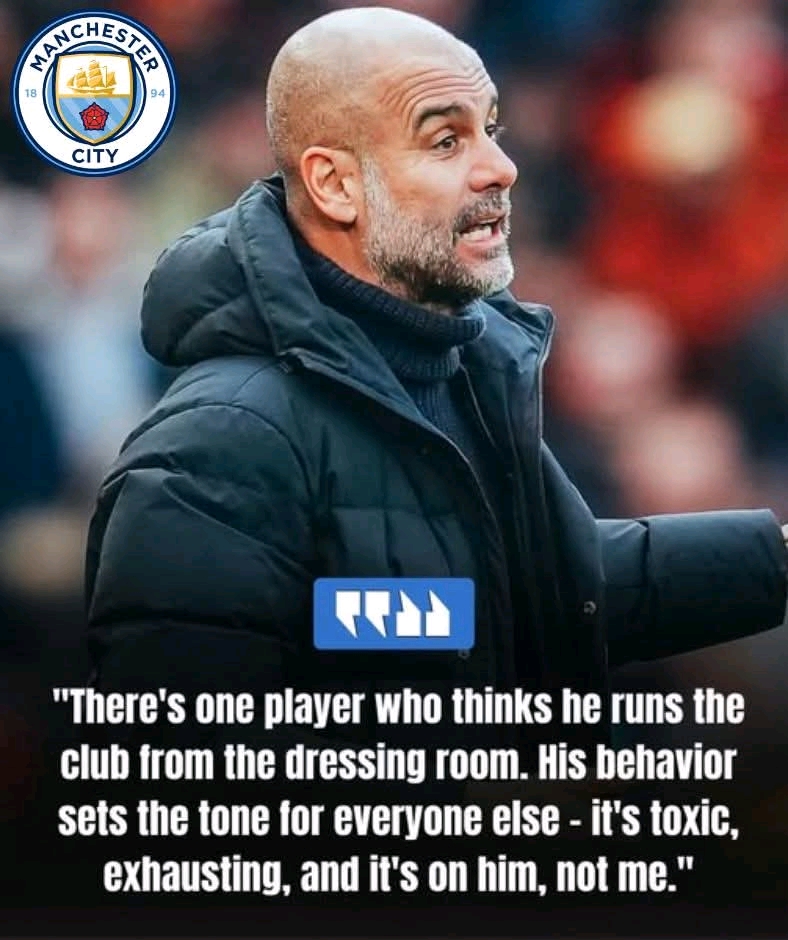
Shockwaves ripped through world football as explosive reports emerged claiming Pep Guardiola has finally spoken after his dramatic exit from Manchester City, and what he allegedly revealed has left fans stunned, confused, and angry. According to sources close to the situation, Guardiola described the Manchester City dressing room as complete chaos, a place where control had been lost, discipline had collapsed, and trust between players had quietly broken down long before results began to expose the cracks. For a manager known for structure, precision, and obsession with control, the word chaos alone was enough to ignite debate across Europe.
The story has travelled fast, fuelled by whispers from inside the club and a growing belief that Manchester City’s struggles this season were not just tactical or physical, but deeply emotional and personal. Guardiola’s departure, described by insiders as sudden and brutal, came after weeks of tension, dressing room unrest, and silent power struggles that had been carefully hidden from the public. While the club’s official statement remained calm and respectful, those close to Guardiola insist the truth behind the scenes was far darker.
Sources claim Guardiola was furious in private, frustrated by what he felt was a breakdown in authority inside the squad. Players who once followed every instruction without question were now challenging decisions, ignoring standards, and forming invisible divides. Guardiola reportedly felt he had lost the dressing room, not because of poor tactics, but because of one central figure whose influence had grown beyond control. That player, unnamed publicly but widely speculated about in football circles, was allegedly identified by Guardiola as the main source of instability.
The idea that a single player could destabilise a Guardiola dressing room has shocked many who followed City’s rise under his leadership. For years, Guardiola was praised for his ability to manage egos, rotate stars, and maintain harmony even in squads full of world-class talent. Yet according to these reports, something changed this season. Injuries, pressure, contract uncertainty, and exhaustion all played a role, but insiders suggest the real damage came from internal resistance rather than external opponents.
Guardiola’s relationship with the squad had reportedly become strained in recent months. Training sessions were described as tense, meetings as awkward, and communication as increasingly one-sided. Some players remained loyal, while others quietly questioned decisions, tactics, and leadership. The unity that once defined City began to fracture, and Guardiola, a man who thrives on emotional connection as much as tactical clarity, felt it slipping away.
The alleged comments attributed to Guardiola paint a picture of a manager who felt trapped inside his own success. Having built Manchester City into a machine that dominated England and conquered Europe, he now found himself fighting battles he could not win with tactics alone. Trust had been broken, and Guardiola reportedly believed the club hierarchy failed to back him strongly enough when early warning signs appeared.
Fans have reacted with disbelief and sadness. For many, Guardiola is Manchester City. He is the architect of their greatest era, the man who transformed the club’s identity and set standards few teams could reach. The idea that his reign ended not with dignity but with chaos feels wrong, almost unreal. Yet football history is filled with great managers leaving under clouds of tension, and City may not be immune to that cycle.
Former players and pundits have weighed in, with some suggesting the modern football dressing room is harder to control than ever. Power has shifted, they argue, from managers to players, especially those with global profiles and massive commercial value. Guardiola’s methods, intense and demanding, may have finally collided with fatigue and resistance after years of relentless pressure.
Others believe the club should have acted sooner, either backing Guardiola fully or beginning a controlled transition. Instead, they allowed uncertainty to grow, injuries to pile up, and morale to dip until the situation became unmanageable. The result, according to insiders, was a dressing room split into camps, where whispers replaced honesty and silence replaced unity.
The player allegedly named by Guardiola as central to the chaos has become the subject of intense speculation. Fans are dissecting performances, body language, interviews, and social media posts, searching for clues. Every missed run, every frustrated gesture, every cryptic quote is now being reinterpreted through the lens of rebellion and influence. Whether fair or not, the damage to trust is already done.
What makes the story even more painful for City supporters is the timing. This is a season where expectations were sky-high, where silverware was expected, not questioned. Instead, inconsistency, defensive fragility, and emotional collapse have defined the campaign. Losses that once felt impossible became routine, and belief quietly drained away.
Guardiola’s alleged admission of chaos has also sparked concern about the club’s future. Without his authority, without his obsessive standards, and without his ability to rebuild systems year after year, what version of Manchester City comes next. Will the club reset, or will the fractures deepen under new leadership. These are questions no one expected to ask so soon.
Inside the dressing room, players are said to be stunned by the fallout. Some reportedly feel guilty, others defensive, and a few relieved. Guardiola’s intensity was not easy to live with, but his success gave meaning to the pressure. Without him, the atmosphere has changed, and not everyone is convinced it is for the better.
The club’s hierarchy faces difficult decisions now. Appointing the next manager is not just about tactics, but about restoring authority, unity, and belief. Whoever steps into the role will inherit a squad full of talent but also full of unresolved tension. Managing that emotional landscape may prove harder than any tactical challenge.
For Guardiola, the exit is said to be deeply personal. He reportedly feels hurt, betrayed, and misunderstood. After giving everything to the club, shaping its identity, and delivering historic success, leaving under a cloud of internal conflict is not how he imagined the story would end. Those close to him say he is exhausted, reflective, and unsure of his next move.
Yet even in departure, Guardiola’s influence remains. His alleged comments have forced uncomfortable conversations, exposed hidden problems, and challenged the club to look inward. Whether those revelations lead to healing or further division remains to be seen.
Football moves quickly, and headlines change by the hour, but this story feels different. It is not just about tactics or results. It is about power, trust, and the human cost of elite sport. Guardiola’s Manchester City era may be over, but the consequences of how it ended will linger long after the noise fades.
As fans continue to debate, speculate, and argue online, one thing is clear. Something broke inside Manchester City this season, and fixing it will take more than new signings or fresh ideas. It will require honesty, accountability, and a willingness to confront uncomfortable truths.
Whether Guardiola’s alleged words were spoken in anger, sadness, or relief, they have already reshaped the narrative. The image of a perfect machine has been replaced by one of internal struggle, reminding everyone that even the most successful teams are fragile when trust disappears.
For now, Manchester City stand at a crossroads, and Pep Guardiola, watching from the outside, leaves behind a legacy of brilliance overshadowed by an ending no one wanted, but one that may define the next chapter more than any trophy ever coul