Gary is never afraid to say what he feels, but fans believe he’s gone too far with this one..

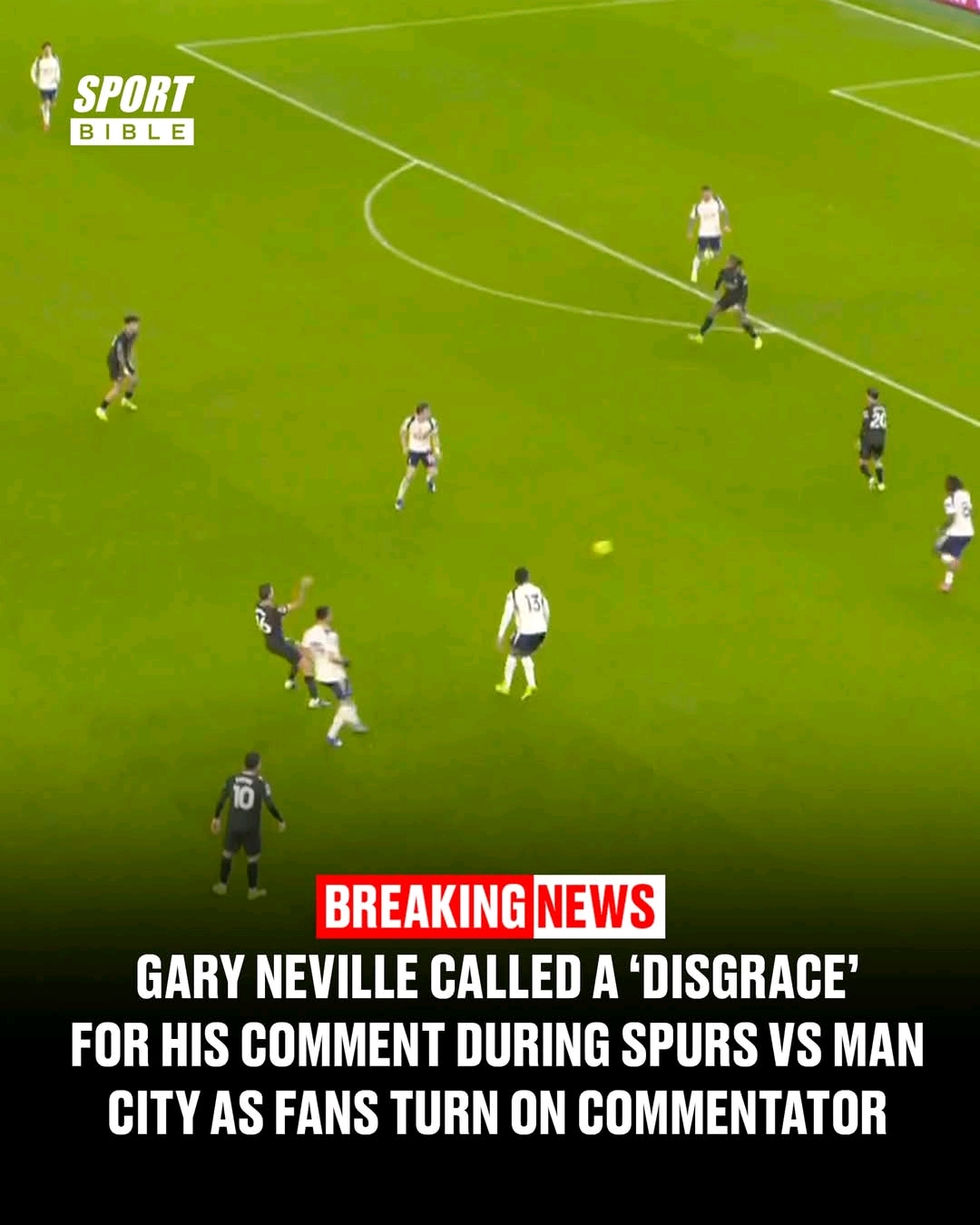
The night was already heavy with tension before the ball was even kicked. Tottenham Hotspur Stadium was full, the lights were bright, and the pressure was impossible to ignore. This was not just another Premier League game. This was Tottenham versus Manchester City, a fixture that always carried drama, fear, history, and expectation. Spurs had become Manchester City’s so-called bogey team over the years, the place where Pep Guardiola’s side often stumbled. But this time, the story felt different even before kickoff. And by the end of the night, one voice would dominate the headlines as much as the football itself. That voice belonged to Gary Neville.
Gary Neville has never been known for holding back. As a former Manchester United captain turned Sky Sports pundit, he has built a reputation for saying exactly what he thinks, whether fans like it or not. But during this clash between Tottenham and Manchester City, Neville crossed a line for many supporters. His words were described as brutal, embarrassing, cold, and savage. For Spurs fans, it felt like public humiliation. For others, it was simply honesty delivered without mercy.
Manchester City arrived in London riding the wave of another dramatic Premier League weekend. Results had gone their way. Rivals had slipped. The title race was tight, and every game mattered. For City, this was a chance to make a statement at a ground that had caused them pain in the past. For Tottenham, it was about survival, pride, and belief.
The pressure on Tottenham’s manager, Thomas Frank, was already reaching dangerous levels. The league form had been poor. Very poor. Tottenham’s last Premier League win had come back on December 28, a narrow 1-0 victory over Crystal Palace. Since then, results had dried up. Confidence had drained away. Fans were restless. Every decision Frank made was being questioned. Every team selection was debated. Every press conference was tense.
As the players walked out, you could feel it. City looked calm, focused, almost relaxed. Tottenham looked nervous, rushed, unsure. The early minutes of the game told the same story. Manchester City controlled the ball with ease. They moved it patiently, confidently, like a team that knew exactly what it was doing. Tottenham chased shadows, pressing without coordination, reacting instead of acting.
It did not take long for the first blow to land.
Manchester City took the lead through Rayan Cherki, and it felt inevitable. The goal came from a move that summed up the difference between the two teams. City passed, probed, waited, and then struck. Tottenham defenders were pulled out of position. The midfield failed to track runners. Cherki found space, took his chance, and finished with calm precision.
As the ball hit the net, the stadium fell quiet. And then came Gary Neville’s voice.
On commentary, Neville wasted no time in delivering his verdict. He claimed that the only way Manchester City would not comfortably win the match was if they lost concentration or failed to score a second goal. It was not just analysis. It was dismissal. In that moment, Neville had already written Tottenham out of the contest.
For Spurs fans watching at home or listening in the stadium, it was painful. The game had barely started, and already they were being told it was over.
Things got worse.
Manchester City did not relax. They did not slow down. They smelled weakness and went for it. Before half-time, their new star signing Antoine Semenyo doubled the lead. Again, the goal was simple. Too simple. Tottenham were passive. City were ruthless. Semenyo found space, took advantage of sloppy defending, and finished clinically.
At 2-0, the game felt done. And that was when Gary Neville delivered what many would later call the most brutal comment of the entire Premier League season.
Congratulating Manchester City for scoring the second goal, Neville joked that they had successfully stopped Tottenham from dragging them into a “charity match.”
The words hit like a slap.
A charity match. Soccer Aid. An exhibition. A game without intensity, without purpose, without pride. That was how Neville described Tottenham’s performance. Not as unlucky. Not as outplayed. But as embarrassing.
Social media exploded instantly.
One fan wrote on X, “Manchester City were in danger of getting drawn into this charity match. Gary Neville, that’s colddd.” The tone was clear. Shock mixed with amusement.
Another fan added, “Gary Neville calling the City Spurs game a charity match hahaha fair play saying it as it is.”
For some viewers, Neville was simply voicing what everyone could see. Tottenham were second best in every department. The intensity was missing. The hunger was gone. The belief was absent.
But for Spurs supporters, it felt like public shaming.
Another Tottenham fan wrote, “Gary Neville describing this game as Soccer Aid is exactly what this is. SHOCKING level of intensity from Tottenham. That is the easiest goal City have ever scored, and Semenyo scores to make it 2-0. Frank’s time at Spurs is done.”
That comment captured the mood perfectly. Anger at the performance. Frustration with the manager. Acceptance that something was seriously wrong.
However, not everyone found Neville’s joke funny.
As the first half ended, criticism of the pundit began to grow louder. Some fans felt he had gone too far. Others believed he was ignoring important context. Injuries. Squad depth. Fatigue. The quality of the opposition.
One angry supporter wrote, “Get Gary Neville off comms the miserable b*****, not one mention of the fact it’s a Spurs squad with a load of injuries playing against a top City team. Did the same when United had a bench full of academy players. He absolutely loves sticking the boot in on Spurs and United.”
Another added, “Gary Neville is a disgrace in the way he’s talking about the Spurs players. Sky Sports should not be allowing it.”
These reactions highlighted a bigger debate that has followed Neville for years. Is he brutally honest, or is he unnecessarily harsh? Is he holding teams to high standards, or is he enjoying their struggles too much?
At half-time, Tottenham were staring at another damaging defeat. The crowd was restless. Booing could be heard. Players walked off with heads down. Thomas Frank stood on the touchline, arms folded, face tense. He knew what this meant. Another poor result would only increase the pressure on his job.
But football is unpredictable. And the second half brought a twist.
Tottenham came out with more energy. More aggression. More urgency. It was as if someone had finally reminded them what was at stake. Dominic Solanke led the charge. He pressed harder. He ran channels. He fought for every ball.
That pressure paid off.
In a moment of chaos inside the City box, Solanke forced Manchester City’s new signing Marc Guehi into scoring an own goal. The ball ended up in the net, and suddenly, Tottenham were back in the match.
The stadium erupted. Hope returned. The atmosphere changed. For a few minutes, it felt like the old Tottenham. The team that could hurt City. The team that could rise in big moments.
Even Gary Neville’s tone softened slightly. He acknowledged the improvement. He admitted Spurs had started the second half well. But the damage from the first half, and from his earlier comments, had already been done.
Despite the goal, questions still hovered over Tottenham. Could they really come back? Or was this just a brief spark before reality returned?
For Thomas Frank, the stakes could not be higher. Failing to take even a point from this game would mean more scrutiny, more criticism, and more uncertainty about his future. Yes, Tottenham had shown some promise in the Champions League. Yes, there had been flashes of improvement. But league form is unforgiving. Results matter more than excuses.
Gary Neville’s comments became the symbol of Tottenham’s struggles. Not just this season, but in recent years. A club with ambition but without consistency. A team that flatters to deceive. A side that can look brilliant one week and hopeless the next.
For Manchester City, the night was about professionalism. They came, they dominated, they scored, and they controlled the game. Even when Spurs pushed back, City never truly panicked. That is what champions do.
For Spurs fans, however, the night hurt. Not just because of the scoreline. But because of how it felt to be talked about. Laughed at. Reduced to a joke on live television.
Gary Neville did not invent Tottenham’s problems. He did not cause their poor form. But his words poured salt into an already open wound.
Some argue that pundits should speak honestly, even if it hurts. Football is elite sport. These are highly paid professionals. If the performance is poor, it should be called out.
Others believe there is a line. That context matters. That injuries, squad depth, and circumstances should be acknowledged. That respect should not be thrown away for a clever joke.
This debate will not end anytime soon.
What is certain is that this match will be remembered not just for goals or tactics, but for words. Words that cut deep. Words that sparked anger and laughter in equal measure.
As the final whistle approached, Tottenham fought, but the damage from the first half lingered. Manchester City looked like a team chasing another title. Tottenham looked like a team searching for direction.
Gary Neville’s “charity match” comment will live on. Replayed. Quoted. Argued over. For Spurs fans, it will sting every time it is mentioned. For neutrals, it will be remembered as a moment of brutal honesty.
Football is not just played on the pitch. It is shaped by narratives, voices, and opinions. On this night in London, Gary Neville’s voice was louder than anyone else’s. And whether you loved it or hated it, it perfectly captured the mood around Tottenham Hotspur at this moment in time.
Uncomfortable. Fragile. And under the harshest spotlight possible.