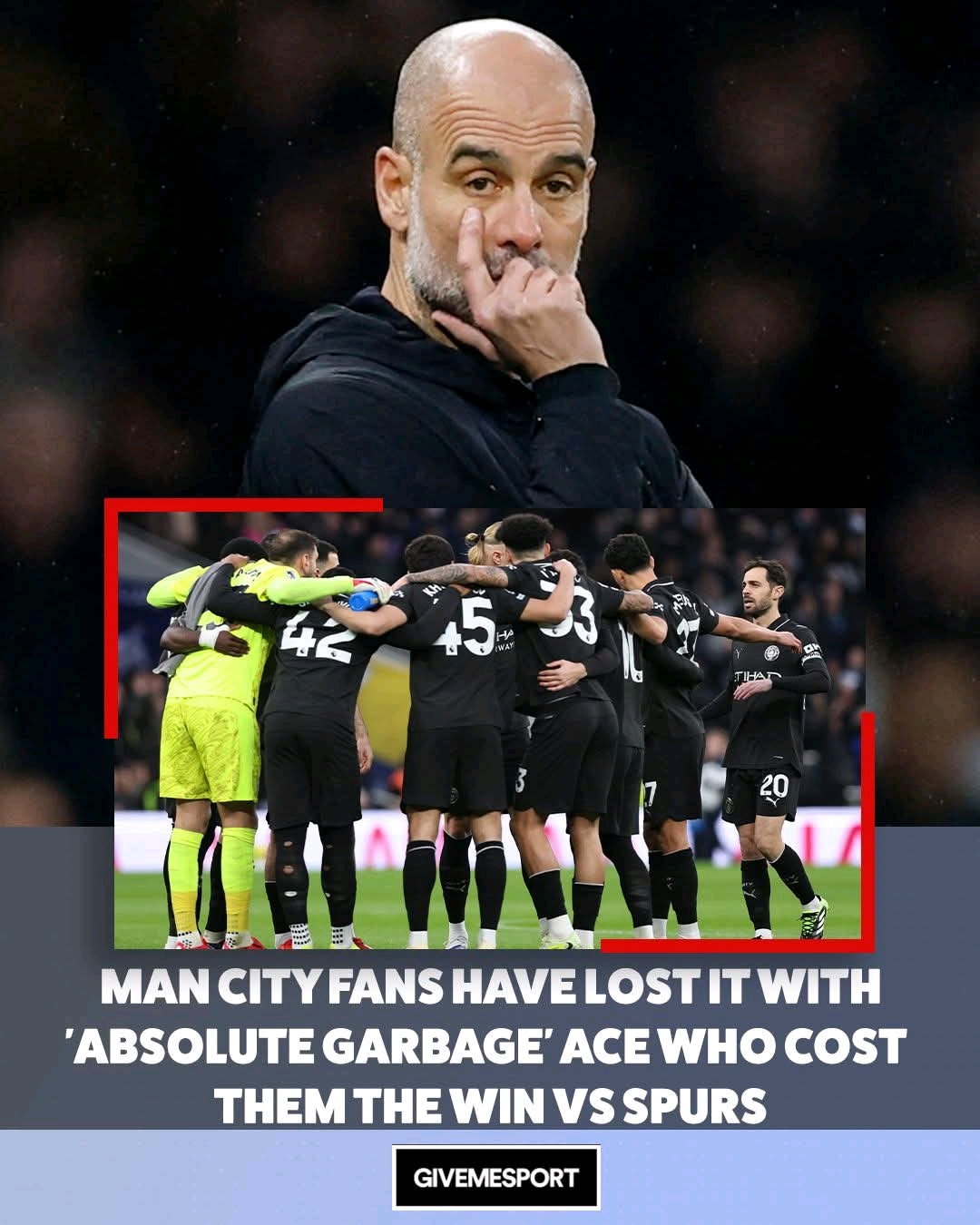
Manchester City walked off the pitch at the Tottenham Hotspur Stadium knowing something had slipped through their fingers, something that felt heavier than just two dropped points. It was the kind of afternoon that stays in the mind long after the final whistle, the kind that makes players stare at the floor and fans argue late into the night. City had been in control, calm, ruthless, and confident, exactly how champions are meant to look. By half time, everything was going according to plan, and the title race felt alive again. Then football did what it always does when certainty arrives too early. It flipped the script.
From the opening minutes, City looked sharp and purposeful. The ball moved quickly, Spurs looked nervous, and the gulf in confidence between the two teams was clear. Tottenham were struggling, short on belief, fragile in structure, and unsure of themselves. Manchester City sensed it immediately. Just ten minutes into the game, Rayan Cherki found space on the edge of the area, took a touch, and struck the ball cleanly with his right foot. The shot flew past the goalkeeper and into the net, and suddenly City were ahead, exactly where Pep Guardiola wanted them. The away end roared, the players celebrated calmly, and the match felt like it was already leaning heavily in City’s direction.
Spurs tried to respond but lacked sharpness. Their passes were loose, their movement slow, and their confidence clearly damaged by recent struggles. City pressed high, controlled possession, and waited patiently for the next opening. Erling Haaland occupied defenders, Antoine Semenyo stretched the pitch, and Rodri dictated the tempo from deep. Everything looked comfortable, almost too comfortable. As the first half drew to a close, City struck again. This time it was Semenyo, timing his run perfectly and finishing with authority just before the break. Two nil. Total control. A textbook Guardiola performance. The City bench looked relaxed. Fans were already talking about closing the gap on Arsenal. Spurs looked beaten.
Statistics backed up the feeling. Manchester City simply do not lose games when they lead by two goals at half time. It had not happened since 2018. This was supposed to be routine. Even Gary Neville, watching from the commentary box, joked that Spurs looked like they were playing a charity match. Nothing suggested what was about to happen next.
The second half began, and suddenly everything changed. Tottenham emerged from the dressing room like a different team. Faster, sharper, braver. The crowd sensed it immediately and lifted the noise inside the stadium. City, meanwhile, looked slightly off, just a step slower, just a little unsure. Spurs pushed forward, and within minutes, they found a way back into the match. A loose moment in City’s defence, a scramble in the box, and the ball fell to Dominic Solanke. His finish may not have been perfect, but it crossed the line, and suddenly the game was alive.
That goal changed everything. Confidence flooded back into Spurs, while doubt crept into City’s minds. Passes that had been clean in the first half became rushed. Defenders who looked solid suddenly looked vulnerable. The midfield began to lose its grip on the game. Tottenham smelled weakness and went for it. Then came the moment that truly stunned everyone. Dominic Solanke, already on the scoresheet, produced something nobody expected. A ridiculous scorpion kick, acrobatic, instinctive, and brilliant. The ball flew into the net, and the stadium exploded. From two nil down to two two. Just like that.
Pep Guardiola stood on the touchline, hands on his head, staring at the pitch in disbelief. What had been total control had turned into chaos. City tried to respond. They pushed forward, searching for the goal that would restore order. Guardiola made changes, throwing on fresh legs and hoping to regain momentum. Tijjani Reijnders came on to replace Cherki. Nico Gonzalez followed. Phil Foden was introduced. Omar Marmoush too. The message was clear. City wanted to win this game.
But something was missing. The flow never returned. Spurs defended with determination, fought for every ball, and disrupted City’s rhythm. Haaland became quiet, isolated, frustrated. Semenyo worked hard but struggled to beat his man. Foden tried to make things happen but looked short of confidence. Time ticked away, and the winner never came. When the final whistle blew, it felt like a defeat.
Much of the post match discussion quickly turned to one man. Tijjani Reijnders. Signed from AC Milan in the summer, his arrival had been greeted with excitement. His debut had been excellent. A goal. An assist. Energy. Quality. Promise. But since then, his performances had steadily declined, and this cameo against Spurs felt like the breaking point for many fans.
Reijnders entered the game at a moment when City needed calm, control, and intelligence. Instead, what they got was frustration. He had chances, clear chances, and failed to take them. He barely touched the ball. He lost his duels. He struggled to impose himself on the game. For a midfielder brought on to change the match, he simply did not do enough. In fact, he almost disappeared.
Statistics painted a brutal picture. Eight touches in total. Two inside the box. Two big chances missed. Zero duels won. For a player meant to support Rodri and help City regain control, it was nowhere near the required level. Fans noticed. Social media reacted instantly and angrily. The patience many had shown earlier in the season evaporated in minutes.
Some supporters were ruthless. They questioned why Guardiola even brought him on. Others went further, suggesting his time at the club should end in the summer. Words like “useless”, “invisible”, and “not good enough” flooded timelines. One fan said he was the worst midfielder they had ever seen in a City shirt. Another said he offered absolutely nothing, neither defensively nor offensively. Calls for him to return to Italy grew louder.
Of course, Reijnders was not the only player criticised. Haaland’s overall performance was questioned despite his movement. Semenyo was accused of lacking quality in one on one situations. Foden was said to be out of form. Marmoush was criticised for showing exactly why he starts on the bench. Even Cherki, despite scoring, was only described as “alright” before being forced off.
But Reijnders took the brunt of the anger. Perhaps because expectations were high. Perhaps because City needed more. Or perhaps because football fans always look for someone to blame when things go wrong. The truth likely lies somewhere in between.
The result leaves City in a difficult position. Six points behind Arsenal, time running out, pressure mounting. Draws like this feel heavier when titles are at stake. Guardiola knows it. The players know it. Every dropped point now feels like a step further away from the trophy. City will need their biggest stars to deliver consistently between now and the end of the season.
The question remains whether Reijnders can be part of that group. His early performances suggested he could be. He showed creativity, intelligence, and attacking threat. But football at this level is unforgiving. One good month is not enough. Consistency is everything. If he wants to survive at Manchester City, he will need to respond quickly and strongly.
For now, the image that lingers is not Cherki’s opener or Semenyo’s goal. It is Guardiola standing still as Spurs celebrated their equaliser. It is City players walking slowly off the pitch. It is fans arguing over performances. It is a reminder that even the best teams can lose control in a matter of minutes.
The title race continues, but City know they cannot afford many more afternoons like this. Spurs may be fighting near the bottom, but on this day, they showed heart, belief, and fight. City, meanwhile, were left asking uncomfortable questions about form, mentality, and whether everyone in the squad is truly ready for the demands of a championship run.
Football always finds a way to humble those who think the job is done too early. On this Sunday afternoon in north London, Manchester City learned that lesson the hard way.