Anfield descended into absolute chaos in the dying seconds of one of the most dramatic Premier League matches of the season, as Manchester City thought they had sealed the most ruthless of victories, only for VAR to rip the goal away and leave players, fans, and even Erling Haaland shaking their heads in disbelief. What followed was confusion, anger, heartbreak, and a controversial red card that may haunt Liverpool for weeks, all wrapped up in a moment that perfectly summed up the madness, tension, and cruelty of modern football.
Manchester City had already done the hard part. They had come to Anfield, one of the most intimidating stadiums in world football, and fought their way to a 2-1 lead against a Liverpool side driven by desperation and belief. Dominik Szoboszlai’s stunning free-kick had earlier dragged Liverpool back into the contest, sending the home crowd into a frenzy and turning the match into a war of nerves. But City, cold and relentless, had responded like champions, regaining control and forcing Liverpool into one last gamble.
As the clock ticked deep into stoppage time, Liverpool knew they had nothing left to lose. Alisson Becker abandoned his goal and sprinted forward to join the attack, hoping to be the hero, hoping for one final miracle in front of the Kop. The sight of Liverpool’s goalkeeper in the opposition half told the full story. This was desperation. This was belief mixed with fear. This was a team pushing everything forward, knowing one mistake could end the game completely.
That mistake came.
Manchester City regained possession, and suddenly Liverpool were exposed. Rayan Cherki picked up the ball near the halfway line, looked up, and saw the empty goal. In that split second, Anfield froze. Cherki struck the ball, sending it rolling towards goal, slow but deadly, like a nightmare unfolding in slow motion.
What followed was chaos.
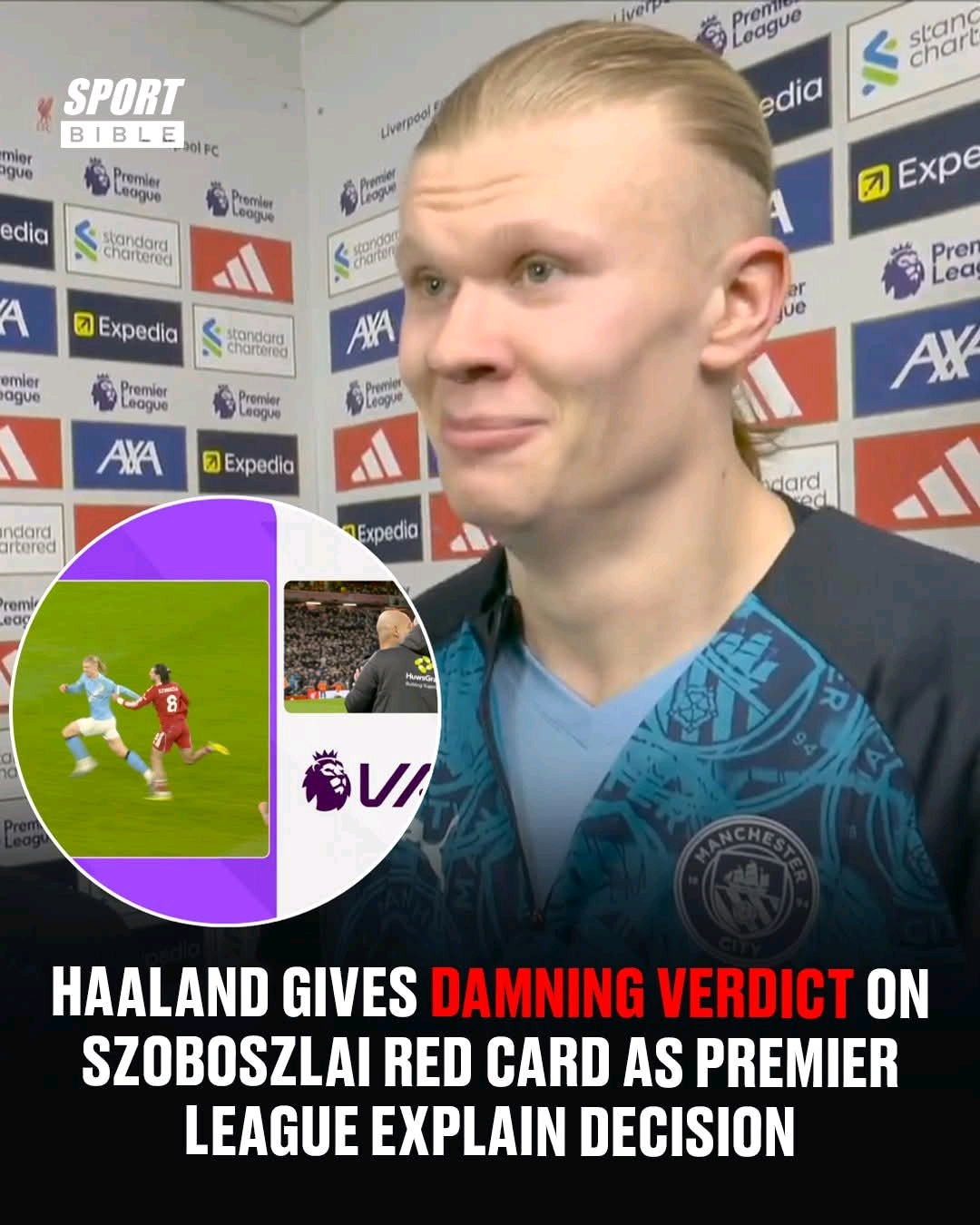
Erling Haaland exploded into life, sprinting towards the ball, while Dominik Szoboszlai chased him desperately, knowing exactly what was about to happen. It became a brutal foot race, strength against desperation, power against panic. Szoboszlai, running on pure instinct, reached out and grabbed Haaland’s shirt, trying to slow him down, trying to buy time, trying to save his team.
Haaland, equally instinctive, pulled back at Szoboszlai as they tangled together, both players fighting for balance, space, and position. The ball continued its slow journey toward the goal, and despite the chaos behind it, it crossed the line.
Manchester City exploded.
Players sprinted away in celebration. Cherki was mobbed. Haaland raised his arms. The bench erupted. Pep Guardiola celebrated wildly on the touchline. City believed they had delivered the final, brutal blow. A goal from halfway. At Anfield. With the goalkeeper upfield. It was humiliation. It was dominance. It was the ultimate statement.
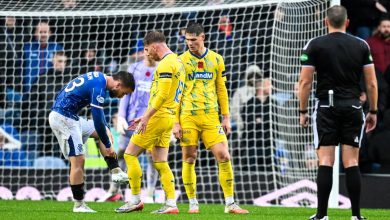
Liverpool players collapsed to the ground. Anfield fell silent. It felt finished.
But football, especially modern football, never ends when you think it does.
Referee Craig Pawson suddenly stopped the celebrations. His hand went to his ear. VAR was checking. Confusion spread instantly. City players looked at each other, unsure. Liverpool players began to argue, pointing, pleading, demanding justice. The crowd roared again, sensing a lifeline, sensing drama.
Then came the words no one ever wants to hear in moments like this. “Referee to the monitor.”
Pawson jogged toward the screen as tension gripped the stadium. Every replay was watched in slow motion. Every pull of a shirt. Every movement of an arm. Every step magnified and debated.
The first foul was clear. Szoboszlai had pulled Haaland’s shirt, denying what looked like a clear goalscoring opportunity. Under the laws of the game, that alone could mean a red card. But then came the second moment. Haaland’s own pull, his arm reaching back, dragging Szoboszlai in return. It was small, but it was there. And in the world of VAR, small moments can destroy big celebrations.
After several agonising seconds, Pawson turned back toward the pitch.
The decision stunned everyone.
The goal was disallowed.
Manchester City players were furious. Haaland stood still, hands on hips, staring into space. Pep Guardiola erupted, shouting in disbelief. The crowd inside Anfield exploded with noise again, this time in confusion rather than joy.
Pawson explained his decision. Because Haaland committed a foul during the advantage phase, the advantage had to be cancelled. That meant the goal could not stand. According to the PGMOL’s interpretation of the laws, once the advantage was pulled back, the original offence had to be punished.
And that punishment was brutal.
Dominik Szoboszlai was shown a red card for denying an obvious goalscoring opportunity.
Liverpool lost a player. Manchester City lost a goal. Everyone lost their minds.
Sky Sports called it a chaotic ending, and that description barely scratched the surface. It was one of those moments that makes fans question everything they think they understand about football rules. How could a goal be disallowed but a red card still given? How could City be punished for scoring? How could Liverpool suffer such a huge blow even though the goal did not stand?
Erling Haaland was asked about the incident after the match, and his reaction said everything. There was no anger, no shouting, no drama. Just frustration and disbelief.
He shrugged his shoulders.
For a player who usually lets his goals do the talking, his words cut deep. He admitted that the referee had to follow the rules, but then he questioned whether the rules made sense at all. He pointed out that Szoboszlai would now miss three matches because of the red card. Three games. Three huge games. And for what?
“Just give the goal,” Haaland said. “Don’t give red cards. It’s as simple as that.”
Those words summed up the feeling of many watching. If City had scored, the match was over anyway. Liverpool were already beaten. Why punish a player so severely for a moment that ultimately changed nothing on the scoreboard?
Haaland went further, explaining how the moment felt from his point of view. He said Cherki simply passed him the ball, and in the end, he could not score because of the decision. There was no bitterness in his voice, just acceptance mixed with confusion. “That’s just how it is,” he said. A simple sentence that revealed how powerless players often feel in the face of VAR and rigid interpretations of the rules.
The Premier League later released an official statement through its Match Centre, confirming the referee’s explanation. According to them, Haaland’s foul cancelled the advantage, meaning the goal could not stand. However, Szoboszlai’s earlier foul was still considered a denial of a clear goalscoring opportunity, which required a red card.
Technically, the decision was correct. According to the letter of the law, everything was done properly.
But football is not played on paper.
For Liverpool, the red card was devastating. Szoboszlai had been one of their best players, scoring a stunning free-kick and driving the team forward with energy and belief. Losing him for three matches could have serious consequences in the title race, in Europe, and in domestic competitions. One moment of desperation, one instinctive grab, and suddenly Liverpool’s season faces a new challenge.
For Manchester City, the frustration lingered even in victory. They won the match. They took three massive points at Anfield. But they were denied a moment that would have gone down in Premier League history. A halfway-line goal. A perfect counterattack. A symbol of ruthless efficiency. Instead, it became another chapter in the long, controversial story of VAR.
For the fans, the debate will rage on for weeks. Some will argue the rules were applied correctly. Others will say the game has lost its soul. Many will ask why advantage can lead to a goal being disallowed but still result in a red card. And almost everyone will agree on one thing. Football feels more confusing than ever.
The incident also raised questions about consistency. Would the same decision be made in another match? Another stadium? Another moment? Or was this simply one of those situations where the rules collided with common sense and left everyone unsatisfied?
Anfield has seen many dramatic endings over the years. Last-minute winners. Famous comebacks. Heartbreaking defeats. But this ending was different. It was not decided by a goal, a save, or a mistake. It was decided by interpretation, replay angles, and technical wording.
As players left the pitch, emotions were still raw. Liverpool fans were angry but relieved the scoreline did not become more embarrassing. City fans were happy with the win but frustrated by what could have been. Neutrals shook their heads, knowing they had witnessed something that would dominate headlines and debates across the football world.
Erling Haaland’s words lingered long after the final whistle. “Just give the goal.” Simple. Honest. Human. In a game increasingly controlled by screens and rulebooks, his comment felt like a cry for simplicity.
Football is supposed to be about moments. About goals. About joy and heartbreak decided in real time. But nights like this remind everyone that the game is changing, whether they like it or not.
Manchester City left Anfield with the points. Liverpool were left with questions. Szoboszlai was left with a suspension. And football fans were left arguing, once again, about whether the laws of the game are protecting fairness or destroying the magic.
One thing is certain. This chaotic ending will not be forgotten anytime soon.