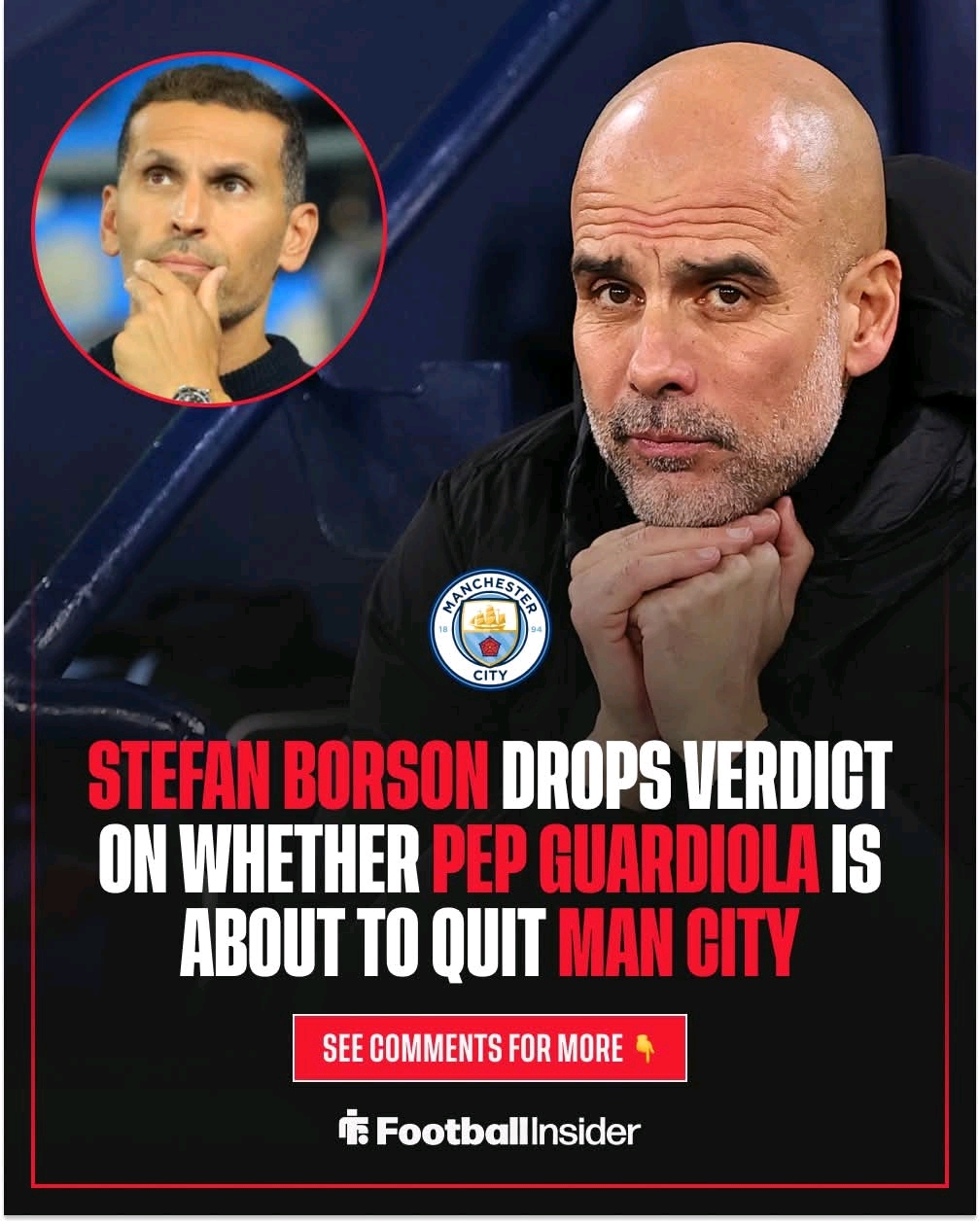
As the 2025–26 season moves toward its decisive phase, one question continues to dominate conversations around Manchester City: is Pep Guardiola approaching the end of his time at the Etihad Stadium?
For nearly a decade, Guardiola has been the defining figure of City’s modern era, overseeing unprecedented domestic dominance, reshaping English football tactically, and turning the club into a global powerhouse. Yet, despite his ongoing success and a contract that runs until June 2027, speculation about his future has intensified once again.
City’s dramatic 2–1 victory over Liverpool at Anfield on Sunday, 8 February, served as a reminder that Guardiola’s side remains firmly in the Premier League title race. The win kept them within six points of league leaders Arsenal and reaffirmed their status as one of Europe’s elite teams. However, even on nights of triumph, the shadow of uncertainty around Guardiola’s long-term plans refuses to fade.
With the season entering its critical stretch and City competing across multiple competitions, the debate over whether Guardiola is nearing the end of his Manchester chapter has reached a familiar but heightened pitch.
Guardiola’s journey at Manchester City began in the summer of 2016, when he arrived from Bayern Munich with a reputation as one of the greatest coaches of his generation. Expectations were immense, but few could have predicted just how transformative his reign would become.
Under Guardiola, City have not only accumulated trophies but also redefined standards. League titles, domestic cups, record-breaking point totals, and a relentless style of play have turned City into the benchmark against which others measure themselves. His influence extends beyond silverware; Guardiola has shaped player development, tactical trends, and even recruitment philosophies across the Premier League.
Now in his tenth season at the club, Guardiola is the longest-serving manager in Manchester City’s modern history. Longevity, however, has never been a defining trait of his career. At Barcelona and Bayern Munich, he chose to step away while still at the peak of his powers, citing mental fatigue and the need for new challenges.
That history fuels the current speculation.
From a purely contractual standpoint, there is no immediate urgency. Guardiola’s deal runs until June 2027, meaning City are under no obligation to plan for a change in the dugout in the short term. Yet football decisions are rarely governed solely by paperwork.
Guardiola himself has often spoken about the emotional toll of elite management. He has repeatedly stressed the importance of motivation, energy, and mental freshness — both for himself and for his players. When those elements begin to wane, Guardiola has shown a willingness to walk away, regardless of external success.
That uncertainty was underlined by comments from former Manchester City financial adviser Stefan Borson, who has offered a candid and informed perspective on the situation.
—
### Stefan Borson’s Verdict: Subtle Signs, No Certainty
Speaking exclusively, Borson suggested that while there are no clear indications that Guardiola is preparing to leave, there are subtle signals that have not gone unnoticed within the game.
According to Borson, the speculation is not being driven internally by Manchester City. In fact, he believes the club itself may be just as uncertain about Guardiola’s intentions as the public.
“I don’t think it’s coming from City,” Borson explained. “To be honest, I don’t think City know either way. There is a possibility that Pep doesn’t know either way, to be honest. That has been the case in previous years.”
That comment is crucial. Guardiola’s future decisions have historically evolved over time rather than being fixed long in advance. Even Guardiola himself has admitted in the past that he assesses his position season by season, rather than committing to long-term plans.
Borson continued by acknowledging a wider feeling within football circles.
“There’s a general feeling within the game that his time is coming to an end. I think there are little signs, small little indicators that suggest that maybe this is the last season.”
What those indicators are is open to interpretation. Guardiola’s body language, his occasional references to fatigue, and his reduced public commitment to future planning have all been cited by observers. None are definitive on their own, but collectively they keep the debate alive.
Despite the speculation, there are equally compelling reasons to believe Guardiola may remain at Manchester City beyond this season.
First and foremost, City are still competing on multiple fronts. Guardiola’s side are fighting for the Premier League title, remain alive in European competition, and have already secured a place in the Carabao Cup final, where they will face Arsenal next month.
Walking away mid-cycle or after a disappointing campaign has never been Guardiola’s preferred approach. Borson echoed that sentiment.
“I do slightly doubt that he would leave on the back of a disappointing season,” he said.
If City were to fall short across competitions — finishing without major silverware — the argument for continuity becomes stronger. Guardiola has often spoken about the desire to fix problems himself rather than handing them over to a successor.
“If they were to go through a season where they don’t win anything at all, I absolutely could see him staying for another season,” Borson added.
In that scenario, Guardiola could view another year as an opportunity for renewal rather than departure
Conversely, success could accelerate his exit.
Guardiola’s career suggests he prefers to leave clubs from a position of strength. At Barcelona, he stepped down after winning everything there was to win. At Bayern Munich, he departed despite continued domestic dominance.
If Manchester City were to win a major trophy — particularly the Premier League or Champions League — this season, the temptation to leave on a high could be strong.
“If they won something big, the league or the Champions League, then I think that the likelihood again increases that he leaves on a high,” Borson noted.
Such a departure would allow Guardiola to preserve his legacy at City while avoiding the gradual decline that often follows long managerial tenures
Manchester City, for their part, are not ignoring the possibility of life after Guardiola.
Football Insider revealed earlier this month that Vincent Kompany has emerged as City’s top target should Guardiola decide to step away. Kompany, a club legend and former captain, has impressed as a manager and is currently in charge at Bayern Munich.
The appeal is obvious. Kompany understands the club’s culture, has Guardiola’s tactical DNA, and commands immense respect within the City hierarchy. While prising him away from Bayern would not be straightforward, his name alone signals that City are at least considering contingency plans.
That said, planning for the future does not mean Guardiola’s exit is imminent. Elite clubs prepare for all scenarios, particularly when a manager’s intentions remain unclear.
One of the less discussed aspects of Guardiola’s situation is the psychological burden of sustained excellence. At Manchester City, success is no longer celebrated — it is expected. Every season begins with the assumption that City will challenge for every trophy.
Maintaining hunger in such an environment is extraordinarily difficult. Guardiola has often spoken about the challenge of motivating players who have already won everything, and the same challenge applies to managers.
Yet Guardiola remains visibly engaged. His touchline intensity, tactical adjustments, and post-match analysis suggest a coach still deeply invested in the process. The Anfield victory against Liverpool was a prime example of Guardiola’s ability to adapt and out-think elite opposition even after nearly ten years in the job.
Chairman Khaldoon Al Mubarak has been one of Guardiola’s strongest supporters throughout his tenure. The relationship between manager and ownership has been central to City’s stability and success.
Any decision Guardiola makes will likely involve extensive dialogue with the club’s leadership. City are known for long-term planning and measured transitions rather than reactive decisions.
If Guardiola does choose to leave, it is unlikely to come as a surprise internally, even if the timing remains unclear externally
For now, Guardiola’s immediate focus remains on the pitch. City’s next fixture against Fulham at the Etihad Stadium on Wednesday, 11 February, offers another opportunity to close the gap on Arsenal and maintain momentum across competitions.
Beyond that, the Carabao Cup final against Arsenal looms large, as do crucial Premier League and European fixtures. These matches may ultimately shape not just City’s season, but Guardiola’s future.
The reality is that no definitive answer exists yet — and that uncertainty may persist until the final weeks of the campaign.
Regardless of what happens next, Guardiola’s legacy at Manchester City is beyond question. He has elevated the club to unprecedented heights and left an indelible mark on English football.
Whether he stays until 2027, departs this summer, or surprises everyone with another contract extension — something he has done before — Guardiola will leave Manchester City stronger than he found it.
As Stefan Borson pointed out, even assumptions about Guardiola’s intentions have been wrong in the past.
“I think it’s unlikely that he’ll renew. I think we can all agree with that. But then again, many times he’s renewed when it wasn’t expected.”
With Pep Guardiola, certainty has never been guaranteed. And perhaps that, more than anything, is why the question of his future continues to fascinate — and divide — the football world.