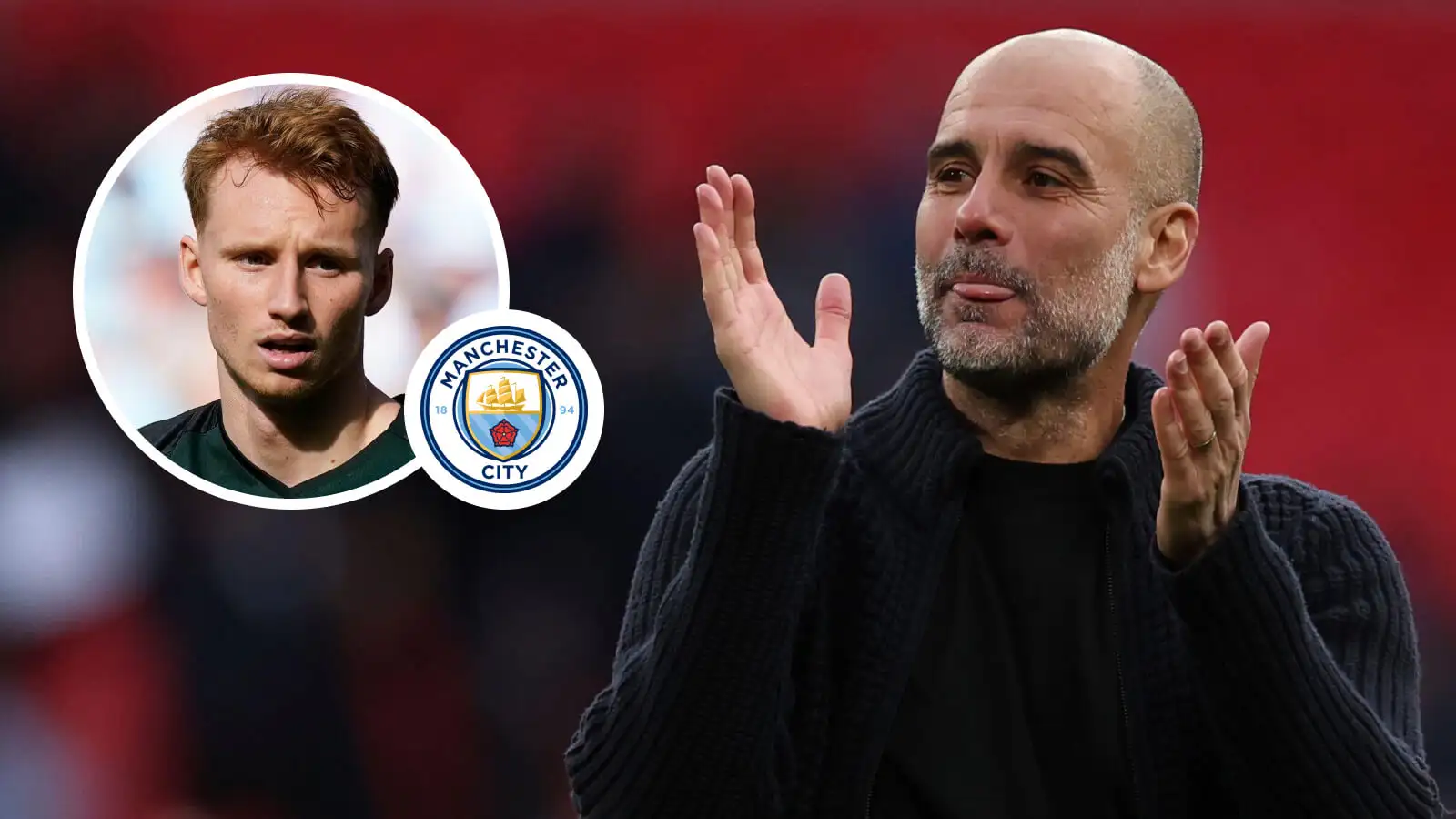
When Elliot Anderson completed his move from Newcastle United to Nottingham Forest in the summer of 2024, the transfer barely registered as seismic news beyond the East Midlands. Priced at £35 million and involving two Premier League clubs operating at very different ends of the table, it was initially viewed as a solid but unspectacular piece of business: Forest strengthening their midfield with a technically gifted English player, and Newcastle balancing their books amid financial constraints. Less than two years later, that perception has shifted dramatically.
Anderson’s development since arriving at the City Ground has been nothing short of remarkable. What was once considered a promising but still unpolished midfielder has evolved into one of the Premier League’s most complete and reliable central players. His consistency, tactical intelligence, and growing influence in decisive moments have not only elevated Forest’s performances but also propelled Anderson into conversations typically reserved for the league’s elite midfielders.
Now, with transfer speculation swirling once again, Anderson finds himself at the center of a narrative far removed from his Newcastle exit. Reports suggest that Forest would demand a fee in the region of £80–100 million should the England international leave this summer—a staggering increase that underlines both his individual growth and the modern Premier League’s inflated valuation of elite midfield talent.
Anderson’s departure from Newcastle was not driven by a lack of belief in his ability. On the contrary, he was widely regarded as one of the club’s brightest academy graduates, a technically sharp midfielder with the engine to match his intelligence. However, Newcastle’s rapid ascent following their Saudi-backed takeover brought with it a new reality: squad places became fiercely competitive, and Financial Fair Play regulations placed pressure on the club to make difficult decisions.
Forest, seeking to build a midfield capable of both controlling games and surviving the relentless demands of the Premier League, saw an opportunity. Their £35 million investment was a clear statement of intent—this was not a depth signing, but a player expected to become central to the club’s long-term vision.
From the outset, Anderson justified that faith. He settled quickly, adapting to Forest’s tactical structure and embracing the responsibility that came with being a high-profile signing. While some players require time to adjust to new surroundings, Anderson looked immediately at home, slotting into midfield with a maturity beyond his years.
Since arriving at Forest, Anderson has made more than 70 appearances across all competitions, a figure that speaks not only to his quality but also to his durability and reliability. In a league where midfielders are often rotated due to tactical demands or physical wear, Anderson has emerged as one of Forest’s first names on the team sheet.
His versatility has been a defining asset. Comfortable operating as a box-to-box midfielder, a deeper-lying orchestrator, or even in a more advanced role when required, Anderson has provided Forest with tactical flexibility. He combines technical precision with relentless work rate, pressing intelligently out of possession while remaining composed and progressive on the ball.
Statistically, his impact has been clear. His passing accuracy ranks among the best for central midfielders outside the traditional “big six,” while his progressive carries and chance-creating actions have consistently placed him in the upper echelon of Premier League performers. Yet numbers alone fail to capture his influence. Anderson’s ability to dictate tempo, break opposition lines, and lead transitions has transformed Forest from a reactive side into one capable of asserting control against stronger opponents.
Perhaps the most impressive aspect of Anderson’s evolution has been his growth as a leader. Despite still being in his early twenties, he has taken on a vocal role within the squad, often directing teammates and setting standards through his intensity and professionalism.
Forest’s coaching staff have repeatedly praised his attitude and tactical understanding, noting how quickly he absorbs instructions and adapts to in-game changes. These qualities have not gone unnoticed beyond the City Ground. England selectors have reportedly been monitoring his progress closely, with Anderson increasingly viewed as a future fixture in the national setup.
Leadership, in modern football, is not always about wearing the armband. It is about responsibility, consistency, and the ability to influence games at critical moments. In that regard, Anderson has ticked every box
Given Anderson’s trajectory, it is little surprise that Forest are reportedly bracing themselves for interest from Europe’s elite. The suggested valuation of £80–100 million may appear eye-watering, but within the context of the Premier League market, it is entirely logical.
Elite central midfielders who combine youth, Premier League experience, and tactical versatility are among the most coveted assets in world football. Add in Anderson’s homegrown status and proven durability, and his valuation begins to make even more sense.
Forest, crucially, are under no immediate pressure to sell. Their financial position allows them to hold firm, and any potential suitor would need to meet their asking price to even initiate serious negotiations. This puts the club in a position of strength—a far cry from the circumstances that enabled Newcastle to sell him just a year earlier.
Among the clubs linked with Anderson, Manchester City stand out as the most intriguing destination. The reigning champions have long admired midfielders who can operate intelligently in multiple phases of play, and Anderson’s profile fits seamlessly into City’s footballing philosophy.
However, uncertainty surrounding Pep Guardiola’s future has added an extra layer of intrigue to any potential move. Guardiola’s influence on player recruitment and development at the Etihad is unparalleled, and his eventual departure would represent a seismic shift for the club.
Interestingly, reports suggest that Guardiola’s future would not deter Anderson from considering a move to Manchester City. Rather than being tied exclusively to the Spaniard’s presence, Anderson is said to be drawn by the club’s broader footballing identity and long-term vision.
What makes this stance particularly fascinating is Anderson’s reported interest in working under two managers who have been linked as potential successors to Guardiola: Cesc Fabregas and Xabi Alonso.
Both former midfield maestros, Fabregas and Alonso represent a new generation of elite coaches shaped by their experiences under some of football’s greatest minds. Fabregas, known for his vision, creativity, and intelligence, has already begun making waves in coaching circles with his emphasis on positional play and technical excellence.
Alonso, meanwhile, has rapidly established himself as one of Europe’s most exciting young managers. His work has been praised for its tactical sophistication, blend of intensity and structure, and ability to maximize the strengths of intelligent midfielders.
For a player like Anderson, the appeal is obvious. Both Fabregas and Alonso built their playing careers on the very qualities Anderson now embodies: composure under pressure, spatial awareness, and the ability to control matches from the center of the pitch
Should Anderson eventually arrive at the Etihad, he would not be expected to replicate any single player’s role. Instead, his value would lie in his adaptability. In a City side that thrives on rotation and positional fluidity, Anderson could operate alongside or in rotation with established stars, gradually assuming greater responsibility as he matures.
His pressing ability would align with City’s aggressive counter-pressing game, while his technical security would allow him to thrive in tight spaces. Importantly, his Premier League experience would minimize the adaptation period that often accompanies high-profile transfers from abroad.
From Forest’s standpoint, Anderson’s rise represents both an opportunity and a challenge. Retaining a player of his caliber would significantly strengthen their ambitions of establishing themselves as a consistent top-half—or even European—side. At the same time, a nine-figure offer would be difficult to ignore, particularly if reinvested wisely.
Forest’s recruitment strategy in recent seasons has focused on identifying players with both immediate impact and long-term value. Anderson epitomizes that approach. Whether he stays or leaves, his success validates the club’s vision and enhances their reputation as a destination for elite talent.
As the summer window approaches, speculation surrounding Anderson is only likely to intensify. Clubs across Europe are constantly searching for midfielders who can offer control, intensity, and intelligence in equal measure, and Anderson’s performances have made him impossible to ignore.
Yet for now, his focus remains on delivering for Nottingham Forest. Those close to the player describe him as grounded and determined, aware that sustained excellence—not transfer rumors—is what will ultimately shape his career.
Whether he remains at the City Ground for another season or takes the next step to one of Europe’s elite clubs, one thing is certain: Elliot Anderson’s rise from promising prospect to Premier League standout is a story still being written, and its next chapter could be one of the most compelling of the upcoming transfer window.