Manchester City vs Fulham: Injury Anxiety, Tactical Tweaks and Selection Headaches as Guardiola Navigates Another Title Test

Manchester City head into their midweek Premier League meeting with Fulham facing a familiar but no less frustrating dilemma: how to balance elite performance levels with a squad stretched thin by injuries, fatigue, and the relentless demands of a title race that refuses to slow down.
Pep Guardiola has spent much of the season improvising. At times, those improvisations have looked inspired, reinforcing his reputation as football’s great problem-solver. At others, they have exposed vulnerabilities in a side that, while still dominant in possession and chance creation, has shown flashes of fragility — particularly in defensive transition.
Wednesday night’s fixture at the Etihad Stadium arrives at a pivotal moment. Manchester City are fresh from an emotionally charged, physically draining victory over Liverpool, a result that may yet prove decisive in the championship narrative. But the aftermath of that win has brought new concerns, especially in defence, where Guardiola’s options appear increasingly limited.
Against a Fulham side comfortable playing the role of disruptor, City will need more than talent alone. They will need structure, discipline, and intelligent game management — qualities that Guardiola prizes, but which become harder to maintain as injuries mount and rotation options shrink.
City’s clash with Liverpool was always likely to be a defining moment in the season. The intensity, tempo, and emotional weight of the contest reflected its significance, and City ultimately emerged with all three points thanks to goals from Bernardo Silva and Erling Haaland.
Yet, as has happened so often in recent campaigns, success came at a cost.
Midway through the second half, young defender Abdukodir Khusanov was forced off following a heavy collision with goalkeeper Gianluigi Donnarumma. The incident, described by Guardiola afterward as “unfortunate but unavoidable,” saw Khusanov take a knee to the head as both players attempted to deal with a loose ball in the penalty area.
Medical staff responded immediately, and while Khusanov was conscious and able to leave the pitch under his own power, concussion protocols were triggered. At this stage, his availability for the Fulham fixture remains uncertain.
For Guardiola, the timing could scarcely be worse.
Khusanov’s emergence this season has been one of the quieter success stories of City’s campaign. Thrust into action due to injuries elsewhere, the Uzbek centre-back has impressed with his composure, aerial ability, and willingness to play out from the back — qualities essential in Guardiola’s system.
If he is unavailable, City’s defensive depth will be tested once again.
Josko Gvardiol remains sidelined with a longer-term issue, depriving Guardiola of a left-footed centre-back who offers balance and progression from deep. John Stones has recently returned to training, but the club has been careful not to rush him back, mindful of his recent injury history and the risk of recurrence.
That leaves Ruben Dias as the only fully fit, established central defender certain to be available. Dias’ leadership and organisational skills are invaluable, but he cannot carry the line alone.
Marc Guehi is expected to partner Dias if Khusanov is ruled out. Guehi offers reliability, strong positional sense, and comfort in possession, though the pairing lacks the natural asymmetry Guardiola often prefers in his back line.
Alternative solutions exist, but each comes with compromise
Guardiola has never been afraid to think creatively when circumstances demand it. Over the years, he has used full-backs as midfielders, midfielders as centre-backs, and wingers as false nines. This season has been no different.
Nathan Aké is capable of playing centrally, offering left-footed balance and defensive intelligence. However, he has also carried a heavy workload, and Guardiola may be reluctant to overload him again so soon after Liverpool.
Young defender Max Alleyne represents another option, though starting him in a Premier League match of this significance would be a bold decision, even by Guardiola’s standards.
At full-back, City’s selection problems have prompted further experimentation. Nico O’Reilly has shown promise at left-back, bringing energy, technical security, and an ability to step into midfield during build-up phases. On the right, Matheus Nunes could be deployed despite being a natural midfielder, continuing Guardiola’s trend of repurposing central players in defensive roles.
This approach offers advantages in possession but can leave City vulnerable when possession is lost — precisely the moments Fulham are likely to target.
Personnel issues naturally influence formation, and Guardiola faces a genuine tactical choice ahead of this fixture.
In recent weeks, City have often operated in a 4-1-4-1 shape, a system designed to maximise control. With a single holding midfielder screening the defence and two advanced midfield lines pressing aggressively, City can dominate territory and suffocate opponents.
Against Liverpool, however, Guardiola experimented with a modified 4-3-3. The change allowed City to press higher up the pitch and create overloads in wide areas, but it also exposed gaps in midfield during transitions — gaps Liverpool exploited on several occasions.
Fulham present a different challenge. Marco Silva’s side are unlikely to press City high for sustained periods. Instead, they will likely defend compactly, absorb pressure, and look to break quickly into space once City’s shape stretches.
In that context, a return to the 4-1-4-1 appears the safer option. It offers greater protection in front of a potentially makeshift defence and allows City to recycle possession patiently until openings emerge.
Few players are as central to Manchester City’s identity as Rodri. The Spanish midfielder is the team’s metronome, defensive shield, and first point of progression all in one.
Yet, his importance has also made him one of the most heavily used players in Guardiola’s squad. Minor fitness issues have dotted his season, and while he completed the full 90 minutes against Liverpool, there is a growing awareness that his workload must be carefully managed.
Should Guardiola decide to rest Rodri — or limit his minutes — Nico Gonzalez is the most likely candidate to step into the holding role.
Gonzalez offers physical presence, discipline, and a willingness to do the less glamorous work of screening the defence. What he lacks, however, is Rodri’s range of passing and his ability to dictate tempo under pressure.
This trade-off could shape the match. Against Fulham’s energetic midfield, City will need someone capable not only of breaking up play but also of ensuring that possession is retained and recycled efficiently.
Further forward, Guardiola has greater flexibility — and opportunity.
Bernardo Silva, who returned from injury to play the full match against Liverpool, has been one of City’s most consistent performers this season. However, his relentless style takes a physical toll, and Guardiola may choose to protect him from overload.
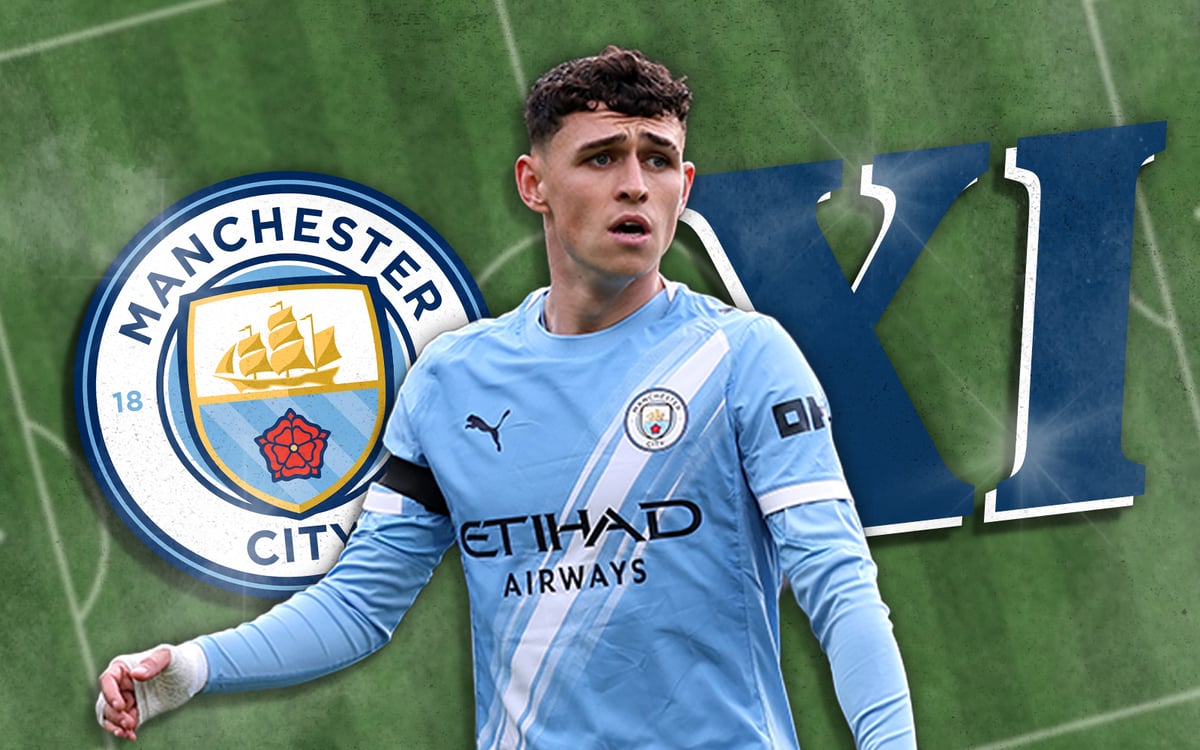
Phil Foden is widely expected to return to the starting XI. Rested against Liverpool, Foden brings creativity, unpredictability, and a goal threat from midfield. His ability to drift between the lines and exploit half-spaces could be crucial against a Fulham side expected to defend deep.
Tijjani Reijnders is another strong candidate to start. The Dutch midfielder provides energy, intelligent off-the-ball movement, and pressing intensity — attributes Guardiola values highly in matches where City expect to dominate possession and territory.
Together, these midfield selections would signal Guardiola’s intent to control the game through sustained pressure rather than quick strikes.
In attack, there is little ambiguity. Erling Haaland remains the focal point.
The Norwegian striker once again demonstrated his value against Liverpool, combining physical dominance with ruthless finishing. Even on nights when he sees limited touches, Haaland’s presence alters the behaviour of opposing defences, creating space for others to exploit.
Supporting him on the flanks are likely to be Antoine Semenyo and Rayan Cherki.
Semenyo offers directness, strength, and a relentless work rate, making him well suited to Guardiola’s pressing demands. Cherki, by contrast, brings flair, imagination, and unpredictability — the kind of player capable of unlocking a stubborn defensive block with a moment of individual brilliance.
Savinho is edging closer to a return from injury, but this match is expected to come too soon. Jeremie Doku remains sidelined, depriving City of one of their most explosive wide options. Mateo Kovacic is also unavailable, further limiting midfield rotation.
While much of the pre-match narrative understandably centres on Manchester City’s injury issues, Fulham should not be treated as an afterthought.
Marco Silva has built a side capable of frustrating elite opponents. Organised, disciplined, and dangerous on the counterattack, Fulham have shown they can punish lapses in concentration — particularly against teams that commit numbers forward.
Their ability to transition quickly from defence to attack could pose problems for a City side experimenting with defensive personnel. Any miscommunication or positional error could be ruthlessly exploited.
Guardiola will be acutely aware of this risk. Expect City to prioritise control, patience, and structure over spectacle, particularly in the early stages.
Assuming Guardiola opts for stability and control, a 4-1-4-1 system appears most likely.
Manchester City (4-1-4-1):
Gianluigi Donnarumma;
Nico O’Reilly, Marc Guehi, Ruben Dias, Matheus Nunes;
Nico Gonzalez;
Rayan Cherki, Phil Foden, Tijjani Reijnders, Antoine Semenyo;
Erling Haaland
This fixture may not carry the glamour of City’s showdown with Liverpool, but its importance is no less significant.
At this stage of the season, dropped points are magnified, and injuries can derail even the most meticulously planned campaigns. Guardiola once again finds himself navigating constraints, forced to balance tactical ideals with the realities of squad availability.
If City manage their defensive issues effectively and establish control in midfield, their quality should be sufficient to overcome Fulham. But in a title race defined by fine margins, there is little room for complacency.
For Guardiola, this is yet another test — not just of his players, but of his ability to adapt, innovate, and extract maximum performance under pressure.