Referee controversy involving Man City! Decision has caused massive debate Fans feel cheated, League may investigate

Manchester City fans arrived at the Etihad Stadium with confidence in their hearts and expectation in their voices. It was FA Cup time again, a competition full of history, drama, and sometimes controversy. On this Saturday afternoon, the challenge in front of them was Salford City, a League Two side with big dreams but a much smaller reputation. On paper, this was supposed to be simple. But football is never just about what is written on paper.
The match between Manchester City and Salford City in the fourth round of the FA Cup ended in a 2-0 victory for Pep Guardiola’s side. City progressed to the fifth round as many expected. But when the final whistle blew, the biggest talking point was not the result. It was a decision. A decision that left many shaking their heads. A decision that once again brought back the debate about VAR and why it is needed.
Former Premier League referee Keith Hackett did not stay silent. He looked at the incident carefully. He watched the replays. And he came to a strong conclusion. According to him, the officials made a major error when they disallowed a goal from Omar Marmoush.
The drama started early in the game. Manchester City came out fast. They pressed high. They moved the ball quickly. They did not want to give Salford City any confidence. In the opening stages, City took the lead. It was a moment of pressure that forced a mistake. A cross from Rayan Ait-Nouri caused confusion in the Salford defence. Alfie Dorrington tried to clear it but instead turned the ball into his own net. The Etihad erupted. City were 1-0 up.
For Salford, that was the worst possible start. Playing against one of the best teams in England is already difficult. Conceding early makes it even harder. Manchester City smelled blood. They kept attacking. They wanted to finish the game early.
Then came the moment that changed the conversation.
Omar Marmoush made a brilliant run. The timing looked perfect. The pass came through. Marmoush controlled the ball and fired a powerful shot into the top corner. It was a sensational finish. The kind of goal that makes fans jump from their seats. City players celebrated. Marmoush celebrated. It looked like 2-0.
But suddenly, the assistant referee’s flag was in the air.
Offside.
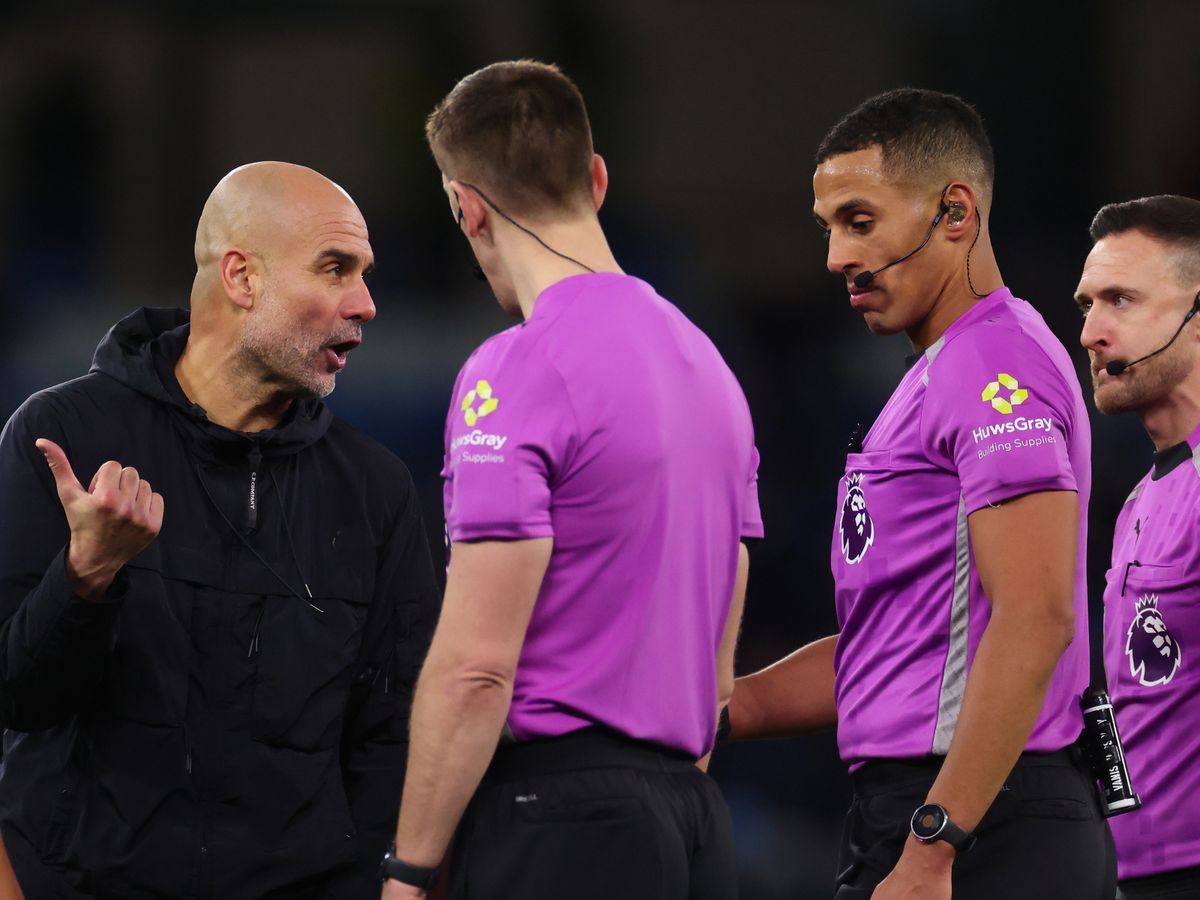
The celebrations stopped. The joy turned into confusion. The goal was chalked off. Marmoush looked shocked. Pep Guardiola looked frustrated. The fans inside the stadium were asking the same question: was he really offside?
When the replay was shown, things became even more interesting. The images suggested that Marmoush had timed his run perfectly. One of the Salford defenders appeared to be playing him onside. It was very close. But it did not look like a clear offside.
This is where the problem became clear. There was no VAR in operation for the fourth round of the FA Cup.
In the Premier League, VAR would have checked the decision. Lines would have been drawn. The margin would have been measured. The correct call would have been confirmed or corrected. But in this match, there was no such technology available.
So the on-field decision stood.
After the match, Keith Hackett spoke about the incident. He did not hide his opinion. He said the assistant referee was in a good position. He was in line with the second rearmost defender. That means he had a clear view. But even with that good position, Hackett believed the decision was wrong.
He explained that when you look at the screenshot, the defender closest to the assistant referee appears to be playing Marmoush onside. In his view, there was no reason to raise the flag. He said clearly that the goal should have been allowed.
Hackett’s comments added fuel to the debate. If a former top referee says the decision was wrong, people will listen. And many Manchester City fans felt they had been denied a legitimate goal.
The FA had already explained their policy about VAR in the competition. They decided that VAR would only be used from the fifth round onwards. Their reason was about consistency. They wanted a level playing field in the earlier rounds because not all stadiums have the technology to support VAR. By not using it in the third and fourth rounds, they believed they were keeping things fair for all clubs.
But matches like this show the downside of that decision.
Manchester City are used to playing with VAR. In the Premier League and in the Champions League, technology is part of the game. Semi-automated offside technology is even used in Europe to make decisions quicker and more accurate. But in this FA Cup tie, it was like going back in time.
Pep Guardiola did not explode in anger after the match. He is experienced enough to know that mistakes happen. But inside, he would have known that his team deserved that second goal. It would have killed the game earlier. It would have removed any small hope Salford might have had.
To Salford’s credit, they did not collapse. They kept fighting. They tried to stay organised. They tried to believe that maybe they could find a way back into the game. Cup football is famous for surprises.
But Manchester City’s quality eventually told.
Even without the disallowed goal counting, City remained in control. Their midfield dominated possession. Their defence looked calm. Salford struggled to create clear chances. In the second half, City finally secured the win with another goal, making it 2-0 and ending any doubts about progression.
Still, the conversation after the game was not about tactics or player performances. It was about that offside decision.
VAR has always divided opinion. Some people love it because it corrects mistakes. Others hate it because it slows the game down. But moments like this remind everyone why it was introduced in the first place.
Offside decisions can be incredibly tight. Human eyes can only judge so much at full speed. Assistant referees have a difficult job. They must watch the defensive line and the attacking run at the same time. It is almost impossible to get every close call correct without help.
Keith Hackett’s words were simple but powerful. He said the incident highlights why we have VAR on offside calls in the Premier League. In other words, this is exactly the kind of mistake technology is designed to fix.
For Omar Marmoush, it was a frustrating afternoon. Scoring at the Etihad in an FA Cup tie should have been a special moment. His finish was excellent. The movement was intelligent. But instead of being remembered as a beautiful goal, it became a controversial moment.
Football can be cruel like that.
Manchester City, however, will not complain too much. They are through to the fifth round. The dream of lifting the FA Cup remains alive. Pep Guardiola knows that in knockout competitions, the only thing that truly matters is progression.
But imagine if the game had been tighter. Imagine if Salford had found an equaliser later. That disallowed goal would have become even bigger. The anger would have been louder. The debate would have been more intense.
This is why consistency in technology use is important. When some competitions use VAR and others do not, players and fans struggle to adjust. In one week, a decision is checked with lines and slow motion. The next week, it is decided in a split second with no review.
The FA’s explanation about fairness is understandable. Smaller clubs do not always have the infrastructure for VAR. Installing it at every ground for early-round matches would be expensive. But at the same time, top-level games played in Premier League stadiums could easily use it.
That is the argument many fans are making.
Manchester City now look ahead to the fifth round, where VAR will finally be in operation. From that stage, every tie will have the technology available. That means fewer controversial offside calls. Or at least, fewer uncorrected ones.
Salford City can leave the Etihad with pride. They faced a giant of English football and did not get embarrassed. They showed organisation and spirit. But they also benefited from a slice of luck with that offside call.
In football, sometimes you need luck. Sometimes you suffer from it.
For City supporters, this match will be remembered as a professional job done, but also as a reminder of how fine margins can shape games. One raised flag changed the story of Marmoush’s afternoon.
Keith Hackett’s criticism will not change the result. The scoreboard will always say Manchester City 2-0 Salford City. History books will not mention the disallowed goal in big letters. But for those who watched closely, it was a moment that mattered.
It was a reminder that even at the highest level, human error still plays a role. Technology was introduced to reduce that. Yet in some competitions, it is still absent.
As Manchester City continue their FA Cup journey, they will hope that future matches are decided purely by performance, not by controversial decisions. The fifth round awaits. The stakes will get higher. The pressure will increase.
And this time, VAR will be watching.