Leeds have condemned the “unexpected and disappointing” booing from fans during a scheduled pause for players to break their Ramadan fast in last weekend’s defeat

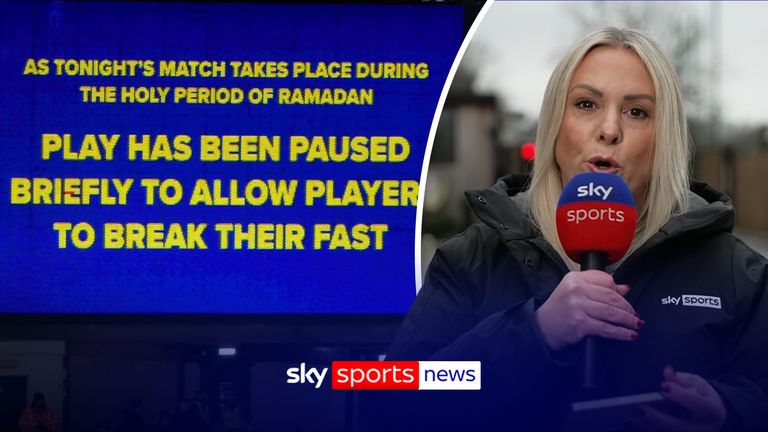
The night at Elland Road was supposed to be remembered for football. A tight Premier League game between Leeds United and Manchester City had the atmosphere that fans love. The stadium was loud, the tension was high, and every moment of the match felt important. Manchester City were chasing another crucial win, while Leeds United were fighting hard in front of their home supporters. But what happened during the game created a conversation that went far beyond football.
Just 13 minutes into Manchester City’s narrow 1-0 victory over Leeds United, the match was briefly stopped. It was not because of an injury. It was not because of a VAR check. Instead, the pause had been arranged so that Muslim players observing Ramadan could break their fast.
For those who follow football closely, this kind of moment has become more common in recent years. Ramadan is an important period in the Islamic calendar. During this month, Muslims fast from dawn until sunset. That means no food and no drink, not even water, for the entire daylight period. For professional footballers who are observing the fast, this can be very difficult because football matches require enormous physical energy.
To help players during Ramadan, officials sometimes allow a short break around sunset so players can take water and food quickly. The break is usually very short, sometimes less than two minutes, but it gives fasting players a chance to hydrate and regain some energy.
In the match between Leeds and Manchester City, officials planned exactly that kind of moment. The game was paused for just 78 seconds. During that short time, Muslim players on the pitch were able to take a quick drink and eat something small to break their fast.
However, as the pause happened, something unexpected followed. Loud boos were heard from sections of the crowd inside Elland Road. The reaction was surprising and quickly became the biggest talking point from the match.
Many fans watching on television noticed the noise immediately. Some people in the stadium were confused. Others did not understand why the match had suddenly stopped. The situation quickly created debate among supporters, journalists, and people across social media.
After the match, Leeds United released a statement addressing the incident. The club made it clear that they were unhappy about the boos that were heard during the pause.
Leeds described the reaction as “unexpected and disappointing.” At the same time, the club also explained that there were several reasons why the situation may have happened.
According to the club, one of the biggest issues was communication. Leeds explained that this was the first time a match at Elland Road had ever been paused specifically to allow players observing Ramadan to break their fast.
Because of that, many supporters inside the stadium simply did not know what was happening. The club admitted that they should have done more before the game to inform fans that such a break might occur.
In their statement, Leeds said that they should have been more proactive with communication ahead of the Manchester City match. If fans had been told clearly before the game, the club believes the reaction might have been very different.
Another issue was the stadium screen. During the pause, a message appeared on the big screen explaining that the game had been stopped so players could break their Ramadan fast.
But Leeds revealed that the message was not visible to every supporter in the stadium. Around 25 percent of the crowd could not see the screen clearly, including supporters in the South Stand.
Because those fans could not see the message, many of them had no idea why the game had stopped. From their perspective, the match had suddenly paused without explanation.
That confusion may have contributed to the negative reaction.
Leeds also pointed to another unusual moment earlier in the season involving Manchester City. When the two teams played at the Etihad Stadium in November 2025, the match was stopped during the second half for what some described as a “tactical timeout.”
That break happened during an injury stoppage when both teams gathered near the touchline. The moment caused debate among fans because tactical timeouts are not a normal part of football.
Leeds believe some supporters at Elland Road may have thought the same thing was happening again. If fans believed the pause was another tactical break rather than a Ramadan moment, that may have added to the confusion and frustration.
The club also mentioned another incident involving Sunderland earlier in the week. During that match, there had also been confusion that led to booing from parts of the crowd.
In addition to the fans, Leeds said some players on the pitch were also confused when the pause happened. Because the match had started with high intensity, some players were unsure why the referee suddenly stopped play.
Television footage showed players looking around and speaking with the officials, trying to understand the reason for the break.
That confusion on the pitch may have also spread to the stands, where fans were already unsure what was happening.
Despite the explanations, the moment still created a strong reaction across football.
Manchester City manager Pep Guardiola was one of the voices who spoke clearly about the issue. Guardiola called on supporters everywhere to respect religion.
For Guardiola, football is a global game that includes players from many different cultures and backgrounds. Ramadan is an important part of life for many Muslim players, and he believes the sport must respect that.
Guardiola has managed many Muslim players during his career. At different clubs, including Barcelona, Bayern Munich, and Manchester City, he has worked with footballers who observe Ramadan.
He understands how difficult it can be for players to train and compete while fasting. That is why he supports the small pauses that allow players to break their fast safely.
For Guardiola, the issue was simple. Football must respect people’s beliefs.
The reaction from Leeds supporters was widely discussed in the media, but the club made it clear that they are committed to improving awareness.
Leeds finished their statement by saying that football still has a long way to go when it comes to removing negative behavior from the game.
They mentioned several problems that continue to affect football, including racism, homophobia, and tragedy chanting.
Leeds also spoke about the abuse their own fans sometimes face, including offensive chants related to Jimmy Savile that are directed at the club by opposition supporters.
According to Leeds, these kinds of issues show that football still has work to do.
The club said they will continue working to create a better environment where respect becomes the standard across the sport.
The situation also raised a wider conversation about Ramadan in football.
In recent years, football authorities have become more aware of the needs of Muslim players during the holy month. Referees in many leagues are now encouraged to allow short pauses around sunset when possible.
These moments usually happen naturally in games. For example, if the ball goes out of play or there is a stoppage, referees may allow players to take a quick drink or eat something small.
Sometimes the pause is planned if the sunset time falls during the match.
Many players have spoken about how important these small breaks can be. After fasting all day without food or water, even a few seconds to drink water can make a big difference to performance and health.
Some famous players who have observed Ramadan while playing include stars from the Premier League, La Liga, and other major leagues.
The football calendar does not stop for Ramadan, so players often have to manage both their faith and their professional responsibilities at the same time.
Nutrition experts and club medical staff often work closely with fasting players during this period. They help them plan meals, hydration, and recovery so they can continue performing at the highest level.
For many players, the support from their clubs and teammates is extremely important.
Back at Elland Road, the match itself ended with Manchester City winning 1-0.
It was a hard-fought game, with Leeds pushing strongly in front of their home supporters. But City managed to hold on and secure the victory.
Despite the result, the conversation after the game focused far more on the 78-second pause than on the football.
The moment highlighted how the sport is still learning how to handle cultural and religious diversity in a better way.
For many people, the solution is simple: awareness.
If fans understand why something is happening, they are much more likely to respect it.
That is why Leeds have already started preparing for the next situation. The club confirmed that another Ramadan break will take place during their upcoming FA Cup match against Norwich City.
Leeds striker Joel Piroe is expected to be one of the players observing the fast during that game.
This time, the club plans to make sure supporters are fully informed before the match begins. Clear communication before kickoff should help avoid any confusion if the game pauses again.
Football is watched by billions of people around the world. It brings together cultures, religions, and communities from every corner of the planet.
Moments like the one at Elland Road show that the game is still evolving as it becomes more inclusive.
For players observing Ramadan, the ability to break their fast safely during matches is a small but meaningful sign of respect.
For clubs and fans, understanding these moments is part of the responsibility that comes with supporting a global sport.
Pep Guardiola’s message after the match was clear. Respect religion.
In a game that connects so many different people, respect remains one of the most important values football can promote.