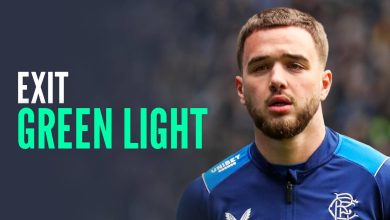
Nothing advanced yet as deal also depends on Forest situation and decision on price tag, but City want him. 🚨 Manchester United, also 𝐚𝐭𝐭𝐞𝐧𝐭𝐢𝐯𝐞 to the situation.


The summer transfer window in European football is always a period filled with speculation, anticipation, and high-stakes maneuvering. Clubs across the continent prepare their strategies months in advance, scouting, evaluating, and prioritizing targets who can make a difference in the upcoming season. For Manchester City, one of Europe’s most ambitious and well-resourced clubs, the summer of 2026 promises to be no exception. Behind the scenes, Pep Guardiola and the City board are already laying plans to strengthen the squad in key areas. Among these, the midfield department has been identified as a priority, with the club determined to bring in a new, dynamic midfielder capable of complementing their existing talents.
Among the names that have emerged as primary targets, Elliott Anderson, the young and talented midfielder currently at Nottingham Forest, has captured Manchester City’s attention. The reports, initially circulated by several reputable football insiders, have created a storm of excitement among fans. Sources suggest that Elliott Anderson is among the top three midfielders being considered by City for the June transfer window, and the club is reportedly “100% committed” to signing a new midfielder. The urgency of the pursuit reflects City’s desire to maintain their dominance both in domestic competitions and in Europe, ensuring that their squad remains competitive at the very highest level.
Anderson, though still in the early stages of his professional career, has already made a name for himself as a highly versatile midfielder. Known for his vision, technical ability, and capability to operate in multiple roles across the midfield, he has impressed observers with his maturity on the ball and tactical intelligence. His performances at Nottingham Forest, particularly in high-pressure matches, have highlighted his potential to compete at the elite level. Guardiola, whose tactical approach emphasizes fluidity, movement, and the ability to read the game, sees in Anderson a player who could fit seamlessly into Manchester City’s system.
Despite the interest from City, the situation remains complex. Nottingham Forest, Anderson’s current club, are under no immediate pressure to sell, and the decision on the player’s transfer will inevitably hinge on a combination of factors including price, timing, and the player’s own willingness to make the step up to one of Europe’s most demanding environments. Forest have nurtured Anderson’s talent with care, and they are expected to ensure that any potential move reflects the value of a young player with significant potential. The club’s board will no doubt consider not only the financial aspects of a transfer but also the implications for the squad and the message it sends to other players within the team.
While City appear highly motivated to secure Anderson’s services, the situation is further complicated by the interest of other clubs. Manchester United, City’s fierce local rivals, have reportedly also been monitoring Anderson’s situation closely. This adds an extra layer of tension and urgency for City. The prospect of losing a promising talent to a rival in the same city is something the club is keen to avoid. For Guardiola and the City board, the priority is clear: move decisively to ensure that Anderson becomes a key part of their midfield plans for the next season, minimizing the risk of interference from other interested parties.
Elliott Anderson’s profile makes him an ideal candidate for Manchester City’s long-term strategy. The club has a history of identifying young talent and nurturing it to world-class levels, combining rigorous tactical training with exposure to high-stakes competition. Anderson fits this model perfectly. His technical skillset, including ball retention under pressure, precise passing, and the ability to transition quickly from defense to attack, aligns with Guardiola’s vision of a modern midfield capable of controlling games and breaking down opposition defenses. Additionally, his work rate and capacity for pressing opponents are qualities that would endear him to a manager renowned for demanding intensity from every player on the pitch.
From the perspective of Manchester City fans, the prospect of Anderson joining the squad is electrifying. City’s current midfield, despite being formidable, has shown signs of wear as the season progresses. Injuries, fatigue, and the ever-increasing demands of competing across multiple competitions mean that reinforcements are not just desirable—they are essential. Anderson’s arrival could provide much-needed depth, versatility, and energy, allowing Guardiola to rotate his squad effectively without compromising on quality. The potential signing also signals the club’s continued ambition, demonstrating that City are intent on maintaining their position at the pinnacle of English and European football.
For Nottingham Forest, the situation is delicate. Anderson has emerged as one of their brightest prospects, and losing him would represent a significant blow to their midfield options. At the same time, the financial realities of modern football mean that a transfer to Manchester City—if negotiated successfully—would likely be transformative for the club. Such a move could provide Forest with the resources to reinvest in their squad, strengthen other areas, and continue their trajectory as a competitive force in the Premier League. Balancing the player’s development, the club’s competitive ambitions, and the financial considerations will be a challenging task for Forest’s management.
Anderson’s own perspective is equally important. At 21 years old, he stands at a critical juncture in his career. Moving to a club of Manchester City’s stature offers the opportunity to work with one of the world’s most respected managers, compete alongside some of the finest talents in football, and participate in the Champions League regularly. Yet such a move also comes with challenges: higher expectations, intense scrutiny, and the pressure to perform consistently at the highest level. For a young player, the decision to leave Forest, where he has developed his skills and established himself as a first-team regular, will require careful consideration.
The financial aspects of the potential transfer are also complex. Manchester City are known for their ability to make significant investments in talent, and it is expected that the club would be prepared to meet Nottingham Forest’s valuation if the right conditions are met. However, as with all transfers involving young, highly-rated players, negotiations are rarely straightforward. Price discussions, performance-related clauses, and potential sell-on agreements will all play a role in determining whether the deal can be completed. The interplay of these factors means that while City’s interest is clear and committed, a final agreement will require patience, strategic negotiation, and alignment of multiple stakeholders.
The potential signing of Elliott Anderson also highlights a broader trend in European football. Clubs increasingly prioritize younger talents who can provide immediate impact while also offering long-term potential. Anderson represents the modern footballer: technically proficient, tactically intelligent, physically capable, and adaptable to multiple systems. For Manchester City, whose squad operates with a precise tactical blueprint, integrating such a player is not just about adding depth—it is about enhancing the overall strategic capacity of the team. Anderson could potentially assume multiple roles, whether in a deeper playmaking position, as an advanced attacking midfielder, or in a rotational capacity to maintain energy and balance across the squad.
Media coverage of the situation has been intense. Football journalists and insiders across Europe have been tracking developments closely, highlighting the competitive dynamics between Manchester City and Manchester United. Social media platforms have amplified speculation, with fans, pundits, and analysts debating the merits of Anderson’s potential move, discussing how he might fit into Guardiola’s system, and comparing him with other potential transfer targets. The conversation reflects not only Anderson’s talent but also the high stakes involved in signing players who can influence the balance of power in the Premier League and beyond.
For Manchester United, Anderson represents a similar opportunity. As one of City’s historic rivals, United are acutely aware that missing out on a high-potential midfielder could have long-term implications. The Red Devils have been attempting to rebuild their squad, blending experienced campaigners with emerging talents, and Anderson fits the profile of a player who could make a significant impact both now and in the future. The competitive tension between City and United adds an extra dimension to the transfer saga, increasing the urgency for Manchester City to act decisively.
The tactical implications of Anderson joining City are significant. Guardiola’s system relies heavily on midfielders who can maintain possession, dictate tempo, and contribute both defensively and offensively. Anderson’s ability to link defense and attack, his positional intelligence, and his passing range make him well-suited to this philosophy. Additionally, his youthful energy would complement the experience of established midfielders, ensuring that City can maintain intensity across a congested fixture schedule. Guardiola is renowned for integrating players smoothly into his system, and Anderson’s profile suggests that he could adapt quickly to the demands of elite-level football at City.
Beyond the tactical considerations, there is also a strategic dimension to the signing. Manchester City, under the ownership of the City Football Group, has consistently demonstrated a commitment to building sustainable squads capable of dominating both domestically and in Europe. Identifying, nurturing, and securing young talent has been a hallmark of their approach, and Anderson represents a continuation of that philosophy. By securing him, City would not only strengthen their midfield options for the immediate season but also invest in a player who could be central to their plans for years to come.
Fans, of course, have reacted with excitement and anticipation. The idea of a promising young midfielder joining a team that has already achieved historic successes is tantalizing. Supporters discuss potential formations, predict how Anderson might combine with other stars, and debate the impact he could have in high-stakes matches against domestic rivals or in the Champions League. Social media has been flooded with speculation, fan-created content, and comparisons to other midfielders, reflecting the level of engagement and expectation that accompanies such high-profile targets.
Yet, amidst the excitement, caution remains necessary. Football transfers are inherently unpredictable, with negotiations subject to multiple variables: club valuations, agent demands, player preferences, contract clauses, and timing. While Manchester City have made Anderson a priority, the path to securing the deal is complex and requires alignment among several stakeholders. Nottingham Forest’s stance, the interest of competing clubs, and the player’s own decision-making will all play critical roles in determining whether the transfer materializes.
Elliott Anderson’s potential move to Manchester City exemplifies the intersection of talent identification, strategic planning, and competitive urgency in modern football. It is a story that encapsulates ambition, rivalry, and the pursuit of excellence. For Manchester City, the opportunity to bring in a player of Anderson’s calibre represents not just an addition to the squad but a statement: a commitment to sustained dominance, a vision for the future, and a clear message to rivals that City intend to remain at the pinnacle of European football.
At Nottingham Forest, the narrative is equally compelling. The club must navigate the complexities of retaining talent, ensuring financial stability, and maintaining competitiveness in the Premier League. Anderson’s development has been a source of pride, and any potential transfer will require careful negotiation to balance the interests of the club, the player, and prospective buyers. The story demonstrates how modern football is as much about strategic planning, negotiation, and foresight as it is about performances on the pitch.
For Elliott Anderson himself, the situation is transformative. A move to Manchester City represents a chance to work with one of the world’s most respected managers, compete alongside world-class players, and participate in high-level domestic and European competitions. At the same time, it poses challenges: higher expectations, increased scrutiny, and the need to adapt quickly to a new tactical environment. His decision will reflect not only ambition but also readiness to step into one of football’s most demanding settings.
In conclusion, the potential signing of Elliott Anderson by Manchester City is one of the most significant transfer stories emerging in 2026. It combines sporting ambition, strategic foresight, competitive rivalry, and the allure of nurturing young talent. The narrative is rich with intrigue, from Guardiola’s tactical planning to the negotiations with Nottingham Forest, the interest from Manchester United, and the anticipation of fans worldwide. While the deal has not yet been finalized, the story illustrates the complexities, excitement, and stakes of modern football transfers.
Anderson remains one of the brightest prospects in English football. Manchester City are reportedly committed to securing his signature, recognizing his potential to enhance their midfield, support their tactical framework, and contribute to their ambitions across competitions. Nottingham Forest, meanwhile, must carefully weigh the financial and sporting implications of a transfer. The interest of Manchester United adds competitive tension, raising the stakes for all parties involved.
Ultimately, football is a game of possibility, and transfer windows are periods where dreams, strategy, and ambition intersect. Elliott Anderson’s situation is a prime example: a talented young midfielder, coveted by elite clubs, navigating the complexities of career progression, club strategy, and market dynamics. The story is ongoing, dynamic, and compelling—a narrative that will continue to capture the attention of fans, pundits, and clubs alike.
For now, Manchester City, Elliott Anderson, and Nottingham Forest remain at the center of one of the summer’s most intriguing transfer sagas, a story where ambition meets opportunity, and where the outcomes may shape the landscape of English and European football for seasons to come. ⚽
–