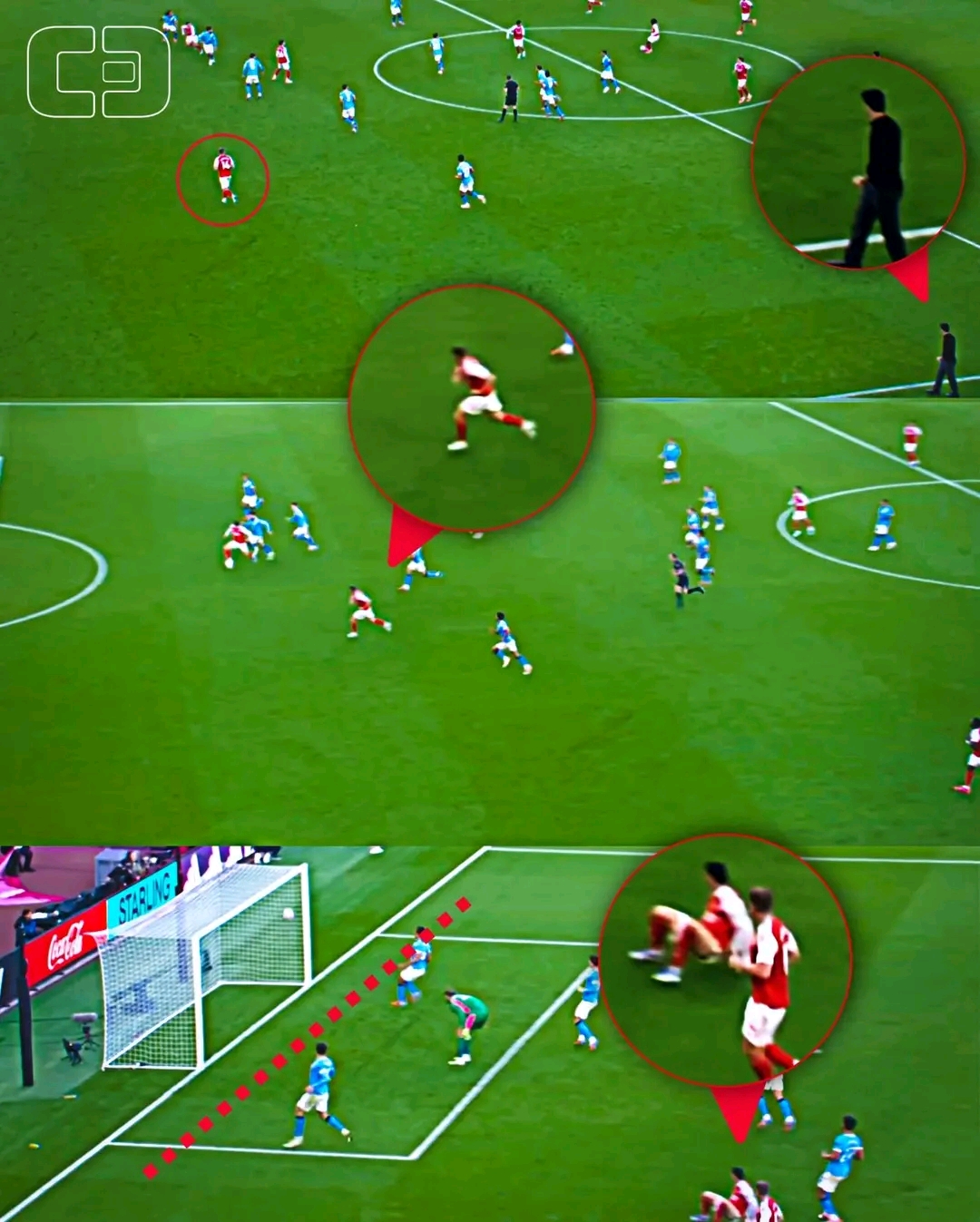
Mikel Arteta orchestrated a masterclass on the touchline, guiding a last-minute equalizer. It was a sign of things to come. First, Eberechi Eze receives the ball, but the real threat goes unnoticed: Viktor Gyökeres. Starting in an offside position, he confuses City’s backline, drawing them toward Martinelli, whose pace they’ve been studying. As Eze plays the ball, Gyökeres freezes and drops onside. By then, Martinelli is through on goal. Two sublime touches later, he lobs the keeper, leaving City’s defenders desperate and helpless. This was 90+3. On Sunday, City won’t push up—they’ll sit deep. Gabriel Martinelli and Viktor Gyökeres? They’ll be unplayable

There are moments in football that look small on the surface but carry a heavy meaning underneath, and this was one of those moments for Thomas Tuchel and the group of players trying to break into his England squad. Right now, there are still between five and ten places open, spaces that have not been locked down, positions where no player can truly say “this is mine.” That creates tension, but it also creates opportunity. And for the players living on the edge of selection, those spaces feel like everything. Their future with the national team depends on how they perform in nights like this.
Every training session, every friendly match, every small chance becomes important. These players are not relaxed. They are not comfortable. They are in a constant state of proving themselves. One strong performance can lift them into the manager’s plans. One quiet game can push them far away from it. That is the reality of international football at the highest level. Nothing is guaranteed, and everything must be earned.
So when England stepped onto the pitch at Wembley to face Uruguay, managed by the intense and demanding Marcelo Bielsa, it was supposed to be more than just a friendly match. It was supposed to be a stage. A moment where those players on the edge could step forward and say, “I am ready.” A moment to show bravery, personality, hunger, and belief. A moment to make noise so loud that the manager could not ignore it.
On paper, everything was perfect. Wembley, one of the biggest stages in football. A strong opponent known for discipline and aggression. A manager watching closely, analyzing every detail. It was the kind of situation where big players reveal themselves. The kind of night where careers can quietly change direction.
But when the game ended in a 1-1 draw, the feeling it left behind was not anger, not frustration, not even shock. It was something worse. It was flat. A quiet disappointment that settled over the stadium. Because the game did not give answers. It only created more questions.
And for players trying to break into the squad, that is the worst possible outcome.
No one truly stood out. No one took control of the moment. No one delivered that performance that forces a manager to stop and say, “I have to pick him.” Instead, it was a night of safe football, careful decisions, and quiet performances. And in a situation where boldness is required, that simply is not enough.
From the beginning, England looked like a team that had control but no real threat. They had the ball, they moved it around, they kept possession. But possession without purpose does not scare opponents. It does not create panic. It does not open spaces. It just passes time.
Uruguay, under Bielsa, are not a team you can dominate with slow football. They are organized. They are aggressive. They are always ready to fight. If you give them time, they become stronger. If you allow the game to slow down, they become comfortable. And that is exactly what England did.
For the fringe players, this should have been the moment to take risks. To run at defenders. To try difficult passes. To make mistakes if necessary, but to do something that changes the game. Because managers at this level are not just looking for players who can keep the ball. They are looking for players who can make something happen.
But too many players chose the safe option. Too many played within themselves. Too many avoided responsibility.
You could see it in small details. A player receiving the ball and passing it sideways instead of turning forward. A winger choosing not to attack his defender. A midfielder playing a simple pass instead of attempting something creative. These are small decisions, but when they happen again and again, they define a performance.
There were moments, of course. Small flashes that showed potential. A quick turn that opened space. A sharp pass that hinted at creativity. A strong tackle that showed determination. But at this level, flashes are not enough.
International football is about impact. It is about moments that change games. And on this night, those moments were missing.
Uruguay, on the other hand, showed a different mentality. They were not perfect, but they were committed. They played with intensity. They pressed with purpose. They looked like a team that knew exactly what they wanted to do. And that made England’s performance look even more passive.
When England scored, there was a brief shift in emotion. For a moment, it felt like this could be the turning point. The kind of moment that lifts confidence, that changes energy, that pushes players to take control of the game.
But that moment passed quickly.
Instead of building on the goal, England dropped back into the same pattern. The tempo slowed. The urgency disappeared. The belief did not grow. And slowly, almost quietly, Uruguay found their way back into the match.
The equalizer did not feel shocking. It felt expected.
Not because Uruguay were dominating, but because England were not doing enough to stop it. There was something missing. Something difficult to describe but easy to feel. Maybe it was leadership. Maybe it was belief. Maybe it was the simple willingness to push harder when the game needed it.
And that is where the real problem lies for players trying to break into the squad.
It is not just about skill. It is not just about technique. It is about mentality.
A manager like Tuchel does not just look at what you do with the ball. He looks at everything. He looks at how you react when you lose it. He looks at your body language. He looks at whether you demand the ball or hide from it. He looks at how you communicate with teammates. He looks at whether you take responsibility in difficult moments.
These are the details that decide careers.
After the match, Tuchel would not only be thinking about who played well. He would be thinking about who showed personality. Who showed courage. Who looked ready for the pressure of international football.
And the truth is, very few players made a strong case for themselves.
Places in the squad are not given. They are taken.
And on this night, it did not look like anyone was ready to take anything.
Instead, it felt like players were waiting. Waiting for the game to come to them. Waiting for something to happen. Waiting for an easy moment to shine.
But football does not work like that.
If you do not take control, the game moves past you. And when the game moves past you, the opportunity goes with it.
There is still time, of course. One match does not decide everything. Football always gives second chances. There will be more games, more training sessions, more moments to impress.
But chances are not endless.
And every missed opportunity makes the next one more important.
For some of these players, this could have been the night that changed everything. The night where they stepped out of the shadows and into the spotlight. The night where they forced their way into the manager’s plans.
Instead, it became just another game. Just another performance that fades into memory without leaving a mark.
That is the real disappointment.
Because talent is not the problem. England have talent everywhere. The issue is turning that talent into something meaningful. Turning it into performances that demand attention. Turning it into moments that cannot be ignored.
The players on the edge of the squad need to understand something very important. They are not just competing against the team in front of them. They are competing against each other.
Every pass matters. Every run matters. Every decision matters.
Because while one player chooses the safe option, another might take a risk. While one player hides, another might step forward. And in that difference, careers are decided.
Friday night did not give clear answers. It did not create clear winners. It did not make the manager’s decisions easier.
Instead, it created uncertainty.
And maybe that is the most frustrating part of all.
Because the opportunity is still there. The door is still open. The places are still available.
But opportunities do not wait forever.
As England move forward, everything will become more intense. The matches will carry more weight. The pressure will grow. The expectations will rise.
And in those moments, only players with courage, personality, and belief will survive.
Those who want to be part of that future need to show more. They need to demand the ball. They need to take risks. They need to accept responsibility.
Because international football is not about playing safe.
It is about making an impact.
It is about stepping forward when the moment arrives and saying, “this is mine.”
For many of those players, that moment came at Wembley.
And the truth is simple.
It passed without anyone truly taking it.