The friendly match against Uruguay, managed by Marcelo Bielsa, was not just another game.

There are between five and ten places still open in the squad that Thomas Tuchel is trying to build, and this moment feels very important for every player who is not already guaranteed a place. These are the players living on the edge of selection, the ones who train every day knowing that one good performance can change everything, and one bad moment can push them even further away from their dream. Friday night at Wembley was meant to be a stage for those players, a chance to step forward, to show courage, to show hunger, to show that they deserve to wear the shirt when it really matters.
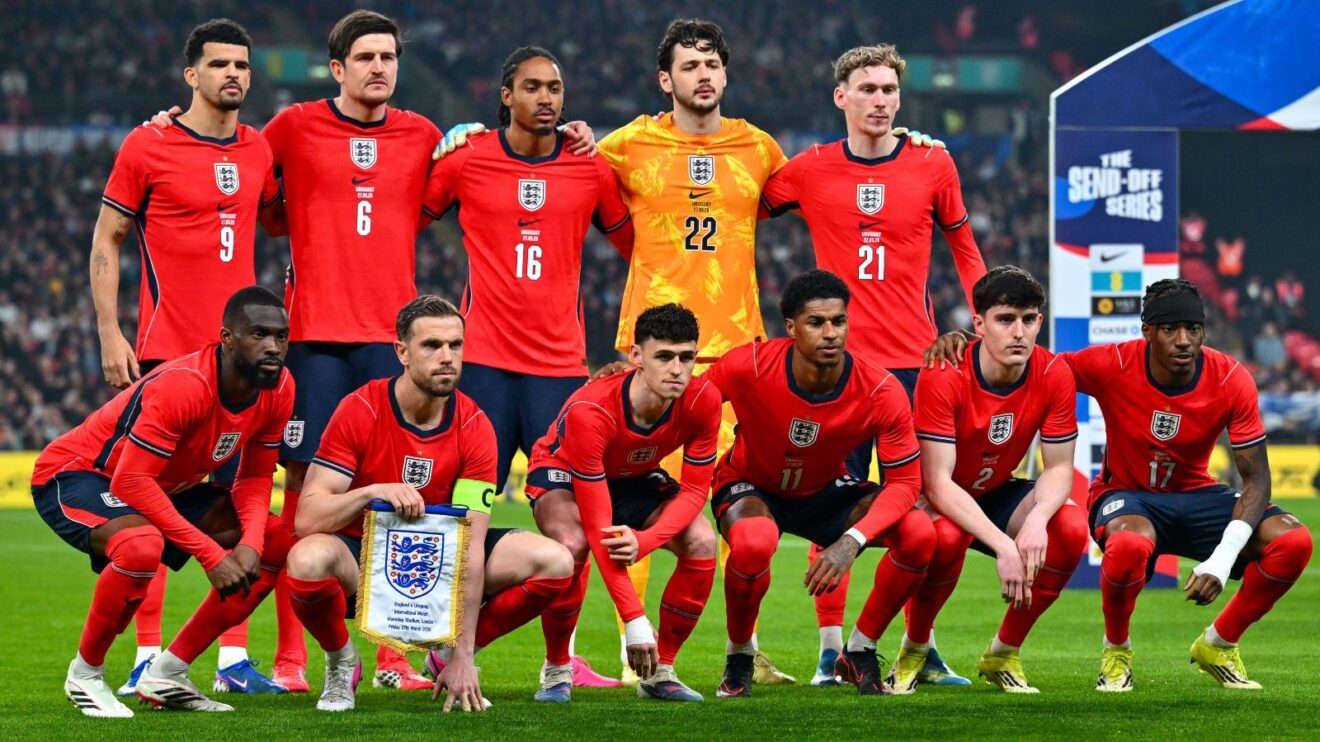
The friendly match against Uruguay, managed by Marcelo Bielsa, was not just another game. It carried a deeper meaning. It was about identity, about competition, about proving that England have depth beyond the obvious names. It was about the second line of players stepping into the light and showing that they are ready to fight for their place. On paper, this was the perfect opportunity. A strong opponent, a big stadium, and a manager watching closely, looking for signs, looking for something different, something convincing.
But when the final whistle blew and the scoreline showed a 1-1 draw, the feeling around the stadium was flat. Not angry, not dramatic, just flat. It was the kind of performance that leaves more questions than answers. It was not a disaster, but it was not inspiring either. And for those players hoping to grab one of those open spots, that is the worst possible outcome. Because in football, if you do not stand out, you risk being forgotten.
The biggest takeaway from that match was not about one player rising above the rest or delivering a moment of magic that forces the manager to take notice. Instead, it was about the absence of that moment. It was about the lack of urgency, the lack of personality, and the lack of players willing to take responsibility. Too many safe passes, too many quiet performances, too many players doing just enough but not doing more.
You could see it in the way England started the game. There was control, yes, but it was slow. The tempo was not high enough to trouble a team like Uruguay, who are always organized and always ready to compete physically. England had possession, but possession without purpose is empty. It does not scare opponents. It does not create chances. It does not convince a manager that you are ready for bigger challenges.
For the players on the fringe, this was the moment to take risks. This was the moment to try something different, to run at defenders, to demand the ball, to show that they are not afraid to make mistakes if it means creating something special. But too many chose the safe option. Too many played within themselves. And in doing that, they allowed the game to pass them by.
There were flashes, of course. Moments where you could see potential, where you could see why certain players are being considered. A quick turn here, a sharp pass there, a strong tackle, a decent run. But flashes are not enough at this level. Not when you are competing for a place in a national team that has serious ambitions. Not when the manager is looking for players who can change games, not just participate in them.
Uruguay, on the other hand, showed exactly what England were missing. They played with intensity, with aggression, with a clear plan. They were not perfect, but they were committed. They knew what they wanted to do, and they did it with conviction. And that contrast made England’s performance look even more disappointing.
When England scored, there was a brief moment of hope. A feeling that maybe this would be the turning point, that maybe the players would grow in confidence and take control of the game. But that feeling did not last long. Instead of building on that moment, England seemed to retreat into themselves again. The energy dropped, the sharpness disappeared, and Uruguay found their way back into the match.
The equalizer felt almost inevitable. Not because Uruguay were dominating completely, but because England were not doing enough to stop it. There was a sense that something was missing, something intangible but important. Maybe it was leadership, maybe it was belief, maybe it was just the willingness to push harder when it mattered most.
And this is where the real problem lies for those players trying to break into the squad. It is not just about technical ability. It is not just about being good on the ball. It is about mentality. It is about showing that you can handle pressure, that you can step up when the opportunity comes, that you can make a difference even when things are not going perfectly.
Thomas Tuchel will have watched that game carefully, not just looking at what players did, but how they did it. He will have noticed who demanded the ball and who hid. He will have seen who reacted quickly after losing possession and who switched off. He will have paid attention to body language, to communication, to decision-making.
And when he sits down to make his decisions, those details will matter just as much as any goal or assist.
The truth is, places in the squad are not given, they are taken. And on this night, very few players looked like they were ready to take anything. It felt more like they were waiting, hoping that things would fall into place, rather than forcing the issue themselves.
That is not enough. Not at this level, not with this competition.
There is still time, of course. One game does not decide everything. Football is full of second chances, and players will have more opportunities to prove themselves. But chances are not endless. And every missed opportunity makes the next one even more important.
For some of these players, this could have been the night that changed everything. The night where they announced themselves, where they made it impossible for the manager to ignore them. Instead, it became just another game, just another performance that fades into the background.
And that is the real disappointment.
Because talent is not the issue. England have plenty of talented players. The issue is turning that talent into impact, into moments that matter, into performances that demand attention.
The players on the edge of the squad need to understand that they are not just competing against the opponent in front of them. They are competing against each other. Every pass, every run, every decision is part of that competition. And if you are not pushing yourself to stand out, someone else will.
Friday night did not provide clear winners in that internal battle. It did not give the manager a simple answer. Instead, it created more uncertainty, more doubt, more difficult decisions.
And maybe that is the most frustrating part of all.
Because the door is still open. The places are still available. The opportunity is still there. But opportunities do not wait forever. They need to be taken, not observed.
As the team moves forward, the intensity will increase. The pressure will grow. The games will become more important. And the expectations will rise.
Those who want to be part of that journey need to show more than they did at Wembley. They need to show courage, personality, and a willingness to take responsibility.
Because in the end, international football is not about playing safe. It is about making an impact. It is about stepping up when the moment arrives.
And for many of those players, that moment came on Friday night.
But it passed without anyone truly seizing it.