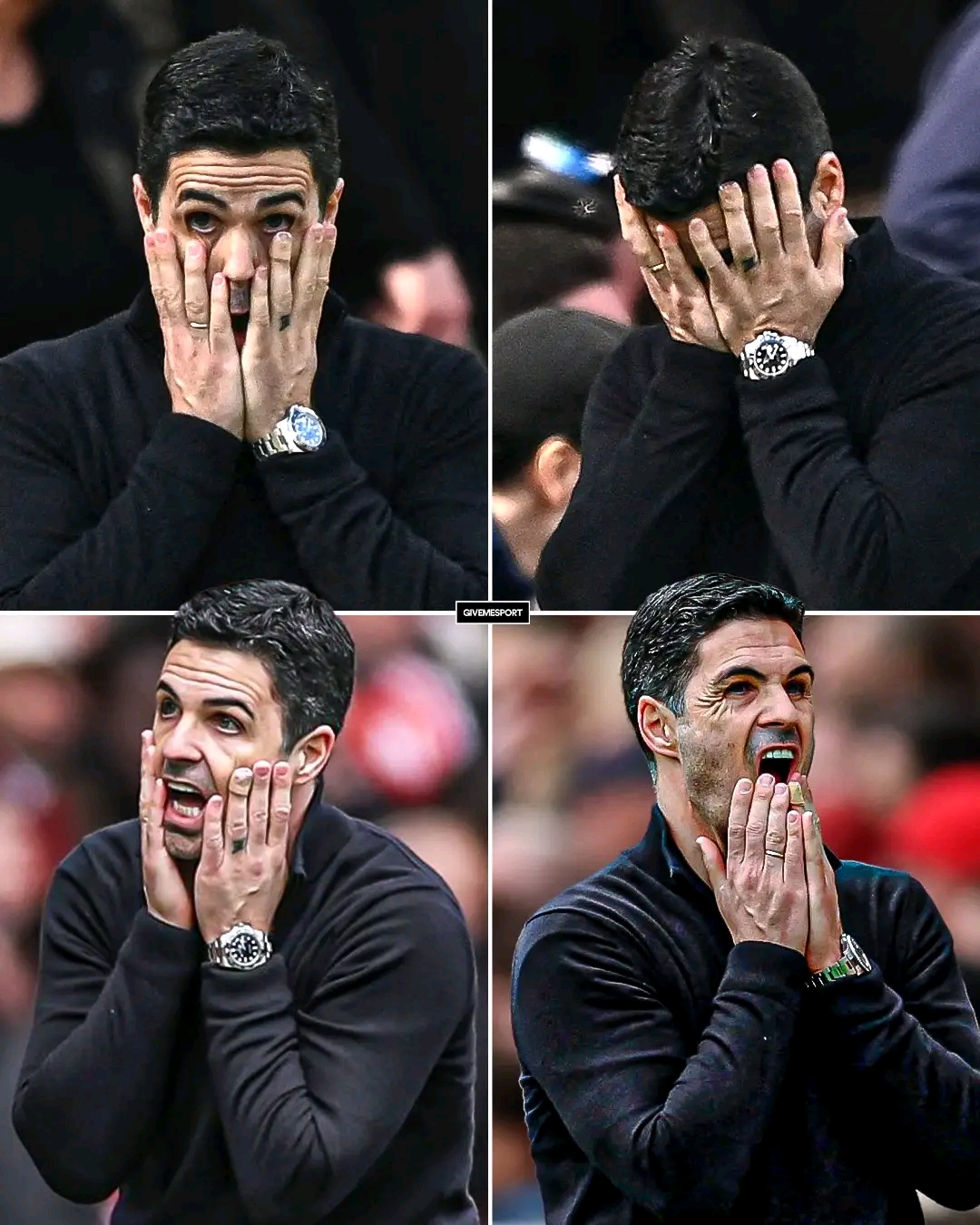
Arsenal’s hopes of securing the Premier League title suffered a significant setback following a surprising 2–1 defeat at home against Bournemouth, a result that has sparked intense debate among supporters and raised fresh concerns about the team’s ability to maintain their position at the top of the table. What was expected to be a routine victory at the Emirates Stadium instead turned into a frustrating afternoon, leaving fans questioning both individual performances and the squad’s overall resilience during the most critical stage of the season.
Coming into the match, Arsenal were in a strong position. They had built a nine-point lead over their closest challengers and appeared to have momentum on their side, despite a mixed run of results in other competitions. The team had recently endured disappointment in domestic cup competitions, losing in the Carabao Cup final and suffering an FA Cup exit at the hands of lower-league opposition. However, a narrow but important victory in the Champions League had restored some confidence, and many expected that boost to carry over into their league campaign.
Instead, the match against Bournemouth exposed vulnerabilities that have intermittently appeared throughout the season. From the opening whistle, Arsenal struggled to impose themselves with the authority expected of title contenders. While there were moments of fluid attacking play, the team lacked sharpness and urgency in key areas, allowing Bournemouth to grow into the game with increasing confidence.
The opening goal came as a warning sign. Bournemouth capitalized on defensive disorganization, breaking forward with purpose and taking advantage of lapses in concentration. Arsenal’s defensive line appeared unsettled, and Bournemouth’s attackers found space in dangerous areas more frequently than anticipated. When the ball eventually found its way into the net, it was a culmination of mounting pressure rather than a moment of isolated brilliance.
Despite going behind, Arsenal managed to respond before halftime. A penalty opportunity provided a route back into the match, and the equalizer offered a temporary sense of relief for the home crowd. At that point, many believed Arsenal would regroup, assert control, and push on for a winning goal in the second half.
However, the second half told a different story. Instead of building on the equalizer, Arsenal appeared tense and uncertain. Their passing lacked precision, their attacking movements became predictable, and their defensive structure continued to look vulnerable under pressure. Bournemouth, sensing an opportunity, remained disciplined and patient, waiting for another chance to exploit Arsenal’s weaknesses.
That opportunity came when Bournemouth struck for a second goal. Once again, defensive lapses played a crucial role. A quick attacking move caught Arsenal off guard, and Bournemouth were clinical in converting their chance. The goal shifted the atmosphere dramatically, turning frustration into anxiety among the home supporters.
While several players struggled to reach their usual standards, much of the post-match discussion centered on one individual performance that drew particular criticism. Many fans took to social media to express their concerns, arguing that recurring issues in that position could ultimately cost Arsenal the title if not addressed quickly.
The criticism was not limited to a single mistake but rather a perceived pattern of inconsistency. Supporters pointed to moments during the match where defensive awareness seemed lacking, positioning was questionable, and reactions were slower than expected. In high-stakes matches, such details can make a decisive difference, and fans feared that similar lapses in upcoming fixtures could have even greater consequences.
It is important to note, however, that football matches are rarely decided by one player alone. While individual errors can be costly, they often occur within a broader context of team performance. Arsenal’s midfield struggled to maintain control at times, the attack lacked its usual cutting edge, and the overall cohesion of the team appeared disrupted. Focusing solely on one player risks overlooking these collective shortcomings.
Nevertheless, the intensity of fan reaction reflects the heightened expectations surrounding Arsenal this season. After years of rebuilding, the team has positioned itself as a genuine title contender, raising hopes of ending a long wait for league glory. With that ambition comes increased scrutiny, and every mistake is magnified as the margin for error narrows.
The timing of this defeat is particularly concerning given the challenges that lie ahead. Arsenal are entering a निर्णcing phase of the season, with crucial fixtures that could determine the outcome of the title race. Matches against top rivals, combined with commitments in European competition, will test the squad’s depth, mentality, and ability to respond under pressure.
One of the key questions now is how the team will react to this setback. Title-winning sides are often defined not by their ability to avoid defeat altogether, but by how they respond when things go wrong. A strong, focused performance in the next match could quickly restore confidence and shift the narrative back in Arsenal’s favor.
The role of the manager will also be critical during this period. Tactical adjustments, team selection, and man-management will all play a part in guiding the squad through this challenging phase. Ensuring that players remain confident while addressing areas of concern requires a careful balance, particularly when external criticism is intensifying.
From a tactical perspective, there may be a need to reassess certain aspects of Arsenal’s approach. Defensive organization, especially in transition, appeared vulnerable against Bournemouth. Improving communication and positioning at the back will be essential, particularly against opponents who excel at quick counterattacks.
In addition, the team’s attacking play may need greater variation. At times, Arsenal’s approach seemed predictable, allowing Bournemouth to anticipate and neutralize their moves. Introducing more creativity and unpredictability could help unlock stubborn defenses in future matches.
Squad rotation could also become an important factor. With a demanding schedule, fatigue can affect performance levels, concentration, and decision-making. Ensuring that players remain physically and mentally fresh will be crucial as the season reaches its climax.
Despite the disappointment of this defeat, Arsenal remain in a strong position overall. Their lead at the top of the table, while reduced in significance by this result, still provides a foundation to build upon. The challenge now is to maintain composure, learn from mistakes, and approach the remaining fixtures with renewed determination.
Fan support will continue to play an important role as well. While criticism is an inevitable part of football, especially after disappointing results, maintaining a positive and supportive atmosphere can help the team regain confidence. The connection between players and supporters can be a powerful factor in overcoming difficult moments.
It is also worth considering the psychological aspect of a title race. Pressure increases with each passing week, and the ability to handle that pressure often separates champions from the rest. Arsenal’s relatively young squad may still be developing the experience needed to navigate such situations, but these challenges can also serve as valuable learning opportunities.
Looking ahead, the upcoming fixtures will provide a clearer indication of Arsenal’s title credentials. A strong response in the next match could quickly shift momentum back in their favor, while further setbacks could open the door for their rivals to close the gap.
Ultimately, this defeat should be seen as a warning rather than a निर्णitive blow to Arsenal’s ambitions. It highlights areas that require improvement but does not erase the progress the team has made over the course of the season. With the right response, Arsenal can still achieve their goal and finish the campaign as champions.
In football, setbacks are inevitable. What matters most is how teams respond to them. Arsenal now face a crucial test of character, resilience, and quality. If they can learn from this experience and emerge stronger, this defeat may yet prove to be a turning point rather than a निर्णcing moment in their season.
As the title race continues, every match will carry immense significance. The margin for error is shrinking, and consistency will be key. Arsenal have shown throughout the season that they possess the ability to compete at the highest level. The challenge now is to demonstrate that they can sustain that level when it matters most.
In conclusion, Arsenal’s loss to Bournemouth has sparked debate, चिंता, and आलोचना, but it has also underscored the intensity and unpredictability of a Premier League title race. With several crucial matches still to come, the story of the season is far from over. Whether this result becomes a निर्णcing setback or a catalyst for renewed determination will depend on how Arsenal respond in the weeks ahead.