The story began with excitement, hope, and a feeling that something new was about to happen at Celtic FC. Fans were ready for a fresh chapter, a new direction, and a manager who could take the club forward into another era of dominance. When Wilfried Nancy arrived, it felt like a bold move. He was not just another name. He came with a reputation, with success from abroad, and with ideas that promised attacking football and a modern approach.
But football can be cruel, and sometimes, things fall apart faster than anyone can imagine.
Nancy’s time at Celtic did not just end badly. It ended incredibly quickly. In fact, it ended so quickly that it made history, but not the kind anyone wanted. Just 33 days after taking charge, he was gone. Eight matches, six defeats, and a club that looked completely lost. It became the shortest managerial reign in Celtic’s long and proud history, even shorter than that of John Barnes, whose time at the club had once been seen as one of the most difficult periods.
When Nancy signed his contract, it was supposed to be the start of something long-term. A two-and-a-half-year deal showed that the club believed in him. He had just come from the United States, where he had managed Columbus Crew and achieved real success. He won trophies, built a strong team, and earned praise for his style of play. Many believed he was ready for the big stage in Europe.
But what works in one place does not always work in another.
From the very beginning, things did not go smoothly. His first matches were difficult, and instead of building confidence, they created doubt. Losing your first game is hard. Losing your second is even harder. But losing both as a new manager at a club like Celtic is a serious problem. The expectations are huge, the pressure is constant, and there is very little patience.
Nancy became the first Celtic manager to lose his first two matches, and that alone raised alarm bells. But things were about to get worse.
The defeats kept coming. The team looked confused, disorganized, and unsure of what they were supposed to do. There were moments of good football, flashes of quality, but they were not consistent. One minute, the team looked promising, the next minute, they looked completely open and vulnerable.
The loss in the Premier Sports Cup final against St Mirren FC was a big blow. Finals are moments where teams must show strength, belief, and focus. Instead, Celtic looked fragile. That defeat hurt not just because of the trophy, but because it showed deeper problems.
Then came another loss, this time against Dundee United FC. At this point, fans started to worry. This was no longer just a bad run of form. This was a pattern. The team was struggling, and there was no clear sign of improvement.
What made it even more painful was the comparison with what came before. Under interim manager Martin O’Neill, Celtic had looked strong. They had won seven out of eight matches. There was confidence, structure, and belief. The players knew their roles, and everything seemed stable.
But under Nancy, everything changed. The system changed. The style changed. The balance of the team disappeared.
Nancy preferred a 3-4-3 formation, a system that focuses on attacking football and high pressing. It can be very effective when used correctly, but it requires the right players, the right preparation, and time to adapt. At Celtic, he did not have those things.
Former striker Chris Sutton described it in a very clear way. He called Nancy “One-Way Will,” a manager who refused to change his approach no matter what happened. According to Sutton, this was one of the biggest problems. Football is not just about having a plan. It is about adapting when things go wrong.
And things were going very wrong.
Celtic had played with a back four for many years. The players were used to it. They understood it. Suddenly, they were asked to play in a completely different system, in the middle of a season, without enough time to adjust. It created confusion. Players were out of position. Defenders looked exposed. Midfielders were unsure of their roles.
The results showed it clearly. Under Nancy, Celtic conceded 18 goals in just eight matches. To understand how bad that is, consider this: before he arrived, the team had conceded fewer goals over a much longer period. The defense, once solid, had become fragile.
There were moments where the team played good football, attacking with energy and creativity. But these moments were rare and inconsistent. Most of the time, the team looked unstable. One mistake led to another. One goal conceded quickly became two or three.
Sutton described it as “kamikaze football.” It was exciting at times, but also reckless. It left the team wide open, vulnerable to counter-attacks, and unable to control games.
The situation reached a breaking point after the defeat to Motherwell FC. That loss was followed by the most painful result of all, a 3-1 defeat at home to Rangers FC. Losing to your biggest rival is always difficult, but the way it happened made it worse.
In the second half of that match, Celtic collapsed. There was no structure, no control, no fight. Fans watched in disbelief as their team fell apart. It was not just a defeat. It was a statement that something was seriously wrong.
That was the final moment. The club decided they could not continue like this.
Nancy was sacked. His coaching staff, including Kwame Ampadu, Jules Gueguen, and Maxime Chalier, also left. At the same time, Paul Tisdale was removed from his role as head of football operations. It was a complete reset, a clear sign that the club believed mistakes had been made at multiple levels.
The club released a short statement. It was simple, direct, and without much explanation. They confirmed the departures and promised more updates in the future. But the message was clear. This chapter was over.
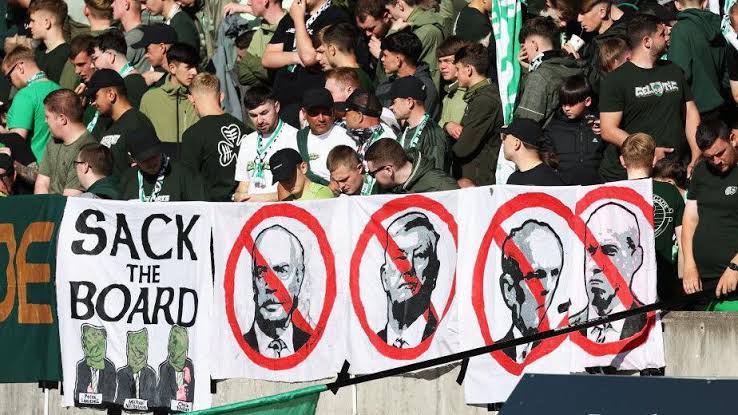
For the fans, it was shocking. Not just because of the results, but because of how quickly everything happened. A manager who was supposed to lead the club into the future was gone in just over a month. It raised serious questions about decision-making, planning, and direction.
How did things go so wrong, so fast?
Part of the answer lies in expectations. Celtic is not just any club. It is a club that is used to winning. In recent years, they have dominated Scottish football, winning 13 of the last 14 league titles. Success is not optional. It is expected.
When results drop, pressure rises immediately.
Another part of the answer is timing. Nancy arrived in the middle of the season. He did not have a pre-season to work with the players, to implement his ideas, to build understanding. He had to make changes quickly, and that is always risky.
Then there is the issue of adaptation. Good managers adjust their approach based on the situation. They understand the players they have, the league they are in, and the challenges they face. Nancy seemed determined to stick to his system, even when it was clearly not working.
And finally, there is the mental side of the game. Confidence is everything in football. When a team starts losing, doubt creeps in. Players hesitate. Mistakes increase. And without strong leadership to steady the situation, things can spiral out of control.
That is exactly what happened.
As Nancy left Celtic, his recent record as a coach also raised concerns. In his last 20 matches, he had only five wins. That is not the record of a manager in control. It is the record of someone struggling to find answers.
For Celtic, the focus now shifts to the future. The club is still in second place in the league, but they are six points behind Heart of Midlothian FC. That gap is not impossible to close, but it will require consistency, belief, and strong leadership.
The players must respond. They must regroup, refocus, and rediscover their identity. Because no matter who the manager is, the responsibility on the pitch belongs to them.
The fans will also play a role. Celtic Park is known for its atmosphere, its passion, and its support. In difficult times, that support becomes even more important.
But the biggest challenge lies with the club’s leadership. They must make the right decision for the next manager. They must learn from this mistake, understand what went wrong, and ensure that it does not happen again.
Because in football, mistakes are part of the game. But repeating them is not acceptable.
Nancy’s story at Celtic will be remembered for its speed, its chaos, and its disappointment. A manager who arrived with promise, but left with questions. A team that started with hope, but ended in confusion.
And a club that now stands at a crossroads, searching for stability, for direction, and for a way to move forward after one of the shortest and most dramatic managerial reigns in its history.