Rangers player ratings vs Celtic: Mikey Moore deserved more, James Tavernier should be ashamed

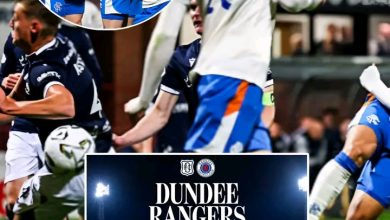
It was supposed to be a day of pride, a day where Rangers would walk into enemy territory and show fight, belief, and courage. Instead, it turned into another painful chapter in a story that fans are starting to know too well. A 3-1 defeat away to Celtic was not just about the scoreline. It was about how the game unfolded, the mistakes that were made, and the questions that continue to grow around this team.
The atmosphere before kickoff had everything you would expect from a derby of this magnitude. The noise, the tension, the history. Every touch of the ball carried weight. Every moment felt important. Rangers knew what was at stake, even if their title hopes were already hanging by a thread. Pride alone should have been enough motivation.
And for a brief moment, it looked like they were ready to rise to the occasion.
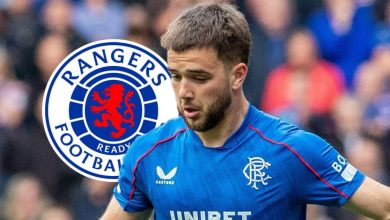
Inside the opening minutes, Rangers struck first. It was a fast, instinctive moment that gave them the perfect start. The move began with pressure, urgency, and belief. When the initial effort was blocked, there was one player who reacted quicker than anyone else. Mikey Moore was there, alert and composed, finishing the chance with confidence to put Rangers ahead.
In that moment, everything felt possible.
Scoring early in a derby can change everything. It can silence the crowd, shift momentum, and give your team the confidence to control the game. For Rangers, it should have been the foundation to build on. But instead of growing stronger, they slowly began to fade.
The lead lasted just 14 minutes.
Celtic responded, and they did it with purpose. A well-worked move down the flank ended with a dangerous delivery into the box. Rangers’ defence hesitated for a split second, and at this level, that is all it takes. Hyun-Jun Yang attacked the cross and finished to bring the game level.
From that point on, the energy shifted.
You could see it in the players. Celtic grew in confidence, pushing forward with intensity, while Rangers started to lose control. Passes became rushed. Decisions became uncertain. The structure that had given them the early advantage began to break apart.
By the time the second half started, the game felt like it was leaning heavily in one direction.
Celtic came out with aggression and purpose, and Rangers simply could not cope. Two quick goals early in the second half completely changed the story of the match. What had once been a promising start turned into a desperate chase.
At 3-1 down, the game was effectively over.
What made it worse was not just the goals conceded, but the manner of the performance. Rangers did not just lose. They looked second best in almost every area. The fight, the organization, the leadership — all of it seemed to disappear when it was needed most.
And that is where the frustration really begins.
Because there were bright spots. There were moments that showed what this team could be. But those moments were not enough, and in a game like this, they never are.
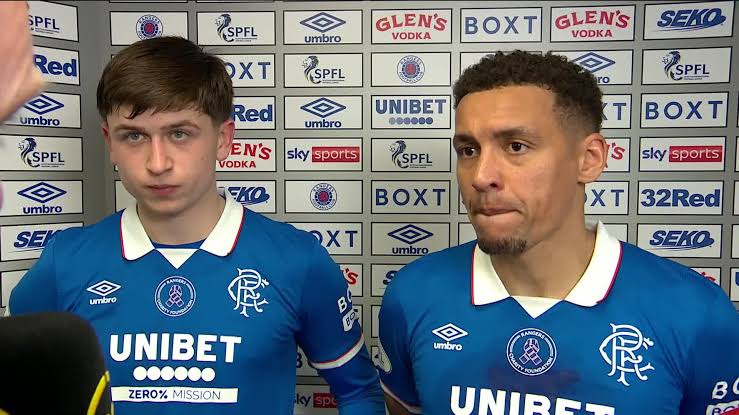
One of the clearest positives was the performance of Mikey Moore. He scored the opening goal, yes, but his contribution went beyond that. Every time he got on the ball, he looked dangerous. He showed confidence, skill, and a willingness to take risks.
But here is the problem — he did not get the ball enough.
For long periods of the game, Moore was isolated. The team failed to involve him consistently, and that is something that is hard to understand. When you have a player who is clearly capable of making things happen, you have to find ways to get him involved.
Looking at his numbers tells the story clearly. One goal, one chance created, three fouls won, two successful dribbles, and only 22 touches in the entire match. For a player who was arguably the most dangerous attacking threat, that is simply not enough.
He won battles, he tried to make things happen, but football is a team game. If the system does not support you, if the ball does not come your way, there is only so much you can do.
And that is why his performance feels wasted.
On another day, with better support, with more involvement, he could have been the difference. But instead, his early goal became just a small highlight in an otherwise disappointing performance.
If Moore represented what could have been, then James Tavernier represented everything that went wrong.
As captain, as a leader, as one of the most experienced players in the team, this was a moment where he needed to step up. Derby matches demand leadership. They demand composure. They demand quality.
Instead, Tavernier struggled badly.
His passing was off. Completing just eight out of twenty passes is not just below standard — it is damaging. It breaks rhythm, it invites pressure, and it disrupts the entire team structure. His long balls failed to find teammates. His crosses, once a strong part of his game, were ineffective.
Only 29 percent of his crosses reached their target.
These are not just numbers. They reflect the reality on the pitch. Every misplaced pass, every failed cross, every wrong decision adds up. It builds pressure on the team. It gives the opposition confidence.
And in a match like this, those small moments become big problems.
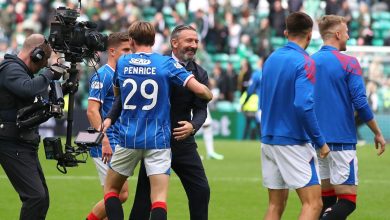
It got to the point where the manager had seen enough. Around the hour mark, Tavernier was taken off. It was a decision that spoke loudly. Substituting your captain in a derby is not something you do lightly. But based on the performance, it was hard to argue against it.
It summed up the day perfectly.
The rest of the team had mixed performances, but none were enough to change the outcome. Jack Butland had little chance with the goals but could not produce anything special to keep his team in the game. The defensive line showed moments of stability but also moments of weakness.
In midfield, there was effort, but not enough control. The game passed them by too easily. They could not dictate tempo, could not win key battles, and could not provide the support needed for the attack.
Up front, Youssef Chermiti showed flashes of promise, but like Moore, he did not receive the support required to make a real impact.
The substitutes came on, but they did not change the story. If anything, they highlighted the lack of depth and the lack of solutions available on the bench.
And that leads to the biggest issue of all — the bigger picture.
This defeat did not just cost Rangers three points. It effectively ended any remaining hope of a title challenge. Even if those hopes were already slim, this result made it official.
But beyond the title race, there are deeper concerns.
There is a pattern forming. Performances in big games have not been good enough. Mistakes keep happening. The same problems appear again and again, and there does not seem to be a clear solution.
Fans are starting to ask difficult questions.
Why does the team struggle to maintain momentum after taking the lead? Why are key players not being used effectively? Why does the defense look vulnerable under pressure? Why is the leadership not strong enough in crucial moments?
These are not small questions. They go to the heart of the team’s identity.
Because in football, especially at a club with the history and expectations of Rangers, it is not enough to compete. You have to win. You have to perform in the biggest games. You have to show character when it matters most.
Right now, that character is being questioned.
The manager will also come under pressure. Decisions will be analyzed. Tactics will be debated. Substitutions will be questioned. That is the nature of the job.
But ultimately, it is the players who step onto the pitch. It is the players who make the passes, take the shots, win the duels, and make the mistakes.
And on this day, too many things went wrong.
Still, football always offers another chance. Another game. Another opportunity to respond. The season may not end with a title, but there is still pride to play for. There is still a responsibility to the fans.
The challenge now is about reaction.
Do they learn from this? Do they improve? Do they show a different side in the next game? Or do the same problems continue?
Because if there is one thing this match made clear, it is that something needs to change.
For Mikey Moore, there is hope. His performance, even in defeat, showed that he has quality, confidence, and potential. If used correctly, he can be a key player.
For James Tavernier, there are questions. Big ones. About form, about leadership, about consistency.
And for Rangers as a whole, there is a moment of truth.
They can either accept this as just another defeat, or they can use it as a turning point.
But one thing is certain.
Days like this are not forgotten easily.