Celtic Face ULTIMATE Punishment After Hearts Carnage As Former Referee Boss Demands HISTORIC Points Deduction! “The official source is pinned underneath.”

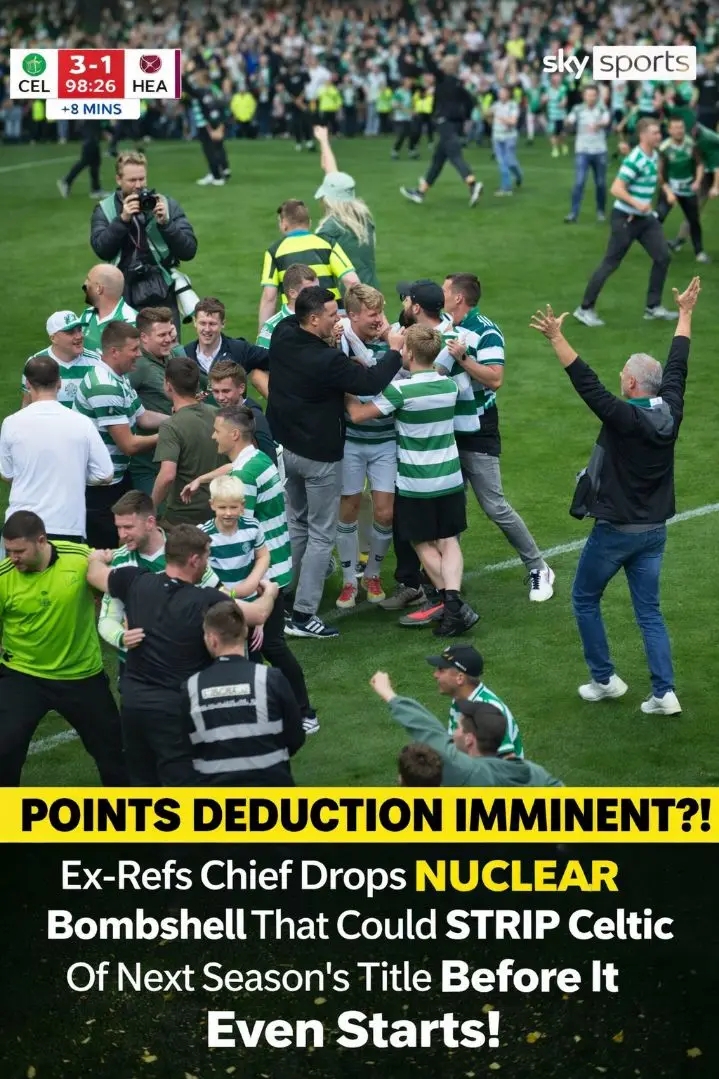
The noise surrounding Celtic FC has exploded into complete chaos after a dramatic and deeply controversial clash against Heart of Midlothian FC left Scottish football on the edge of another major storm. What was supposed to be an intense football battle has now turned into something far bigger, with calls for severe punishment, massive debates across the country, and one former refereeing chief demanding an unprecedented points deduction that could shake the entire league.
Fans are stunned. Pundits are divided. Social media is in meltdown.
And now the pressure on Celtic continues to grow every single hour.
The controversy began immediately after the heated encounter between Celtic and Hearts, a match that already carried huge emotion before kickoff. Whenever these two clubs meet, there is tension. The atmosphere is always fierce, the tackles are always harder, and the emotions often spill beyond football itself.
But few expected things to spiral into this level of drama.
From the opening whistle, the match felt aggressive and chaotic. Challenges flew in everywhere. Players surrounded the referee after almost every decision. Supporters inside the stadium sensed early that the game was slipping away from normal control.
Every tackle increased the temperature.
Every argument added more fuel.
And as the match continued, anger began building on all sides.
Several controversial incidents quickly became the centre of attention. Hearts players and staff were furious over refereeing decisions they believed favoured Celtic. Celtic supporters, meanwhile, argued that their players were being unfairly targeted by officials and opposition reactions.
The game slowly transformed from football into confrontation.
Then came the flashpoints that changed everything.
A series of heated clashes between players triggered chaos both on the pitch and in the stands. Tempers exploded. Substitutes became involved. Coaches left technical areas shouting at officials. Security staff suddenly found themselves under pressure trying to calm the situation.
For many watching, it felt like complete disorder.
And once the final whistle arrived, the controversy only became bigger.
Former referees, analysts, and pundits immediately began discussing whether the Scottish football authorities needed to take serious action. Some argued it was simply an emotional football match that got out of control. Others believed it crossed a dangerous line.
But one former refereeing boss went even further.
According to reports, the former official demanded what many are calling an “ultimate punishment” for Celtic — a historic points deduction.
That suggestion immediately shocked Scottish football.
Points deductions are extremely rare at the top level, especially for incidents connected to match chaos rather than financial issues or administrative breaches. The idea that a club as massive as Celtic could face such punishment instantly became the biggest story in the country.
Fans reacted with disbelief.
Some supporters called the proposal ridiculous and exaggerated. Others argued Scottish football authorities needed to send a strong message if they truly wanted to restore discipline and respect within the game.
The debate became explosive almost immediately.
On television, radio, podcasts, and social media, everyone suddenly had an opinion.
Was Celtic unfairly targeted because of their size and influence?
Did Hearts contribute equally to the chaos?
Did the officials completely lose control of the match?
Should stronger punishments exist for incidents like this?
These questions dominated discussions across Scotland.
For Celtic fans, the outrage was instant.
Many supporters accused critics of trying to create unnecessary drama around the club. They argued that football is emotional by nature and that heated matches happen everywhere without calls for historic punishments.
Others pointed toward inconsistent treatment across Scottish football, claiming other clubs had escaped with far lighter criticism for similar situations in the past.
But despite those arguments, pressure continued growing.
What made this situation even more intense was the involvement of a former refereeing authority figure. When criticism comes from ex-players or rival fans, clubs often dismiss it as emotion or rivalry. But when a former official publicly demands action, it creates a different level of attention.
Suddenly, the possibility of disciplinary action no longer felt impossible.
And Scottish football authorities now face enormous pressure over what happens next.
The timing could not be worse for Celtic either.
The club had already been dealing with growing tension surrounding officiating controversies throughout the season. Fans, players, and management repeatedly expressed frustration over decisions they believed went against them.
At the same time, rival supporters accused Celtic of receiving favourable treatment because of their dominance and influence in Scottish football.
That combination created the perfect environment for controversy to explode.
Now every moment from the Hearts match is being analyzed repeatedly.
Video clips are circulating online nonstop. Experts are slowing down incidents frame by frame. Former referees are offering conflicting opinions. Some insist Celtic players crossed the line. Others argue the officials failed to manage the game properly from the beginning.
As always in football controversy, perception depends heavily on loyalty.
Celtic supporters see one story. Rival fans see another completely different version.
But beyond the arguments, there is one undeniable truth: the match damaged the image of Scottish football.
That is why calls for stronger action are growing louder.
Some pundits believe Scottish football has become too tolerant of aggressive touchline behaviour, constant referee abuse, and emotional confrontations between players. They argue authorities must finally make an example of a major club to force cultural change.
Others completely reject that idea.
They warn that punishing Celtic with a points deduction would create even bigger chaos and could damage trust in the league itself. Many believe such a punishment would be wildly disproportionate and impossible to justify fairly.
Even neutral supporters appear divided.
Some want accountability. Others fear overreaction.
Meanwhile, inside Celtic, the atmosphere is reportedly tense.
The players know the scrutiny is intense. The coaching staff know every word they say publicly will be analyzed carefully. Club executives understand this situation could easily become even more damaging if handled poorly.
That is why public responses have been cautious so far.
No one wants to inflame the situation further.
But privately, frustration is said to be growing inside the club. Many within Celtic reportedly feel the reaction has become excessive and sensationalized. They believe the club is being placed at the centre of a media storm that ignores the full context of what happened during the match.
Still, football controversy rarely disappears quickly.
And this story continues getting bigger.
Part of the reason is because Scottish football already feels emotionally charged right now. Rivalries are intense. Pressure is high. Every major decision becomes magnified instantly online.
One dramatic match was always capable of creating chaos.
But once words like “historic punishment” and “points deduction” entered the conversation, the story reached another level completely.
Now even supporters outside Scotland are paying attention.
For younger fans especially, the idea of a giant club like Celtic potentially facing serious sanctions feels almost unbelievable. Celtic are one of the biggest and most successful clubs in British football history. The thought of them being punished in such dramatic fashion creates fascination immediately.
That fascination fuels the media cycle further.
Every new rumour spreads rapidly. Every comment becomes a headline. Every reaction creates another debate.
And yet, amid all the noise, many people are asking the same important question.
Would a points deduction actually happen?
Realistically, many experts believe it remains highly unlikely.
Scottish football authorities would need extremely strong justification to impose such a severe punishment. Historically, points deductions are usually connected to financial collapses, administration issues, or serious rule breaches beyond normal disciplinary matters.
That is why many believe the calls are more symbolic than realistic.
The former referee boss may have wanted to send a message about standards, discipline, and respect within the game rather than genuinely expecting Celtic to lose points.
But once such a statement enters public discussion, the pressure becomes real anyway.
Now authorities must show they are taking the situation seriously.
Possible outcomes could include fines, suspensions, official warnings, or disciplinary hearings. Those punishments would still create major headlines, even if the most dramatic predictions never happen.
For Hearts, the situation also remains emotional.
Their supporters believe their club suffered unfairly during the chaos and want accountability too. Some feel Celtic’s status within Scottish football protects them from stronger criticism. Others simply want officials to improve consistency moving forward.
The rivalry between the two clubs has only intensified because of everything that happened.
And the next meeting between Celtic and Hearts now feels even more dangerous emotionally.
Players will remember the controversy. Fans will remember the arguments. The atmosphere could become incredibly hostile.
Football thrives on rivalry, but incidents like this also raise difficult questions about where passion crosses into disorder.
That conversation is now unavoidable in Scotland.
For Celtic manager and players, the challenge becomes staying focused on football itself while the media storm continues around them. Every press conference will contain questions about the controversy. Every away match will bring hostile reactions from rival supporters.
Handling pressure is part of life at a giant club like Celtic, but situations like this can still become draining mentally.
Especially when accusations grow more dramatic by the day.
The phrase “ultimate punishment” alone has already captured attention everywhere.
Some fans believe the language is intentionally sensational. Others believe strong language is necessary to force change.
Either way, the controversy has now become one of the biggest talking points in Scottish football this season.
And until authorities officially respond, the speculation will continue growing.
For now, supporters across the country are waiting.
Waiting to see if investigations happen.
Waiting to see if punishments are announced.
Waiting to see whether this becomes another short-lived football controversy or something far more serious.
One thing is certain though.
The Celtic vs Hearts clash has become much bigger than one football match.
It has evolved into a national debate about discipline, officiating, power, rivalry, and how Scottish football wants to present itself moving forward.
And with emotions still running dangerously high, this story feels far from over.