I was absolutely raging. It is just not right, it is fundamentally not right” Pissed Off SFA Chief calls Celtic outrage on Penalty vs Motherwell “DISGUSTING” as the make final decision on ABOLISHING the use of VAR in Scottish Football

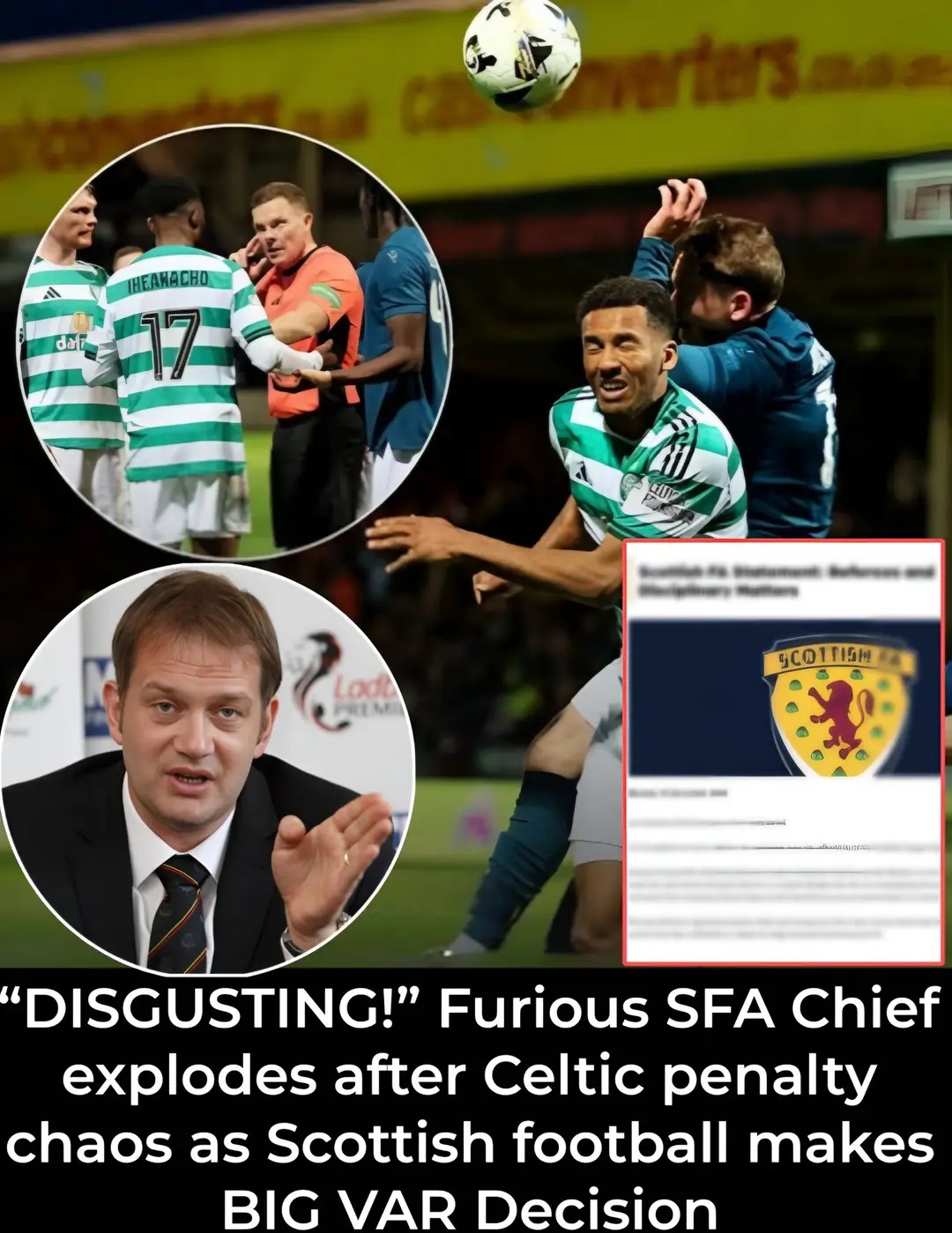
The debate around VAR in Scottish football has exploded once again after fresh controversy in a match involving Celtic and Motherwell, with emotions running extremely high inside the game. Reports of anger, frustration, and strong internal reactions have dominated discussions, with officials and football insiders questioning the impact of VAR on the modern Scottish game.
The controversy began after a key penalty incident in the match between Celtic and Motherwell. The decision immediately divided opinion among fans, pundits, and officials, with one side believing it was a correct call and the other insisting it was a clear mistake. As always in Scottish football, where every point matters in the title race, such moments quickly turn into national talking points.
Celtic’s supporters felt the decision was justified, while critics argued it showed inconsistency in VAR usage. The argument escalated beyond normal match debate and became part of a wider conversation about the future of video technology in Scotland.
According to reports circulating in football circles, a senior Scottish football figure expressed strong frustration about the situation. The reaction was described as highly emotional, with claims that the incident left them extremely angry about how VAR is being applied. Words like “disgusting” and “completely unacceptable” were used in the heat of the moment, reflecting how tense the situation had become behind the scenes.
The core issue being discussed is not just one penalty, but the wider trust in VAR across the league. Some officials and football voices believe the system is not delivering consistent results. Others argue it is still improving and should be given time to settle fully into the Scottish game.
This tension has existed since VAR was introduced in Scotland. While the system was brought in to reduce mistakes and improve fairness, it has instead created new arguments. Every weekend brings new controversy, new interpretations, and new debates about whether referees are being helped or confused by technology.
In this latest case, frustration reportedly reached a level where strong opinions were voiced about whether VAR should even continue in its current form. Some discussions went as far as questioning whether the system should be reviewed or even removed entirely if it continues to create division rather than clarity.
However, football authorities are unlikely to make any sudden decisions. VAR is now part of the global football structure, used in major leagues and international competitions. Removing it from Scottish football would place the league out of alignment with the rest of Europe, making such a move highly unlikely.
Still, the emotional reaction shows how deeply VAR decisions are affecting people involved in the game. Managers, players, and officials often feel that key moments are being decided not by human judgment on the pitch, but by slow-motion replays and technical interpretation off it.
For Celtic, the incident added another chapter to a season already filled with scrutiny. Every decision involving the club tends to attract intense attention, especially in matches that influence the title race. Rival fans often view such decisions through a different lens, adding more fuel to the debate.
For Motherwell, the focus was on feeling hard done by, as they believed the decision went against them at a crucial moment in the match. This is a familiar feeling for many clubs outside the traditional top two, who often feel VAR does not always deliver balanced outcomes.
The wider Scottish Premiership landscape has only intensified these reactions. With Celtic, Rangers, Hearts, and other clubs all competing for key positions, every point matters. A single penalty decision can change momentum, league standings, and even season-long narratives.
Inside football administration, frustration has reportedly grown over how VAR incidents dominate headlines every week. Instead of focusing on goals, tactics, and performances, much of the discussion now revolves around refereeing interpretation and video reviews.
Despite this, there is still strong belief among many officials that VAR is necessary. They argue that while it is not perfect, it is still better than relying solely on on-field decisions that could be even more inconsistent. The challenge, they say, is not removal but improvement.
Training for referees, clearer guidelines, and better communication with fans are all being discussed as ways to reduce anger and confusion. Some believe that transparency in explaining decisions could help calm tensions and reduce the emotional reactions seen after controversial moments.
However, emotions in football are rarely controlled by logic alone. Fans invest deeply in their clubs, and when decisions appear unfair, frustration is inevitable. That emotional response is part of what makes football so intense and unpredictable.
The reported strong reaction from a senior football figure highlights just how seriously these issues are being taken behind closed doors. Even those responsible for overseeing the game are feeling the pressure of constant scrutiny and criticism.
At the same time, calls to “abolish VAR” remain more of an emotional response than a realistic policy direction. The system is still evolving, and most leagues are working through similar challenges. Scotland is not alone in facing debate over how VAR should be used.
In many ways, this controversy reflects a bigger question in modern football. Should the game rely more on human judgment and flow, or should it continue moving toward technological precision, even if it creates delays and debate?
There is no simple answer.
What is clear is that VAR will continue to be part of Scottish football for the foreseeable future. But so will the arguments, the frustration, and the emotional reactions that follow every controversial decision.
For now, the incident involving Celtic and Motherwell will remain another example of how one moment in a match can spark a much bigger national conversation about fairness, technology, and the future of the game in Scotland.
And as long as football remains this passionate, these debates will never be far away.
:::