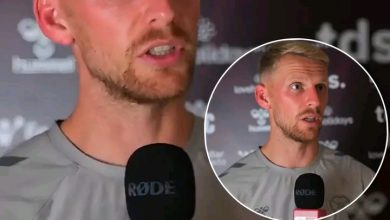
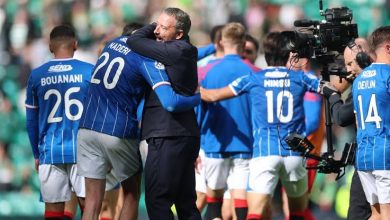
In just 12 HOURS after Enrique Riquelme GUARANTEED he will sign Erling Haaland if elected: Haaland’s agent and father have publicly denied any agreement or these claims. ❌ 𝐌𝐀𝐍𝐂𝐇𝐄𝐒𝐓𝐄𝐑 𝐂𝐈𝐓𝐘 𝐇𝐀𝐕𝐄 𝐓𝐇𝐑𝐄𝐀𝐓𝐄𝐍𝐄𝐃 𝐋𝐄𝐆𝐀𝐋 𝐀𝐂𝐓𝐈𝐎𝐍 𝐀𝐆𝐀𝐈𝐍𝐒𝐓 𝐄𝐍𝐑𝐈𝐐𝐔𝐄

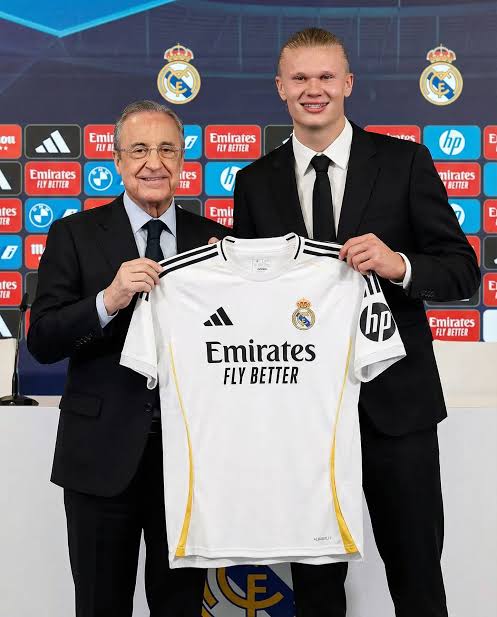
The football world was shaken by a storm that arrived faster than anyone expected, and it all started with a bold political-style promise, a superstar name, and a reaction that quickly turned from excitement into controversy.
Within just 12 hours of Enrique Riquelme making a dramatic public guarantee that he would sign Erling Haaland if he were elected, the situation spiraled into one of the most talked-about football stories of the moment.
What began as a confident statement soon turned into a chain reaction of denials, legal warnings, and confusion that pulled in one of the biggest clubs in world football—Manchester City.
And suddenly, a simple political-style football promise turned into a serious legal and sporting controversy.
It all started with ambition.
Enrique Riquelme made headlines by declaring, in very strong and confident terms, that if he were elected into a position of power, he would bring Erling Haaland to his side. It was the kind of statement designed to grab attention, energise supporters, and project authority. In modern football culture, especially around elections, ownership battles, or leadership campaigns, big promises are often used to signal intent.
But this one went further than most.
Because Haaland is not just any player.
He is one of the most valuable and influential footballers in the world today. A striker who has redefined goal scoring in modern football, combining power, speed, intelligence, and ruthless finishing. At Manchester City, he is not just a star—he is a central pillar of the team’s identity and long-term planning.
So when a public figure confidently stated that he would sign him, the football world immediately paid attention.
At first, it sounded like typical football talk. Bold claims, big dreams, and political-style messaging meant to energise a base. Many fans initially reacted with curiosity and humour, treating it as another example of ambitious rhetoric in football politics.
But that reaction did not last long.
Because almost immediately after the statement gained traction, the situation shifted.
The camp of Erling Haaland moved quickly to shut down the claims.
Both his agent and his father publicly denied that any agreement existed, or that any discussions of this nature had taken place. Their response was clear and direct: there was no deal, no understanding, and no truth to the suggestion that the player was involved in any such arrangement.
This was a critical moment in the unfolding story.
Because once a claim involving a player of Haaland’s magnitude is publicly denied by his representatives, the entire narrative begins to collapse under scrutiny. What was initially a bold promise now risked becoming misinformation spreading at high speed across football media and social platforms.
And that is when the situation escalated further.
According to reports, Manchester City were not only monitoring the situation closely—they were also reportedly considering legal action against Enrique Riquelme over the nature of the claim.
The reason behind this reaction lies in how modern football operates.
Clubs like Manchester City invest heavily in protecting their players, their contracts, and their public image. When a statement publicly suggests that a player under contract could be signed or moved without any basis, it raises concerns about misinformation, reputation damage, and interference with professional stability.
Even if the statement was made in a political or hypothetical context, the impact in modern media can be immediate and far-reaching.
Within hours, the story had spread across social platforms, football pages, fan discussions, and news aggregators. Headlines were forming. Debates were starting. Some fans believed it was possible, others dismissed it instantly, while many simply watched the situation unfold like a drama with no clear ending.
But behind the noise, the reality was simple.
There was no agreement.
No negotiation.
No confirmed transfer talk involving Haaland.
Just a statement, a reaction, and then a rapid denial.
Still, the damage—at least in terms of attention—had already been done.
For Manchester City, the concern was not just about this specific claim, but about what it represented. In the modern football era, where information spreads instantly, clubs are extremely sensitive to anything that could create confusion around player stability.
Manchester City operate at the highest level of competition, where small distractions can become big narratives if not addressed quickly. With a player like Haaland, who is central to their attacking system, even unfounded speculation can create unnecessary noise around the squad.
That is why the reported threat of legal action was taken seriously.
It was not just about disagreement.
It was about control of narrative.
It was about protecting a player’s name from being used in claims that could mislead fans or be interpreted as transfer activity.
Meanwhile, the denial from Haaland’s camp added another layer of clarity. His father and agent made it clear that nothing had been agreed, discussed, or even initiated. In modern football, where transfer rumours are constant and often exaggerated, such direct denials are not uncommon—but they are important in shutting down misinformation early.
And in this case, the timing mattered.
Because the original statement had already spread widely within hours.
This created a situation where three different forces were now involved in the same story:
A political-style promise from Enrique Riquelme.
A public denial from Erling Haaland’s representatives.
And a reported legal warning from Manchester City.
Together, these elements turned what might have been a simple quote into a full-scale media storm.
Fans reacted in different ways.
Some saw it as harmless political ambition—just exaggerated promises meant to attract attention. Others viewed it as irresponsible, arguing that mentioning a player of Haaland’s level in such a direct “guarantee” created unnecessary confusion.
A third group simply enjoyed the drama, as football culture often does. In the modern era, stories like this spread not only because of their seriousness, but because of their entertainment value. The idea of a superstar striker being “guaranteed” in a political promise sounds more like fiction than reality, and that contrast alone fuels engagement.
But beneath the entertainment, there is a serious layer.
Because Erling Haaland is not just a symbolic name in football conversations. He is one of the most protected assets in world football. His contract situation, performance level, and market value make him central to both sporting and commercial strategies at Manchester City.
Any suggestion involving his transfer—even hypothetical—tends to attract immediate attention from multiple directions: media, fans, rival clubs, and legal teams.
That is why this story escalated so quickly.
It touched one of the most sensitive points in football: the movement of elite players.
At the same time, it highlights how modern football communication has changed. A single statement, even if not officially tied to a club, can create international headlines within minutes. Social media amplifies everything. Context is often lost. Reactions come faster than clarifications.
In this case, the correction came quickly from Haaland’s side, but the initial wave of attention was already in motion.
And once that happens in today’s football world, it is difficult to fully reverse the narrative.
For Manchester City, the focus now remains stability. The club is built on control, precision, and long-term planning. Any external noise around key players is treated seriously, especially when it involves misinformation or unverified claims.
That is why the reported legal warning should be understood not as emotional reaction, but as institutional protection. Clubs at this level are extremely careful with their brand, their players, and the accuracy of information associated with them.
For Enrique Riquelme, the situation serves as a reminder of how powerful football statements can become when they involve global stars. What may be intended as political messaging or motivational ambition can quickly turn into international football news, especially when it involves names like Haaland.
In the end, the facts remain simple.
There is no agreement.
No transfer deal.
No confirmed negotiation involving Erling Haaland.
Just a bold claim, a fast denial, and a strong reaction from one of the biggest clubs in the world.
But the story itself will likely continue to circulate, because it contains everything modern football media thrives on: big names, controversy, rapid reactions, and the blurred line between statement and speculation.
And at the center of it all remains Erling Haaland, one of the most talked-about players in the game, whose name alone is enough to turn a simple quote into global headlines within hours.