Man City star faces media ATTACK after shockingly poor display for his country

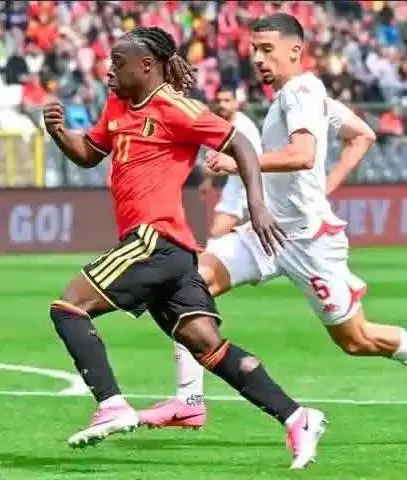
Manchester City superstar Erling Haaland has found himself at the centre of criticism after Norway’s recent 1-1 draw against Morocco, with several media outlets in his home country delivering harsh verdicts on what many described as one of his quietest performances in recent memory.
The Manchester City striker arrived at the match carrying enormous expectations. After another sensational season in England and a summer filled with excitement surrounding Norway’s return to the World Cup stage, supporters expected Haaland to once again lead the attack and remind the world why he remains one of football’s most feared goalscorers.
Instead, the evening in New Jersey turned into a frustrating experience for both the striker and the Norwegian national team.
While the result itself was not disastrous, much of the post-match discussion focused on Haaland’s performance. The 25-year-old struggled to impose himself on the game, saw very little of the ball, and was unable to create the type of decisive moments that have become a trademark throughout his career.
As a result, criticism arrived quickly.
For a player who has spent the last several years breaking records, scoring goals for fun, and terrorising defenders across Europe, even a single quiet performance can attract enormous attention. That reality was on full display following Norway’s draw with Morocco.
The match was intended to serve as another important preparation game ahead of the World Cup. Norway enter the tournament with growing confidence and belief after ending a long absence from football’s biggest stage.
For the first time in decades, Norwegian supporters feel they possess a squad capable of competing against some of the world’s strongest nations.
At the heart of that optimism stands Haaland.
The Manchester City striker is not only Norway’s biggest star but also one of the most recognisable footballers on the planet. His incredible goalscoring record has transformed expectations surrounding the national team.
For years, Norway struggled to qualify for major tournaments despite producing talented players. Now, with Haaland leading the line and several exciting talents around him, the country believes it can finally make an impact on the world stage again.
That is why his performance against Morocco generated so much discussion.
Expectations were naturally high.
Haaland entered the game after another outstanding campaign for Manchester City. Despite facing intense pressure from defenders every week in the Premier League, he once again delivered remarkable numbers.
By the end of the season, he had scored 38 goals in all competitions.
Twenty-seven of those goals came in the Premier League, helping him secure another Golden Boot award and further strengthening his reputation as one of the deadliest finishers in football.
Throughout the campaign, he remained the focal point of Manchester City’s attack. Whether City were competing domestically or in Europe, Haaland consistently found ways to influence games through goals, movement, and his physical presence.
His season ended positively as well.
In Manchester City’s final away fixture of the campaign against Bournemouth, Haaland found the net once again in a 1-1 draw. It was another reminder of his ability to produce important moments even when matches become difficult.
Following that game, Pep Guardiola decided to give his star striker additional rest.
The City manager understood the demands of a long season and wanted Haaland to be physically fresh before joining up with the Norwegian national team.
As a result, Haaland was left out of Manchester City’s final Premier League match against Aston Villa, allowing him extra recovery time before international duty.
The expectation was that the rest period would leave him fully prepared for Norway’s World Cup preparations.
Instead, his return against Morocco proved unexpectedly difficult.
From the opening whistle, Norway struggled to establish attacking rhythm.
Morocco defended aggressively and prevented Norway’s attacking players from finding consistent space in dangerous areas. This had a direct impact on Haaland, who spent much of the game isolated from the rest of the attack.
The statistics told a remarkable story.
During his 72 minutes on the pitch, Haaland registered only four touches of the ball.
For a striker who is normally involved in decisive moments throughout matches, the number was surprisingly low.
Even more concerning for some observers was the fact that he managed only one shot during the game.
That effort was blocked before it could seriously test the Moroccan goalkeeper.
As the match progressed, frustration appeared to grow.
Television cameras captured what seemed to be a brief disagreement between Haaland and a member of Norway’s medical staff or physiotherapy team.
While the exact details of the exchange were not immediately clear, the footage quickly became a talking point among supporters and journalists.
Combined with his quiet display on the pitch, it contributed to a growing narrative that the evening had simply not gone according to plan for the Manchester City striker.
When the final whistle arrived, criticism followed almost immediately.
Several Norwegian media outlets delivered unusually harsh assessments of Haaland’s performance.
One publication awarded him a rating of just two out of ten.
For a player of his status, such a score is exceptionally rare.
The publication argued that he had been largely invisible throughout the first half and failed to exert meaningful influence on the contest.
Although they acknowledged some slight improvement after the break, their overall conclusion remained highly critical.
Another major Norwegian broadcaster was equally unforgiving.
They handed Haaland a rating of three out of ten, making him the lowest-rated player in the entire Norway squad.
Such assessments quickly attracted international attention.
After all, this was not an inexperienced player struggling to adapt to senior football. This was Erling Haaland — a striker who has shattered scoring records in Germany, England, and European competition.
But that is also exactly why criticism arrives so quickly.
The higher a player climbs, the greater the expectations become.
For most forwards, a single disappointing performance might pass without major discussion. For Haaland, every touch, movement, and missed opportunity is analysed in detail.
His standards are simply different.
Supporters have become accustomed to seeing him score goals almost every week.
Defenders know how dangerous he can be.
Managers design entire game plans around stopping him.
When a player reaches that level of influence, average performances naturally stand out more than they would for others.
Norway head coach Stale Solbakken recognised this immediately.
Rather than joining the criticism, the manager quickly moved to defend his star player.
Solbakken understands better than most that football is a team sport.
A striker depends heavily on service from teammates, movement around him, and the overall structure of the team.
When those elements are not functioning properly, even the world’s best forwards can appear isolated.
The coach therefore refused to place blame solely on Haaland.
Instead, he emphasised the collective nature of the performance and suggested that criticism directed at one player was unfair.
His defence of Haaland was important because Norway’s hopes at the World Cup remain heavily linked to the striker’s form and confidence.
The national team cannot afford distractions or divisions before such an important tournament.
And despite the criticism, there remains overwhelming belief in Haaland’s ability.
One difficult evening does not erase years of excellence.
If anything, his track record suggests that he is likely to respond strongly.
Throughout his career, Haaland has repeatedly demonstrated an ability to bounce back from setbacks.
Whether dealing with injuries, criticism, or difficult matches, he has consistently returned with goals and performances that silence doubters.
That mentality is one of the reasons he has become such a dominant force in world football.
Norway’s qualification for the World Cup has also increased pressure on every member of the squad.
The nation has not appeared at football’s biggest tournament since 1998.
For nearly three decades, Norwegian supporters have waited for another opportunity to compete among the world’s elite.
Now that the wait is finally over, expectations have risen dramatically.
Many believe this generation represents the strongest Norwegian team in years.
Alongside Haaland, Norway possesses a number of highly talented players competing at top European clubs.
Captain Martin Ødegaard has developed into one of the Premier League’s most influential midfielders.
His vision, creativity, and leadership have made him a key figure for both club and country.
Former Manchester City academy graduate Oscar Bobb has also continued attracting attention with his technical quality and attacking intelligence.
Many Norwegian supporters believe Bobb could become one of the breakout stars of the tournament.
Then there is Antonio Nusa, another exciting young talent who has generated significant excitement.
His pace, creativity, and ability to beat defenders provide Norway with an additional attacking threat.
Together, these players form the core of a team carrying genuine ambition.
That ambition is one reason why reactions to the Morocco draw were so emotional.
Supporters are desperate to see signs that Norway can compete at the highest level.
When the team struggles, concerns naturally emerge.
When Haaland struggles, those concerns become even louder.
Yet football history repeatedly shows that elite players often use criticism as motivation.
Few strikers in world football possess Haaland’s hunger to prove people wrong.
Every challenge throughout his career has been met with determination.
Every doubt has usually been answered with goals.
As Norway continue preparing for the World Cup, the focus will now shift away from media ratings and toward performance on the pitch.
The tournament itself is what matters most.
Friendly matches and warm-up fixtures are important, but they do not define careers.
What happens when the World Cup begins will ultimately shape the story of Norway’s campaign.
For Haaland, the mission remains simple.
Lead his country.
Score goals.
Help Norway compete against the world’s best teams.
One quiet match against Morocco has created headlines and sparked criticism, but few people inside the Norwegian camp are likely to panic.
The coaching staff know his quality.
His teammates trust him.
And opponents certainly still fear him.
The reality is that world-class players are judged differently.
When they score, it is expected.
When they struggle, it becomes major news.
That is the burden that comes with being one of football’s biggest stars.
For Erling Haaland, criticism after the Morocco draw is simply the latest challenge in a career already filled with enormous expectations.
And if his past is any indication, he will be determined to respond in the only way he knows best — by scoring goals and reminding everyone exactly why he remains one of the most dangerous forwards in world football.